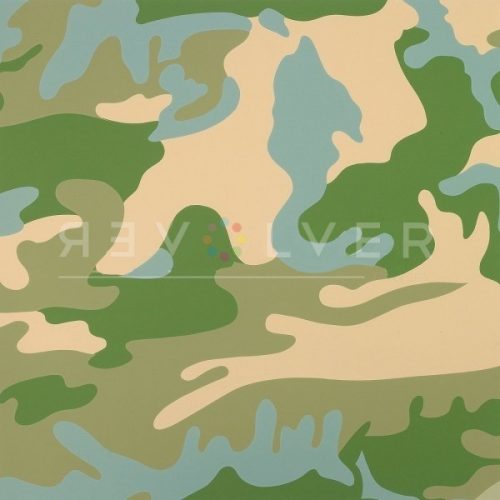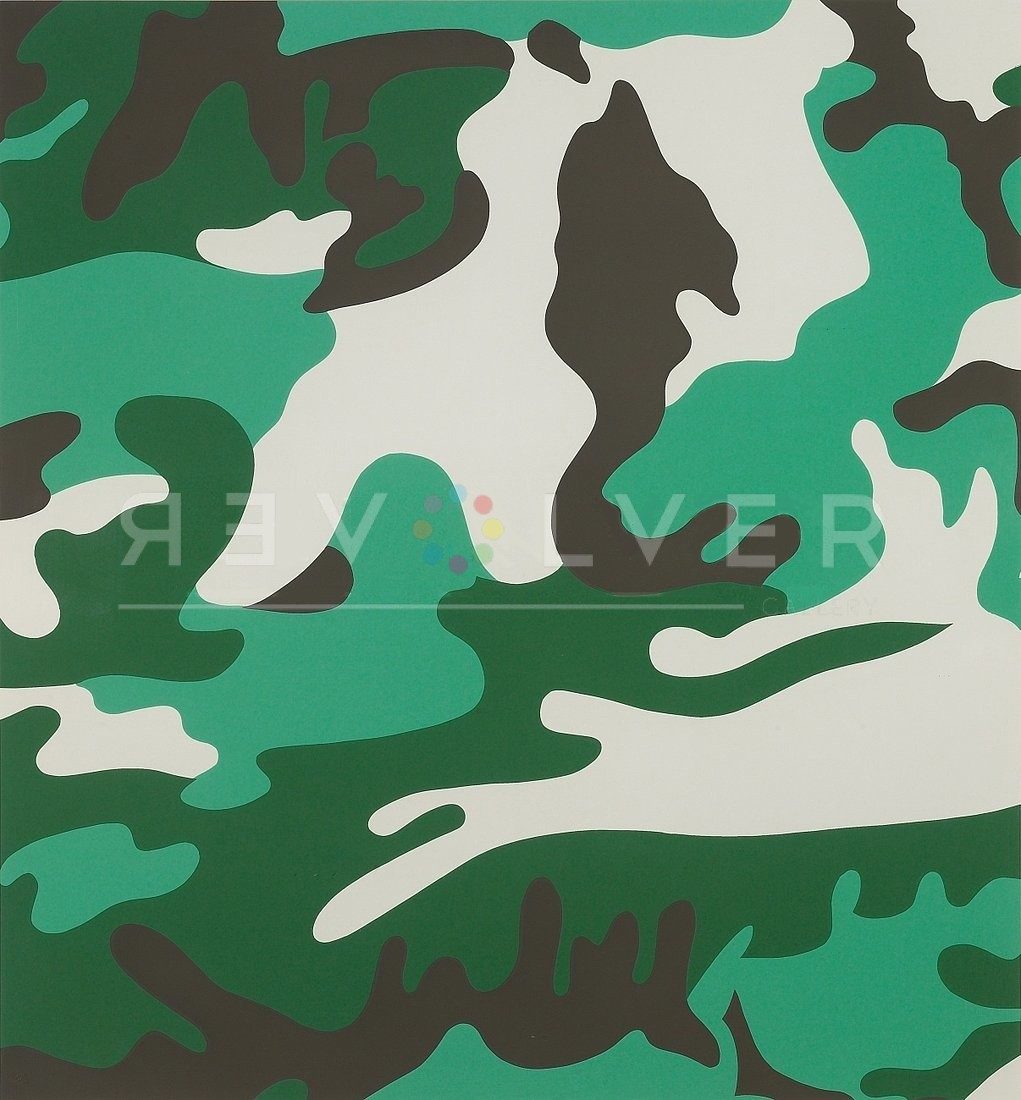
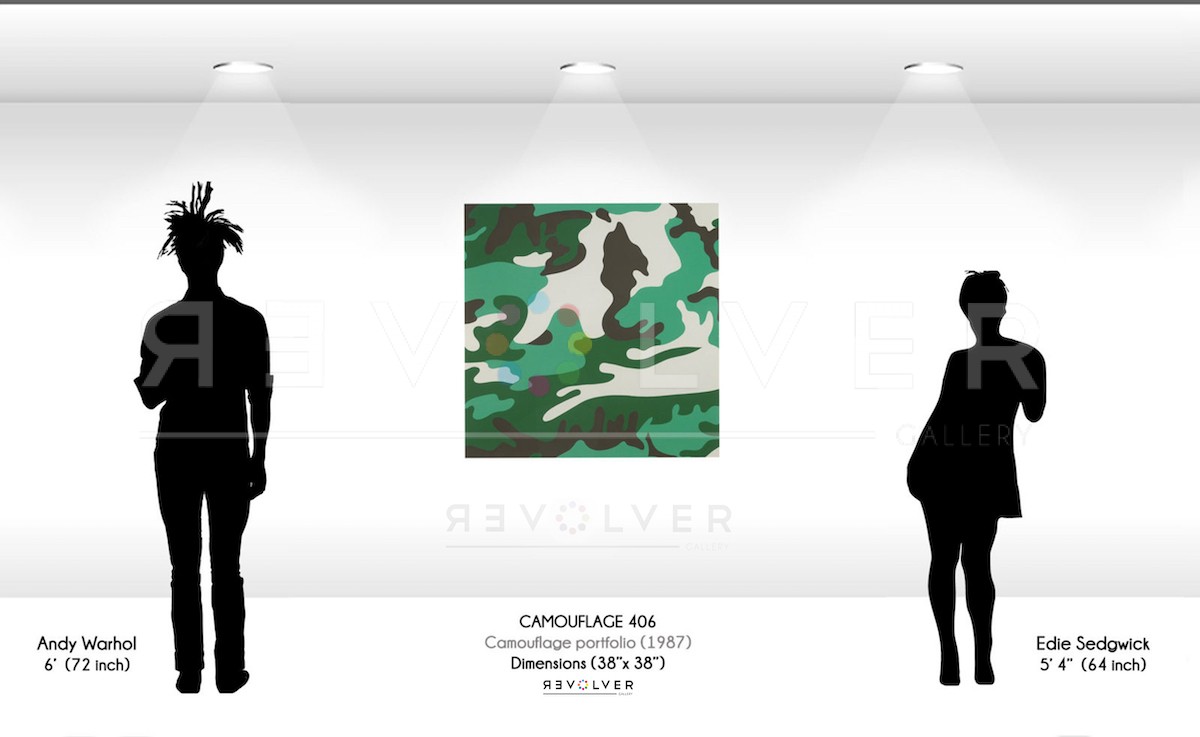
Camouflage 406 by Andy Warhol
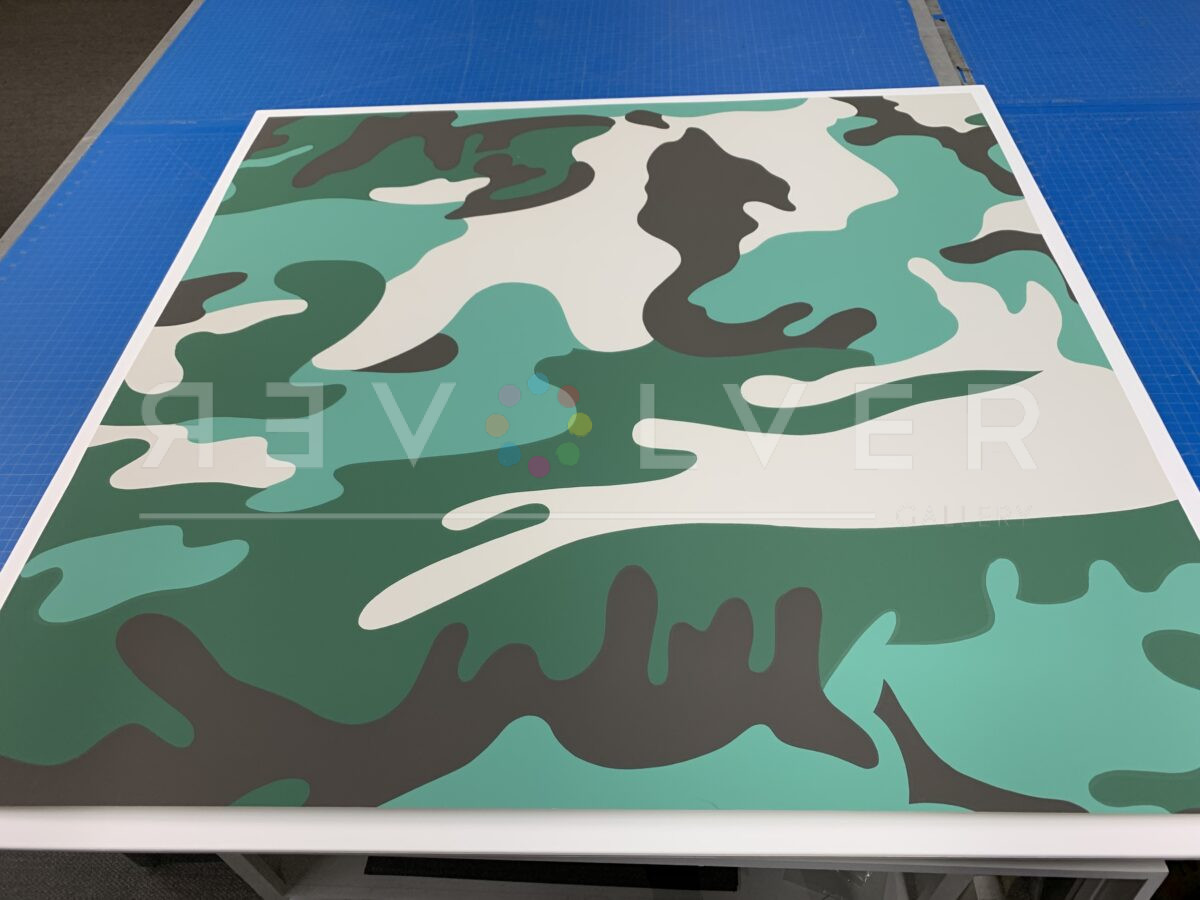
Camouflage 406 outside of a frame
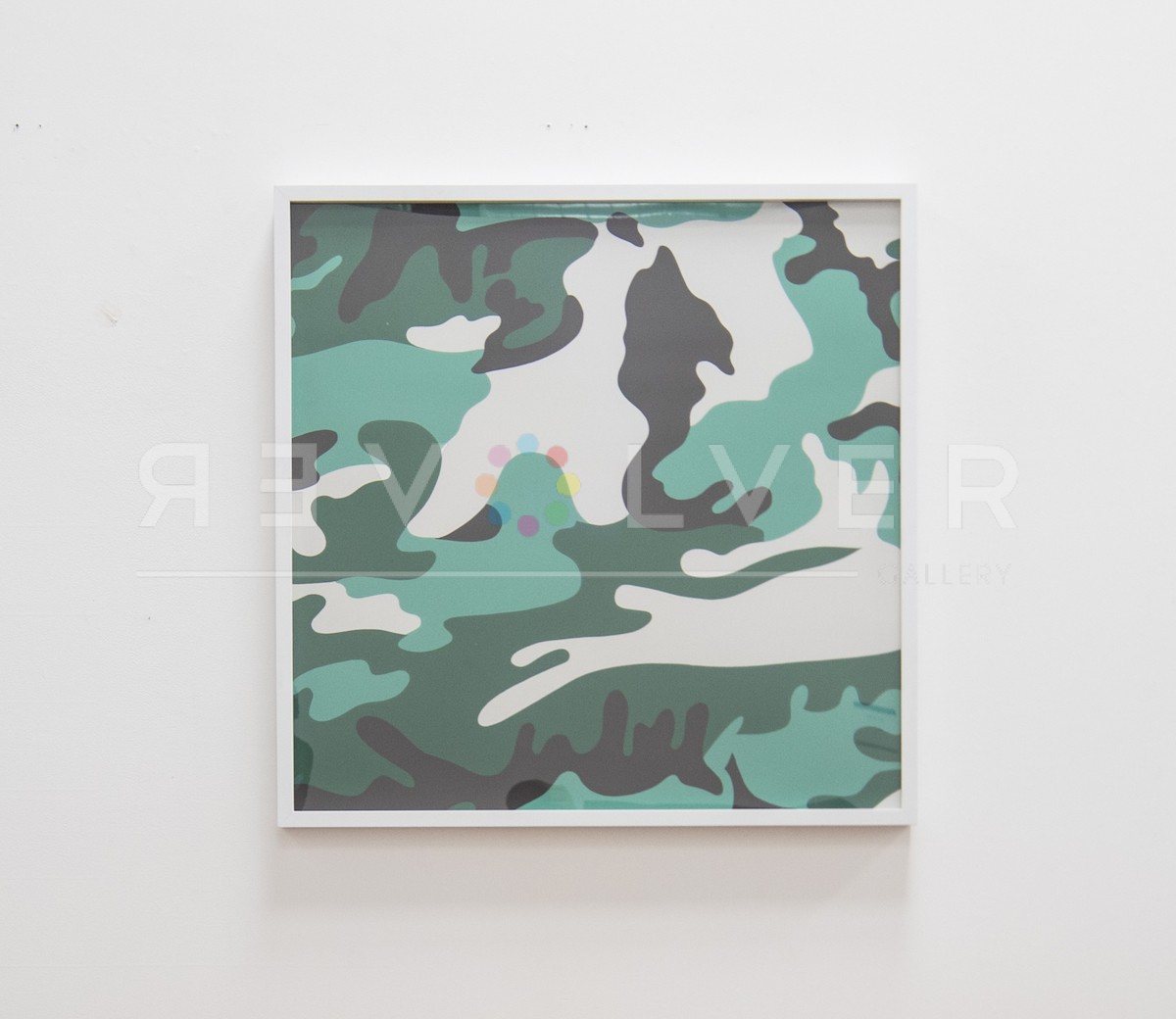
Camouflage 406 in a frame
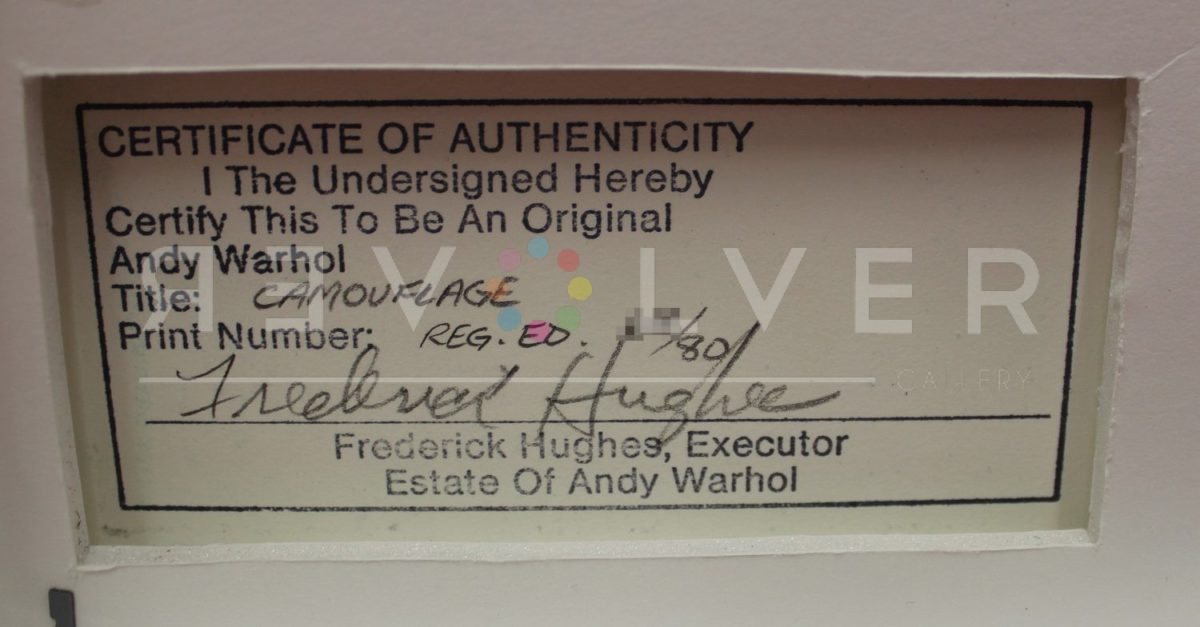
Stamp of the Certificate of Authenticity on verso of Camouflage print
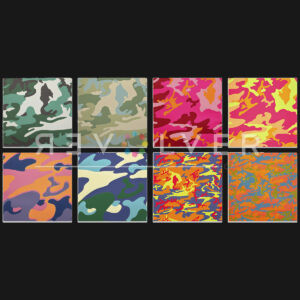
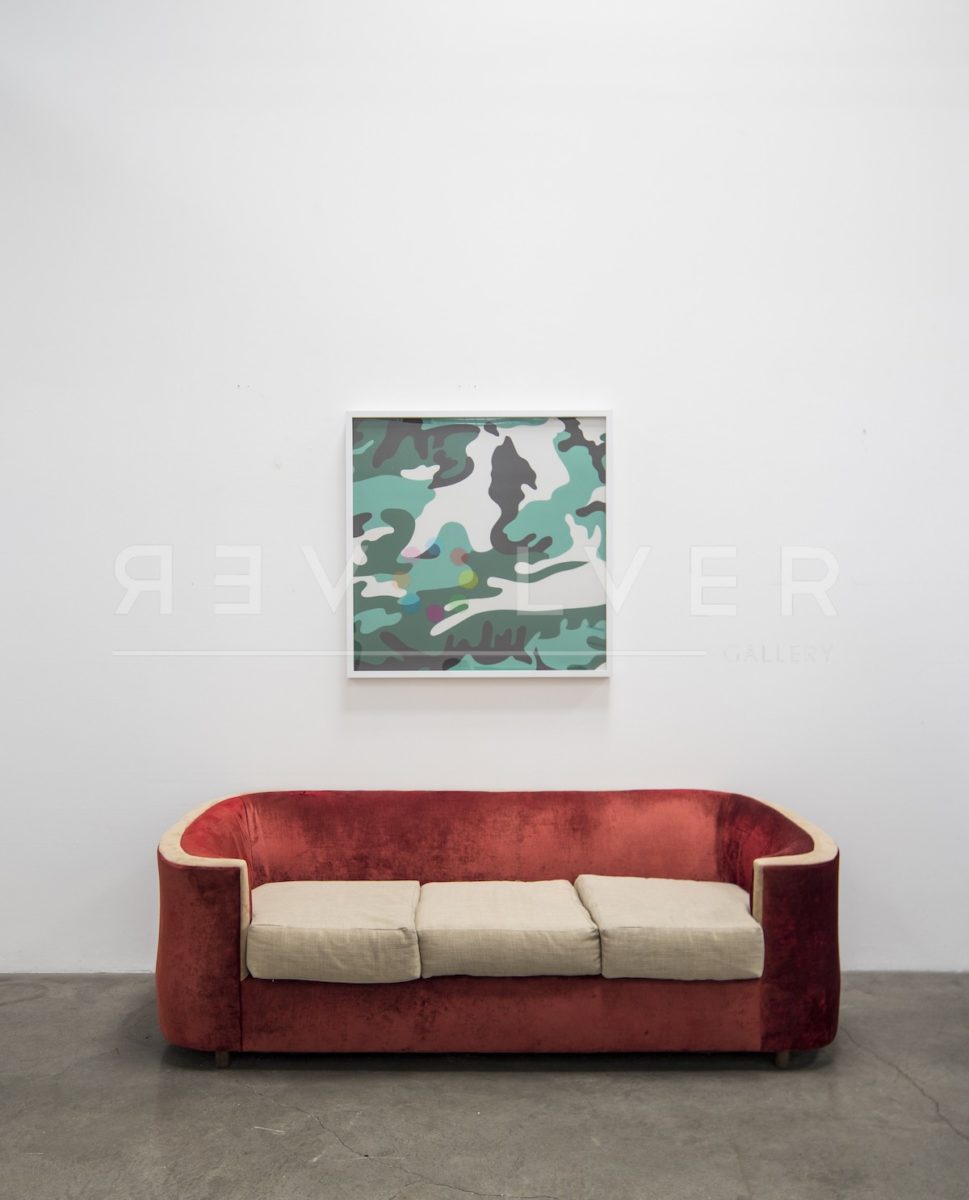
Andy Warhol - Camouflage (Full Suite) hanging jpg
Andy Warhol - Camouflage 406
Left: Debbie Harry wearing a Stephen Sprouse design from the Andy Warhol (Camouflage) collection, 1986. Photographer unknown. Center: "Debbie Harry: In Love With Love" Album, in which Debbie Harry is wearing the  Stephen Sprouse original dress, which was inspired by Andy Warhol's Camouflage portfolio. Photographer Unknown. Right: On Andy Warhol TV in 1986, Debbie Harry appears in a Stephen Sprouse original dress — neon camouflage inspired by Warhol’s late paintings... paintings meant to be worn. Warhol signed her dress.

Camouflage 406

Catalog Title: Camouflage (FS II.406)
Year: 1987
Size: 38" x 38" | 96.5 x 96.5 cm
Medium: Silkscreen on Lenox Museum Board
Edition: Edition of 80, 3 PP, 1 EP, 84 individual TP not in portfolios, signed and numbered in pencil on verso by the executor of The Estate of Andy Warhol on a stamped certificate of authenticity.
Name(Required)
This field is hidden when viewing the form

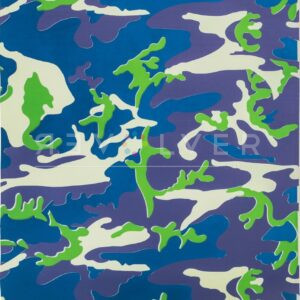
Camouflage 406 by Andy Warhol is the first screenprint in his celebrated Camouflage series. The print features the familiar military camouflage pattern rendered in vivid green, white, and black. While the design recalls the U.S. Army’s woodland-style uniforms, Warhol transforms it into something entirely his own. The crisp outlines and flat planes of color create an optical rhythm that shifts between abstraction and pattern. The stark white accents break up the dense fields of green, giving the piece a dynamic sense of movement and depth. What once served as a symbol of concealment becomes an image of spectacle and bold visibility.

From Military Fabric to Pop Abstraction

In 1986, Warhol’s studio assistant, Jay Shriver, inspired the idea for the Camouflage series. Shriver had been experimenting with pushing paint through military mesh fabric, creating abstract textures that caught Warhol’s attention. Fascinated, Warhol sent him to a New York army surplus store near Union Square to purchase camouflage cloth. Once the material was photographed, Warhol removed the fabric’s mesh, isolating only its shapes and tonal variations. He then reinterpreted the design in vivid Pop Art colors, replacing muted greens and browns with high-contrast hues that demanded attention. In doing so, Warhol redefined a utilitarian pattern as a field of pure visual energy.

Printed by Warhol’s longtime collaborator Rupert Jasen Smith, Camouflage 406 embodies the artist’s late-career fascination with abstraction, surface, and transformation. The portfolio was completed in 1987, just before Warhol’s unexpected death, making these prints among his last published works. While he was able to exhibit them once in a New York group show in 1986, he never signed the final editions himself. Nevertheless, each print was authenticated and stamped by the Estate of Andy Warhol, preserving his legacy through this iconic final series.

Camouflage 406 in Warhol’s Larger Body of Work

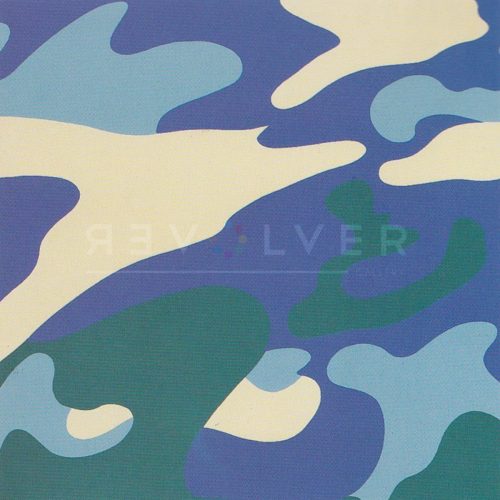
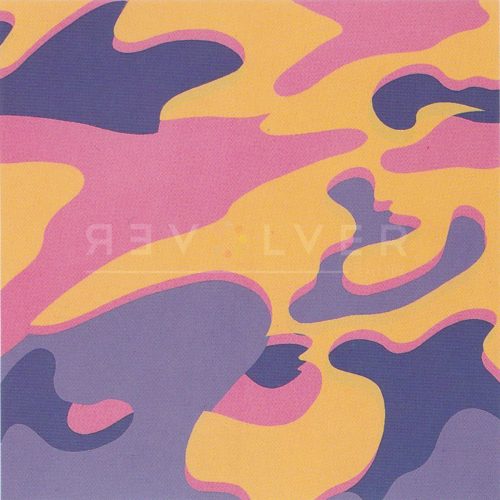
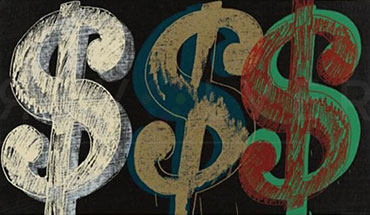
Camouflage 406 connects to many of Warhol’s recurring themes—repetition, disguise, and the blurred line between art and commerce. Just as he had elevated soup cans, celebrities, and dollar signs into icons of modern life, he turned camouflage into an emblem of pop culture itself. While the pattern’s military associations evoke both protection and aggression, its transformation into luminous color suggests seduction and spectacle. This tension—between visibility and concealment—echoes throughout Warhol’s late work, including his Camouflage Self-Portrait from 1986, where the same pattern partially obscures his face.

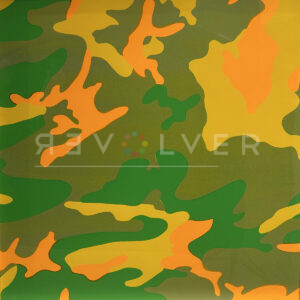
The Camouflage portfolio, which includes FS II.406–413, remains one of Warhol’s most conceptual series. It demonstrates how he could take an everyday surface and, through color and context, convert it into something both abstract and iconic. Moreover, in Camouflage 406, the artist transforms the language of war into the language of Pop—replacing function with fascination, and turning invisibility into art.

Photo credits:

Left: Debbie Harry wearing a Stephen Sprouse design from the Andy Warhol (Camouflage) collection, 1986. Photographer unknown.

Center: “Debbie Harry: In Love With Love” Album, in which Debbie Harry is wearing the  Stephen Sprouse original dress, which was inspired by Andy Warhol’s Camouflage portfolio. Photographer Unknown.

Right: On Andy Warhol TV in 1986, Debbie Harry appears in a Stephen Sprouse original dress — neon camouflage inspired by Warhol’s late paintings… paintings meant to be worn. Warhol signed her dress.

Share this page:

Related Works