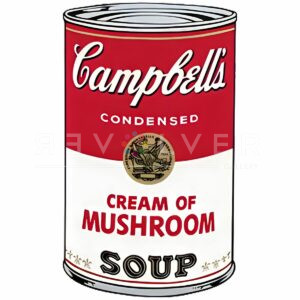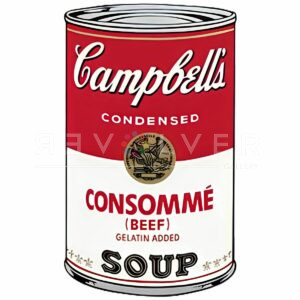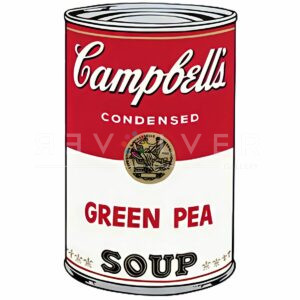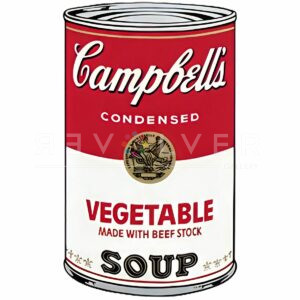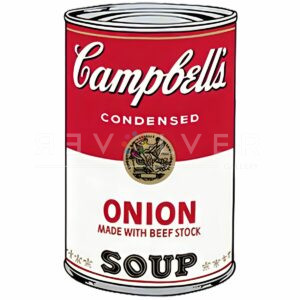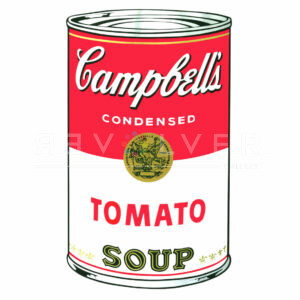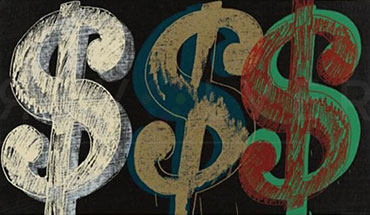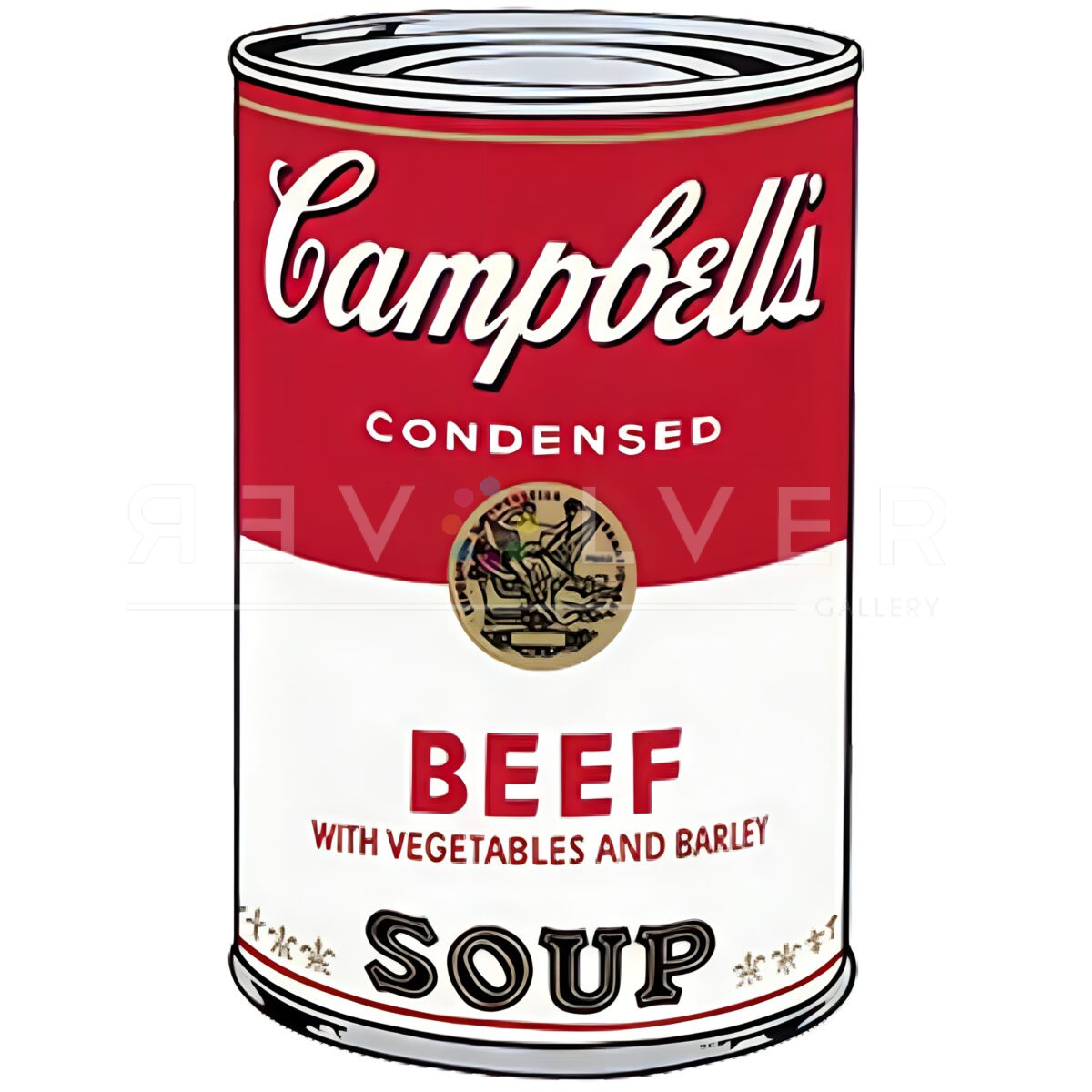
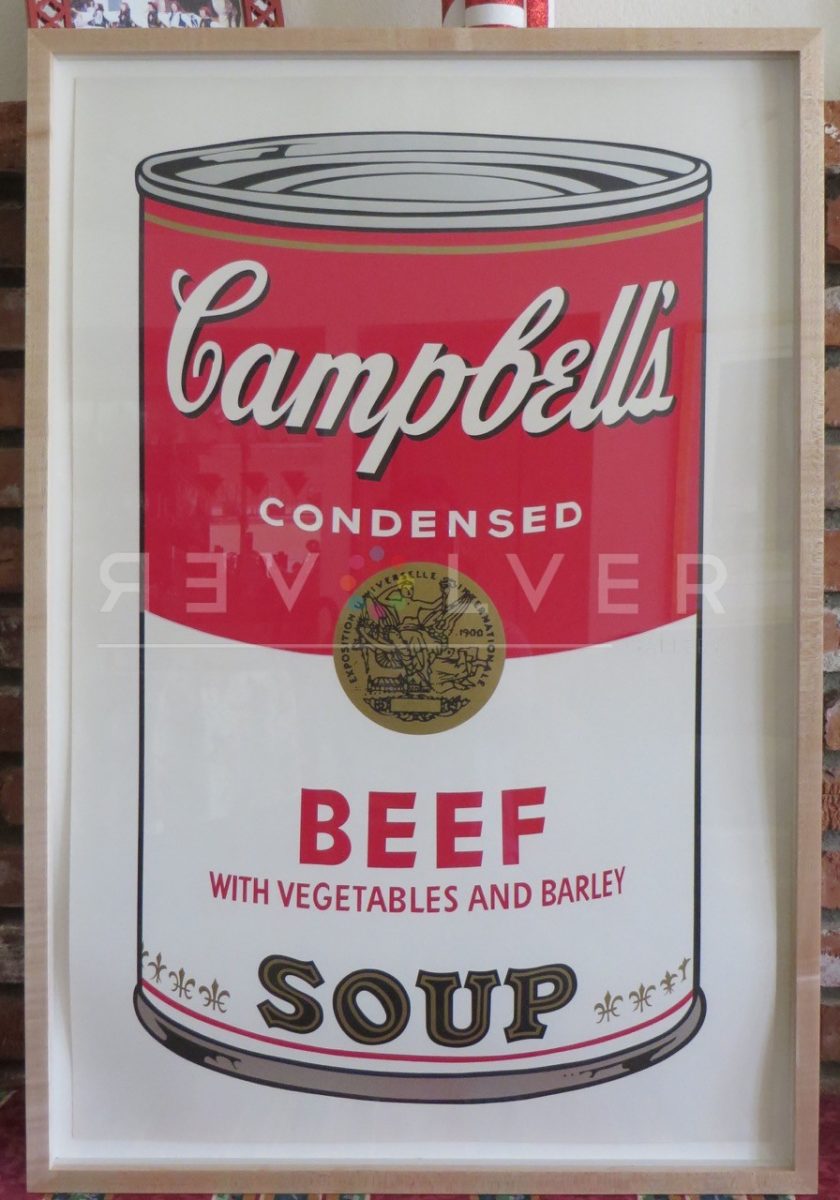
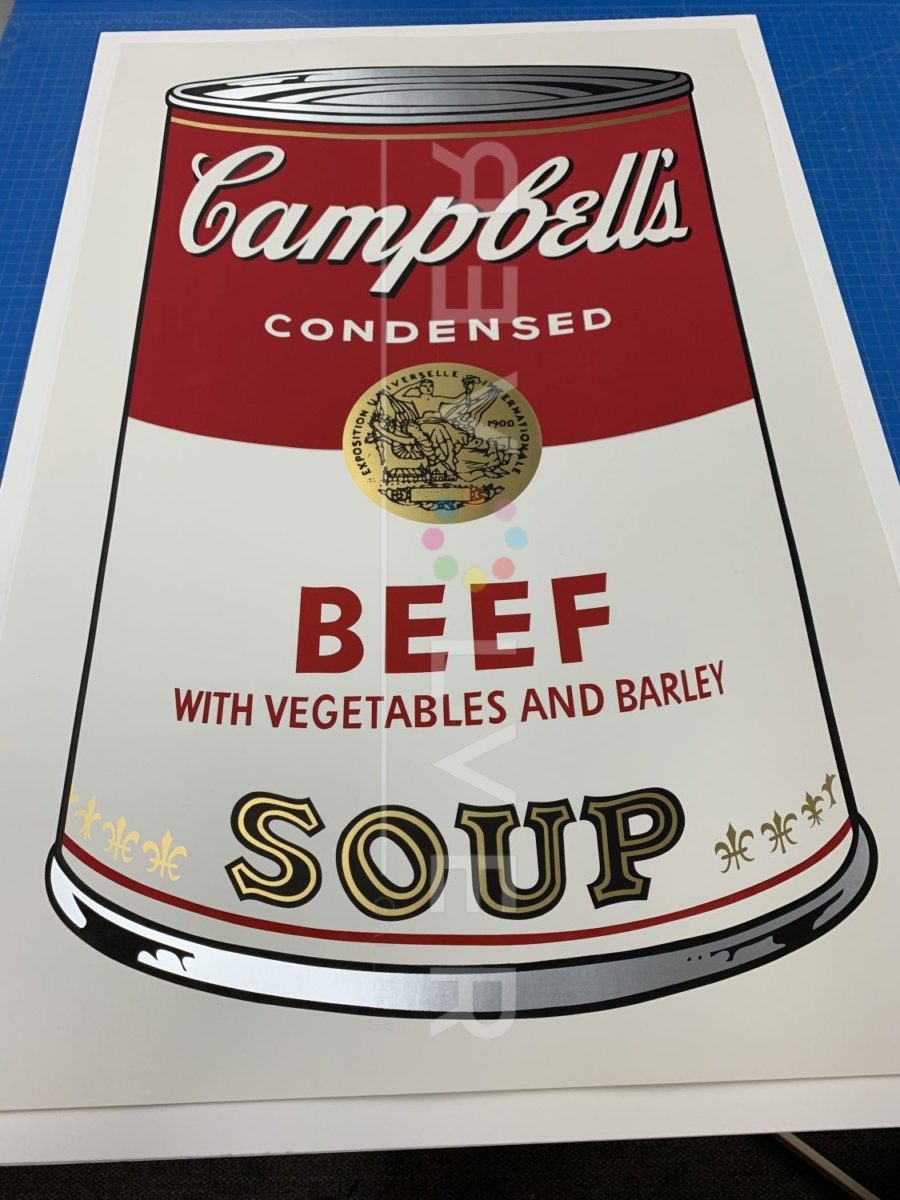
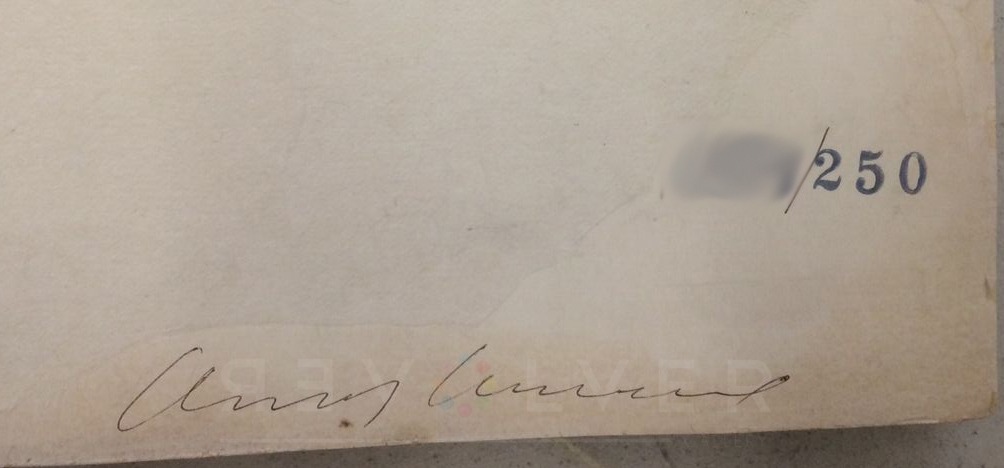
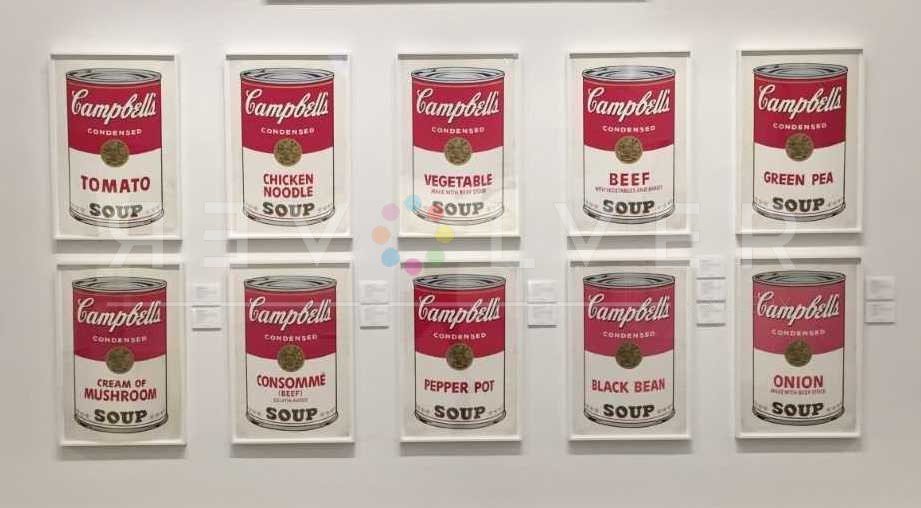
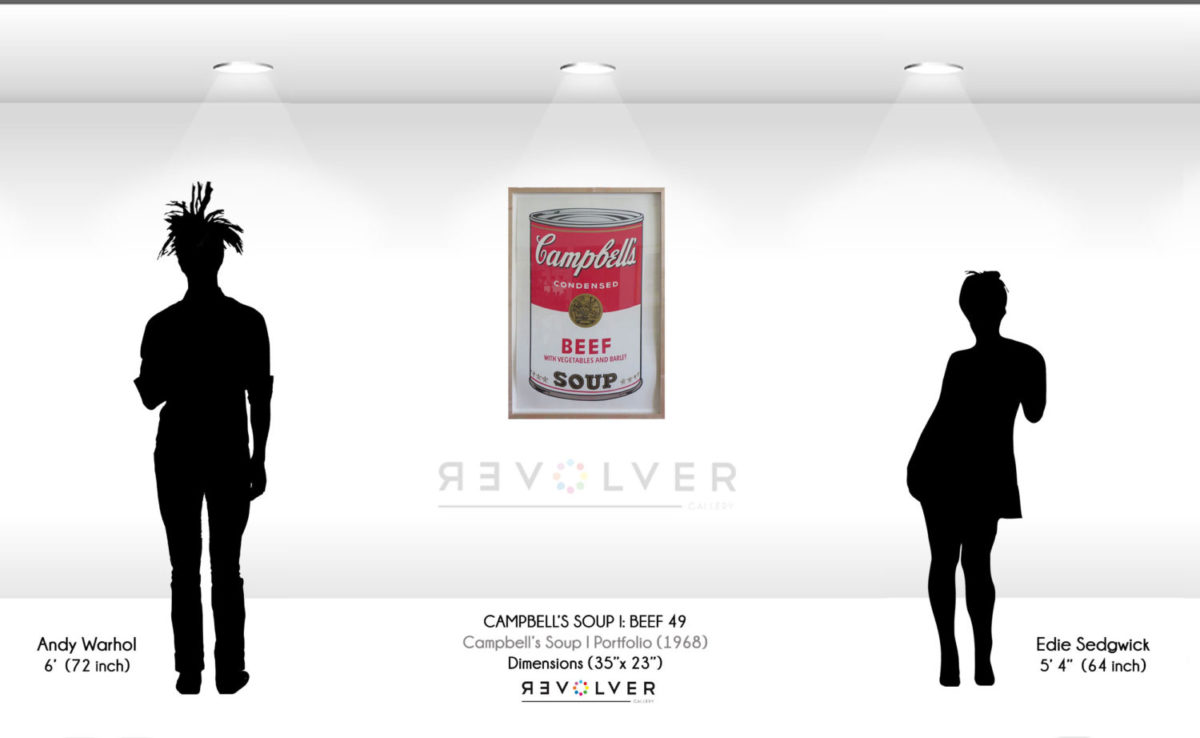
Campbell’s Soup Cans I: Beef 49 by Andy Warhol is one of ten screenprints included in his Campbell’s Soup Cans I portfolio from 1968. The subject of these prints originates from Warhol’s 32 Campbell’s Soup Cans from 1962. Six years after the original paintings, Warhol returned to the iconic design using his silkscreen technique, allowing him to develop an even closer replica of Campbell’s original product. One year later, Warhol returned to the concept again with the Campbell’s Soup Cans II portfolio. The prints are absolute in their color and shape, as a direct homage to the real life soup cans. These multiple series of Campbell’s Soup Can prints are perhaps of the most popular Warhols of all time.
Warhol debuted 32 Campbell’s Soup Cans in 1962 at the Ferus gallery in Los Angeles. It was his first one-man show. The exhibit resembled a grocery store aisle, and received mixed reviews. Some critics called the soup cans a blatant duplication of Campbell’s Soup, and claimed the work lacked any artistic merit. At the same time, some people enjoyed the exhibit, and the soup cans were ultimately a success. In the end, the soup cans became some of Warhol’s most important work, and were essential to the growth of the pop-art movement. In appreciating Warhol’s soup cans, it’s vital to understand the historical circumstance during which they debuted.
It is easy to see why the public found it difficult to digest the meaning of Warhol’s Campbell’s Soup cans. At the time, pop-art was an underground genre, and abstract expressionism dominated the scene. People expected abstract painterly images, and complex art that evoked the emotional depths of the human experience. As we can see, Warhol’s Soup cans appear as a simple commercial image, which was offensive to some artists. But, as a hallmark of modern art, Warhol’s soup cans are rich in a conceptual sense.
Popular art of the time drew inspiration from themes such as nature, emotion, and human struggle. For Warhol, these were outdated concepts. He was very appreciative of consumer culture and modern industry. Indeed, he held a very positive view of capitalism and consumerism. Warhol found the world of mass-production to be full of inspiration and tiny miracles; consumer items and everyday objects fascinated him. Therefore, objects like Campbell’s Soup cans, perfume, and Life Savers were completely legitimate sources of artistic value. He felt it was objects like these that truly represent the human condition in the 20th century. Warhol felt that industry, mass-production, and advertising were authentic and true to contemporary life. Drawing inspiration from these sources, Warhol presented the soup cans with bravery. They suggest a new and more relevant realm of artistic subject matter.
Furthermore, the Campbell’s Soup cans prints are an experiment in the context of art. Would we consider an image of Campbell’s Soup art if we viewed it on a billboard, or at Campbell’s headquarters? Pioneering the Pop Art genre, Warhol employs a basic motif: he removes the material from its original context, and presents it anew. In other words, the subject becomes alienated from its natural habitat; and then it adapts. Warhol took the same image and placed it in an art gallery, re-contextualizing a commonplace household object that we overlook everyday. By doing this, Warhol effectively persuades us to pay closer attention, and suggests that we can find artistic value in objects like a soup can. Additionally, Warhol wanted to hold a mirror up to the consumer, reflecting the objects of consumption back to society.
Overall, pieces like Campbell’s Soup Cans I: Beef 49 greatly disrupted ongoing themes in the art world. They call on us to search for inspiration in unrecognized venues of life, and they illustrate Warhol’s philosophy very clearly. As experimental avant-garde art, the soup cans have become some of the most iconic and recognizable pieces in the history of modern art. Campbell’s Soup I: Beef 49 is amongst Warhol’s greatest works, and will remain in the history books forever.
Photo Credits:
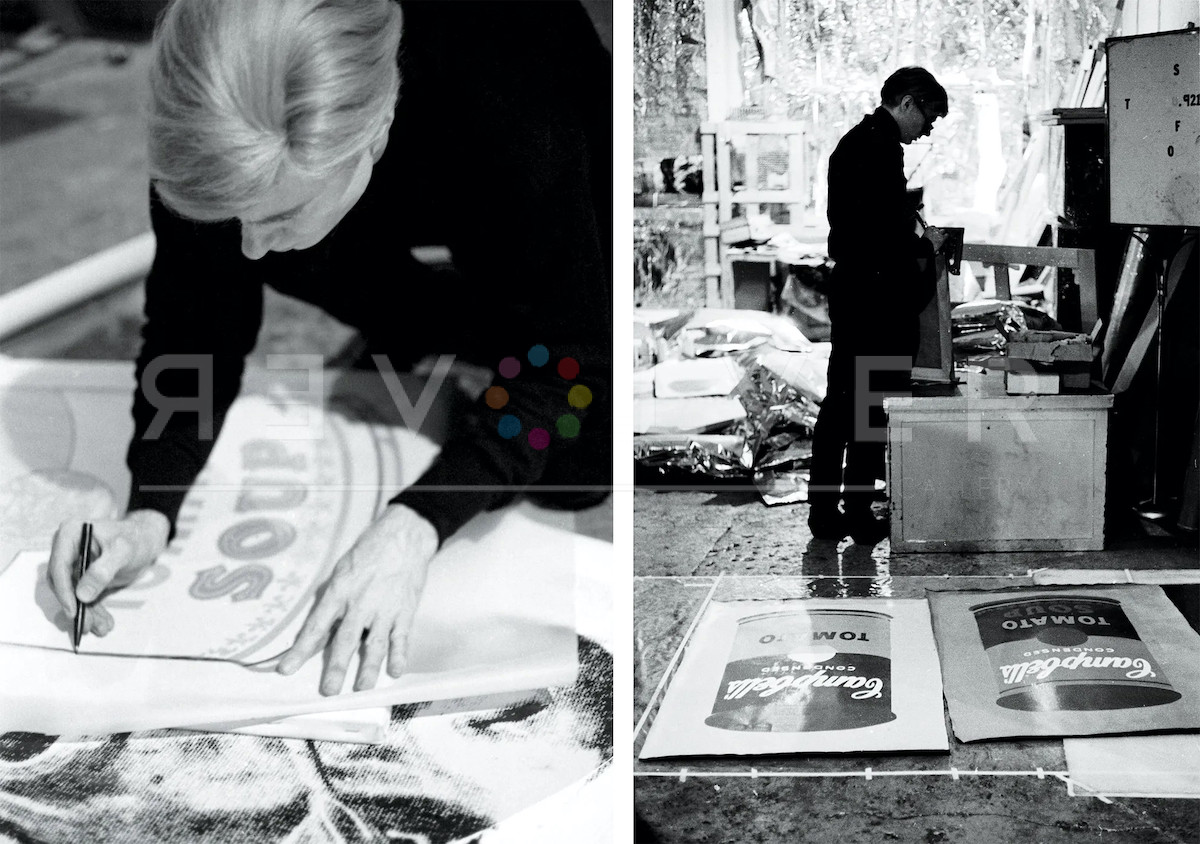
- Andy Warhol tracing Campbell’s Soup silkscreen, The Factory, New York City, circa 1965 © Estate of Nat Finkelstein © 2021 The Andy Warhol Foundation for the Visual Arts, Inc. / Licensed by DACS, London
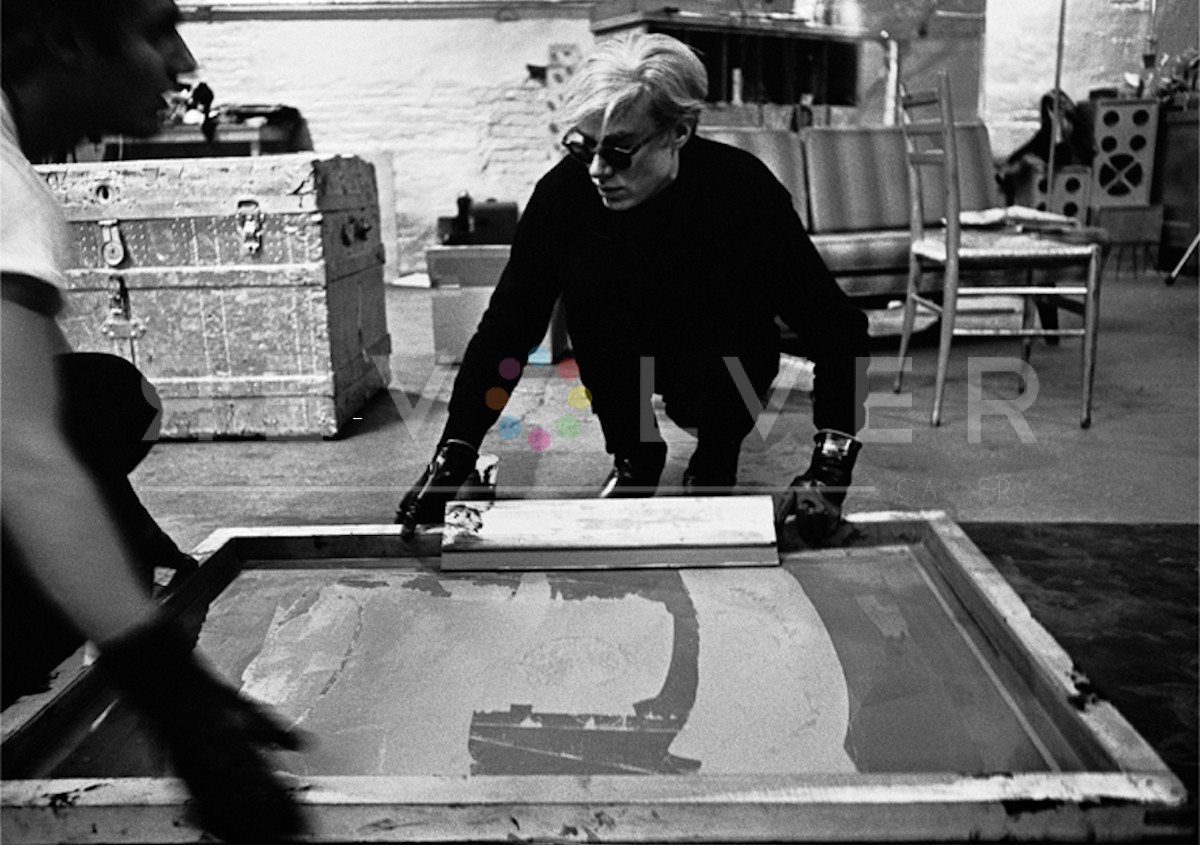
- Andy Warhol and Gerard Malanga make a painting, 1964
Vintage gelatin silver print, 10¼ × 14¾ inches; 26 × 38 cm. Photo by Matthew Marks. - Andy Warhol, 1964. Vintage gelatin silver print, 10¼ × 14¾ inches; 26 × 38 cm. Photo by Matthew Marks.