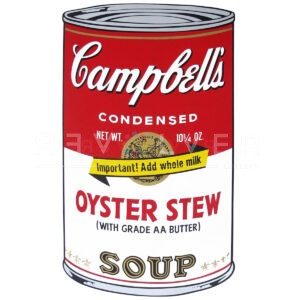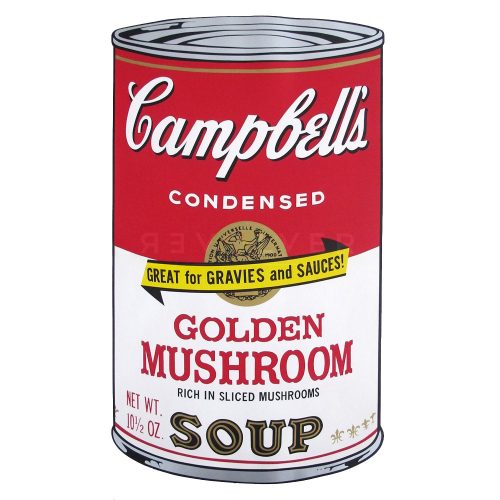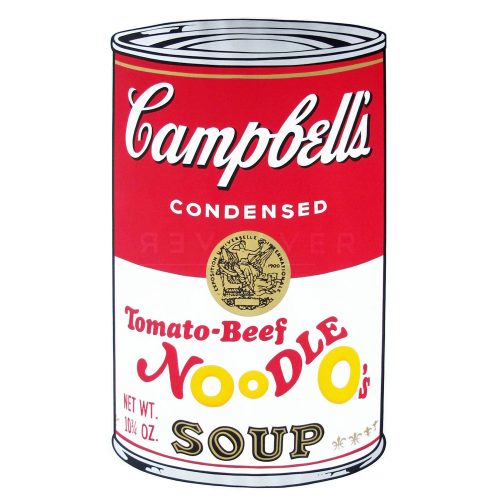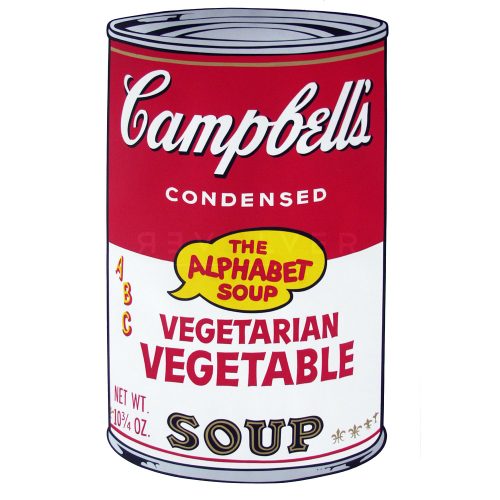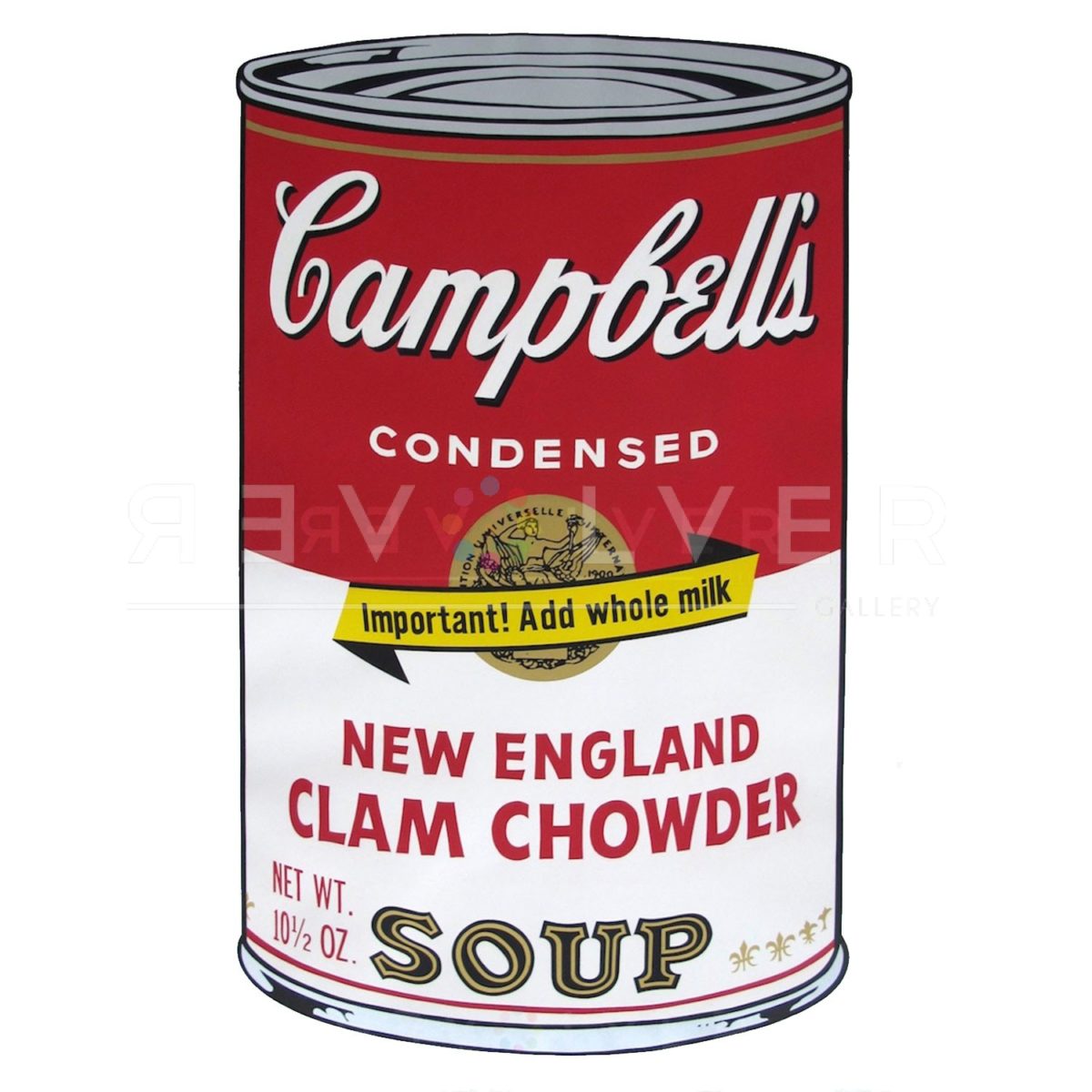
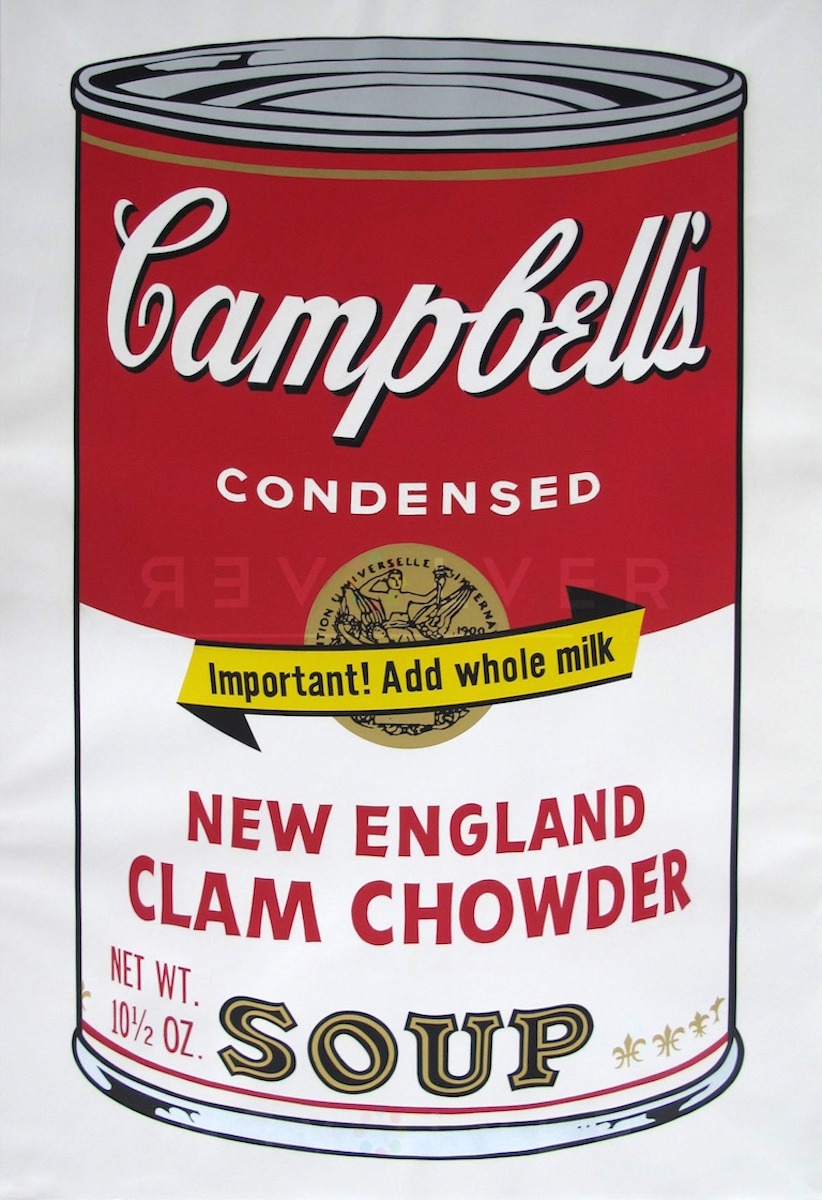
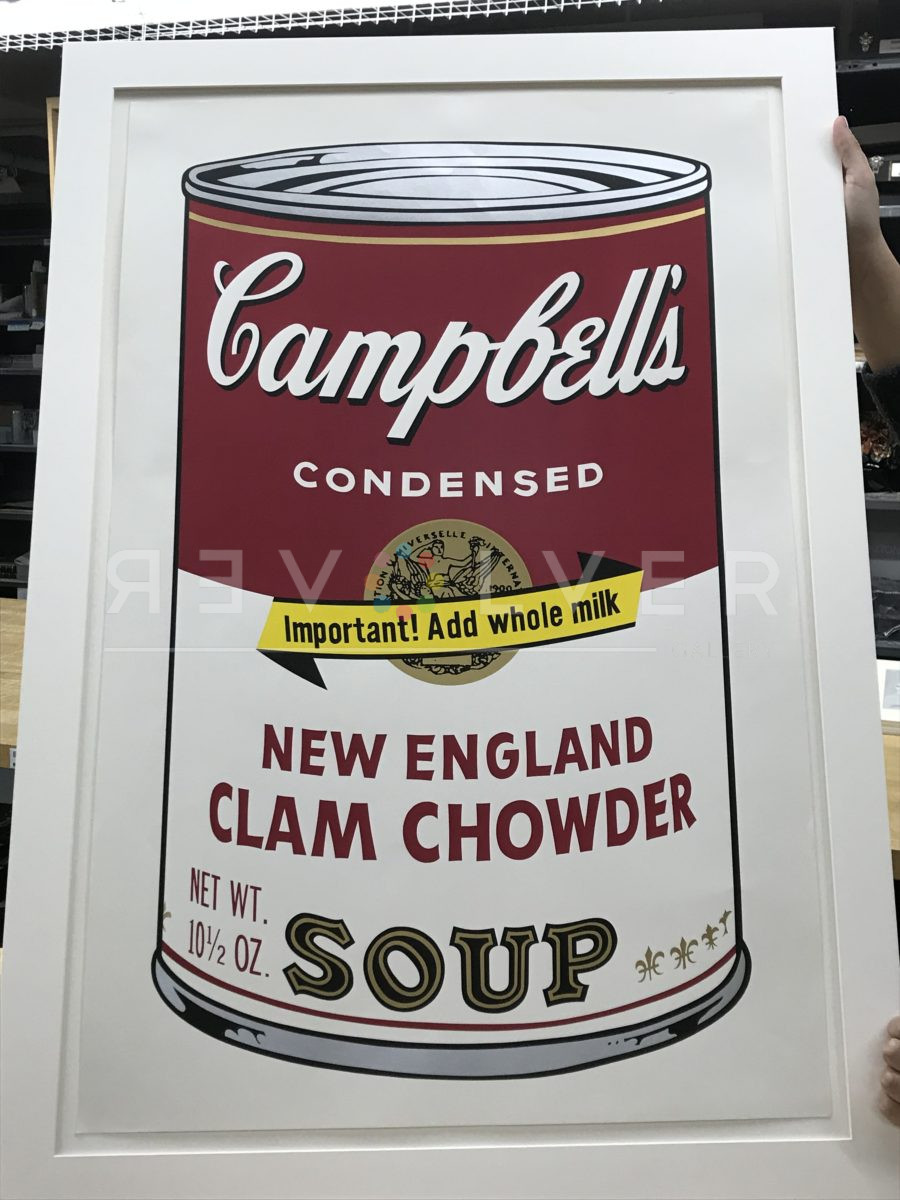

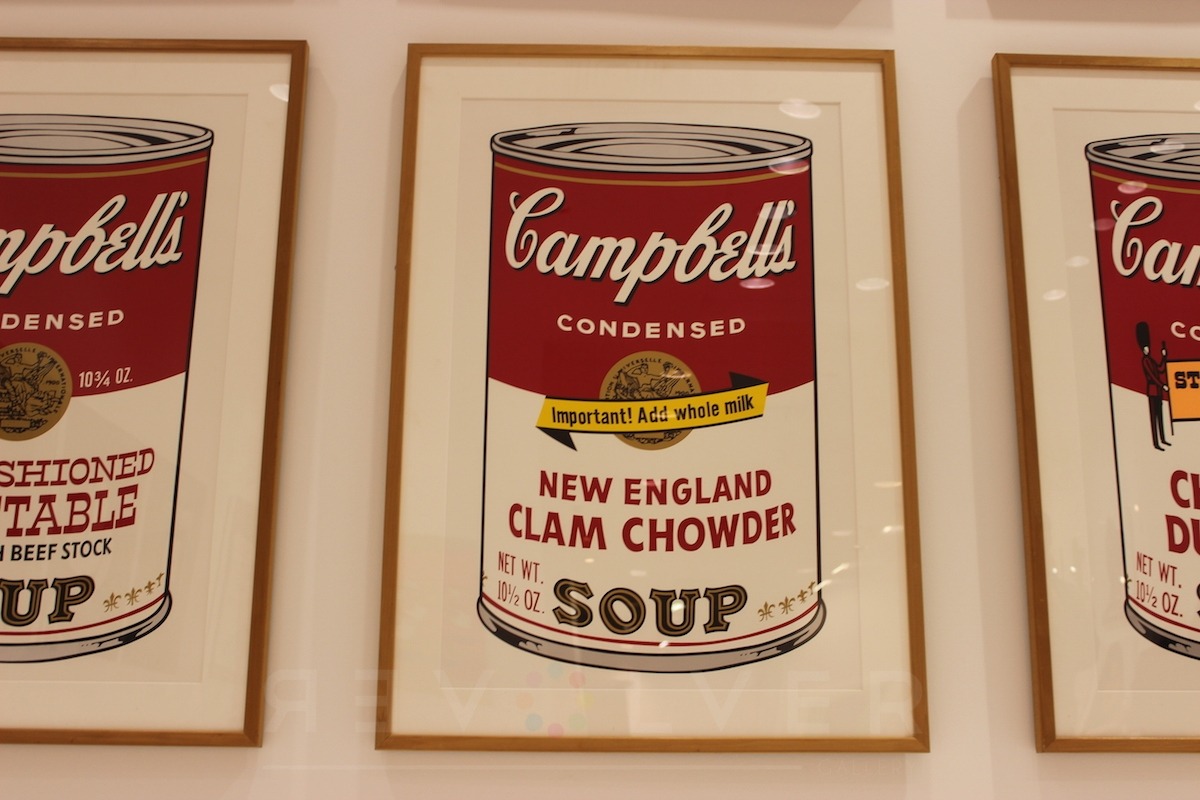
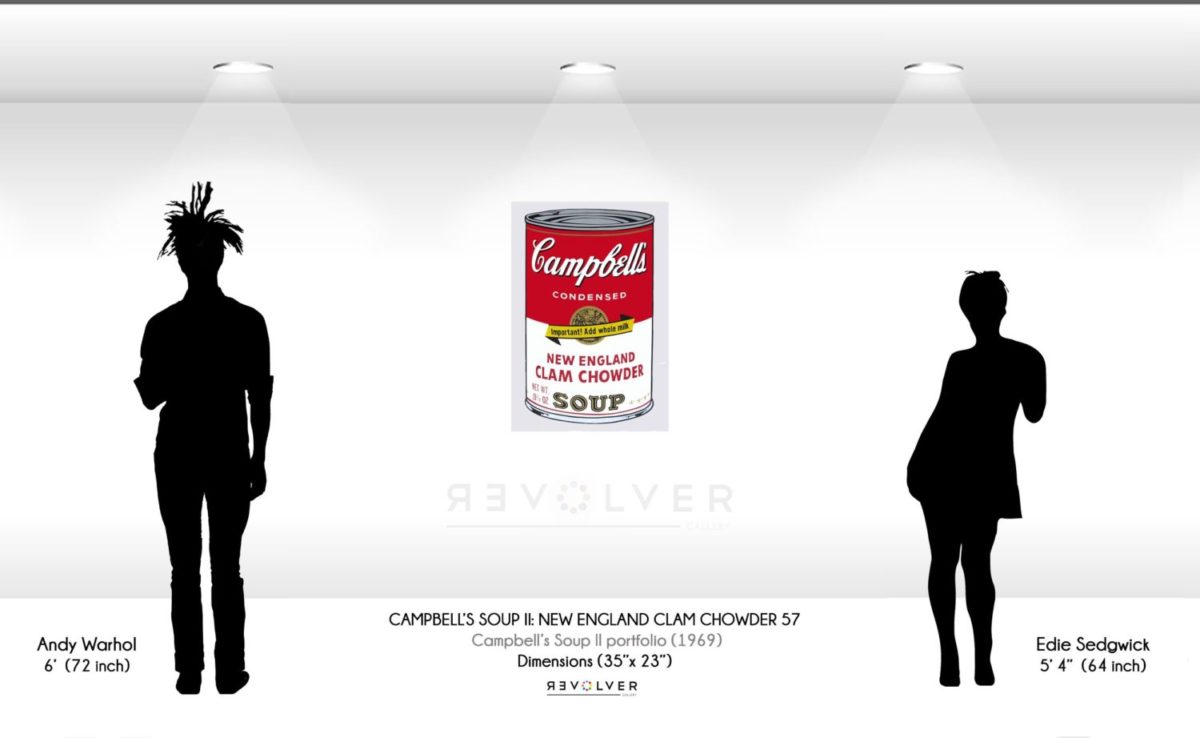
Campbell’s Soup Cans II: New England Clam Chowder 57 is a print from from Andy Warhol’s Campbell’s Soup Cans II portfolio. This series from 1969 consisted of ten prints, each with different flavors and names. This collection was a continuation of his first Campbell’s Soup Can portfolio from 1968, with ten additional prints featuring the more uncommon flavors. Warhol’s bold soup cans initially shocked the art world when they were first featured in 1962. Now, they have remain as some of the most famous pieces of modern art history. The Campbell’s Soup Cans II portfolio is one of Warhol’s most valuable works.
Not only did this new series contain a different lineup of flavors, but the label also has additional illustrations. This new collection of prints has the same trademark design Americans know and love, but with the bonus of new graphics. In place of the traditional Campbell’s golden seal, the from of the can shows unique designs. The New England Clam Chowder golden seal is wrapped in a banner which reads: “Important! Add whole milk”. This new design fit well into Warhol’s already existing soup can prints, adding a small flare to his traditional design.
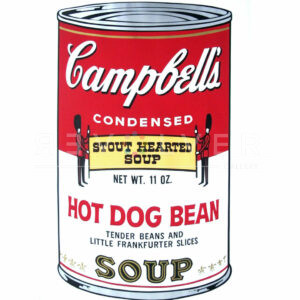
Some of the other unique illustrations from this series include Hot Dog Bean 59, Chicken N’ Dumplings 58 and Vegetarian Vegetable 56, which are all real flavors of the soup.
Campbell’s Soup Cans II: New England Clam Chowder and similar prints became some of most iconic images of modern art. Warhol used the cans to express his view of consumerism and advertisement and their relationship with art. By appropriating images of household products such as Campbell’s Soup Cans and Brillo Pads, Warhol created a new, hyper-relatable kind of artwork. Warhol’s use of repetition adds to the advertisement style, resembling the look of billboards and comic book pages.
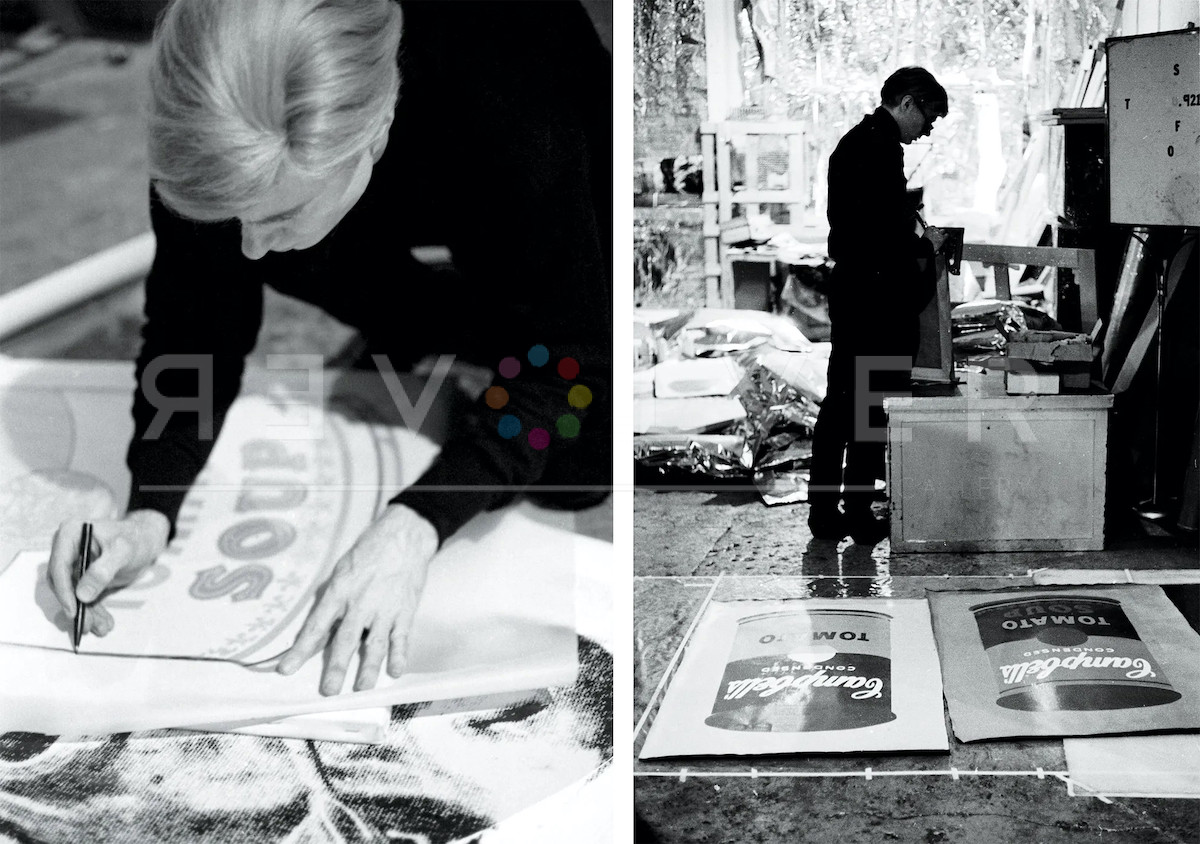
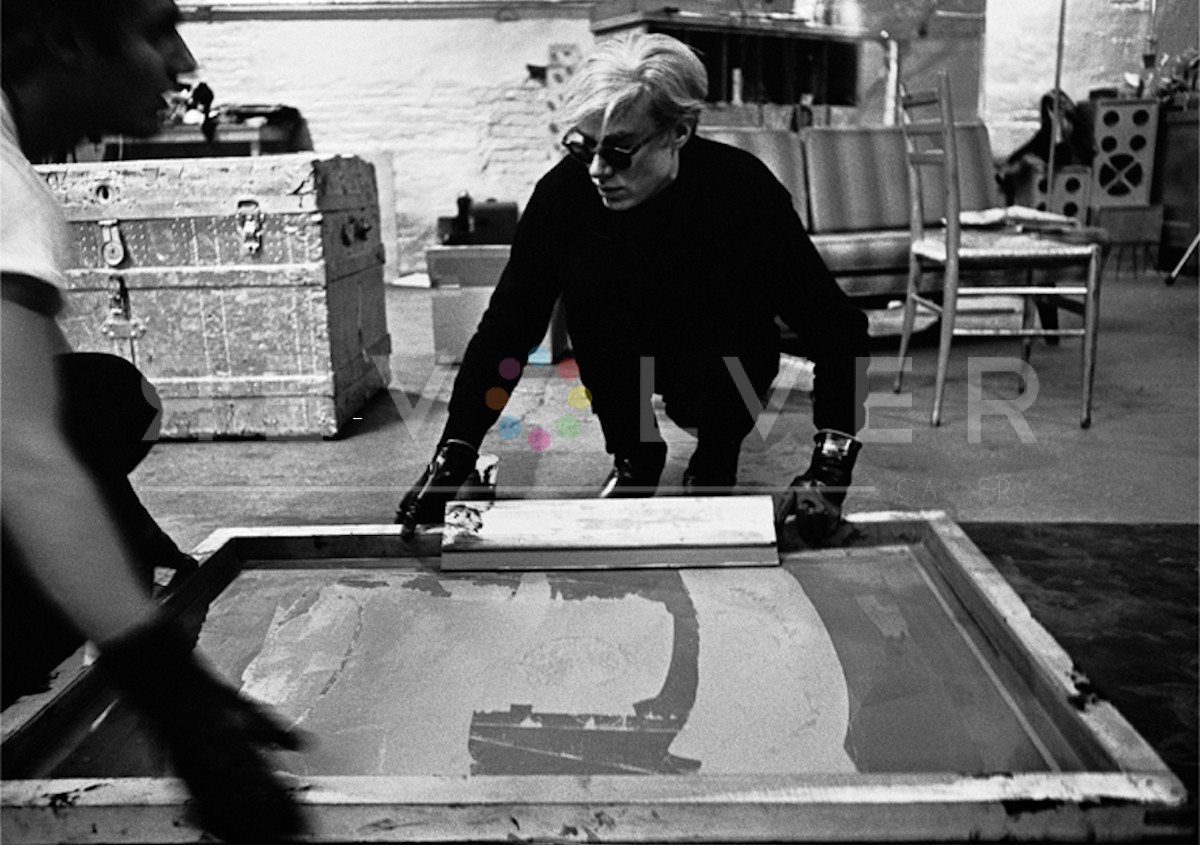
This style became even more accessible after Warhol began to use the silkscreen printing technique. Although Andy originally hand painted the cans for his 32 Campbell’s Soup Cans (1962), the development of the silkscreen technique revolutionized his process.
This new creative development allowed Warhol to create multiple copies of a single work, mass producing images in a more convenient, reliable way. By using this new technique, Warhol was able to achieve a nearly identical and accurate outcome. Even the process in which he created the soup can prints emulated the sense of industrial production and consumerism. Warhol’s love for mass-production, advertising, and Campbell’s soup all morphed together to create these portfolios.
Although his soup cans are arguably his most notable works, 32 Campbell’s Soup Cans received a bit of controversy in 1962. Some just could not understand what to make of his work, therefore critics ridiculed Warhol for his series. Although many didn’t understand why one would paint something as random as a soup can, Warhol simply loved the soup. In fact, Andy once said, “Pop art is about liking things”. Warhol’s soup cans and their relevance are still debated to this day, fifty-nine years after their original debut.
Prints like Campbell’s Soup Cans II: New England Clam Chowder soon became a quintessential item of pop-art history. By creating the Campbell’s Soup can prints, Warhol ushered in the Pop Art movement and gained tremendous influence. Still to this day, Warhol’s soup cans rule the world of Pop Art.
Photo Credits:
- Andy Warhol tracing Campbell’s Soup silkscreen, The Factory, New York City, circa 1965 © Estate of Nat Finkelstein © 2021 The Andy Warhol Foundation for the Visual Arts, Inc. / Licensed by DACS, London
- Andy Warhol and Gerard Malanga make a painting, 1964. Vintage gelatin silver print, 10¼ × 14¾ inches; 26 × 38 cm. Photo by Matthew Marks.
- Andy Warhol, 1964. Vintage gelatin silver print, 10¼ × 14¾ inches; 26 × 38 cm. Photo by Matthew Marks.