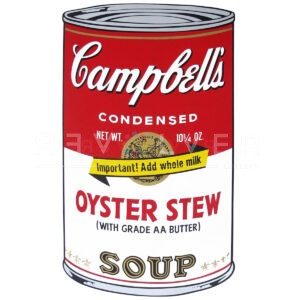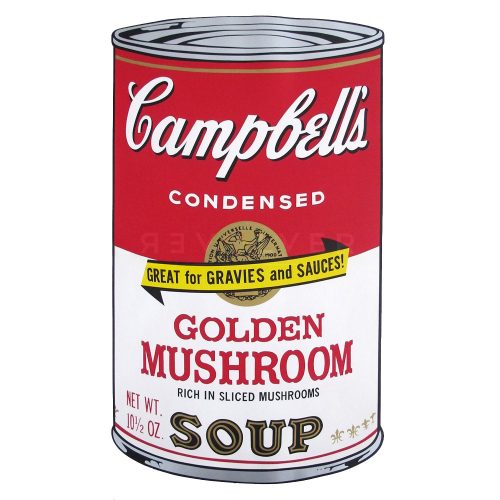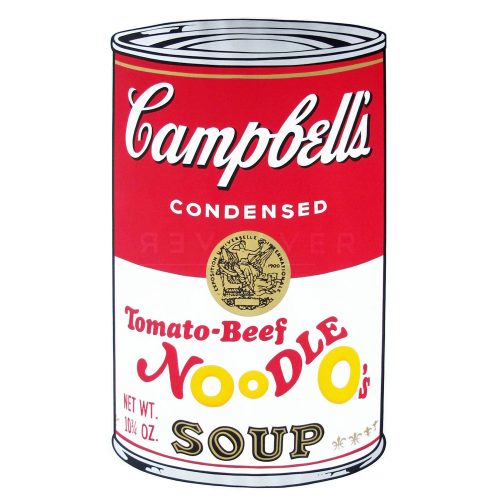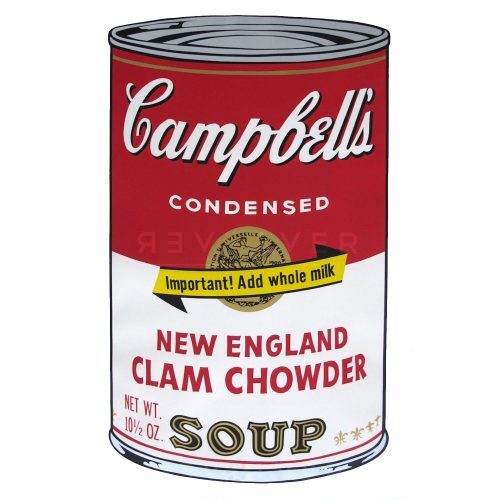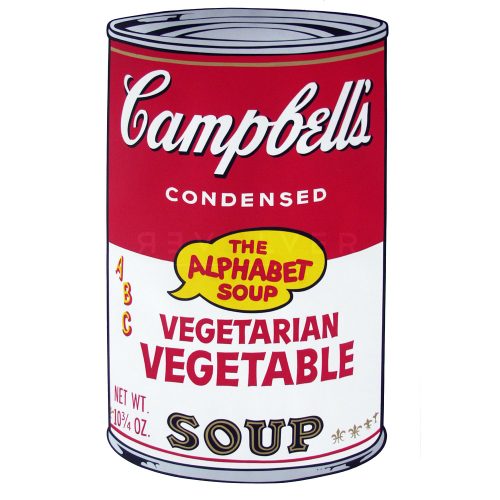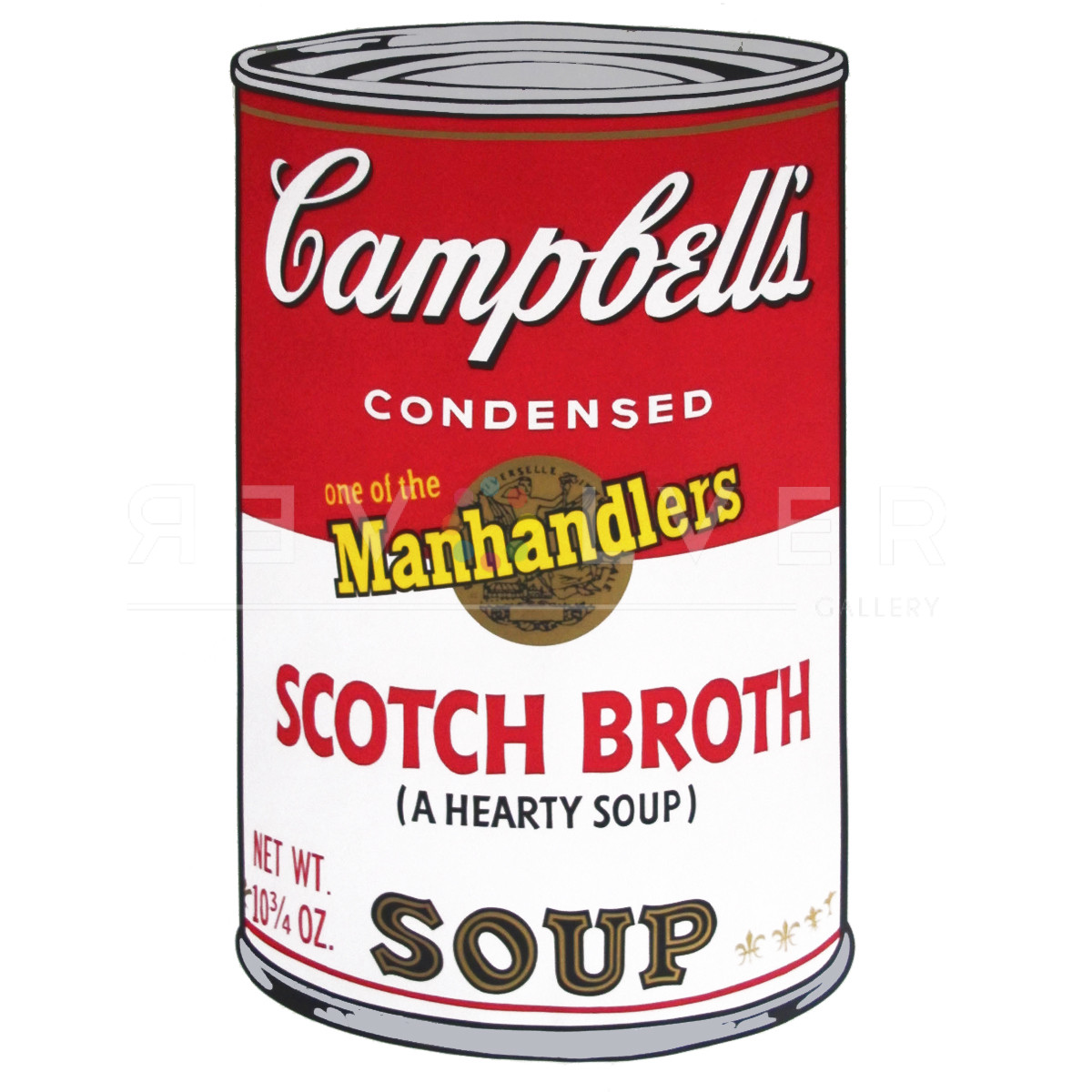
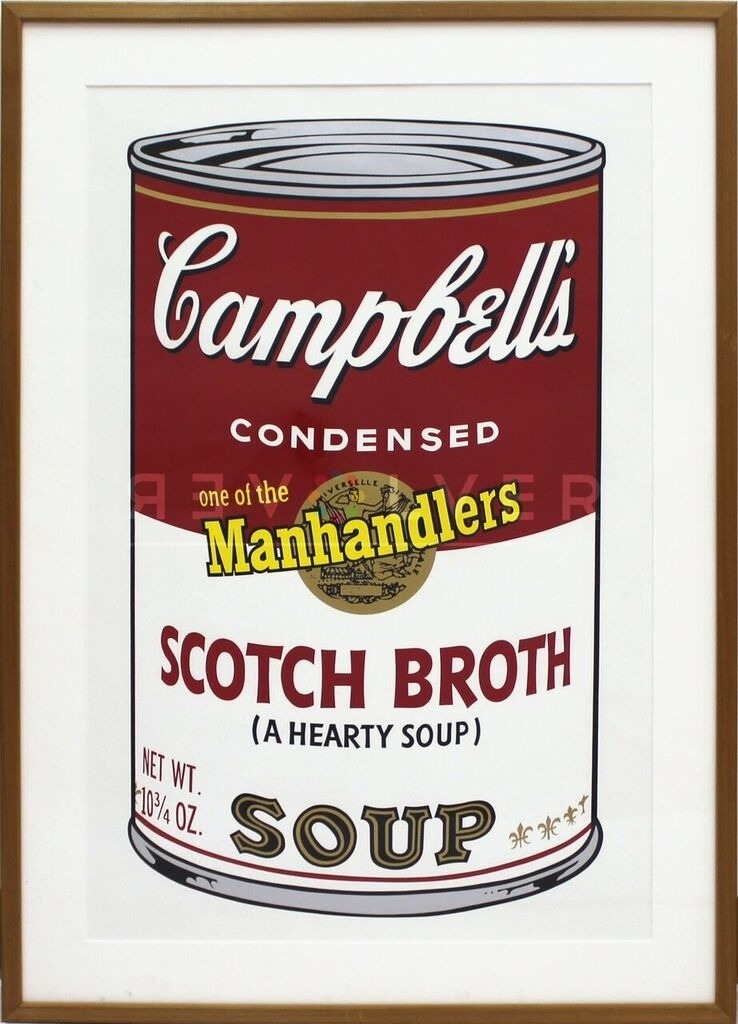
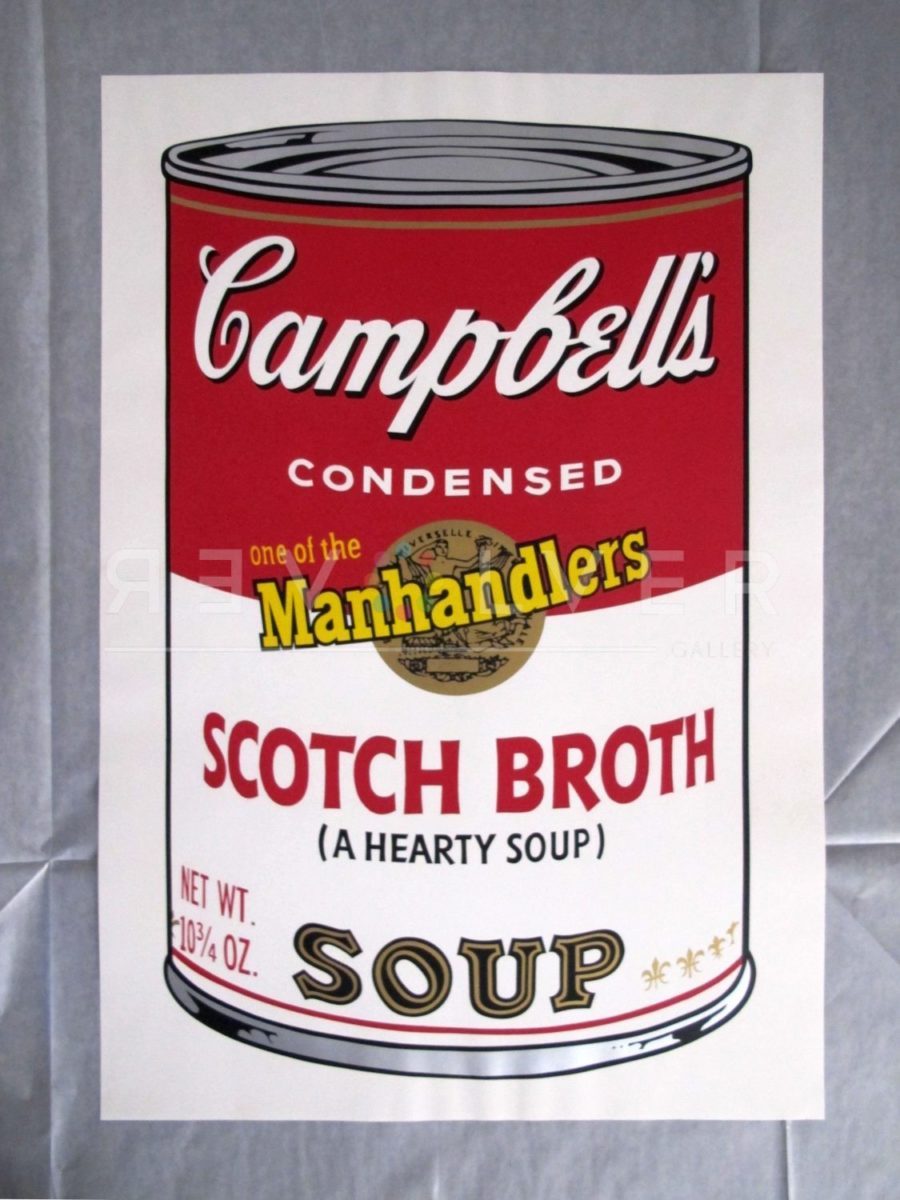
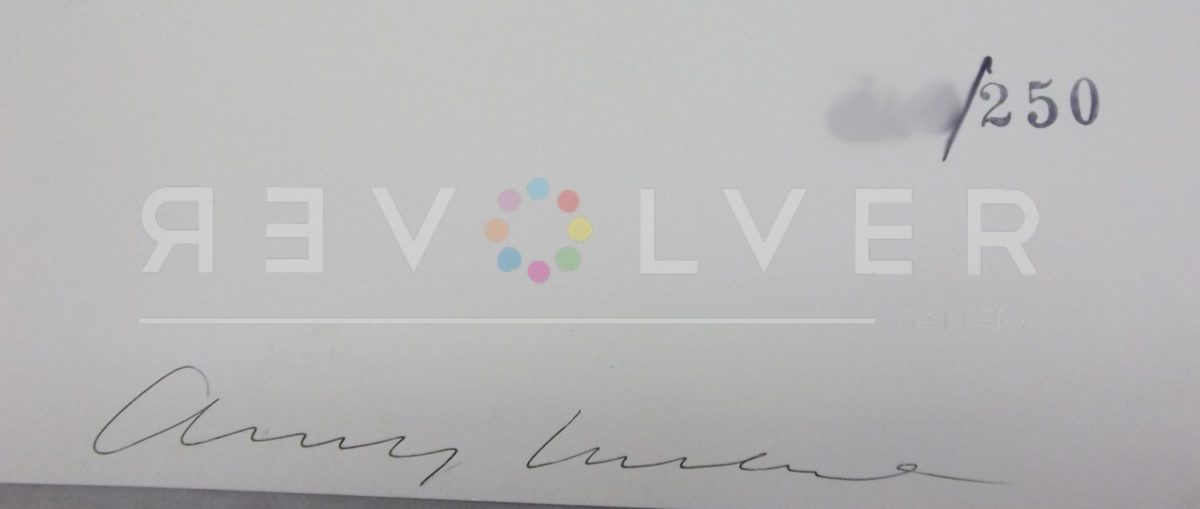
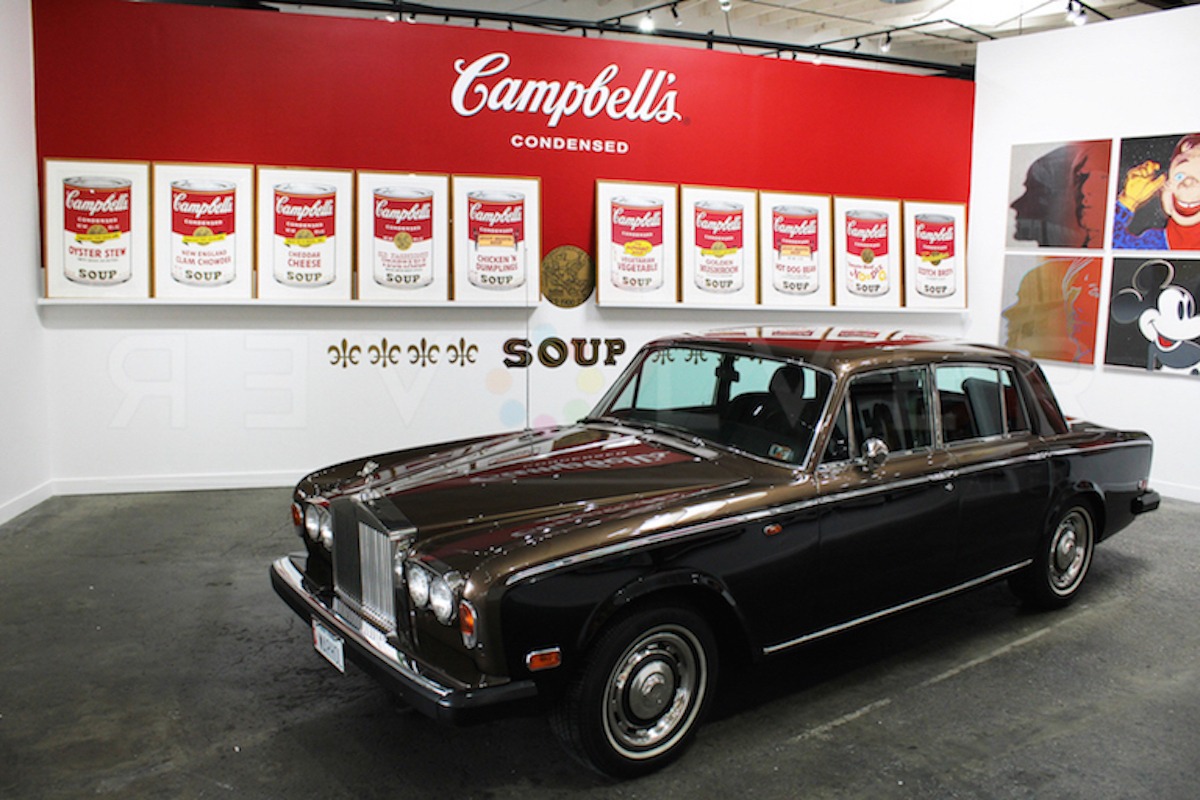
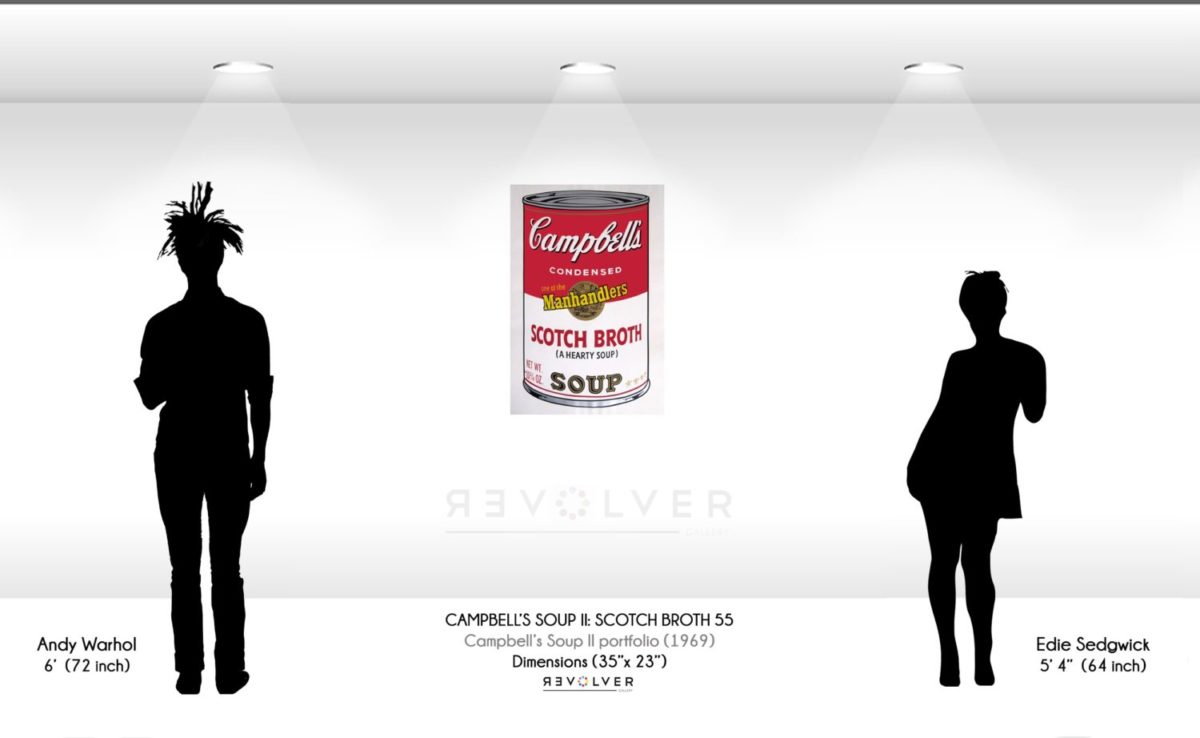
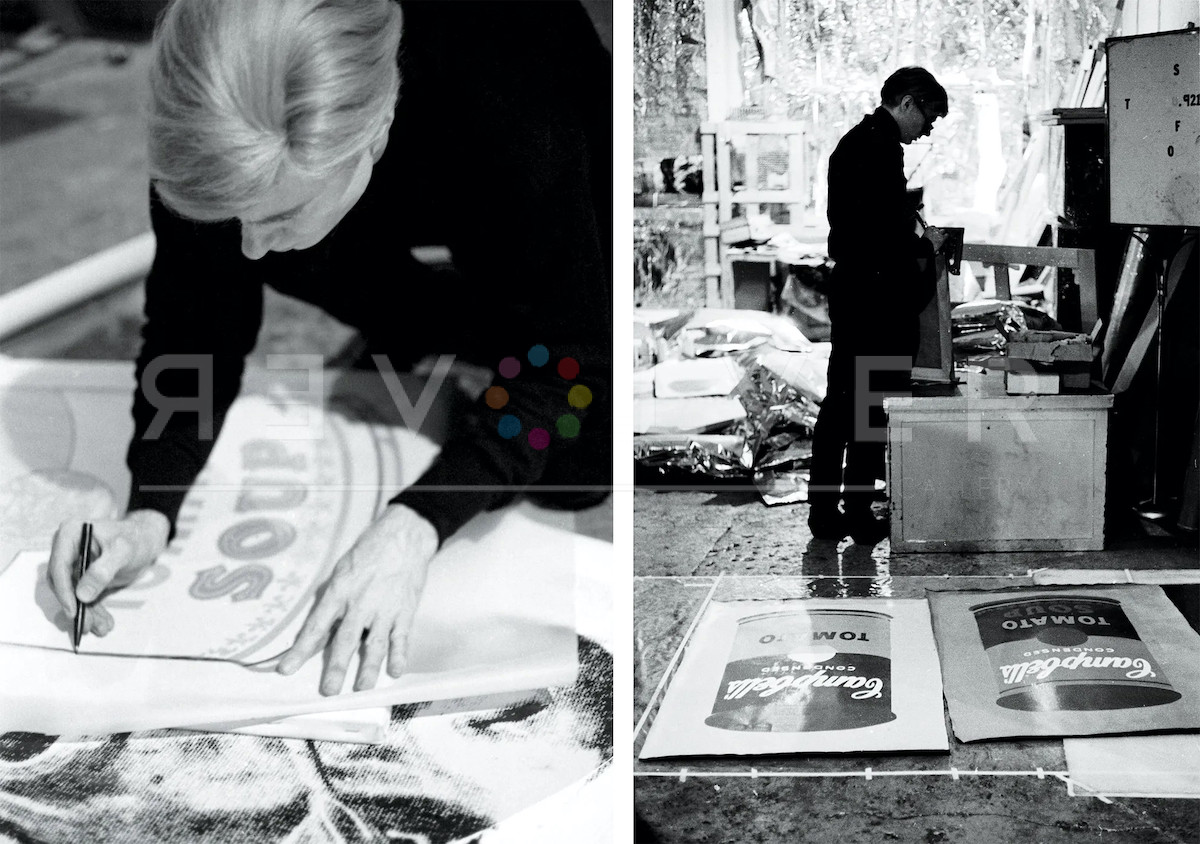
Campbell’s Soup Cans II: Scotch Broth 55 by Andy Warhol is one of ten prints from the 1969 Campbell’s Soup Cans II portfolio. These prints featured additional flavors the brand created. This series, which expands on his Campbell’s Soup Cans I prints from the previous year, is based on Warhol’s original 32 Campbell’s Soup Cans paintings from 1962. Warhol’s signature Pop Art soup cans took the art world by storm. The work exhibits his signature design techniques and philosophy concerning consumerism, advertising, and mass production. The Campbell’s Soup Cans II portfolio is one of Warhol’s most valuable print series of all time.
Although Warhol’s 1969 portfolio still presents the same familiar red and white design, Campbell’s Soup Cans II showcases ten additional Campbell’s flavors. This new collection of prints has the same trademark design, but with the addition of new graphics. In place of the traditional Campbell’s golden seal, the label on Scotch Broth 55 reads: “one of the Manhandlers: Scotch Broth (a hearty soup).” This design fits well into Warhol’s already existing soup creations, representing the furthest development from his original paintings, considering the additional illustrations.
Other works from this series include New England Clam Chowder 57, Hot Dog Bean 59, and Chicken N’ Dumplings 58. These unusual soups which Warhol included in his second series are all real flavors of Campbell’s Soup. Each soup can has its own unique label illustrations.
Prints like Campbell’s Soup Cans II: Scotch Broth 55 are some of the most iconic Pop Art works, serving as a symbol of consumer culture and advertisement. As a Pop Artist, Warhol created this famous design by appropriating an ordinary object and placing it in a new context, transforming it into a work of fine art. Warhol wanted to draw artistic attention to common items, which greatly fascinated him. With his Campbell’s Soup Cans, Warhol challenged ideas of what could be deemed socially and artistically acceptable.
Although the Campbell’s Soup cans are arguably some of his most notable works, Warhol’s first series, 32 Campbell’s Soup Cans, received quite a bit of controversy when first shown in 1962. The commercial subject matter confused many artists and critiques, who ridiculed Warhol for the series. Due to the unfamiliar subject matter of Warhol’s Soup Cans, some people questioned the significance of his work. Many decades after their debut, people still may debate the value of Warhol’s soup cans
Not only did Warhol have a clear fascination with consumerism, but he also expressed his personal connection to the company. “I used to drink it [Campbell’s Soup]. I used to have the same lunch every day, for twenty years, I guess, the same thing over and over again”. Warhol loved the soup, and was fascinated by the design’s success, which remained the same for years.
Campbell’s Soup Cans II: Scotch Broth 55 soon became a quintessential item of Pop Art history. The soups kickstarted the new art movement, and became icons of the art world. Still to this day, Warhol’s soup cans are extremely significant pieces of modern art history.
Photo Credits:
- Andy Warhol tracing Campbell’s Soup silkscreen, The Factory, New York City, circa 1965 © Estate of Nat Finkelstein © 2021 The Andy Warhol Foundation for the Visual Arts, Inc. / Licensed by DACS, London
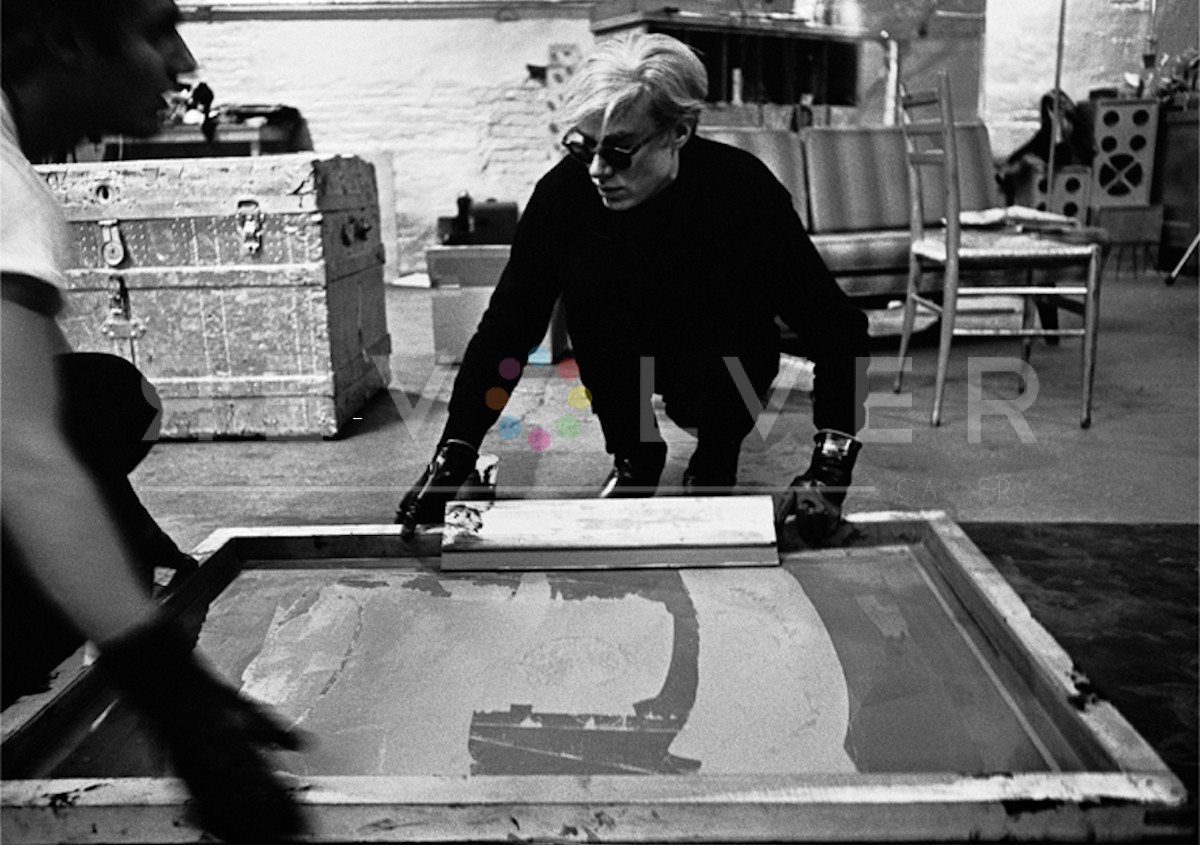
- Andy Warhol and Gerard Malanga make a painting, 1964. Vintage gelatin silver print, 10¼ × 14¾ inches; 26 × 38 cm. Photo by Matthew Marks.
- Andy Warhol, 1964. Vintage gelatin silver print, 10¼ × 14¾ inches; 26 × 38 cm. Photo by Matthew Marks.