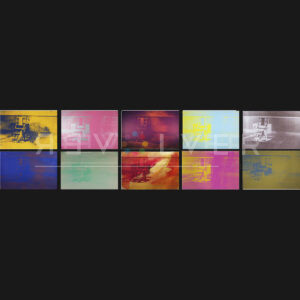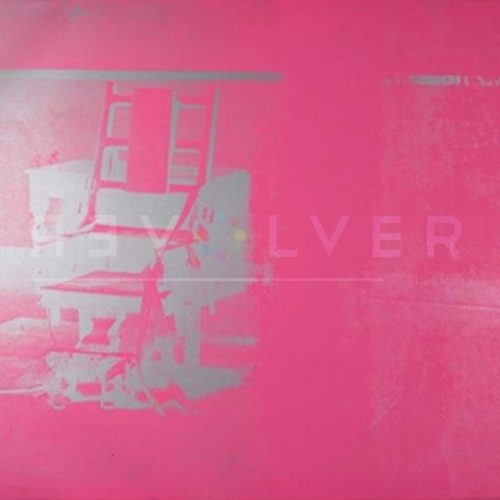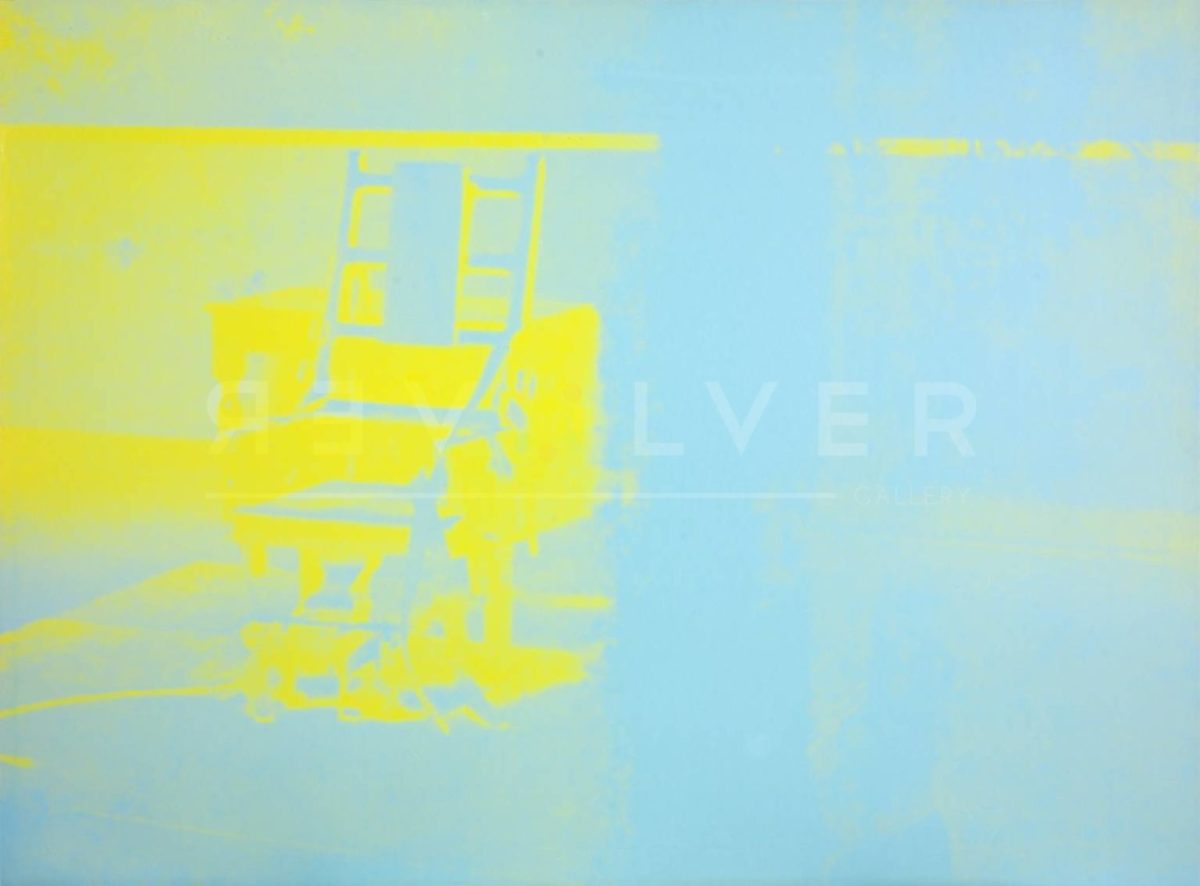
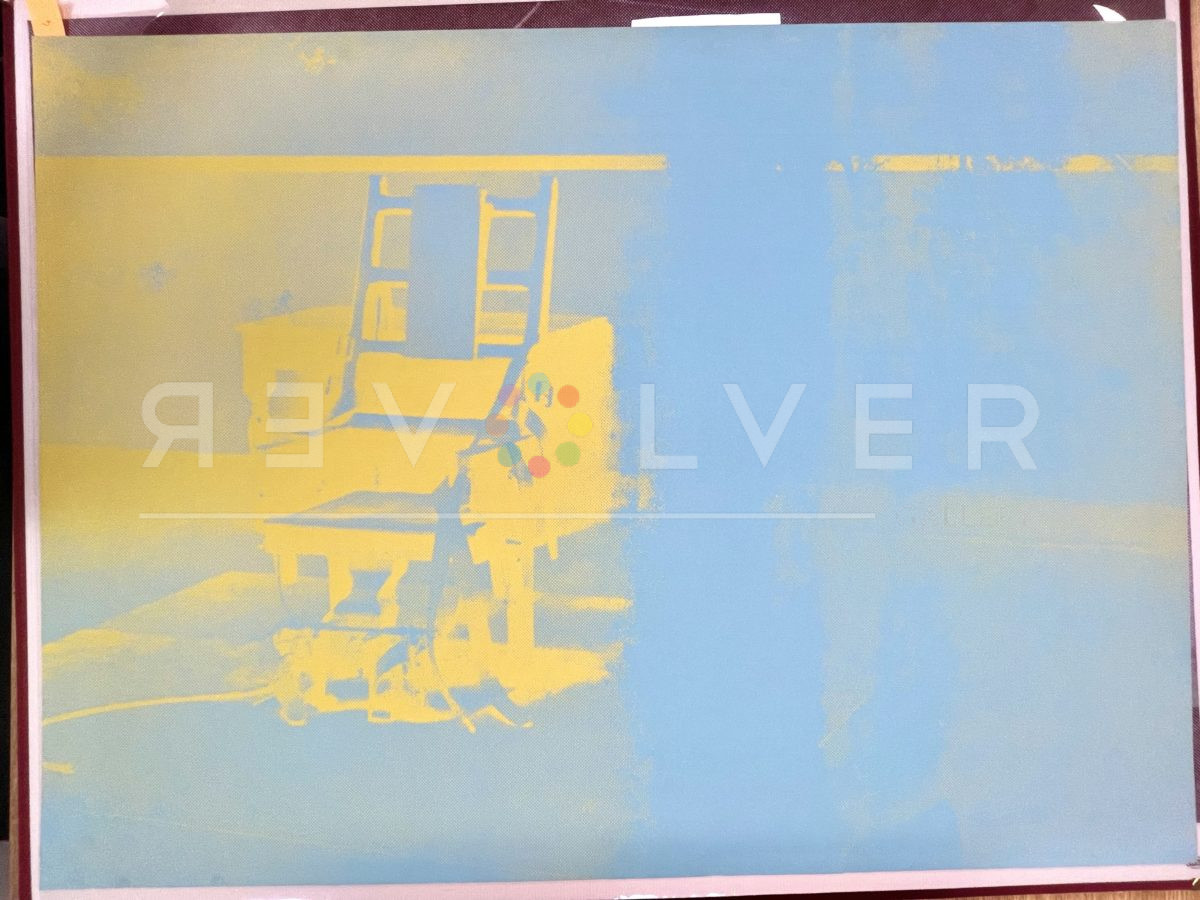
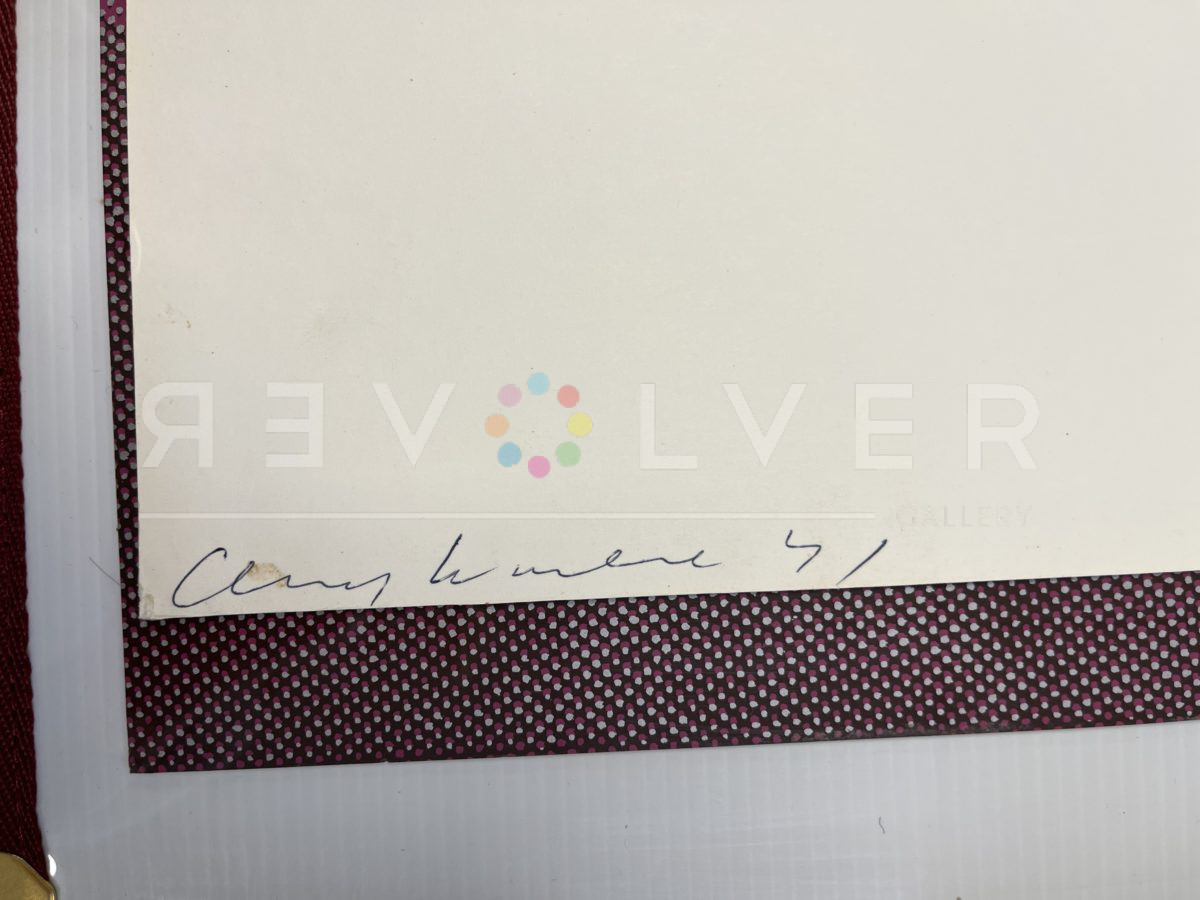
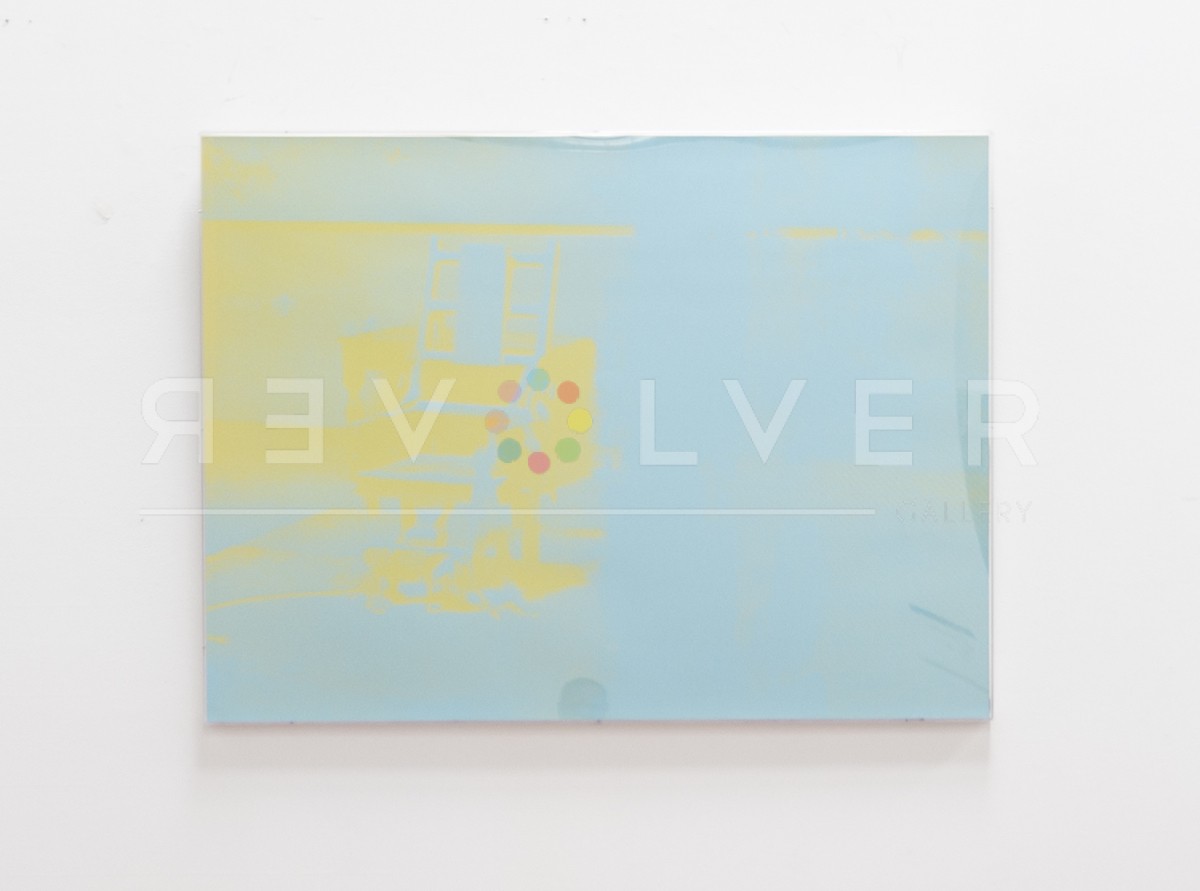
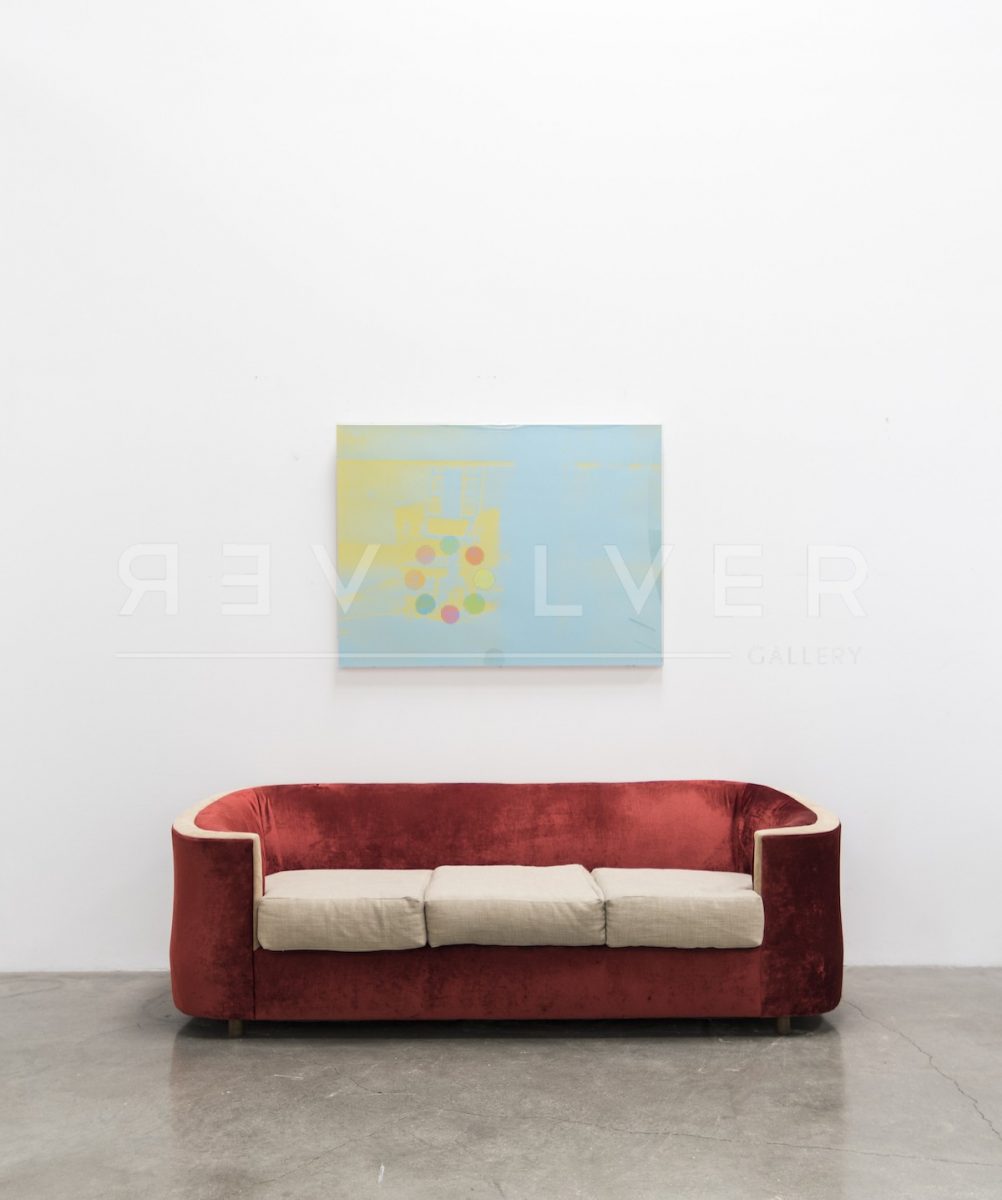
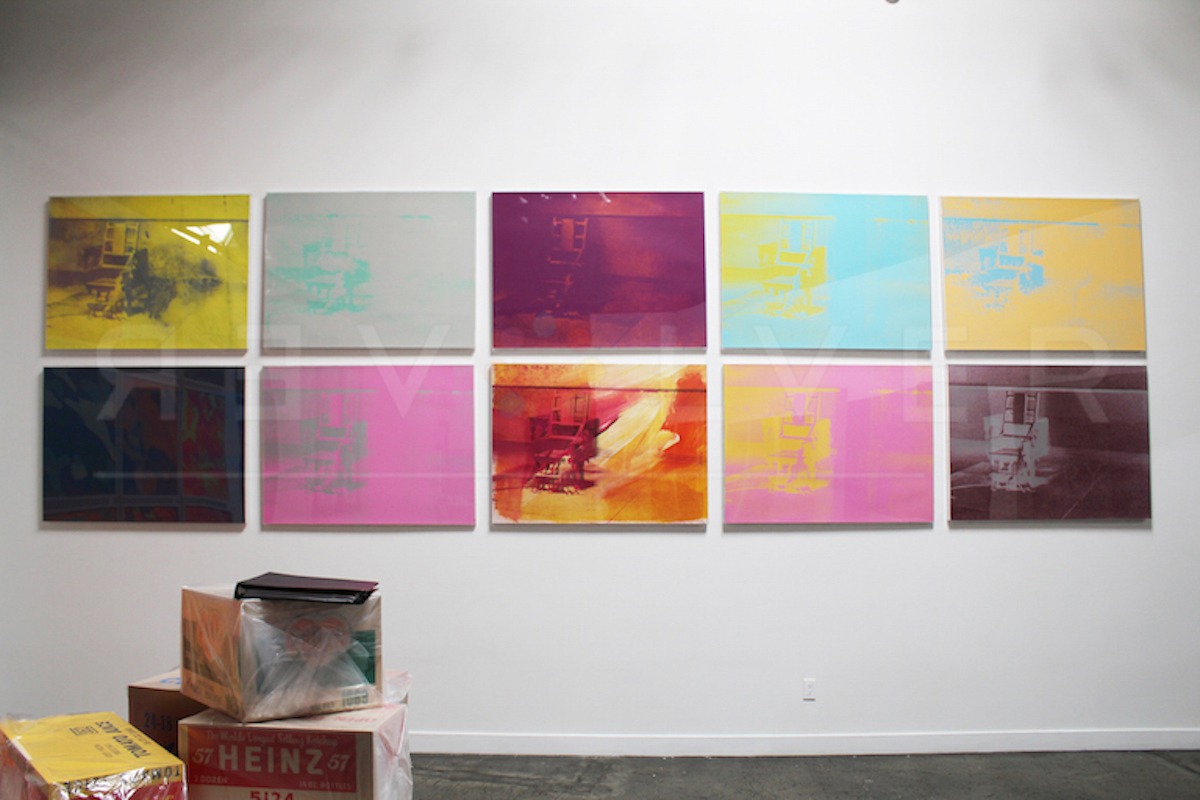
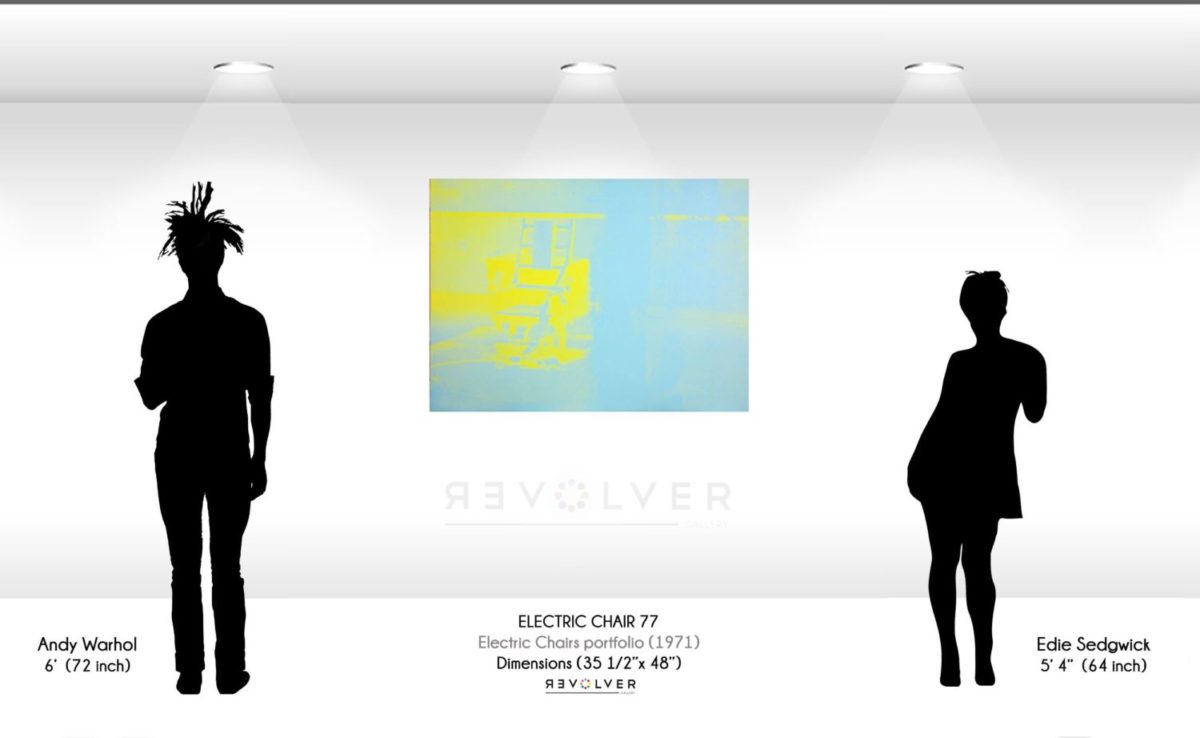
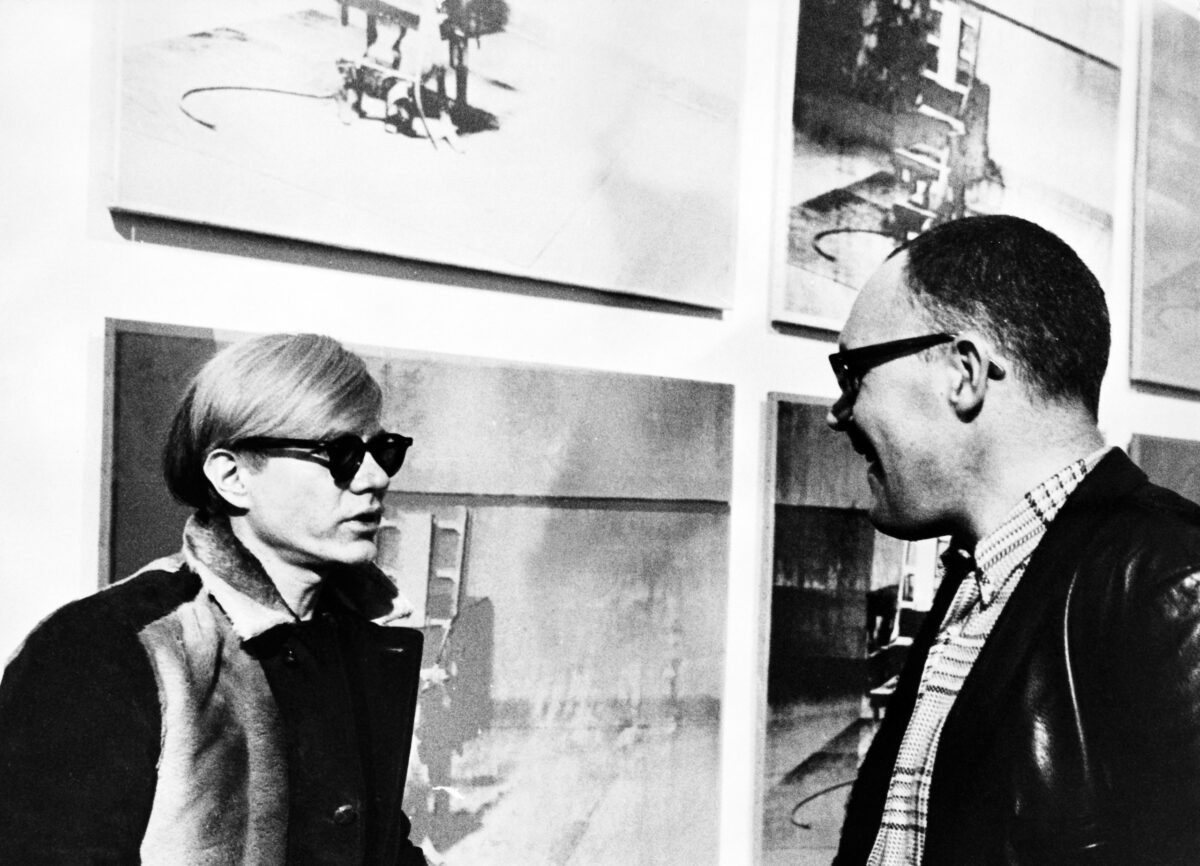
Electric Chair 77 is a work from Andy Warhol’s Electric Chair (1971) portfolio, which is included in his notorious Death and Disaster Series. Macabre themes became a staple in Warhol’s later work, especially after his attempted assassination by Valerie Solanas. But the Death and Disaster collection came earlier in Warhol’s career, and included some of the first prints to demonstrate the extent of his thematic range and lack of reservations about what he was willing to depict. The Electric Chairs portfolio from 1970 ranks amongst Warhol’s top 10 most valuable portfolios of all time.
The portfolio’s subject matter made controversy almost guaranteed. The debate around the death penalty reached its peak in the 1960s, and Warhol created his first Electric Chair image during the same year New York’s Sing Sing prison conducted its last two exectutions by electrocution. In Warhol’s typically irreverent style, Electric Chair 77 is ripe with social commentary. The print explores the presence of violence in our culture, and invokes the viewer’s consciousness of this relationship.
Society’s relationship with death fascinated Warhol, which he saw as a kind of obsession. “When you see a gruesome picture over and over again,” Warhol said, “it doesn’t really have any effect”. For Warhol, this desensitizing effect had a deep impact on our relationship with mortality. Violent images could still shock and provoke, as evidenced by the initial reception of the Electric Chair portfolio. But Warhol’s observations about desensitization spoke to more than an image’s capacity to scandalize.
Debates about capital punishment in the 1960s meant that American families constantly saw images of death in the news. Warhol’s ability to capture the defining images of the cultural moment made him uniquely capable of toying with this reality. The image of the electric chair, however grim, was as inseparable from American culture as the consumer products and celebrity imagery that existed on the surface.
The portfolio debuted at the height of controversy around the electric chair. The timing of Electric Chair all but guaranteed that it would be met with a scandalized reception. But Warhol was no stranger to controversy. The controversy the portfolio met resulted in a kind of immortalizing notoriety. The screenprint forces the viewer to confront the image of the chair itself. In its starkness, Warhol’s work is able to take a grim but certain aspect of American culture, and thereby challenges our culture’s relationship with violence.
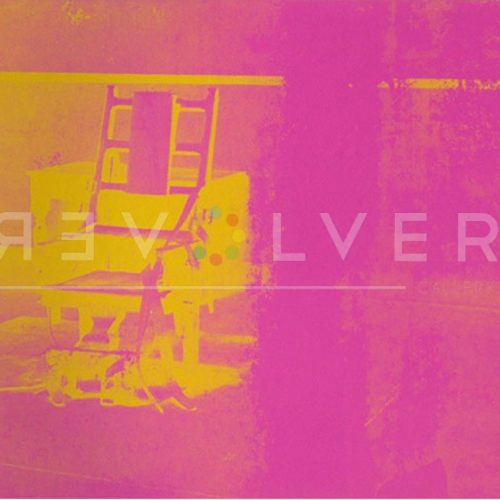
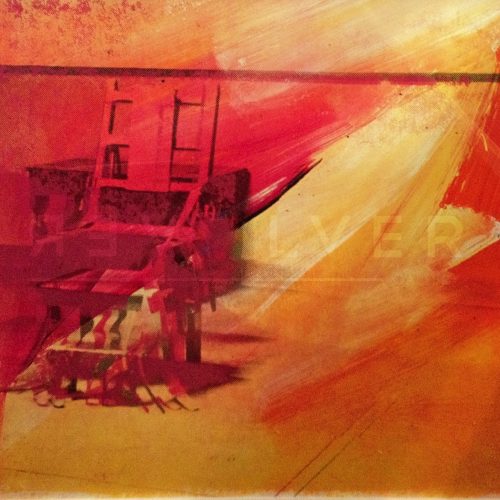
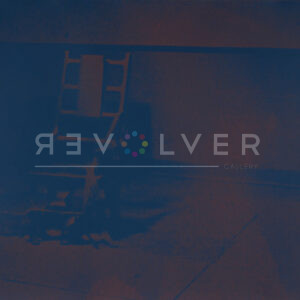
Electric Chair 77 uses bright, contrasting colors to bring the grim image to life with Warhol’s unmistakeable flair. The chair appears drowned out by the electric blue background, its outline recognizable by the loud contrasts of the yellow. The two clashing colors make the image impossible to ignore. The effect is eye-popping, and affects the viewer with a feeling often associated with images of disaster; the feeling of being unable to look away.