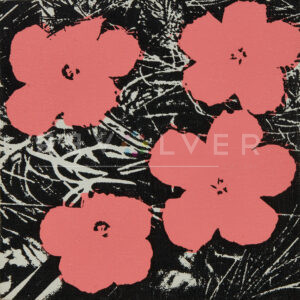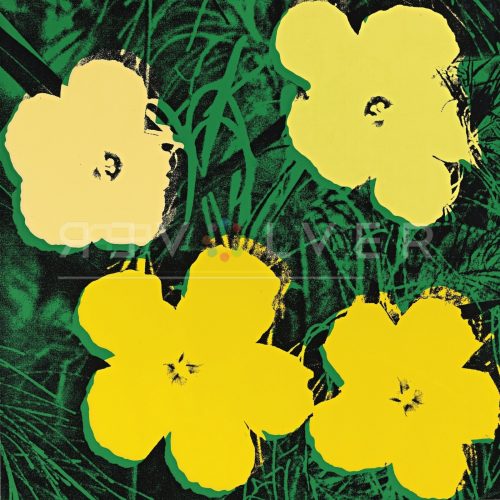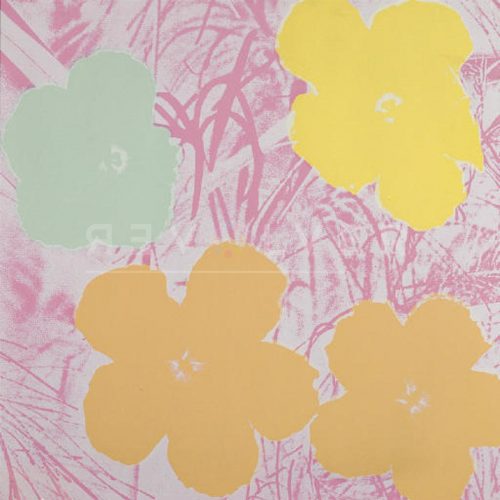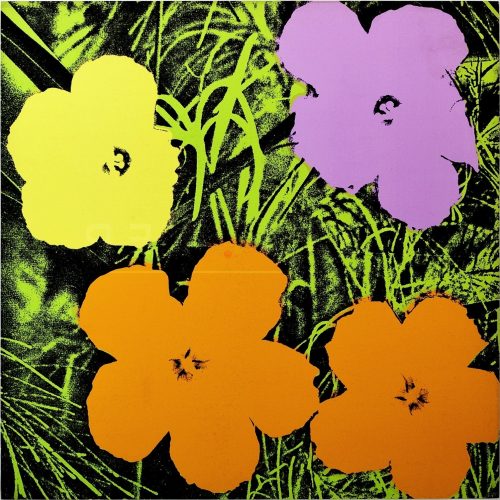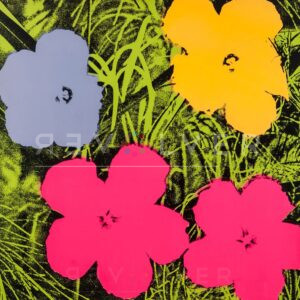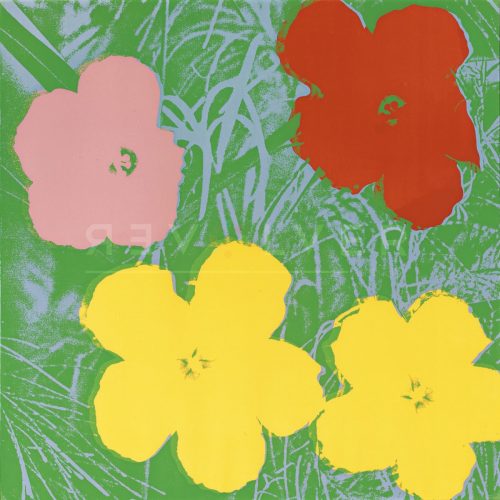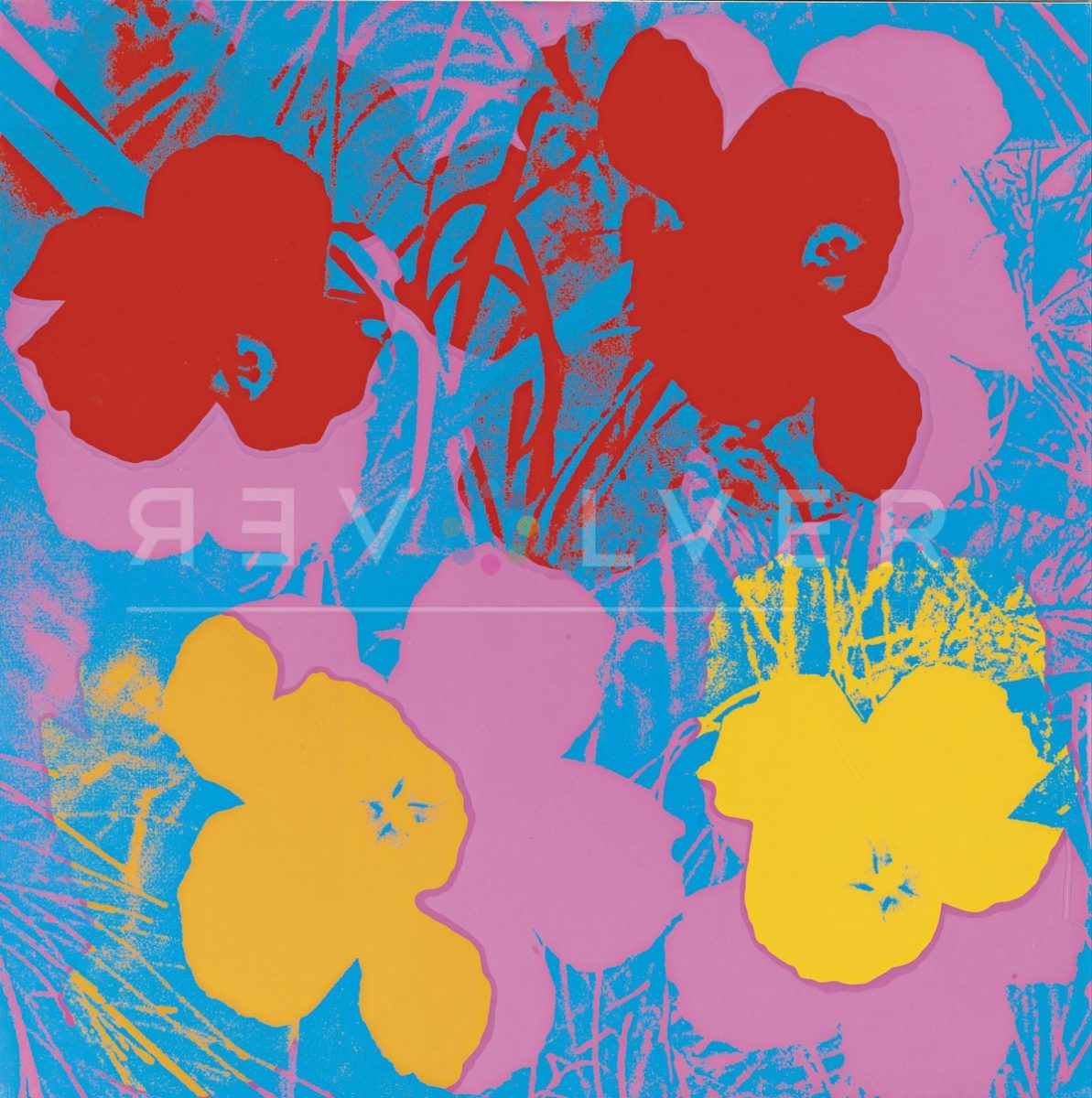
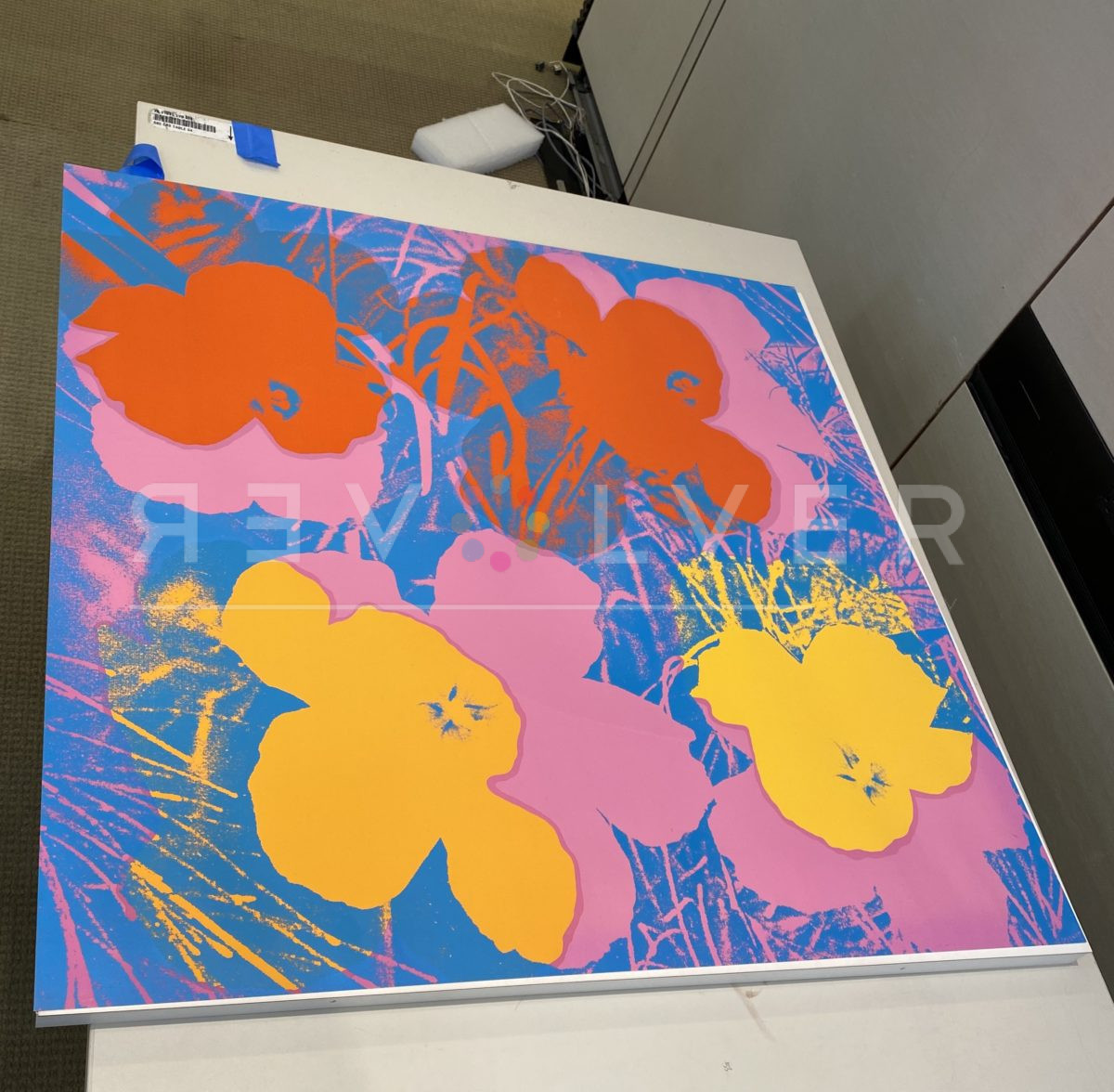
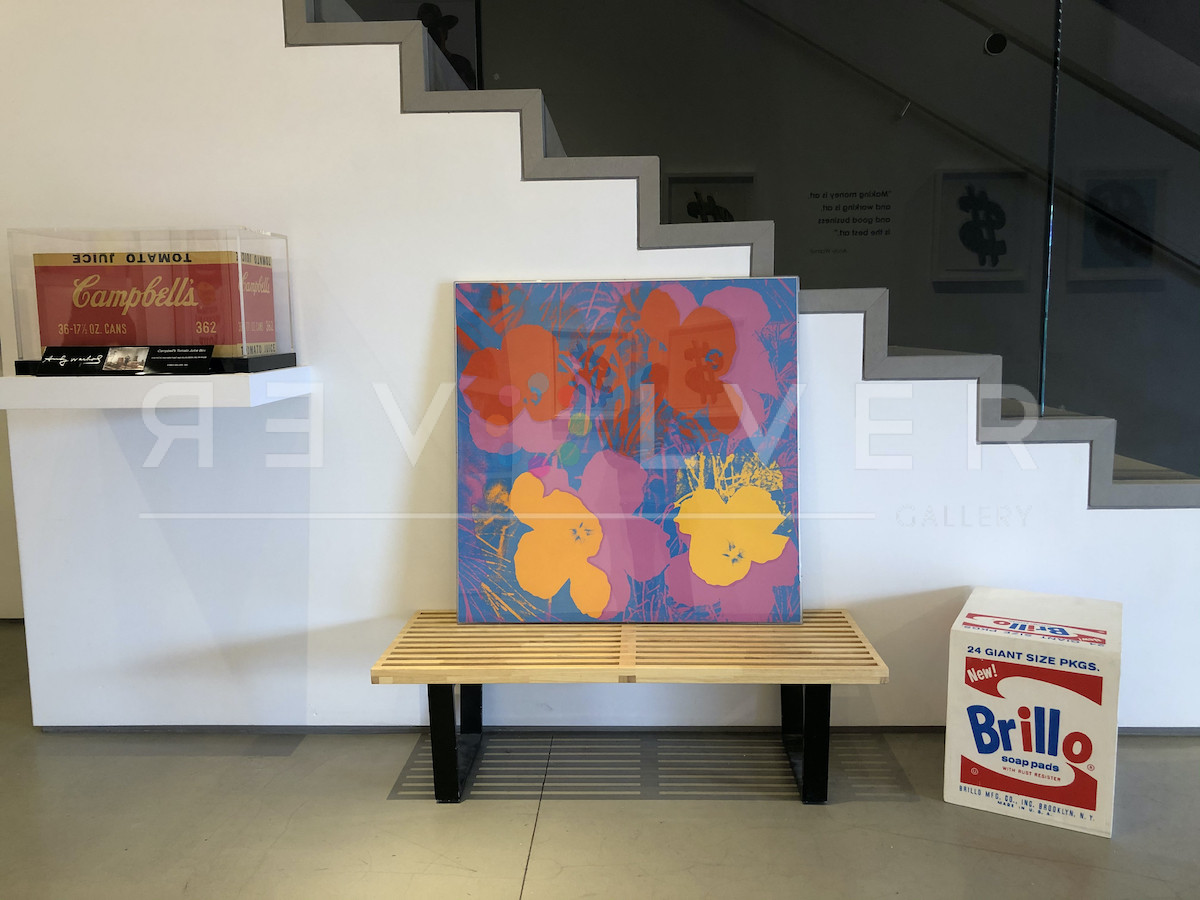
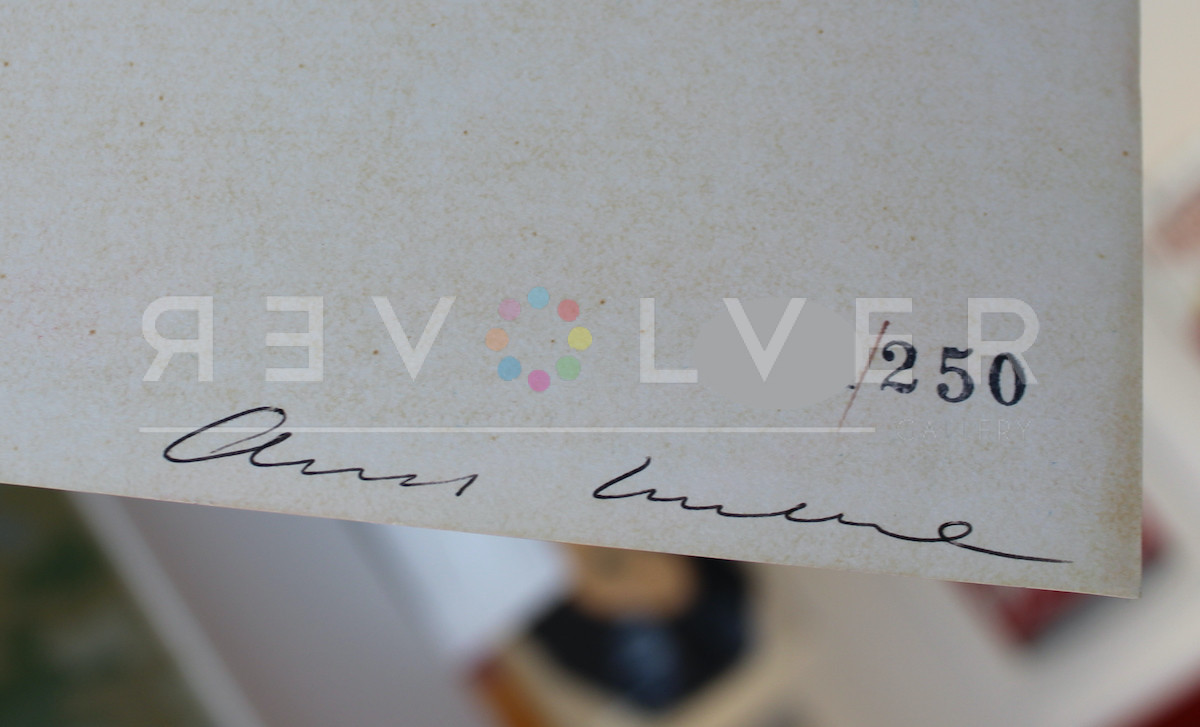
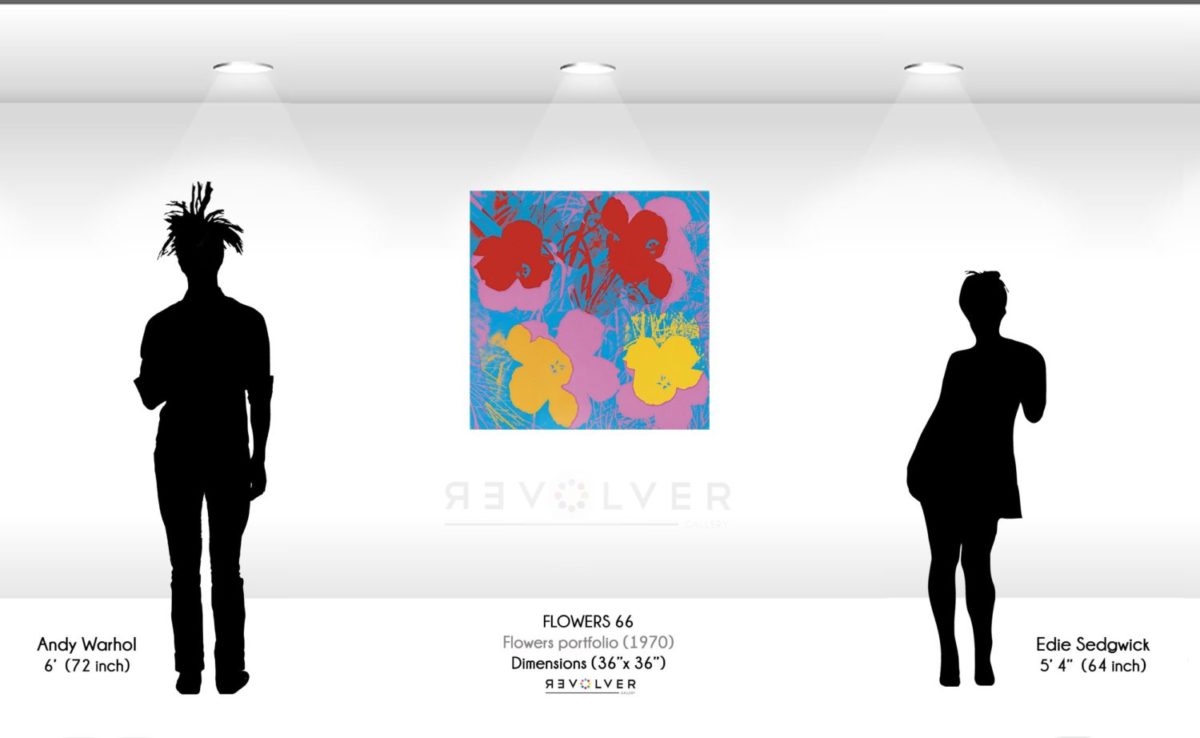
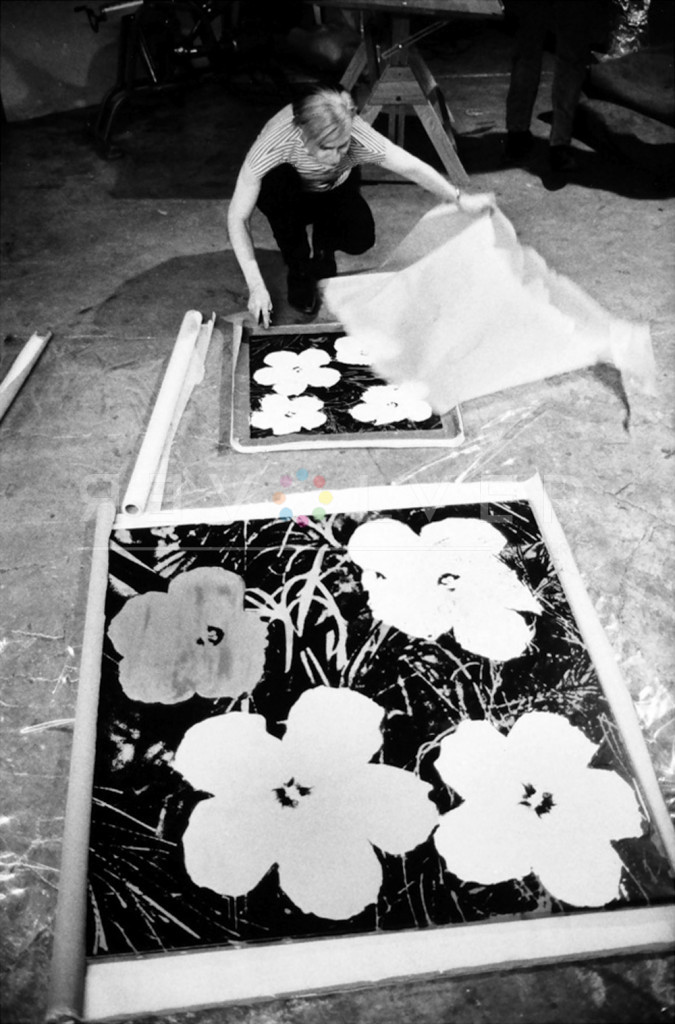
Flowers 66 by Andy Warhol is a screenprint from Warhol’s Flowers series, published in 1970. It is one of ten prints in the portfolio, and presents the hibiscus flower in high-contrast, psychedelic hues.
“I always notice flowers,” Warhol said in his 1988 book, Andy Warhol’s Party Book. Throughout his career, the artist’s fascination with the outside world fueled his drive to create. Consequently, the things that caught Warhol’s eye often appeared in his work in some shape or form. As a child who often had to stay home from school due to his struggles with the neurological disorder St. Vitus dance, Warhol consumed Hollywood magazines like cotton candy. His captivation with fame and stardom would lead him to create world-renowned portraits of icons like Mick Jagger, Muhammad Ali, Ingrid Bergman, and Queen Elizabeth, among others.
Flowers 66, however, showcases a different side of Warhol. At the time, he was famous for his astute ability to capture the popular culture of the present moment. However, more than anything, he enjoyed working with subjects he loved, even classic motifs like flowers. As in portfolios like Space Fruit and Sunset, Warhol changed course, taking a subject derived from nature and heightening its raw beauty. Simultaneously, the artist’s use of factory-style repetition and vivid, popping colors make this collection purely Warholian, and undeniably Pop.
First exhibited at the Leo Castelli gallery in 1964, Flowers would go on to become one of Warhol’s most popular portfolios. The image of hibiscus flowers taken by Patricia Caulfield originally appeared in an issue of Modern Photography. Two years later, Caulfield would sue Warhol when she discovered his appropriation of her photograph. The legal blow forced the artist to rethink his methods, causing his artwork to evolve. Above all, the experience played a major role in Warhol’s decision to use his own photography for future works.
In Flowers 66, Warhol holds nothing back. It could be argued that this specific print parades the artist at his most brazen, firing on all cylinders. Although he depicts a bucolic floral scene, Warhol strips the flowers of their identity. Like most subjects of Warhol’s, they are commercialized and made anew for our modern, consumerist world. Through this work, the artist postulates that even a traditional, oft-used subject in art like flowers can be souped up, bought and sold. Colors like red, pink, yellow, and blue clash together in the print, fusing the flowers and grasses into one Technicolor mass. Consequently, a sense of chaos pervades through the piece. The square 36×36 format adds to this effect as the work can be viewed from a variety of angles.
“In a funny way, he was kind of repeating the history of art,” Gerard Malanga explained. “It was like, now we’re doing my flower period! Like Monet’s water lilies, Van Gogh’s flowers”. In true Pop form, Warhol aimed to take familiar subjects and stretch their boundaries, leaving the viewer with a new interpretation of something they thought they knew. At the same time, he simply loved flowers and most likely wanted to leave his mark on the classic tradition. The layers at play in Flowers 66 demonstrate Warhol at his best, and he would continue to explore flowers in future portfolios like Flowers (Hand-Colored) and Flowers (Black and White).
Photo credit: Andy Warhol silk-screening Flowers, 1965-7. Photo by © Stephen Shore.