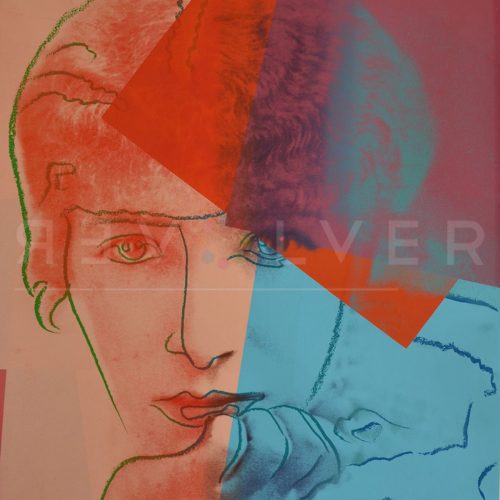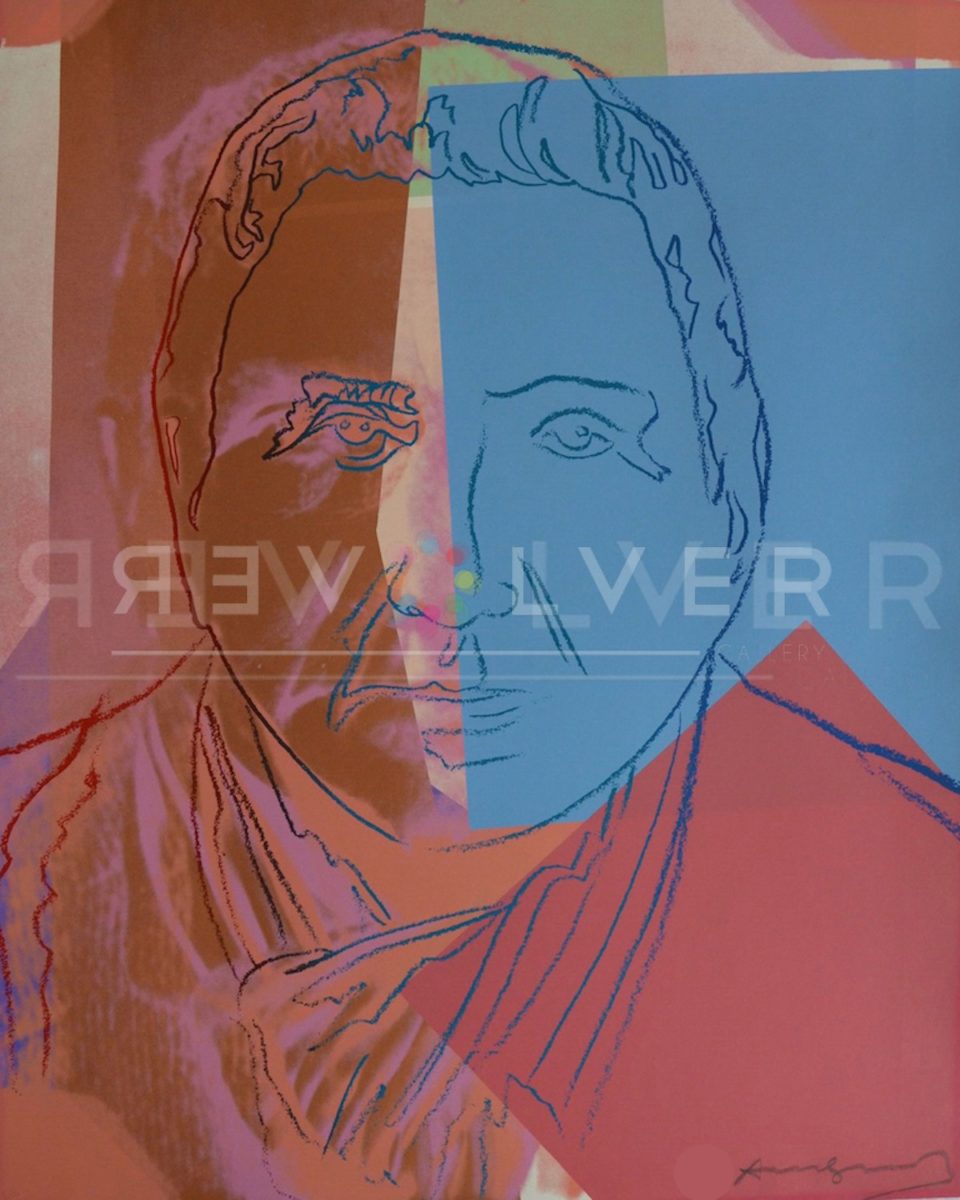
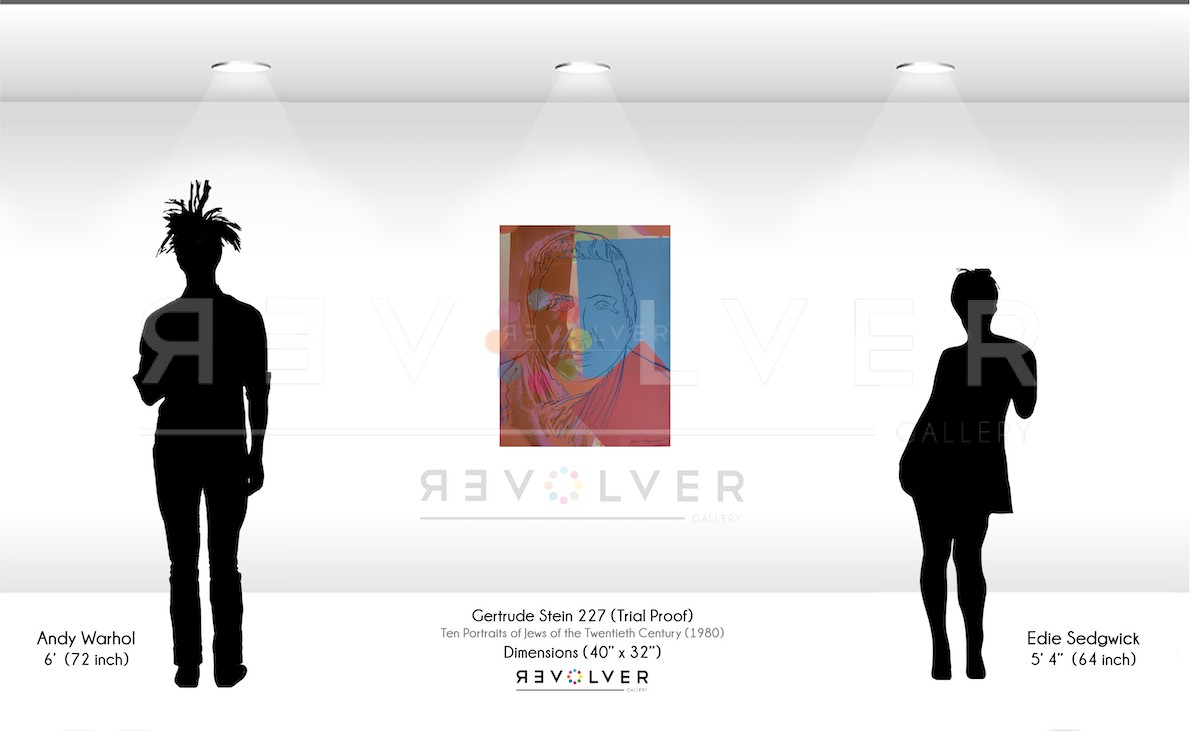
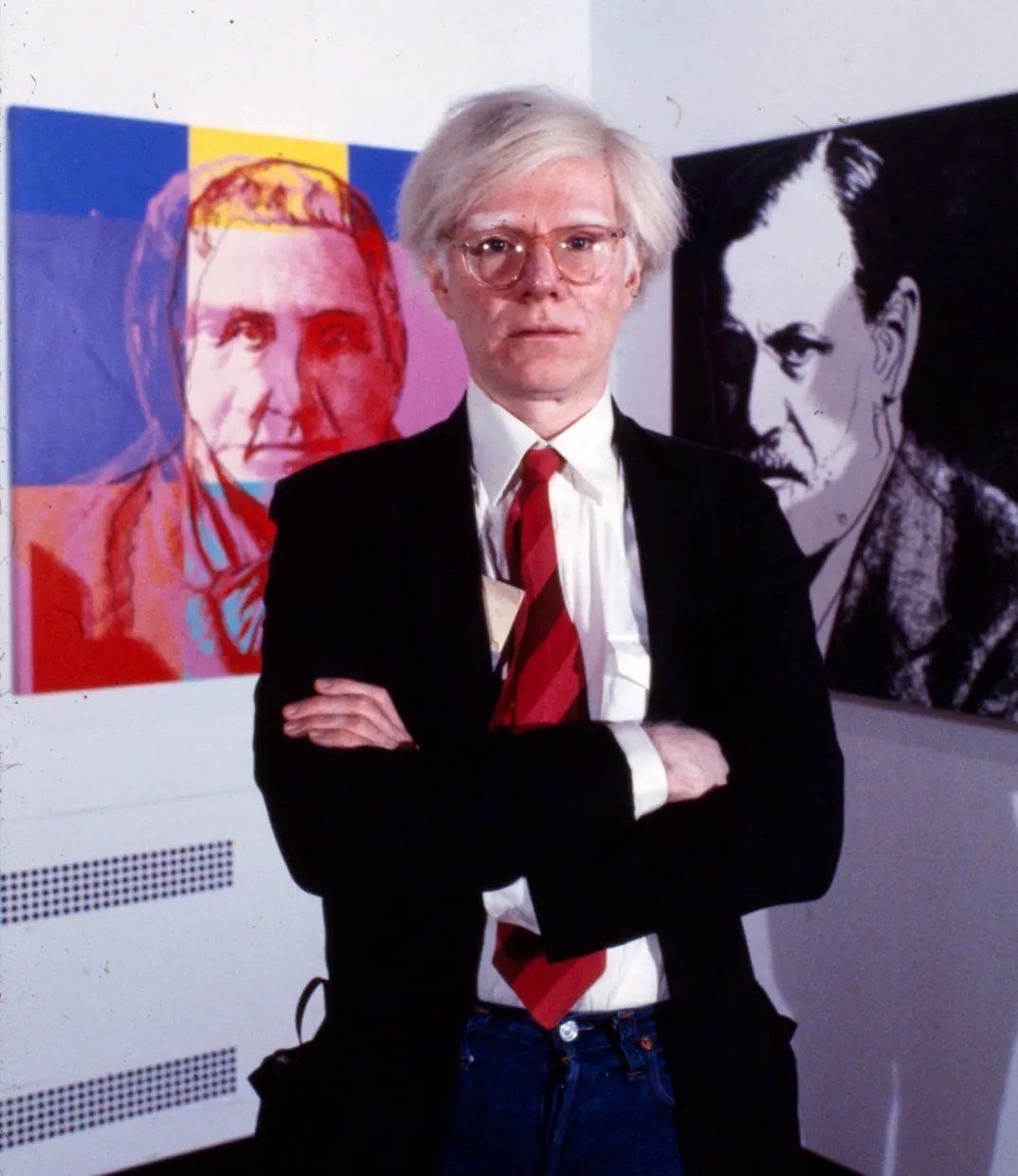
Gertrude Stein, the influence behind Warhol’s Gertrude Stein 227, was an American writer of novels, poetry and plays that eschewed the narrative, linear, and temporal conventions of 19th-century literature. Stein was also known to be a fervent collector of Modernist art. She was born in West Allegheny Pittsburgh, Pennsylvania, raised in Oakland, California. She moved to Paris in 1903, making France her home for the remainder of her life. For some forty years, the Stein home at 27 Rue de Fleurus on the Left Bank of Paris was a renowned Saturday evening gathering place for both expatriate American artists and writers and others noteworthy in the world of vanguard arts and letters, most notably Pablo Picasso. Entrance into the Stein salon was a sought-after validation, and Stein became combination mentor, critic, and guru to those who gathered around her, including Ernest Hemingway who described the salon in A Moveable Feast.
Gertrude Stein 227 as Part of Andy Warhol’s Larger Body of Work
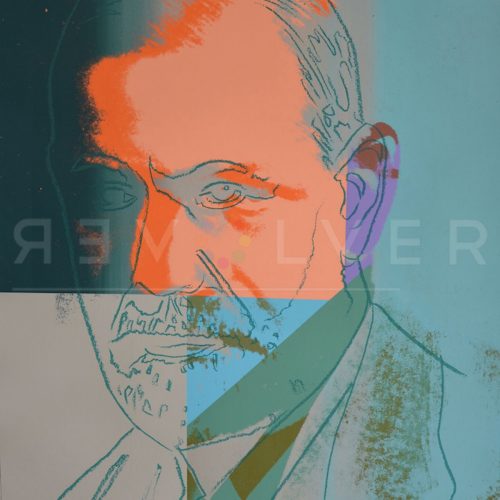
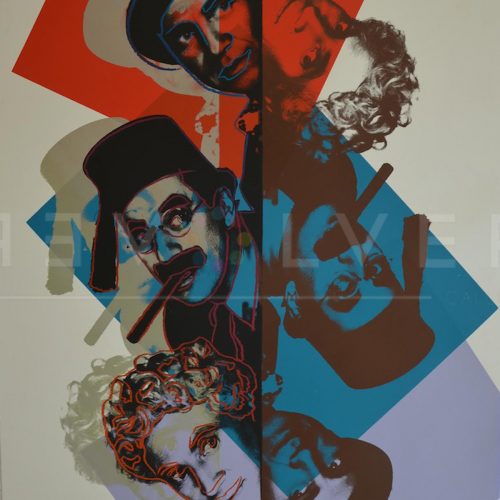
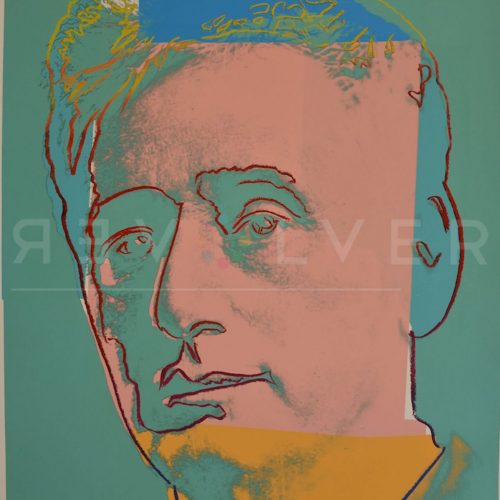
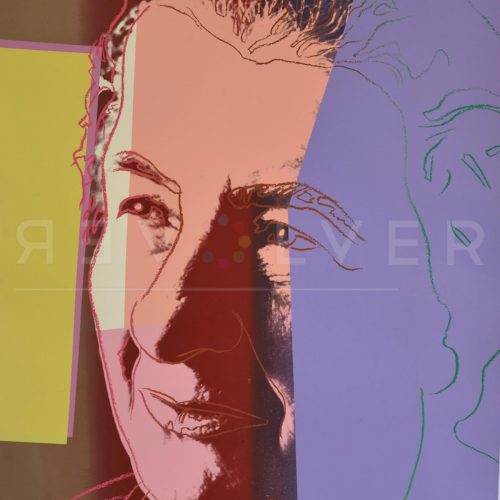
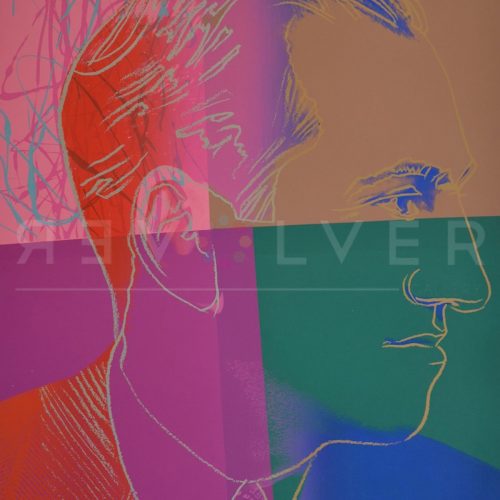
Gertrude Stein 227 is a part of Warhol’s Ten Portraits of Jews of the 20th Century. Warhol was prolific in his works depicting celebrities and was well known for his fascination with fame. It is noted that Warhol’s portraiture tends to reveal only the surface of a subject, just their image. In this series of portraits, the type of celebrity Warhol deals with is not so glamorous or typical of his usual pick of movie or rock stars. Each portrait is of a very influential figure in either the arts, sciences, or law.