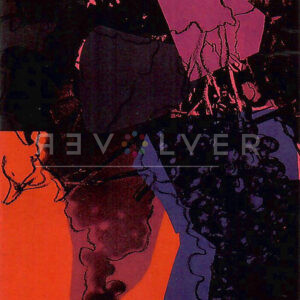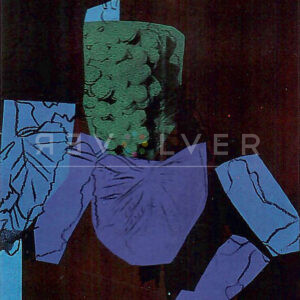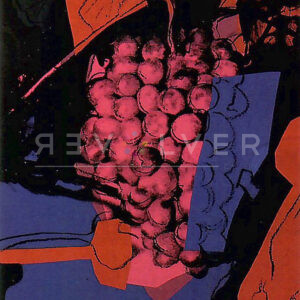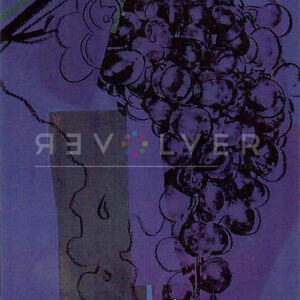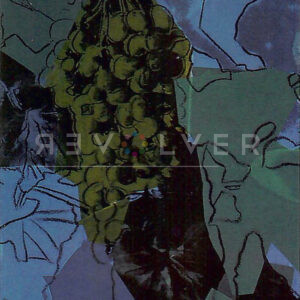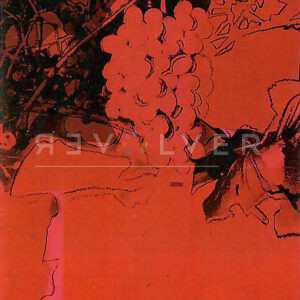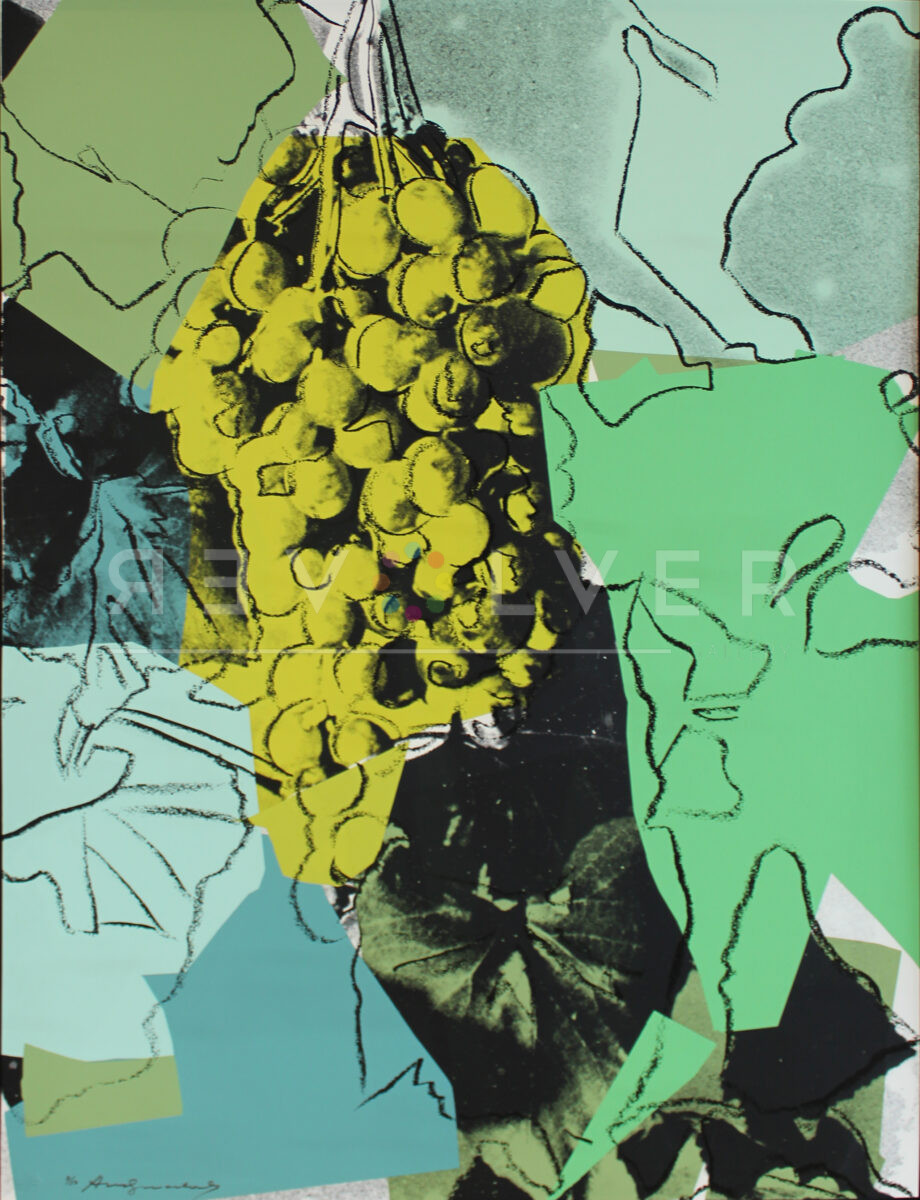
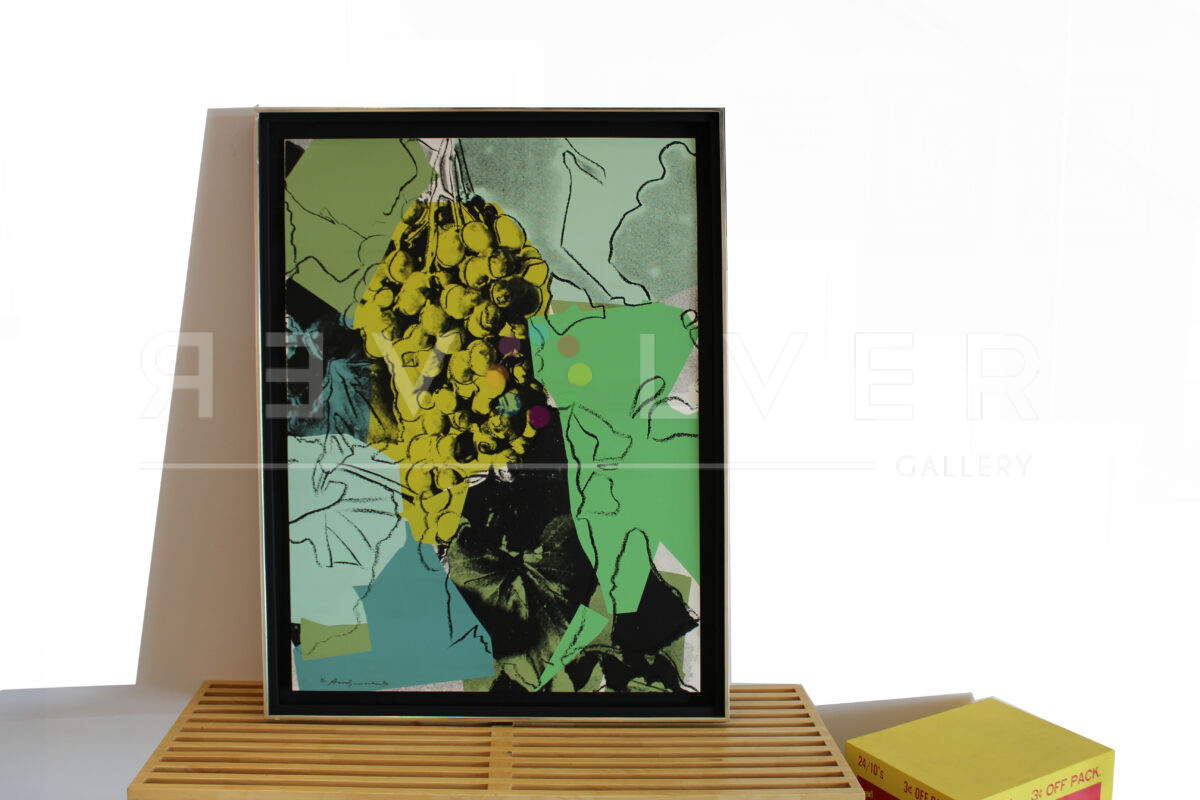
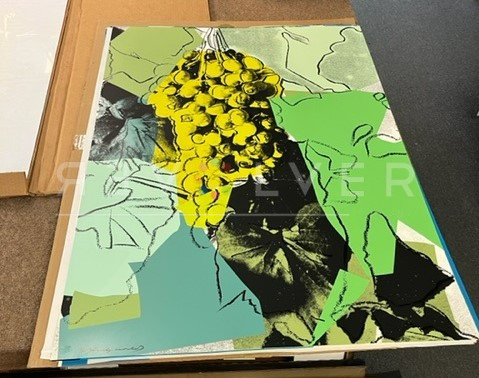
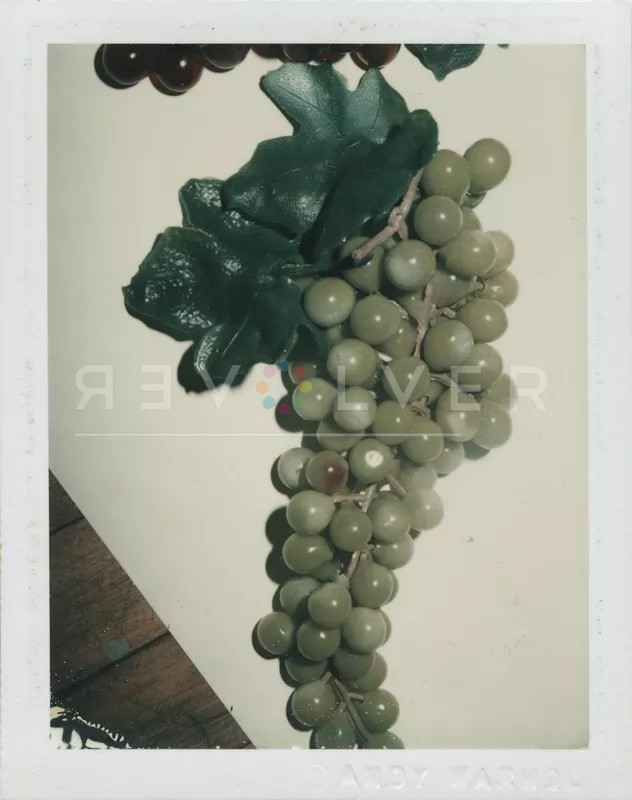
Grapes 191 is a remarkable screen print from the Grapes series which Andy Warhol created in 1979. The print showcases the artist’s innovative approach to the still life genre, featuring a bunch of grapes surrounded by grape leaves. The striking palette of green hues adds an abstract and dynamic feel to the composition, while highlighting vegetal aspects of the fruit. The use of black hand-drawn gestural lines further enhances the print, giving it a sketch-like quality reminiscent of Warhol’s early career as a commercial illustrator.
In Grapes 191, Warhol masterfully experiments with form, composition, and color, subverting expectations of traditional still life drawings. The fragmentation and abstraction in this print, along with the use of vibrant greens and yellow hues, elevate the subject of fruit to an iconic Pop Art representation. The central focus on the yellow-green grapes creates a captivating contrast against the backdrop of darker and lighter green and gray tones, making them visually arresting elements within the composition.
The influence of collage techniques is evident in the layering of block colors and the incorporation of black gestural lines to outline the grapes and leaves. Warhol’s tendency to incorporate collage-like textures began earlier in the decade, with works like Mick Jagger and Ladies and Gentlemen. This artistic approach adds depth and complexity to the print, infusing it with a sense of energy and movement. As one of six prints in the Grapes series, this artwork exemplifies Warhol’s fascination with experimenting with color and shape to deconstruct familiar objects and transform them into visually intriguing works of art.
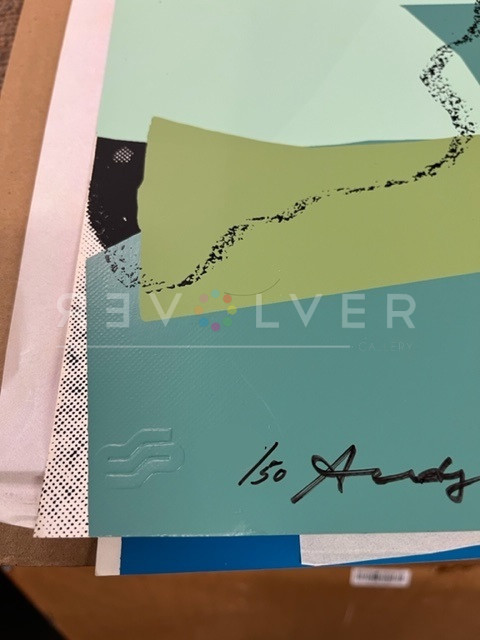
Warhol’s signature, at the bottom right in black felt-tip pen, adds a final touch to the composition, underscoring the authenticity of the artwork. Grapes 191 stands as a testament to Warhol’s ability to push artistic boundaries and breathe new life into traditional subjects. His dynamic and abstracted portrayal of grapes and leaves captivates the viewer, leaving them with a fresh perspective on the age-old theme of still life. With this print, Warhol adds another iconic piece to his oeuvre, solidifying his place as a trailblazer in the world of contemporary art.