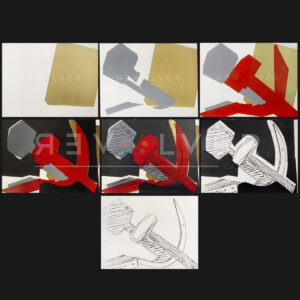
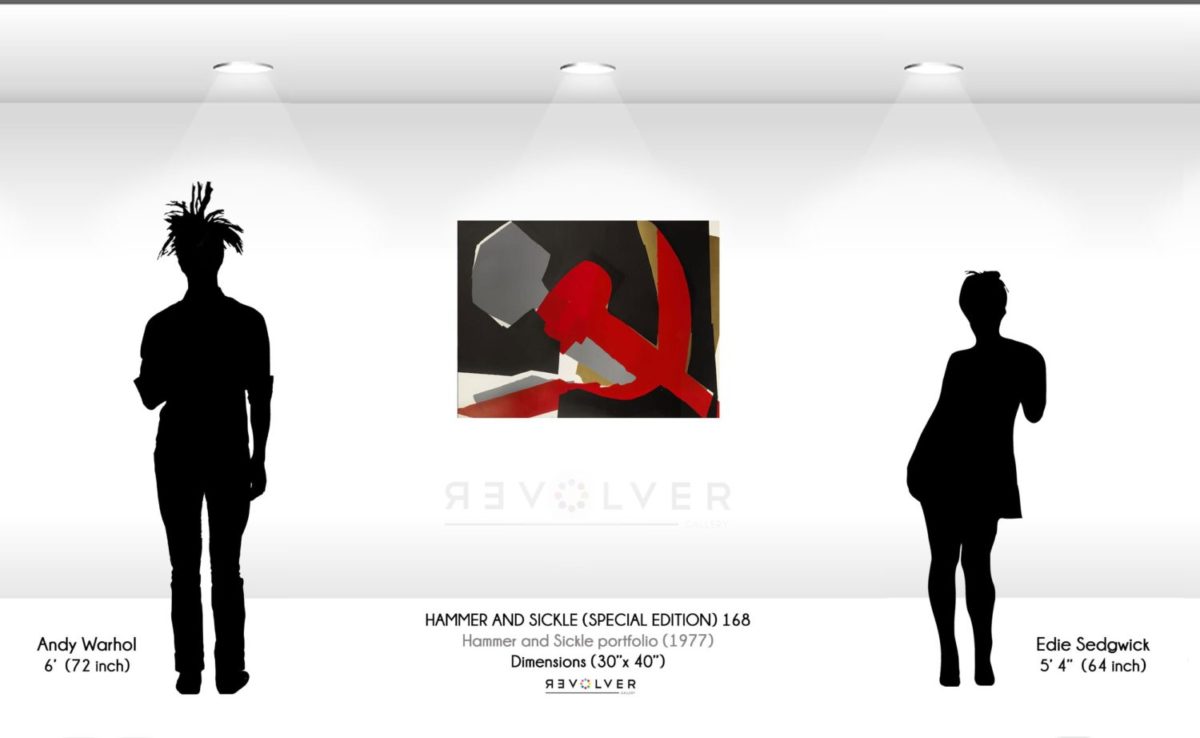
Hammer and Sickle (Special Edition) 168 is the fourth of seven prints in Andy Warhol’s 1977 Hammer and Sickle (Special Edition) portfolio. This series breaks down the printing progression of Warhol’s 1977 acclaimed Hammer and Sickle portfolio into seven prints of the different screenprinting layers. Warhol was inspired to create the original four prints of the Hammer and Sickle portfolio upon observing communist graffiti on the streets of Italy. By the time that Warhol discovered the graffiti, serious Communist strongholds in Italy had greatly diminished. Warhol believed that in the graffiti he saw, the hammer and sickle had become less tied to the original communist symbolism—in which the hammer and sickle represented the union of industrial and agricultural workers—and had become almost apolitical symbols of a particular facet of pop culture.
Warhol himself was not a Communist, though the media thought him to be one and often inquired about his political beliefs. Following an interview in which he was asked about his relationship with communism, Warhol told his friend Bob Colacello, “Maybe I should do real Communist paintings next. They would sell a lot in Italy.” This offhand comment demonstrates the way that Warhol aimed to divorce imagery from its meaning with this series.
For the original Hammer and Sickle series, Warhol instructed assistant Ronnie Cutrone to locate source images for the prints. Although Cutrone scoured communist bookstores in New York City, Warhol was dissatisfied by the flatness of the reproductions Cutrone found. In Soviet history books and on flags, the hammer and sickle were two-dimensional and stylized into simple icons. In the end, he asked Cutrone to purchase a hammer and sickle and photograph them in different positions. Warhol then used these photographs as the source images for his own sketches for the Hammer and Sickle portfolio.
Warhol exhibited the portfolio in 1977 under the fitting title Still Lifes at the Castelli Gallery in New York City. This title purposefully omits any reference to communism or the hammer and sickle, and instead emphasizes Warhol’s painstaking attention to the more concrete details of the hammer and sickle’s physicality.
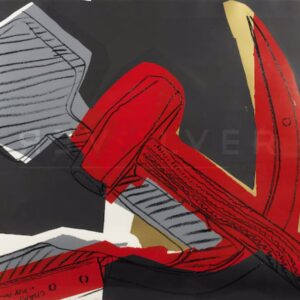
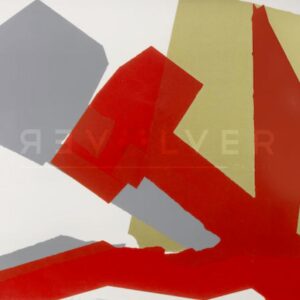
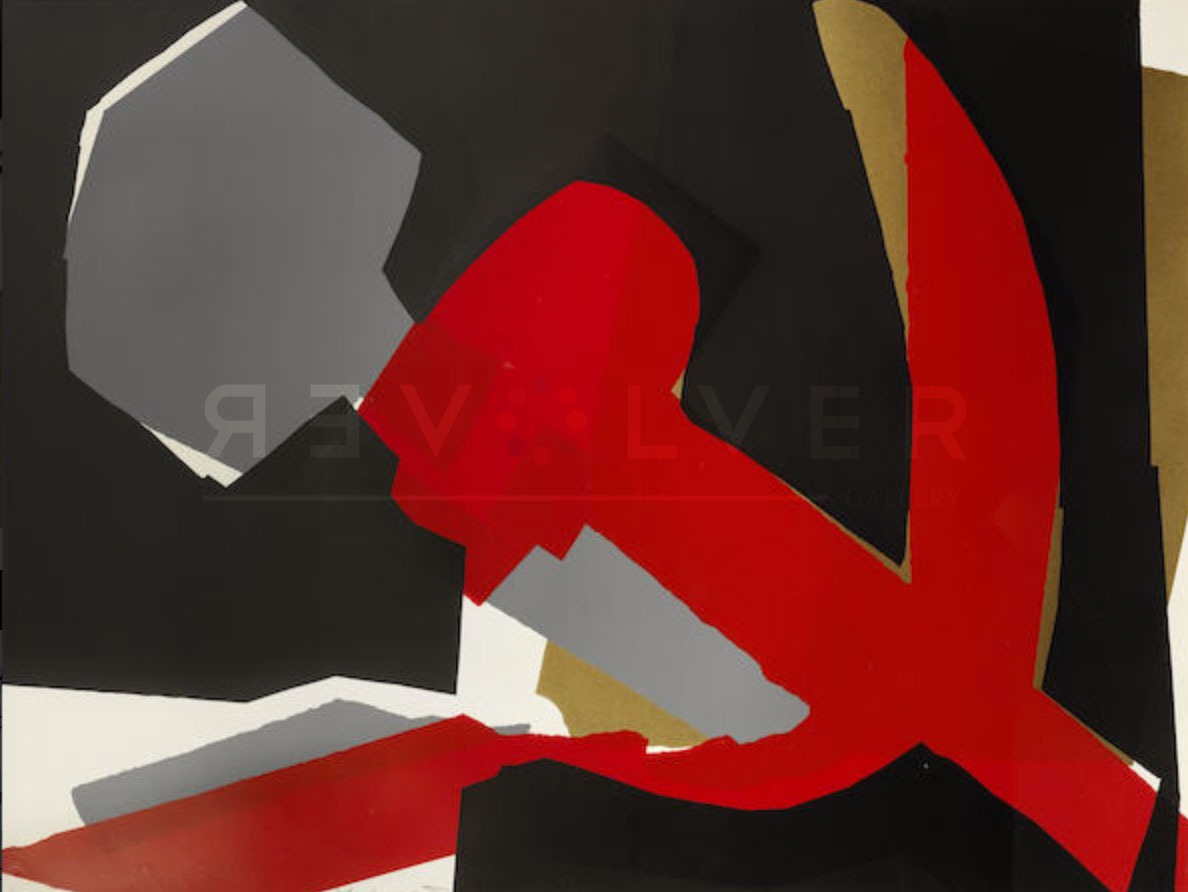
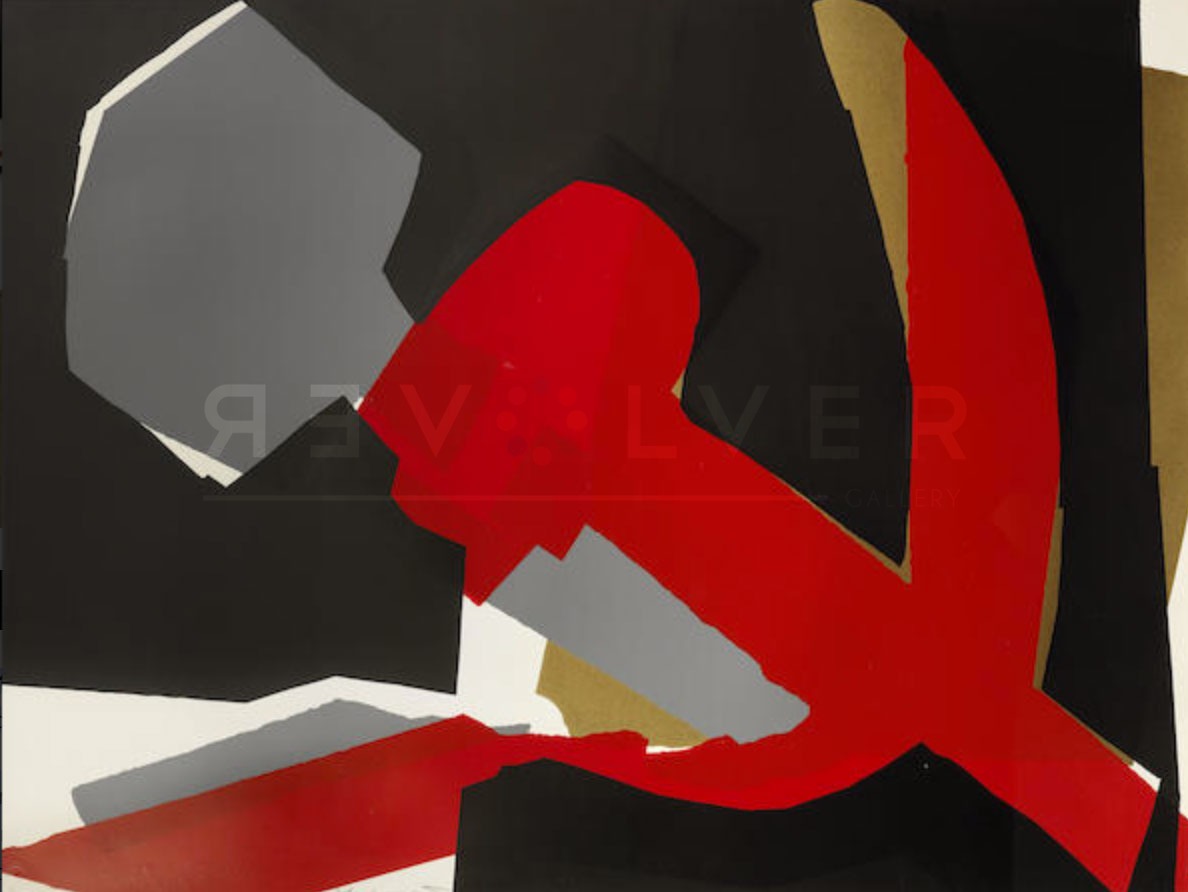
Warhol makes an even greater effort to decontextualize the hammer and sickle with his Hammer and Sickle (Special Edition) portfolio. By illustrating the printing progression of Hammer and Sickle in his Special Edition portfolio, Warhol breaks down both artistic practice and symbolic meaning. In Hammer and Sickle (Special Edition) 168, only the shapes of the screenprint are present. Against a black background, swatches of red, gray, and gold block out the rough shape of the hammer and sickle. The flatness of the red swatch nearly transforms this piece back into the true two-dimensional Communist symbol.
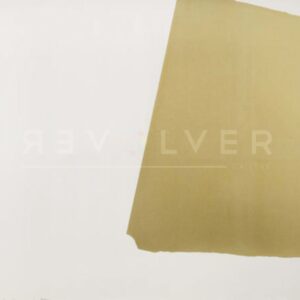
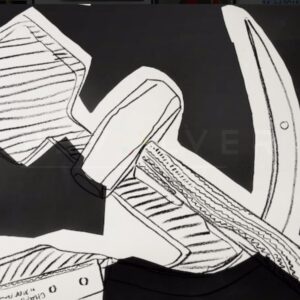
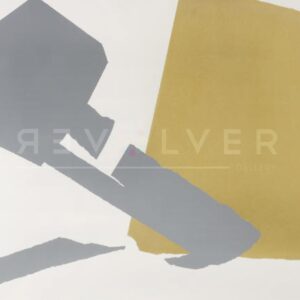
As the fourth print in the portfolio, 168 shows an incomplete version of the final print. Hammer and Sickle (Special Edition) 165 through 168 each show the layering of color blocks necessary to the screenprinting process, beginning with gold, and adding silver, red, and eventually black. In 169, Warhol includes all color blocks and the sketching to show a complete composition. In 170 and 171, he removes the color blocking, first leaving just a black backdrop in 170 and finally leaving just a sketch against a white background in 171.
With the Special Edition portfolio, Warhol dances on the fine line between art and propaganda and analyzes his own artistic practices and the way we attach meaning to symbols. In Hammer and Sickle (Special Edition) 168, Warhol constructs and deconstructs the iconic symbol before our very eyes.
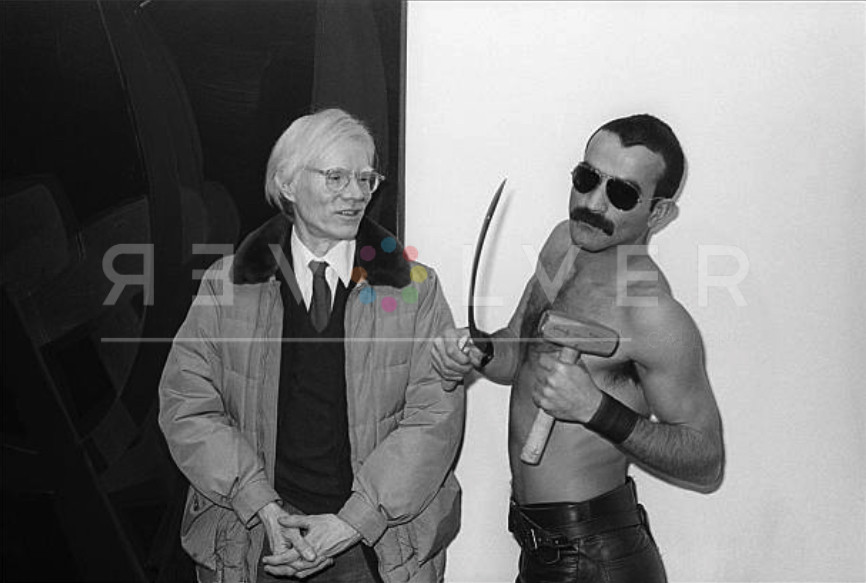
Photo credit: Andy Warhol poses with Victor Hugo, who holds the original hammer and sickle artist used in the works, at the opening of his “Hammer & Sickle” show at the Castelli Gallery, New York, New York, January 11, 1977. Photo by Allan Tannenbaum/Getty Images.