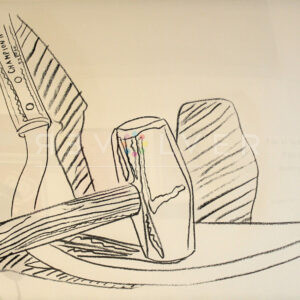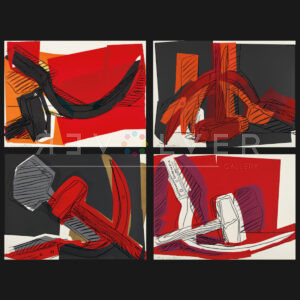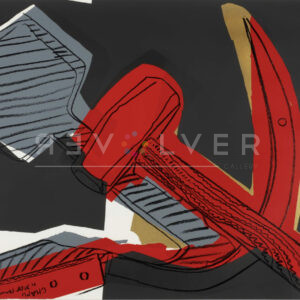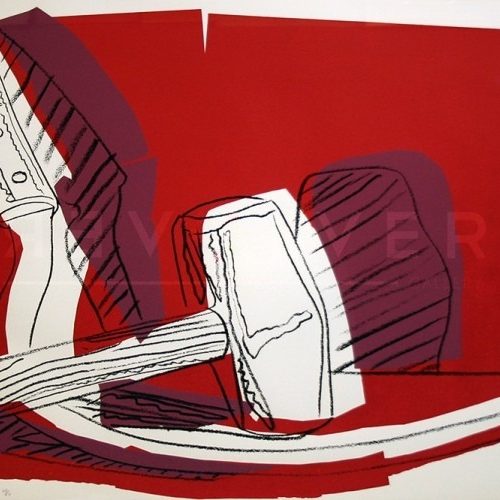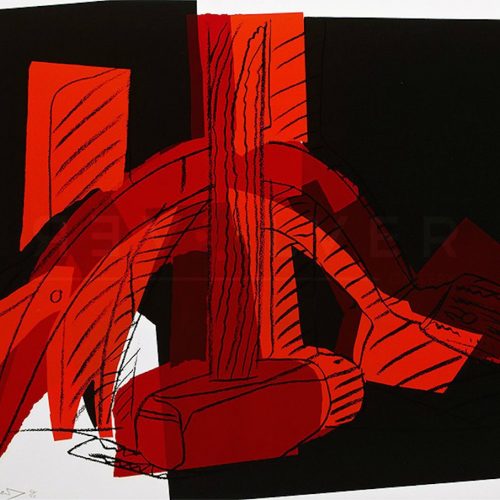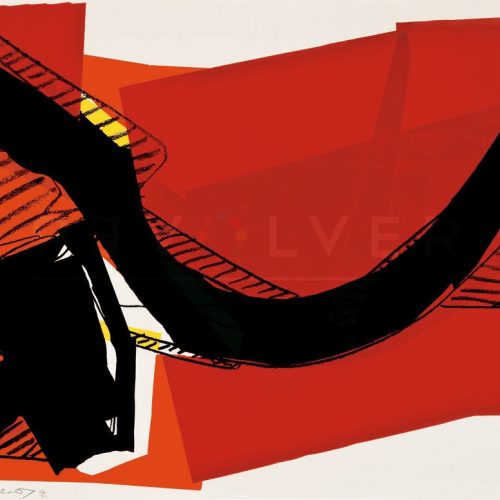
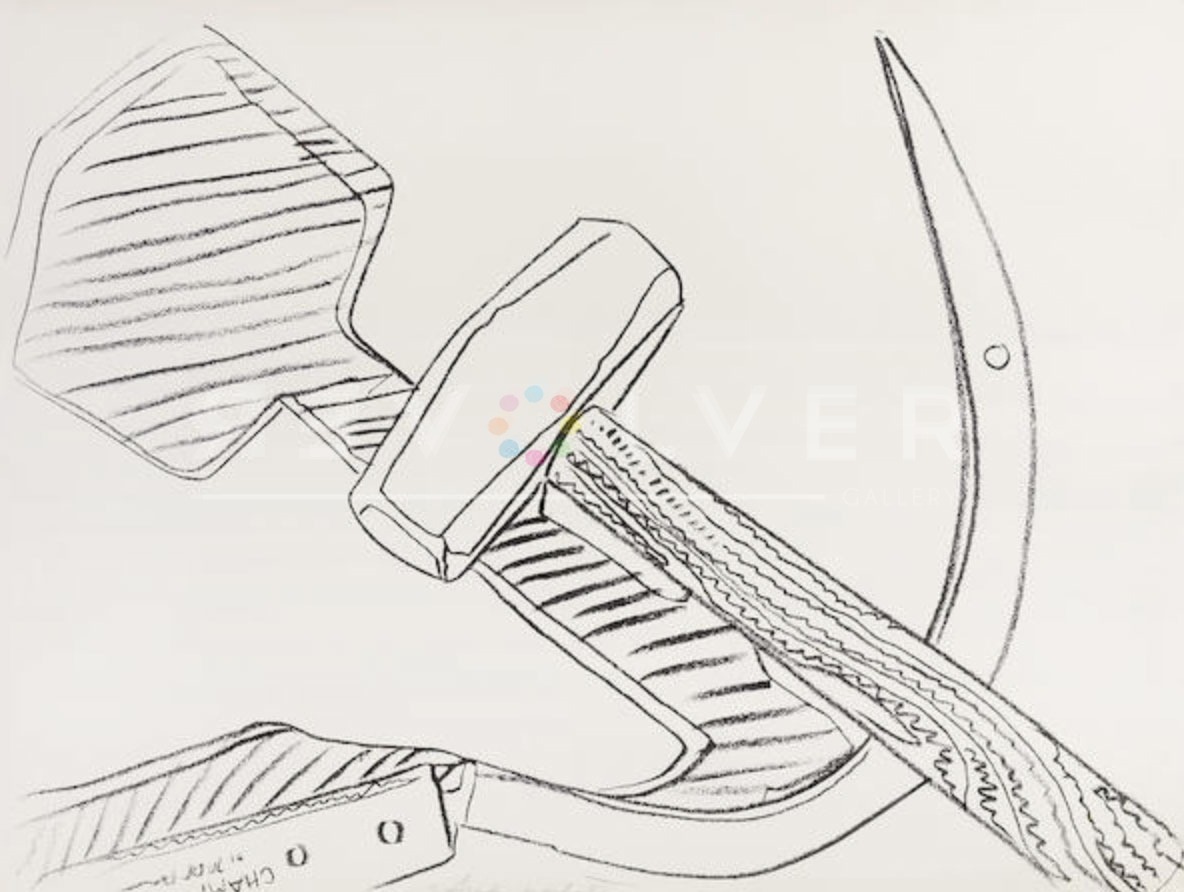
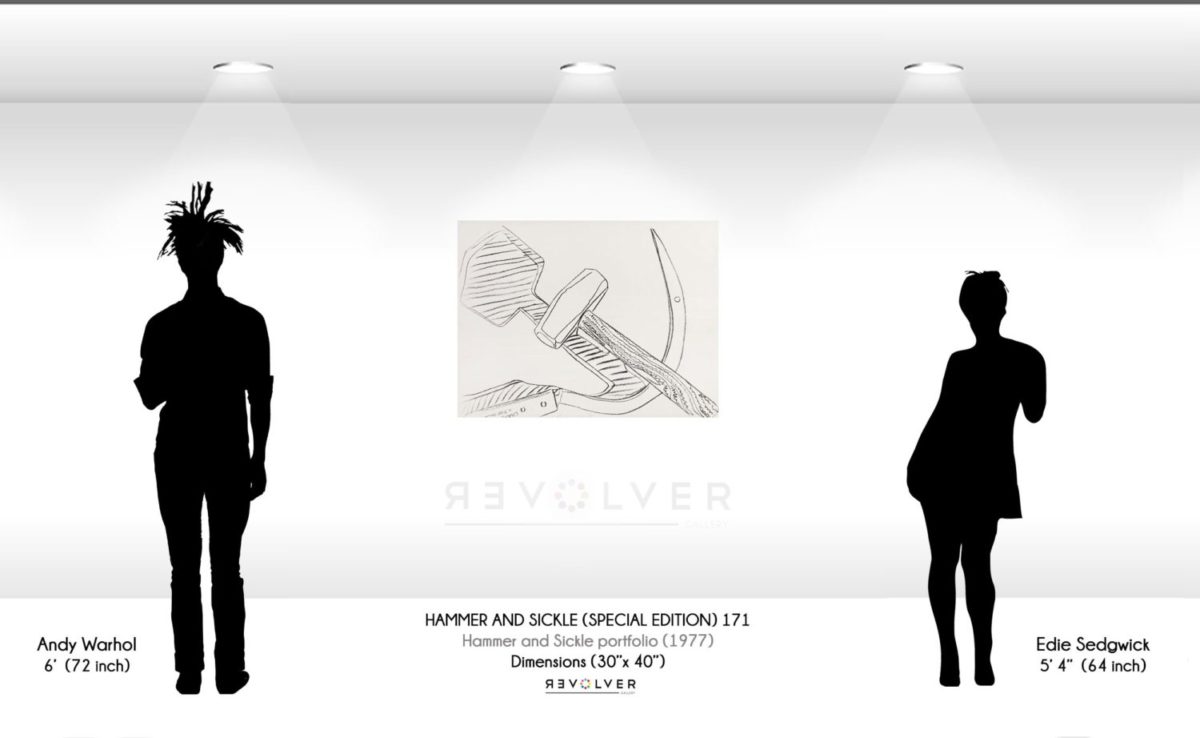
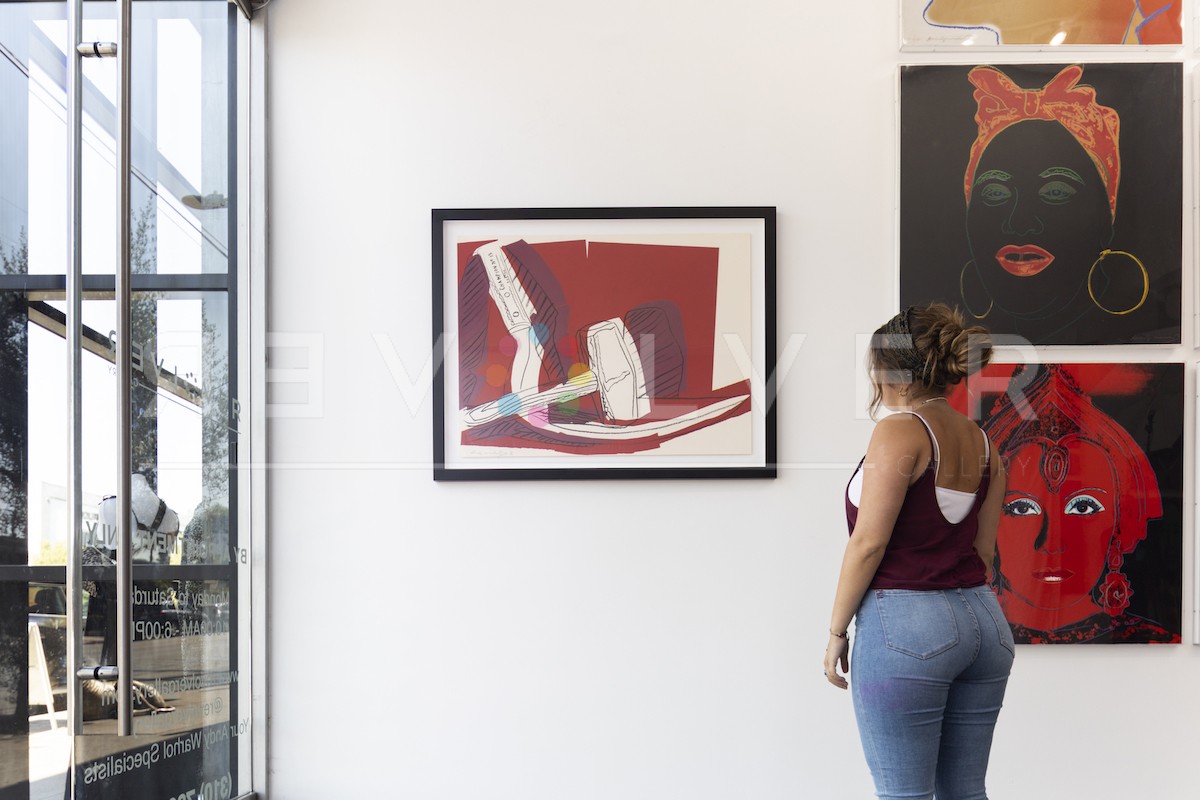
Hammer and Sickle (Special Edition) 171 is one of the ten screenprints from Andy Warhol’s Hammer and Sickle (Special Edition) portfolio. The portfolio, created in 1977, features a simplistic and further deconstructed version of the Hammer and Sickle portfolio including tools that were not featured in the original. The inspiration for the portfolio came to be after Warhol traveled to Italy in 1976. While in Italy he came across various amounts of street graffiti that depicted the hammer and sickle, representing the union of farm and industrial workers under communist control. Taken by the ubiquity of the symbol, Warhol returned to Manhattan to reimagine the famed icconography.
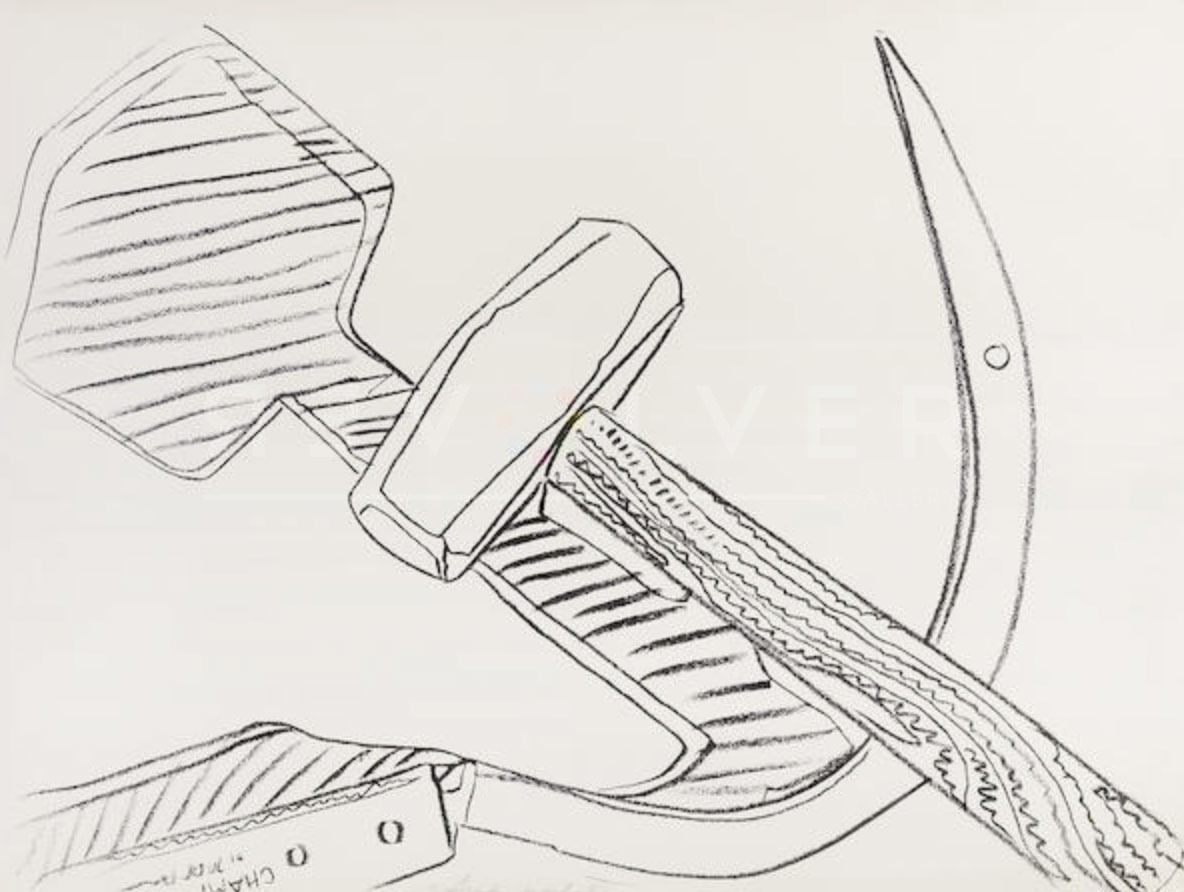
With the help of his studio assistant, Ronnie Cutrone, Warhol gathered tools with close resemblance to the hammer and sickle depicted in the communist iconography and photographed the tools from various angles, compositions, and viewpoints. Warhol’s primary interest with the Hammer and Sickle portfolio was to separate the tools from the connotations and ties to communist ideology, presenting them simply in a visual manner. Many of the screenprints within the portfolio depict the hammer and sickle in a deconstructed manner with the tools depicted in block forms and subtle illustrations of the tools. In Hammer and Sickle (Special Edition) 171, Warhol portrays the hammer and sickle with simple illustrated lines. Diverting from the use of color swatches in the background and block depictions of the objects, he opts to depict the objects in a subtle illustrated form.
Though the overall intention of the portfolio was to survey the visual appearance of the tools, and the relevance of the infamous symbol, some perceived the portfolio as a form of political commentary underlining the communist ideology. Ongoing stress and tensions of the Cold War likely contributed to the panicked views toward the portfolio. The continuous conflict between the United States and the Soviet Union post-WWII generated fear surrounding the belief and spread of communism in the states. Warhol, having prior works featuring political subject matter such as his Flash, Mao, and Lenin portfolios, remained clear with his intention surrounding the Hammer and Sickle series. When faced with questions regarding the portfolio’s intentions, Warhol’s only comment was, “we went off to the store and bought a hammer and sickle. Bob [editor of Interview Magazine] has a lawn to cut.”
The complete Hammer and Sickle (Special Edition) portfolio functions as a unique analysis of the deconstructed imagery of the hammer and sickle. Warhol’s separation of the imagery from its political meaning is achieved through the artistic devices of Pop Art, in which “readymade” images are often re-contextualized.
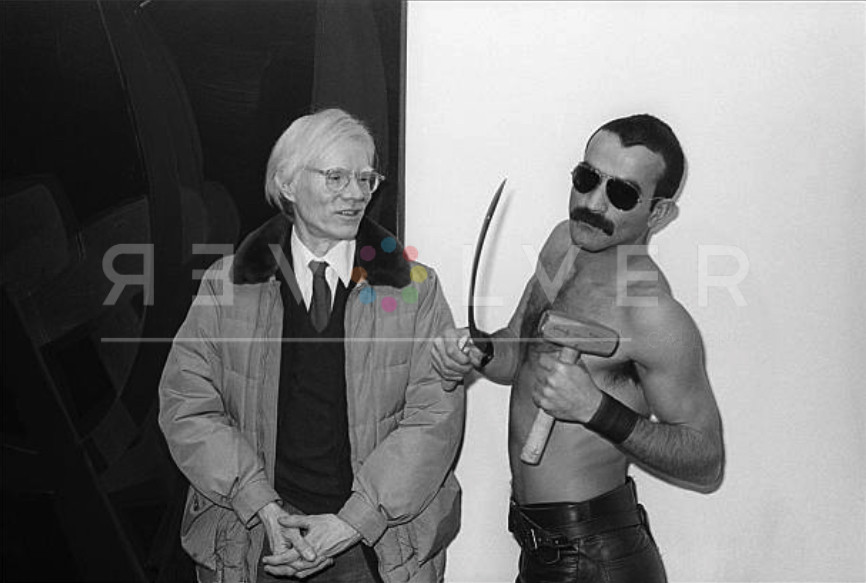
Photo credit: Andy Warhol poses with Victor Hugo, who holds the original hammer and sickle artist used in the works, at the opening of his “Hammer & Sickle” show at the Castelli Gallery, New York, New York, January 11, 1977. Photo by Allan Tannenbaum/Getty Images.