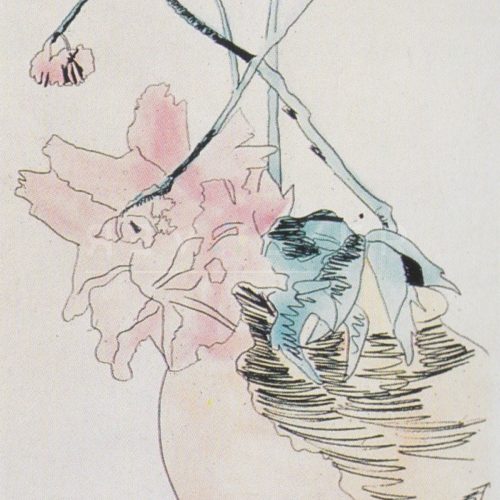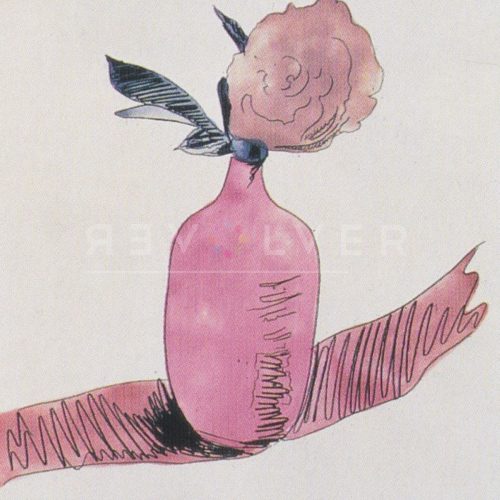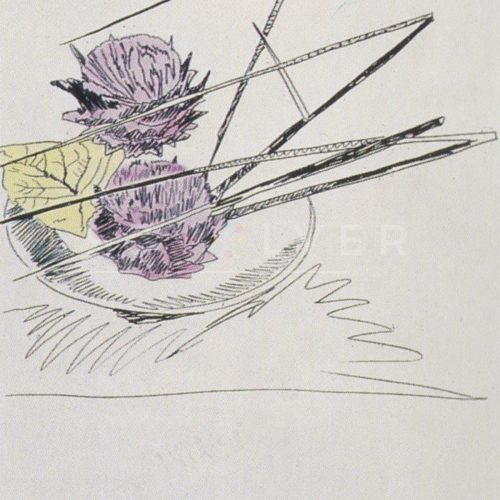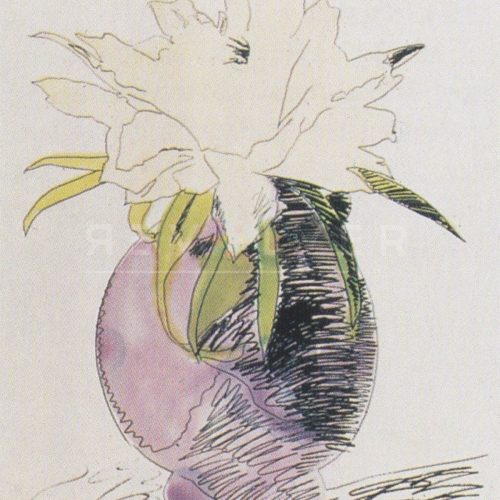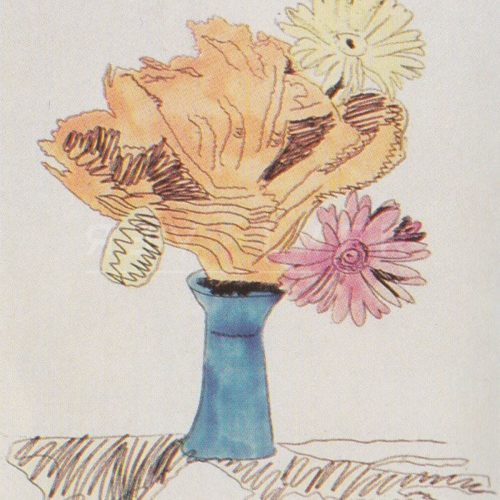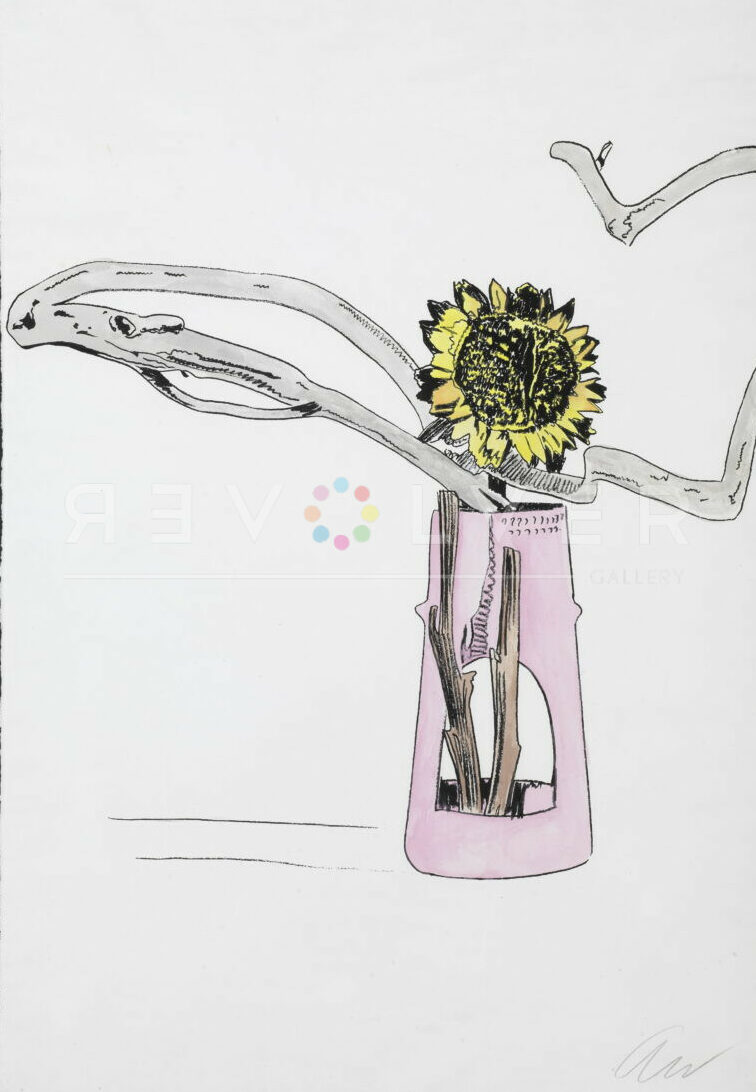
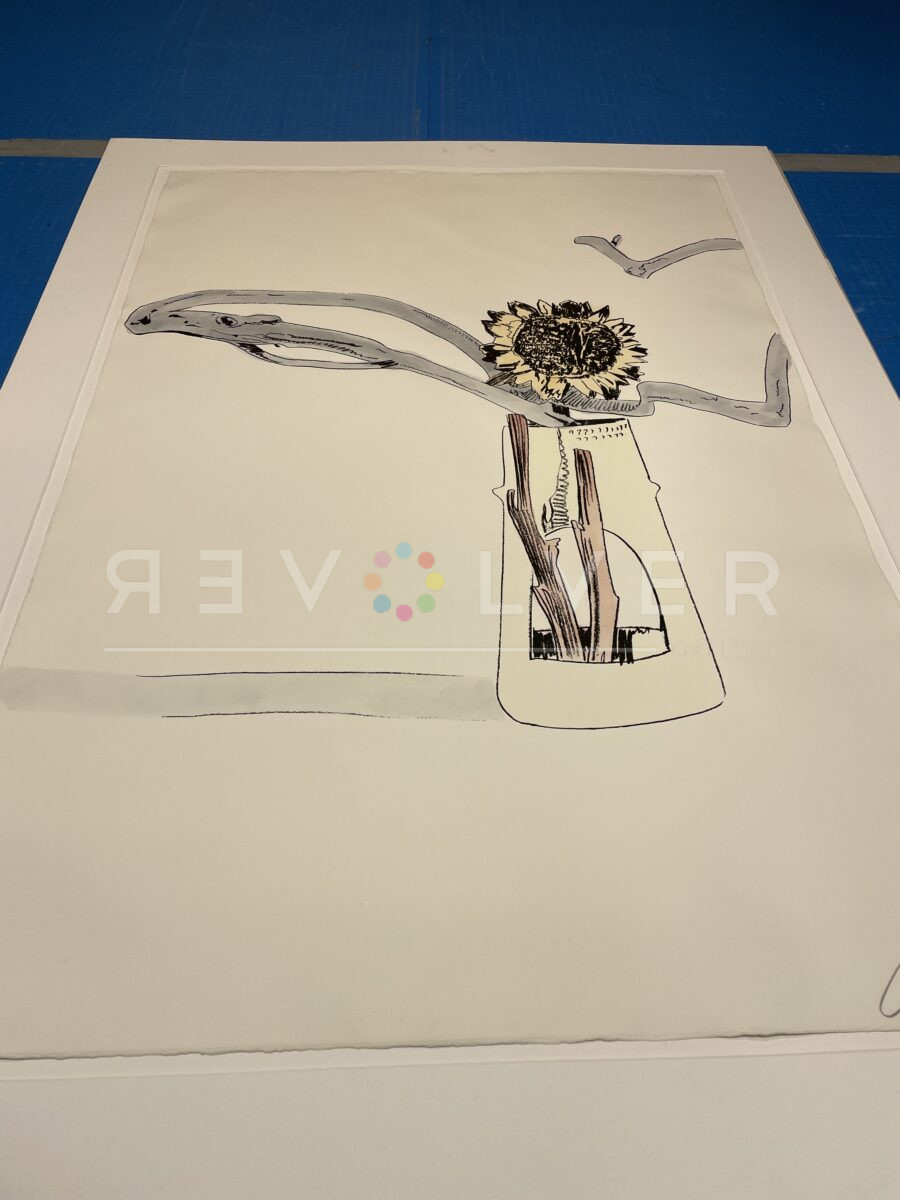
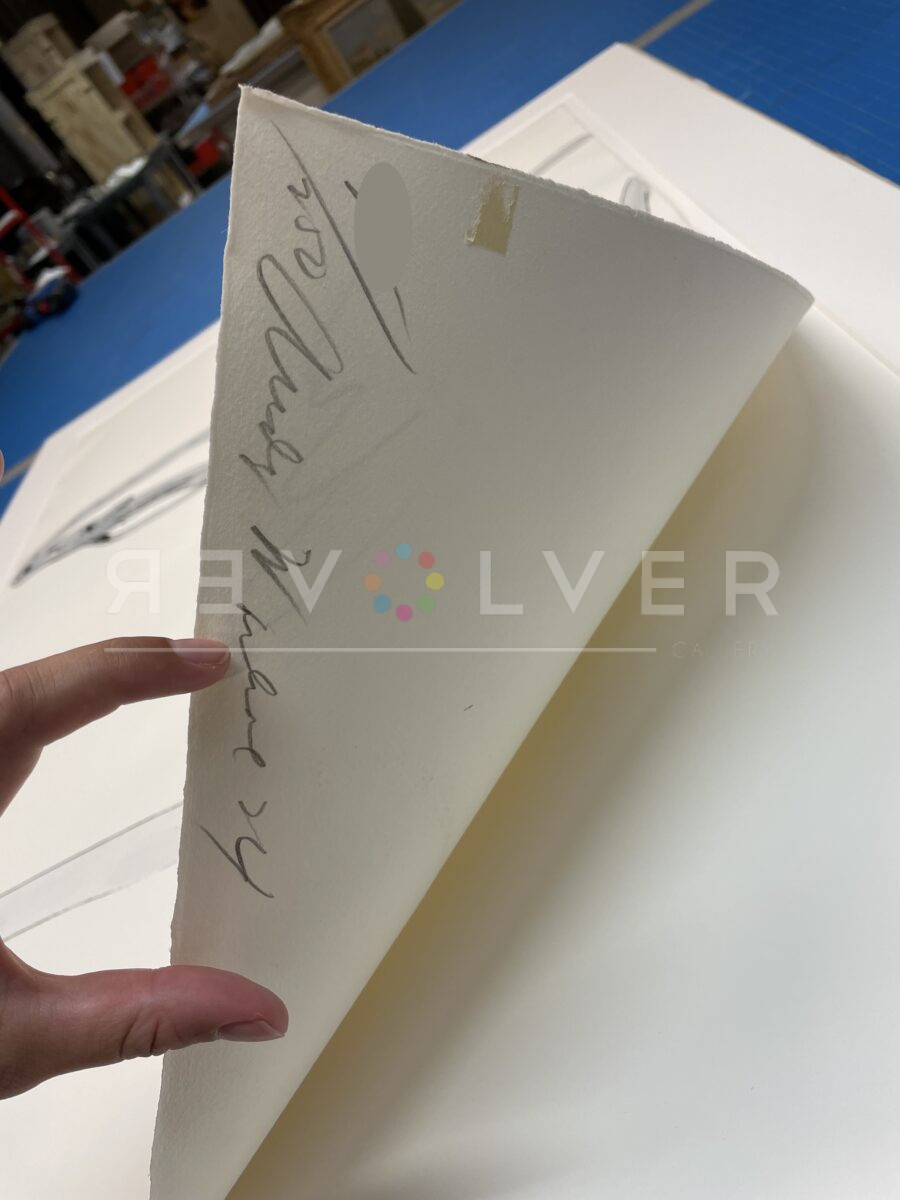
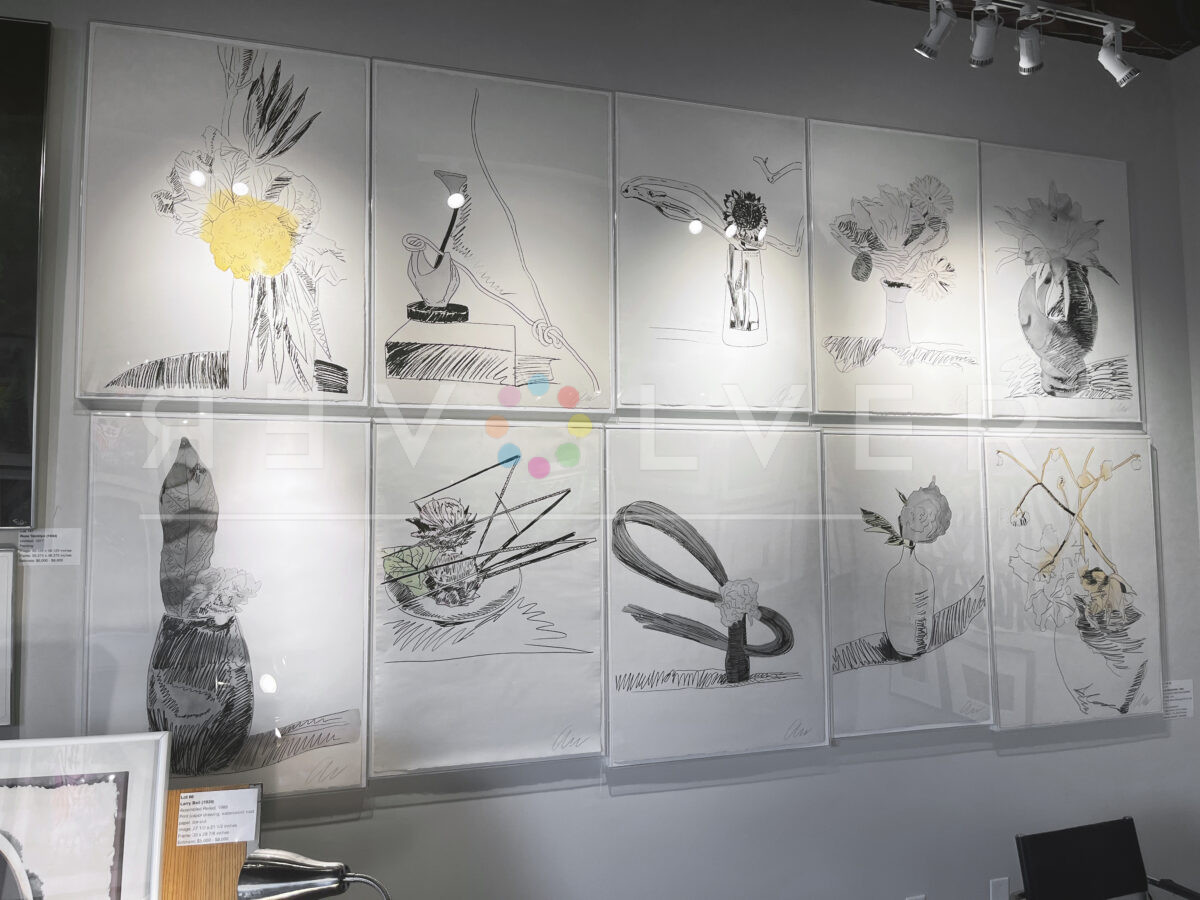
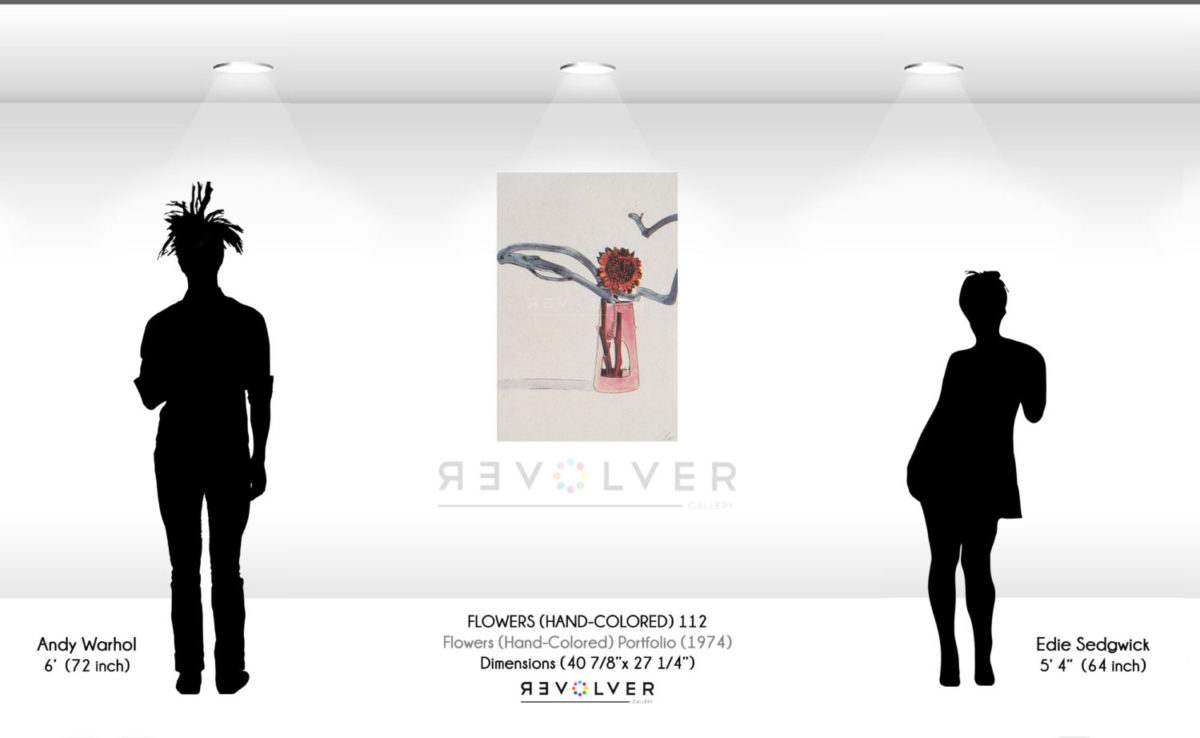
Flowers (Hand-Colored) 112 by Andy Warhol is one of ten hand-colored screenprints from the artist’s 1974 Hand-Colored Flowers portfolio. The Flowers (Hand-Colored) series follows Black and White Flowers, which focuses on Warhol’s fascination with line drawings that place an emphasis on line and composition. Both series are based on images found in a wallpaper catalogue called Interpretive Flower Designs. The Flowers (Hand-Colored) series contains images that are the same as the previous black and white series, but they are filled with color. Warhol’s application of Dr. Martin’s aniline watercolor dyes instills an element of design with the free flow of colors, which create a vibrant still life.
Works like Flowers (Hand-Colored) 112 mark a deviation from Warhol’s typical artistic style. Rather than showcasing the Pop Art technique that made him famous, here, Warhol appears to revisit his earlier, simplistic illustrative style. As such, the work alludes to his early career as a commercial artist, when his output mostly included hand-drawn advertisements for shoes and other consumer goods. By hand-coloring, shading, and adding subtle hues to some of the flowers and their parts, this series maintains Warhol’s personal touch, which is what makes the works so special. In many of Warhol’s catalogue, the artist is not present in the work—Warhol loved creating purely objective, representational images, like his work with Campbell’s Soup or Coke.
Flowers (Hand-Colored) 112 was printed by Alexander Heinrici.
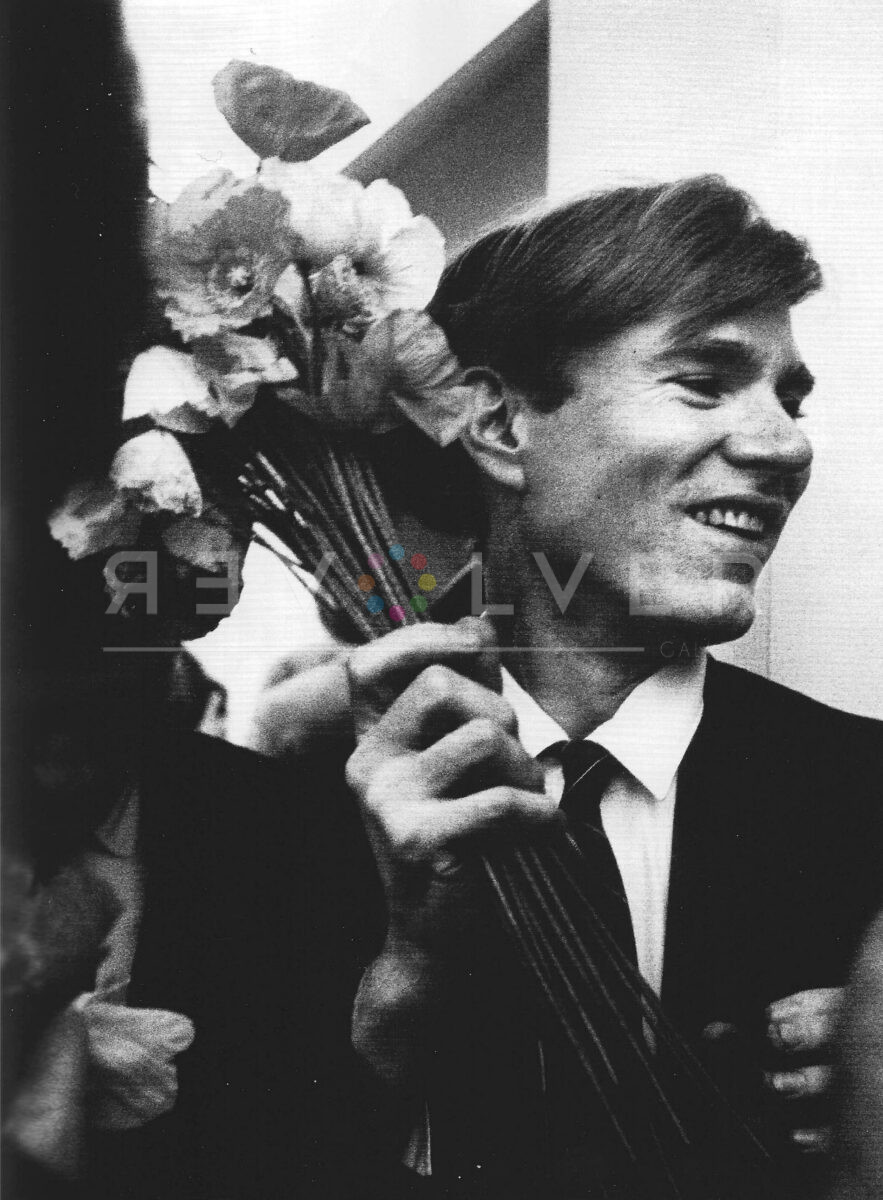
Photo credit: Andy Warhol at the opening of his “Flowers” exhibition, Galerie Ileana Sonnabend, Paris. Photo by Harry Shunk & János Kender, May 12, 1965.