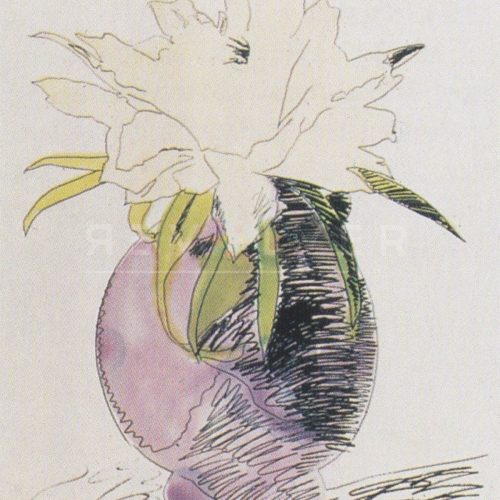
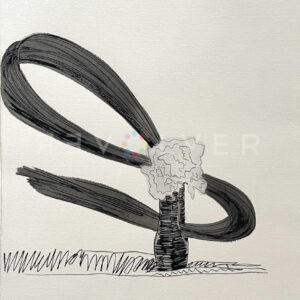
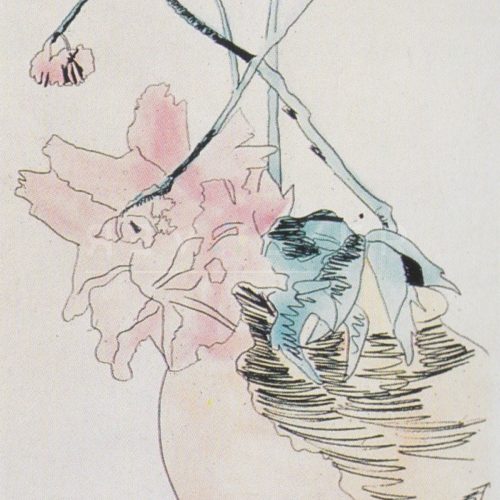
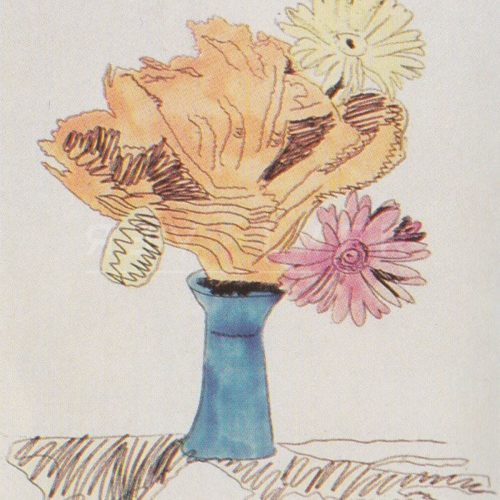
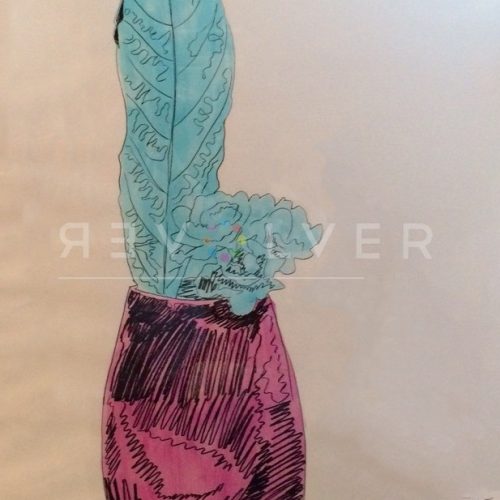
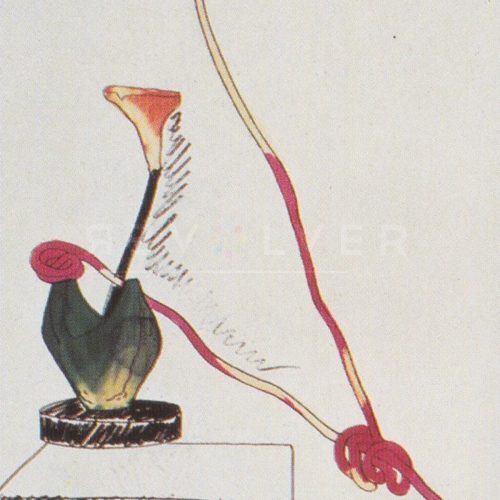
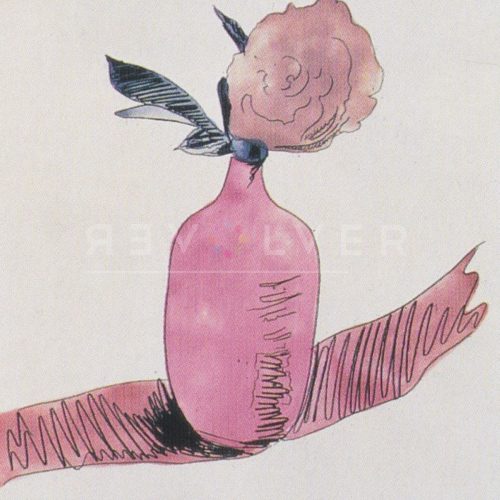
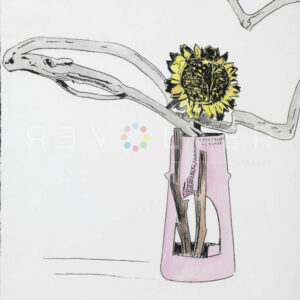
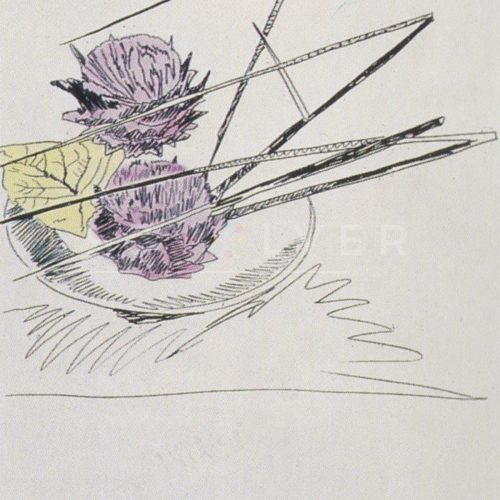
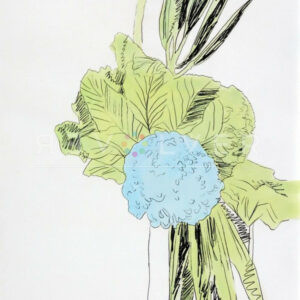
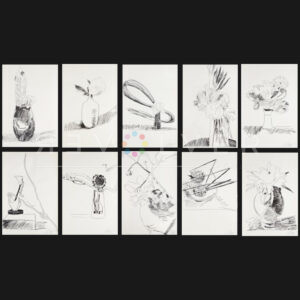
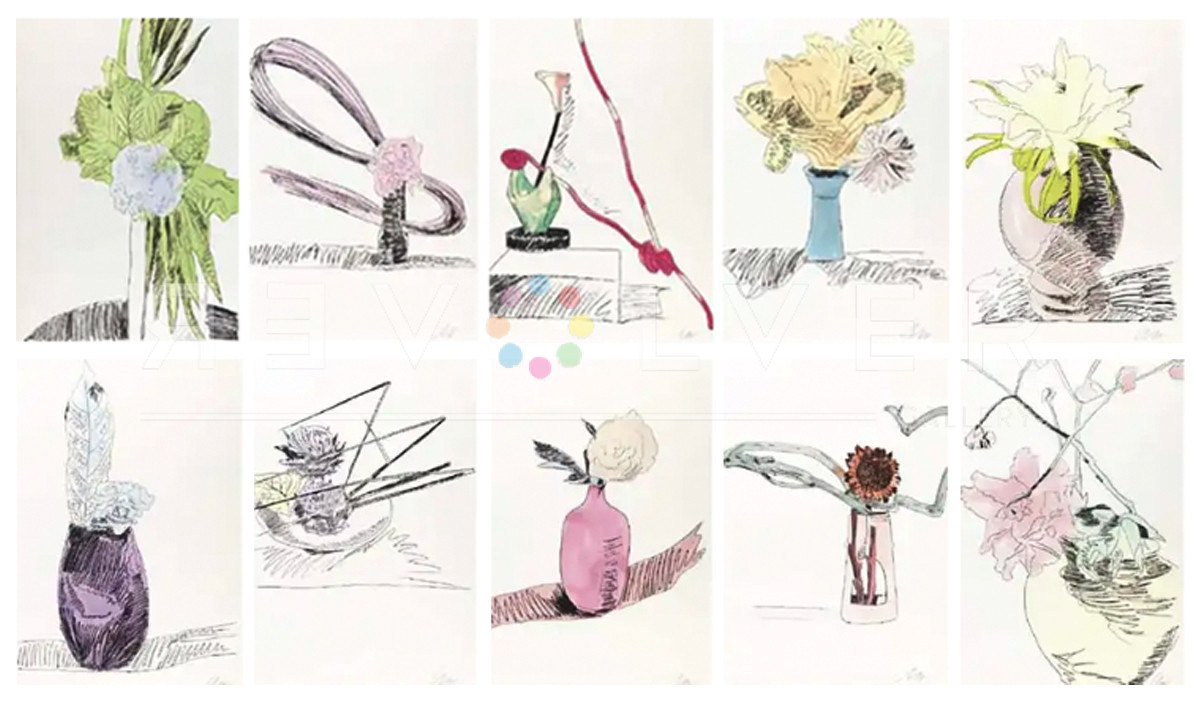

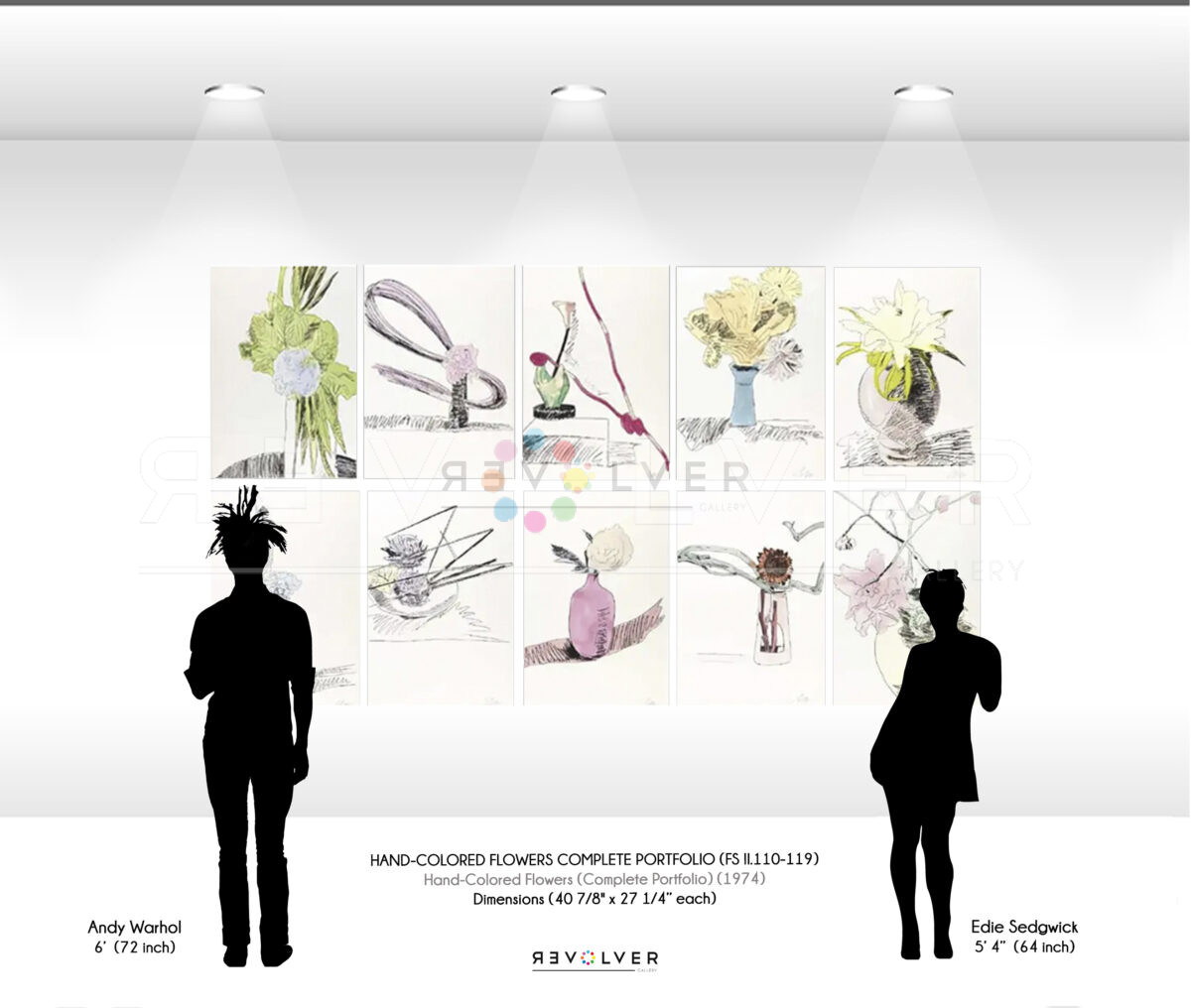
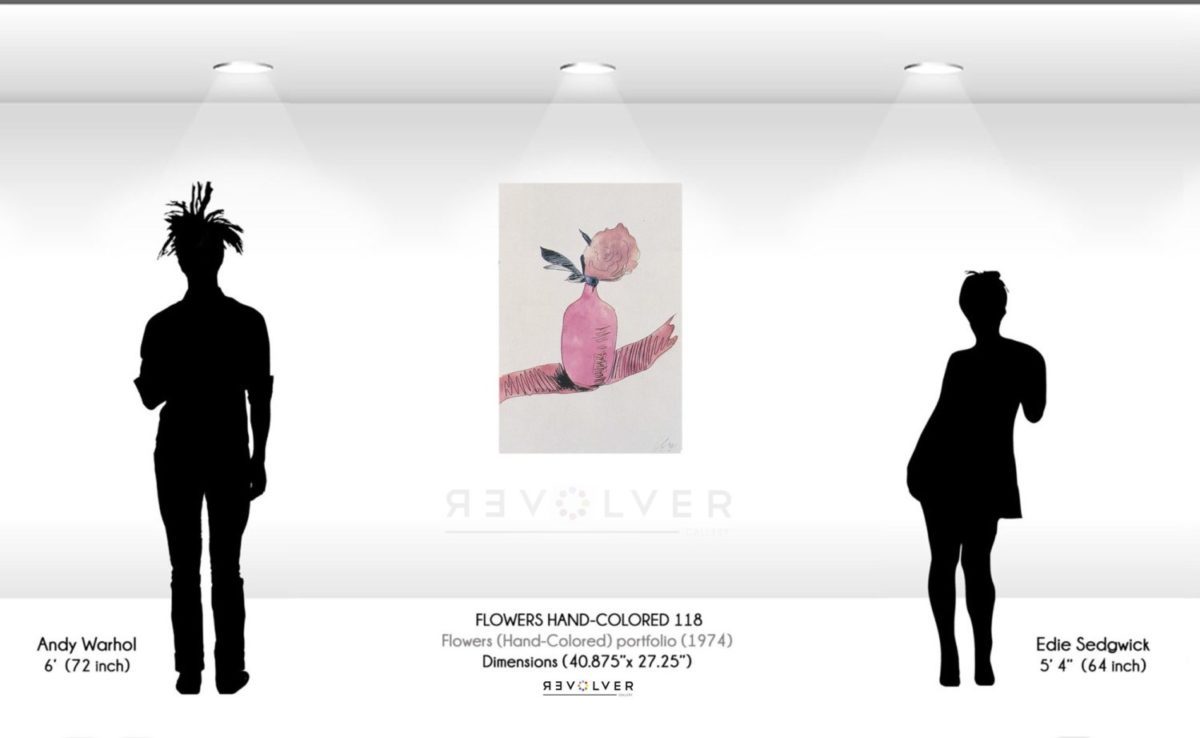
The Hand-Colored Flowers complete portfolio by Andy Warhol is a group of 10 hand-colored floral screenprints (FS II.110-119). The series is similar to Warhol’s Black and White Flowers portfolio, which he also published in 1974. Both collections are based on images of flowers that Warhol found in a wallpaper catalogue called Interpretive Flower Designs. Hand-Colored Flowers was printed by Alexander Heinrici.
The first thing any Warhol fan will notice about the series, is that it breaks from his typical Pop Art style in both aesthetics and media. In Hand-Colored Flowers, Warhol returns to his fascination for line drawings, similar to his work from the 1950s, which emphasizes outline more than composition.
Warhol’s application of Dr. Martin’s aniline watercolor dyes instills a prominent design element with the free flow of colors that bleed beyond the structure of their lines. Compared to Warhol’s Flowers suite from 1970, the hand-painted and hand-drawn quality of the meticulously detailed suite is decidedly a more personal, delicate approach that shows Warhol’s innate artistic sense to not shy away from different methods. A similar comparison can be made between the Hand-Colored Flowers and Warhol’s Kiku works from 1983.
While Warhol’s work is typically more reflective of the Pop Art genre, the Hand-Colored Flowers complete portfolio is somewhat of a more special series, as it showcases the artist’s personal style in a more contemporary light, exhibiting his talent throughout different modes. Warhol takes recognizable flowers, such as roses and sunflowers, and maintains the integrity of the subject while still adding his own spin through abstract shadows and shading; he creates masterpieces out of the banal.
The full Hand-Colored Flowers complete portfolio includes FS II.110-119.
Warhol continuously revisited the use of flowers as a subject matter throughout his entire career in almost every medium. Compared to Warhol’s Flowers series from 1970, the hand-painted and hand-drawn quality of Hand-Colored Flowers is decidedly a more personal, delicate approach that shows Warhol’s ability to not shy away from different methods. Both the Flowers (Hand-Colored) and Flowers (Black and White) series are a testament to Warhol’s ability as an artist. Rather than showcasing Warhol’s typical Pop Art style, the portfolios demonstrate Warhol’s skill across mediums and methods.
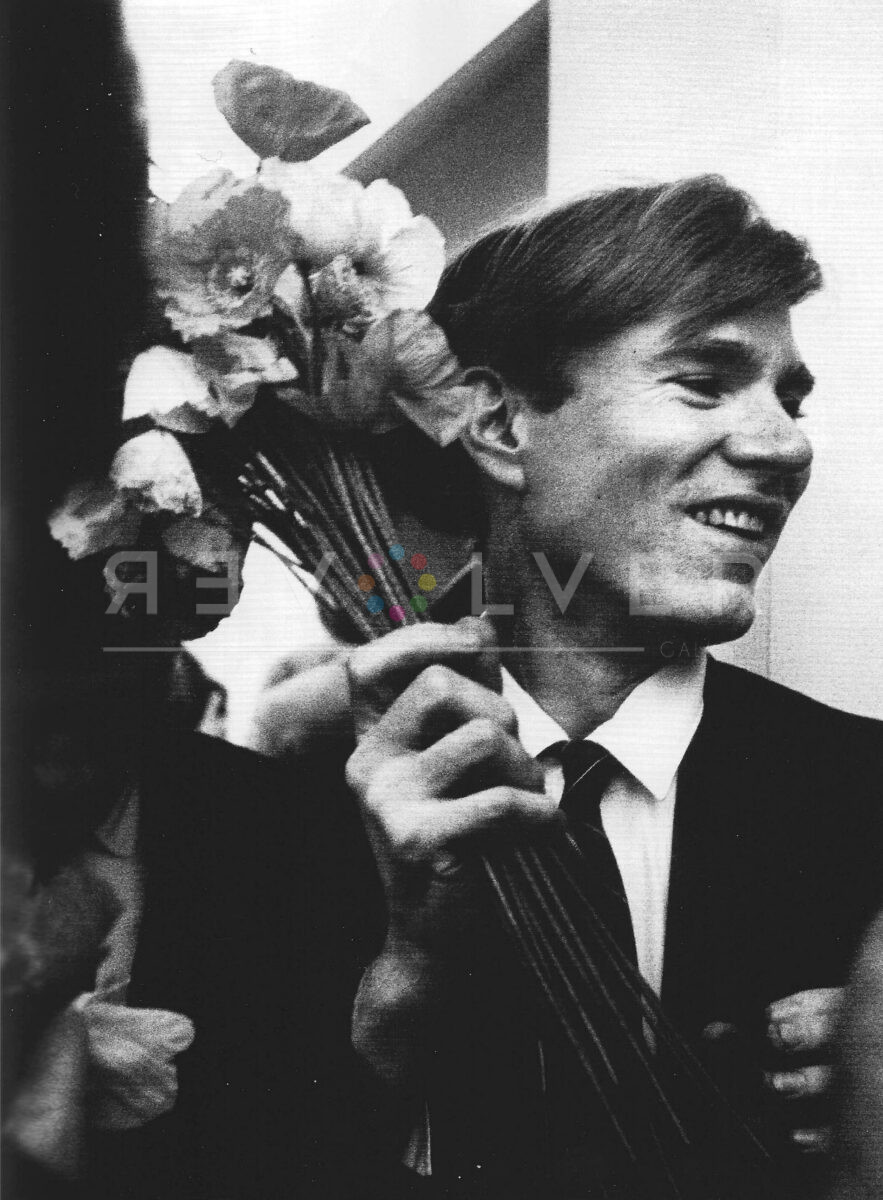
Photo credit: Andy Warhol at the opening of his “Flowers” exhibition, Galerie Ileana Sonnabend, Paris. Photo by Harry Shunk & János Kender, May 12, 1965.

© 2024 Revolver Gallery. All Rights Reserved. Revolver Gallery is not affiliated with the Andy Warhol Foundation for the Visual Arts.
To provide the best experiences, we and our partners use technologies like cookies to store and/or access device information. Consenting to these technologies will allow us and our partners to process personal data such as browsing behavior or unique IDs on this site and show (non-) personalized ads. Not consenting or withdrawing consent, may adversely affect certain features and functions.
Click below to consent to the above or make granular choices. Your choices will be applied to this site only. You can change your settings at any time, including withdrawing your consent, by using the toggles on the Cookie Policy, or by clicking on the manage consent button at the bottom of the screen.