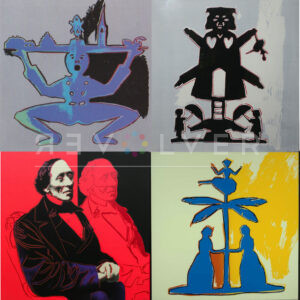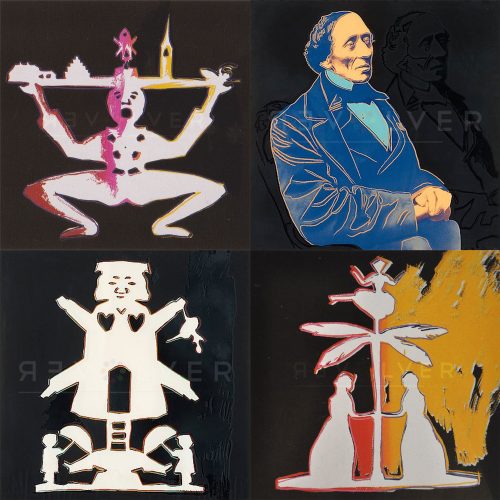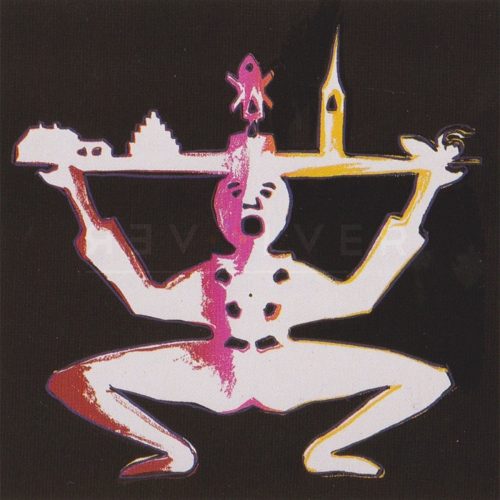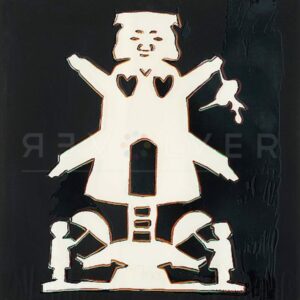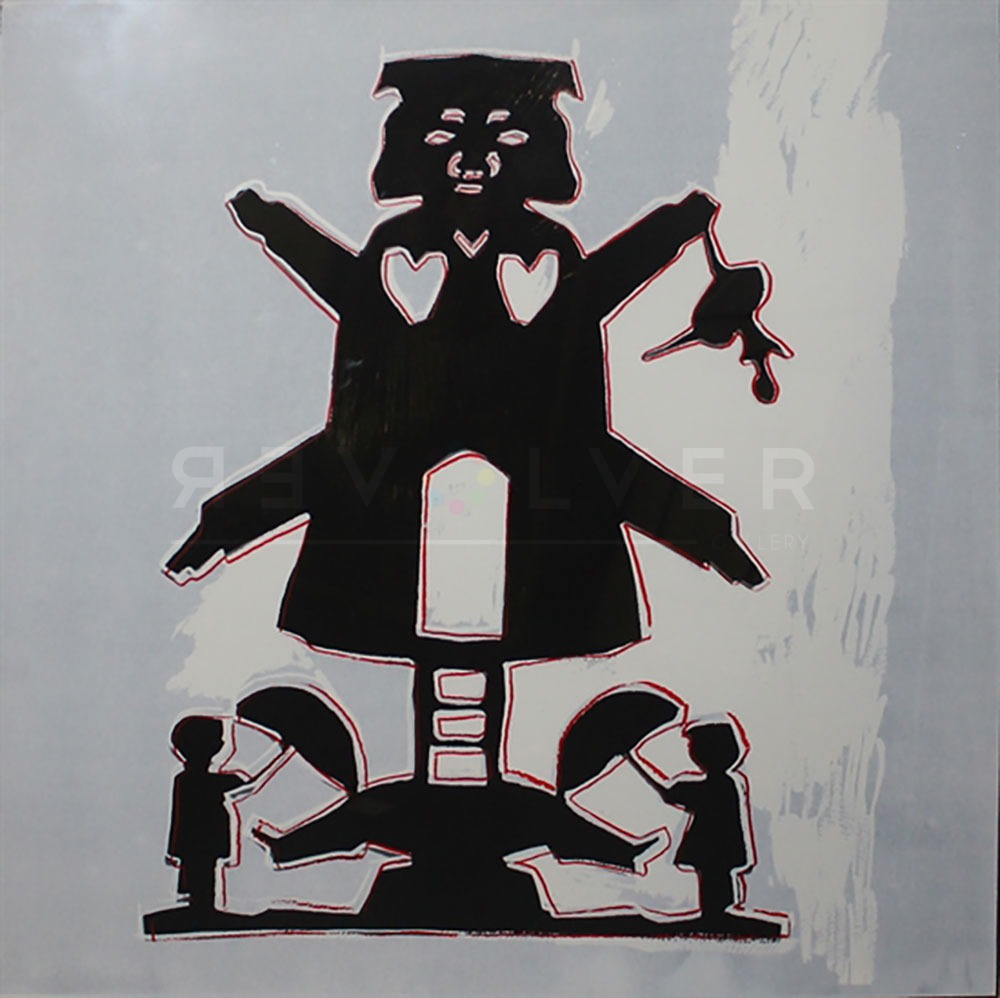

Hans Christian Andersen 397 by Andy Warhol
Hans Christian Andersen 397 by Andy Warhol unframed
Warhol's signature on Hans Christian Andersen 397
Hans Christian Andersen 397 by Andy Warhol in a frame
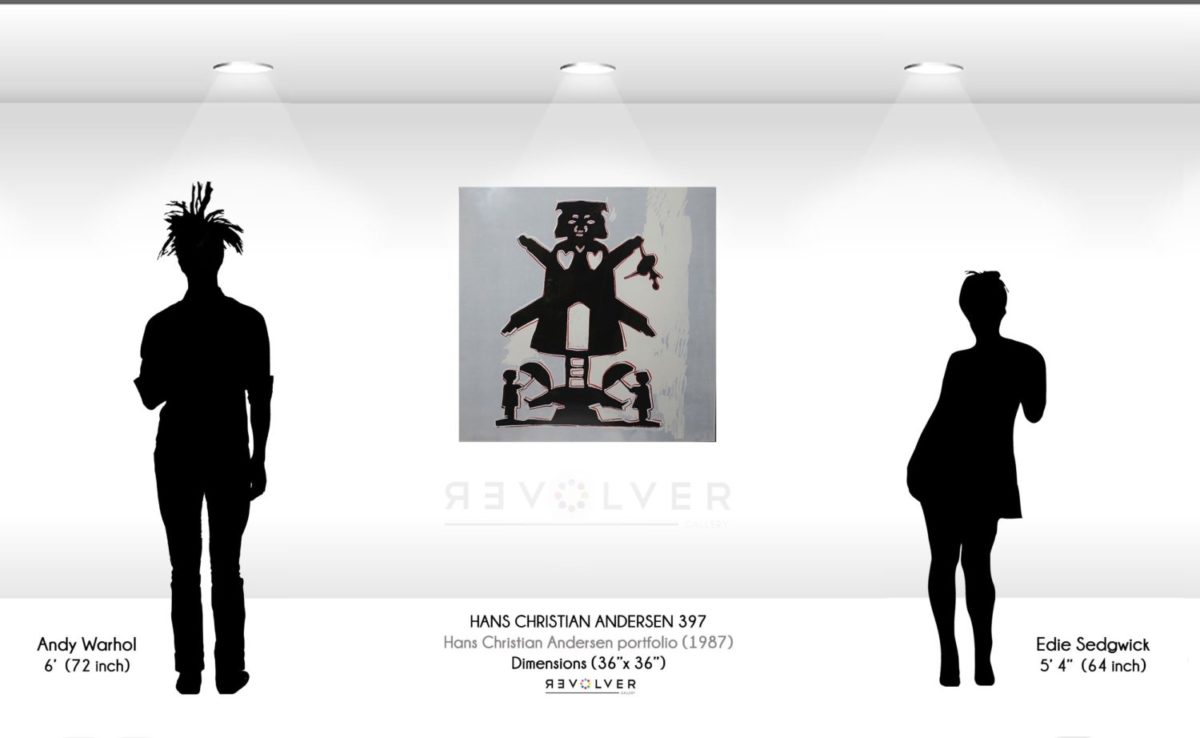
Size comparison image for the Hans Christian Andersen 397 print.

Hans Christian Andersen 397

Catalog Title: Hans Christian Andersen (FS II.397)
Year: 1987
Size: 38” x 38” | 96.5 x 96.5 cm.
Medium: Screenprint on Lenox Museum Board
Edition: Edition of 25. 8AP, 3PP, 5HC, 36TP. portfolio of 4. Signed and numbered in pencil on verso by the Estate of Andy Warhol.
Name(Required)
This field is hidden when viewing the form

SHans Christian Andersen 397 by Andy Warhol is a 1987 screenprint from the artist’s Hans Christian Andersen Complete Portfolio. The artwork depicts a stylized pink paper cut-out figure of a woman holding a small doll-like figure, flanked by two kneeling children. The sharp silhouette stands against a deep black and maroon background, heightening the contrast and giving the composition a theatrical presence. The piece evokes both innocence and unease, reflecting the dual nature of fairy tales—beautiful yet dark, childlike yet profound.

The series was inspired by Hans Christian Andersen, the celebrated Danish author known for his timeless fairy tales. Moreover, Andersen’s ability to blend whimsy with moral and emotional depth deeply resonated with Warhol. As a result, the Pop artist dedicated an entire suite to the author and his world of imagination. The dark cut-out figures in Hans Christian Andersen 397 enhance the sense of wonder and nostalgia. At the same time, they also focus the viewer’s attention on the central, almost haunting form.

Warhol’s Interpretation of Fairy Tale Imagery

Warhol’s Hans Christian Andersen suite consists of four screenprints. Three of them are based on Andersen’s paper cut-out characters and one portrait of the author himself. The series was completed in 1987, just before Warhol’s death, and printed by Rupert Jasen Smith in New York. It was published by Art Expo Danmark in Odense, Denmark, and posthumously stamped on the verso in black ink. The suite, catalogued as FS II.349–352, captures Warhol’s fascination with stories and archetypes that transcend generations and cultures.

Unlike his celebrity portraits, which glorify fame and mass media, the Hans Christian Andersen series reveals a more introspective side of Warhol. Here, he reimagines the innocence of childhood through the lens of Pop Art. The cut-out style pays homage to Andersen’s own paper art, while Warhol’s signature flat colors and bold outlines give the works a contemporary edge. Moreover, by juxtaposing fairy tale imagery with the starkness of modern design, Warhol highlights the contrast between nostalgia and modernity—a recurring theme in his late career.

Hans Christian Andersen 397 in Warhol’s Larger Body of Work

Warhol’s choice to immortalize Hans Christian Andersen aligns with his lifelong fascination with icons—whether they were movie stars, political leaders, or cultural figures. Andersen’s universal stories of transformation, longing, and redemption resonated with Warhol’s own preoccupation with identity and reinvention. Similarly, much like Reigning Queens or his portraits of Marilyn Monroe, this series elevates its subject to the realm of myth. Yet, rather than focusing on celebrity, Warhol celebrates the creative imagination itself.

Completed in the final year of his life, Hans Christian Andersen 397 reflects Warhol’s ability to find beauty and meaning in storytelling. Through simple forms and vivid contrasts, he transforms a child’s craft into a meditation on art, memory, and cultural legacy.

Photo credits:

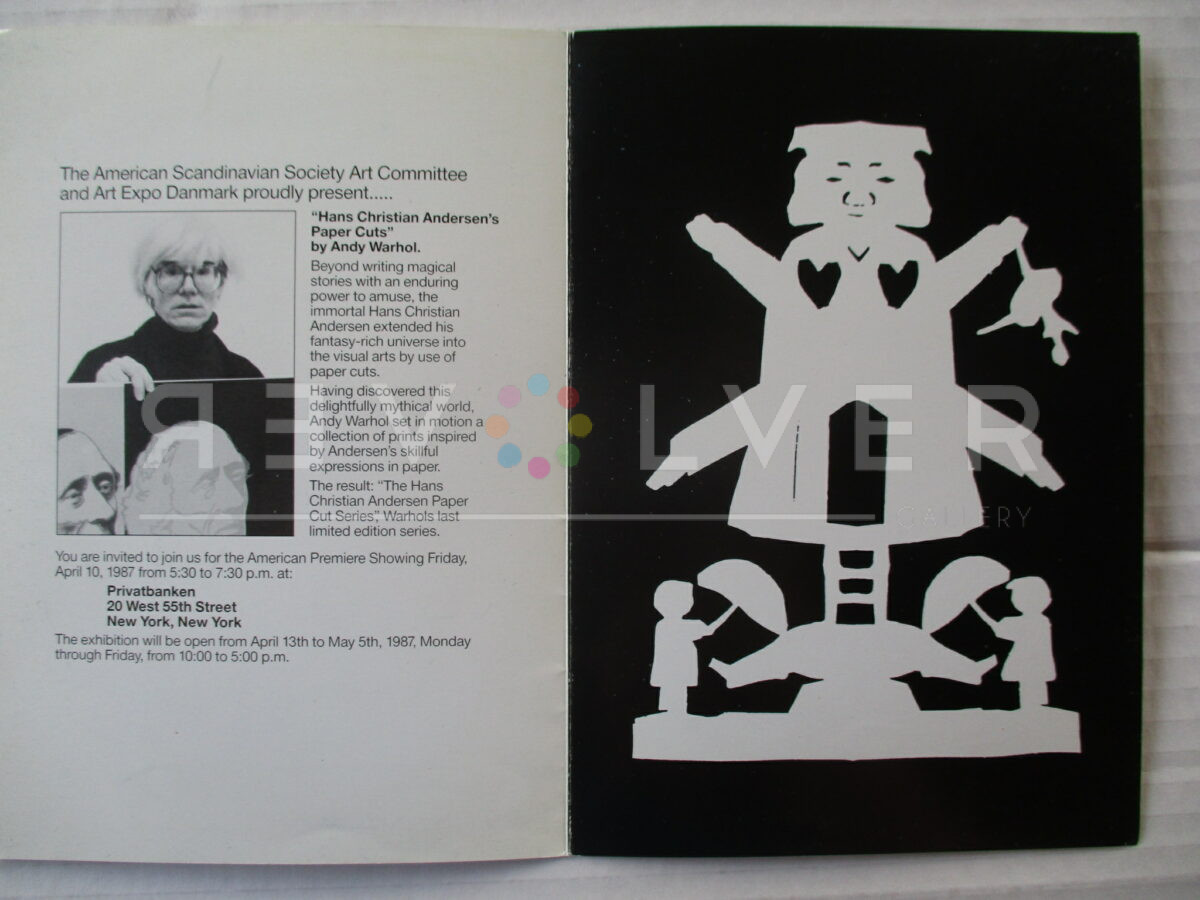
  1. Exhibition invite for “Hans Christian Andersen’s Paper Cuts by Andy Warhol.” Printed by Privatbanken NYC, 1987.
  2. Andy Warhol holding his Hans Christian Andersen (FS II.398) print. Published in a 1987 exhibition invite for “Hans Christian Andersen’s Paper Cuts by Andy Warhol.” Printed by Privatbanken NYC.
Share this page:

Related Works