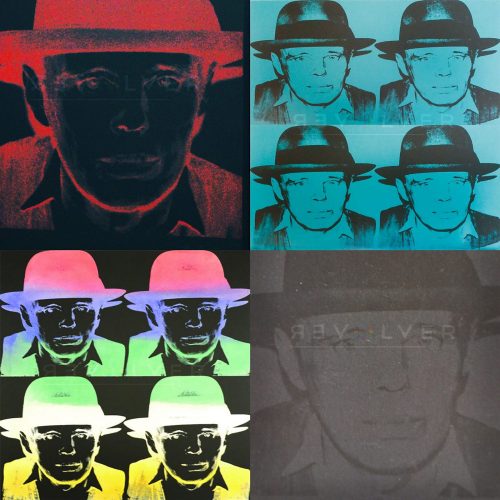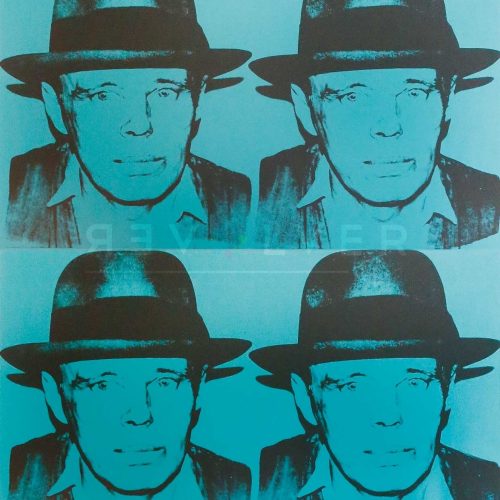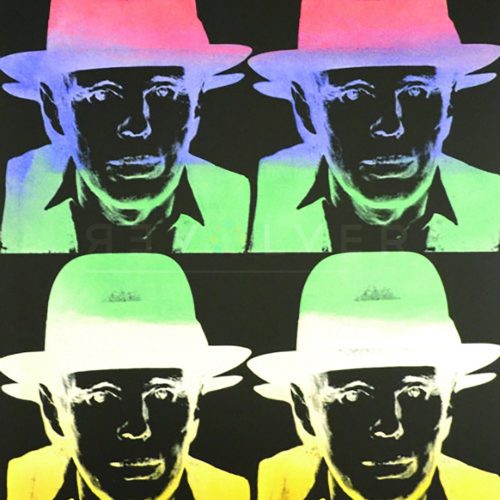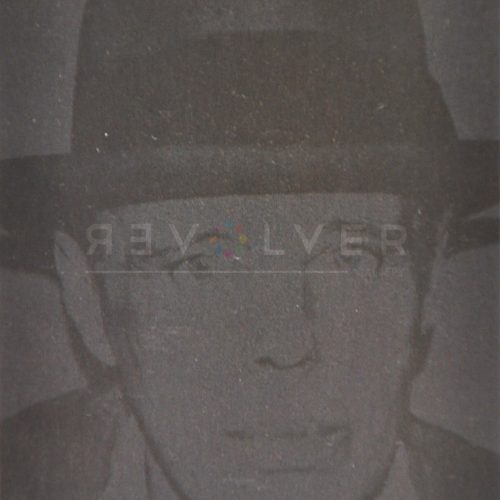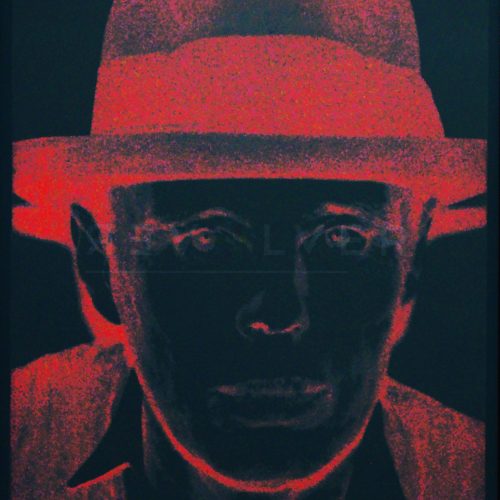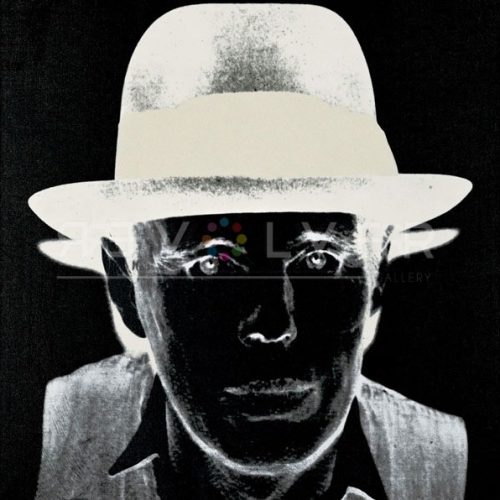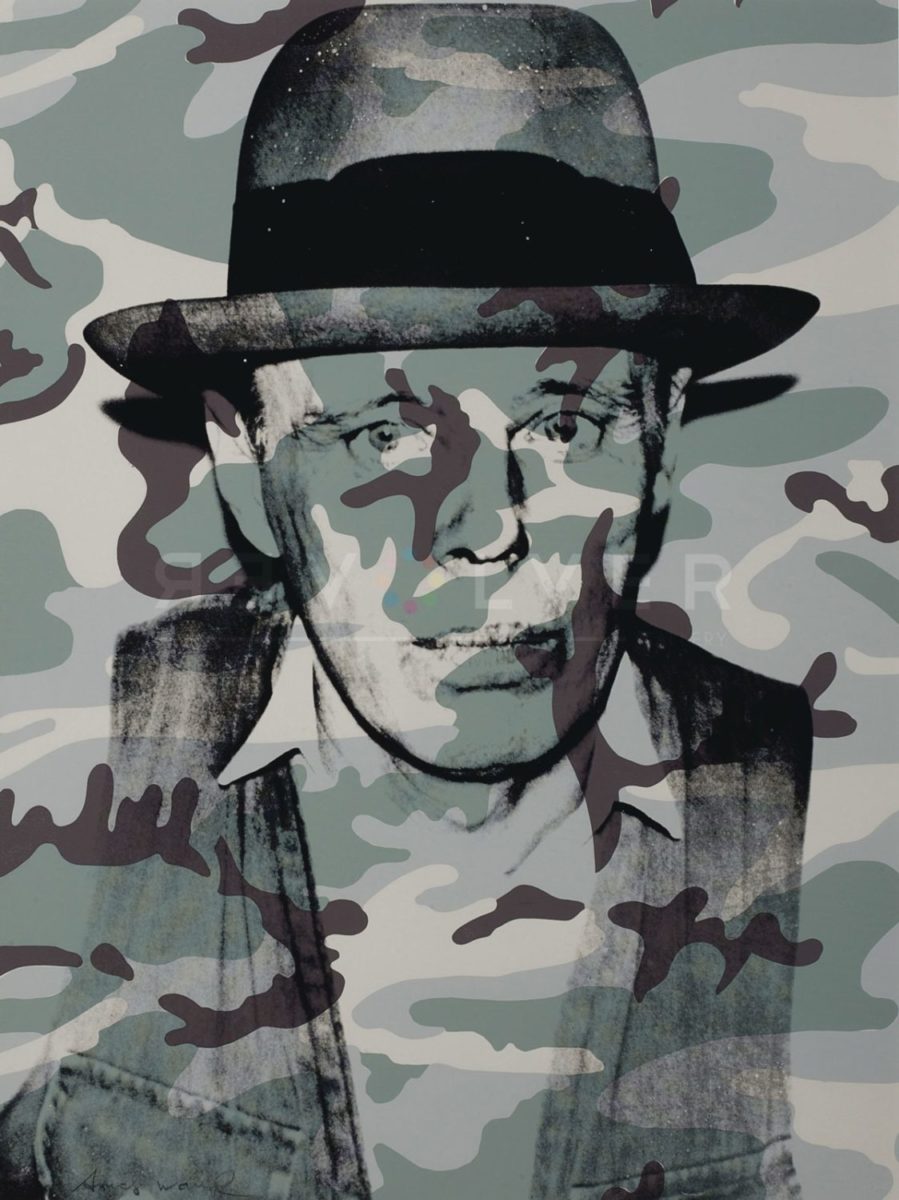
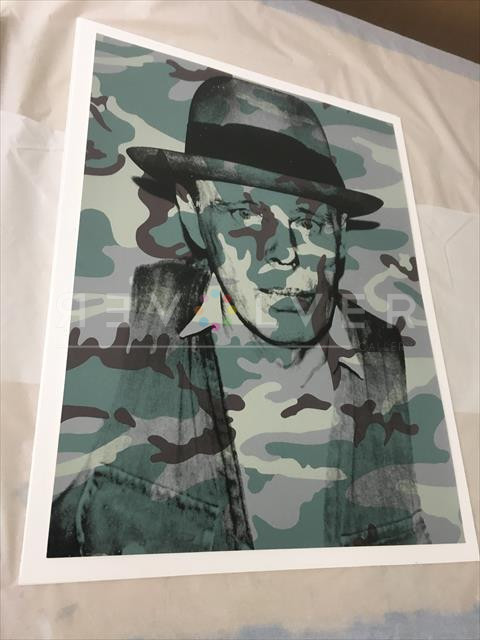
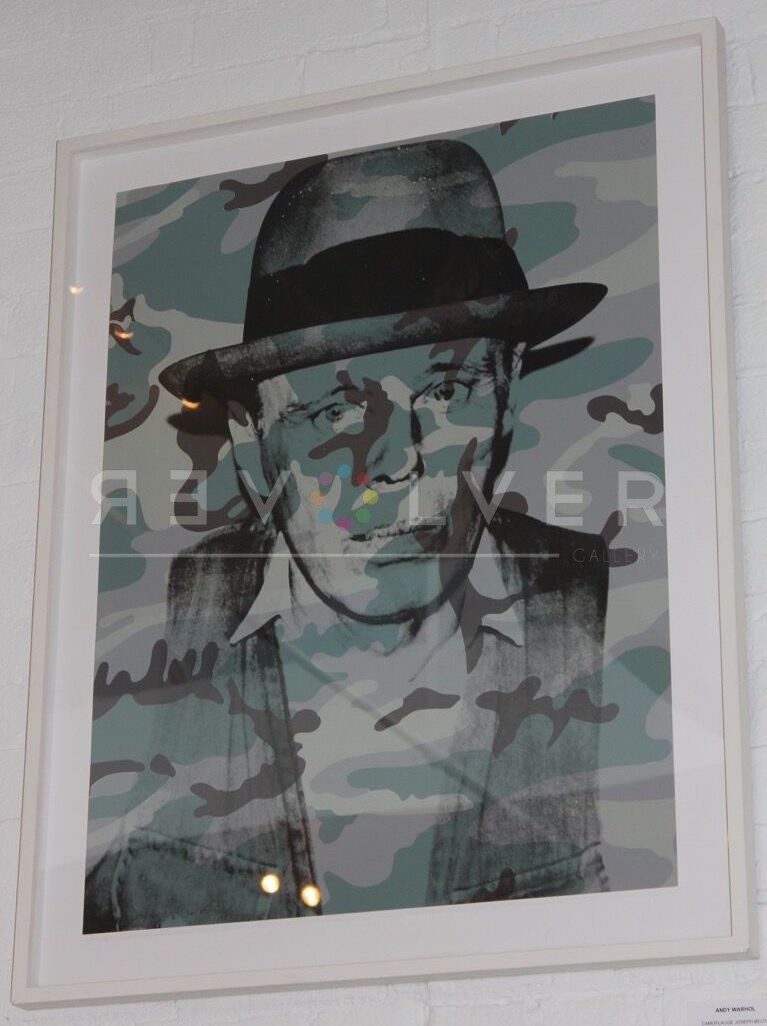
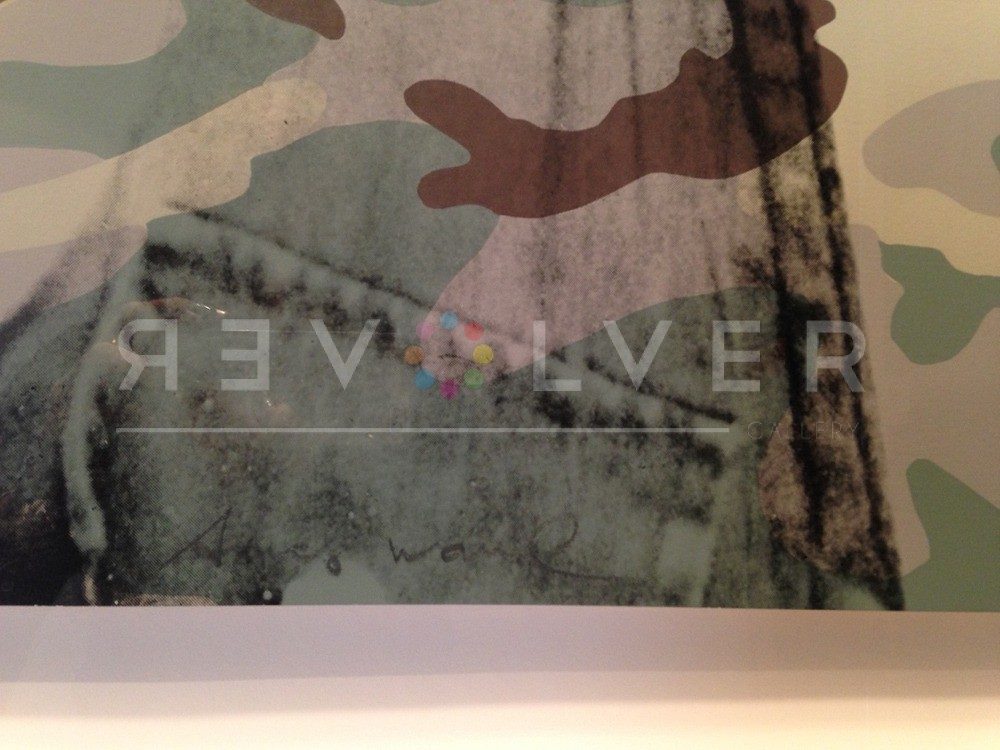
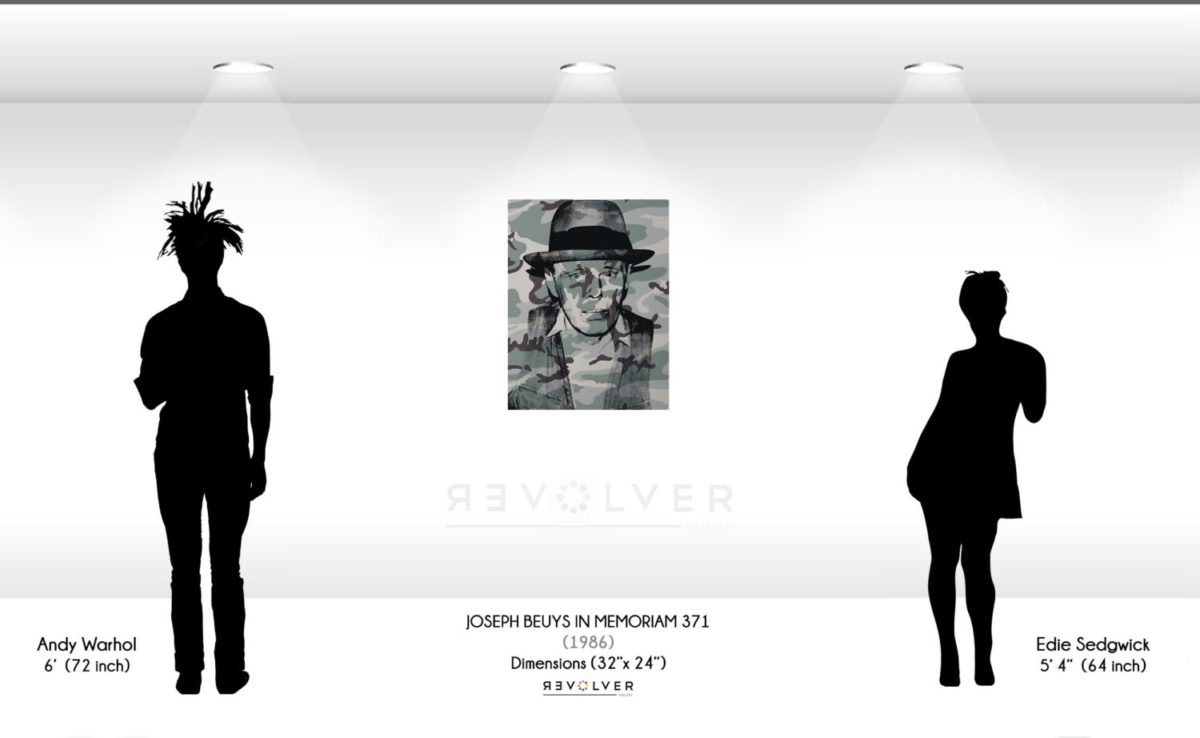
Joseph Beuys in Memoriam 371 is a screenprint by Andy Warhol from 1986, published three years after the completion of his Joseph Beuys complete portfolio. The work is a tribute to Joseph Beuys, a massively impactful and influential 20th century German artist, art and political theorist, and lecturer. Warhol created the work in 1986, the same year Beuys died of heart failure in his native Dusseldorf.
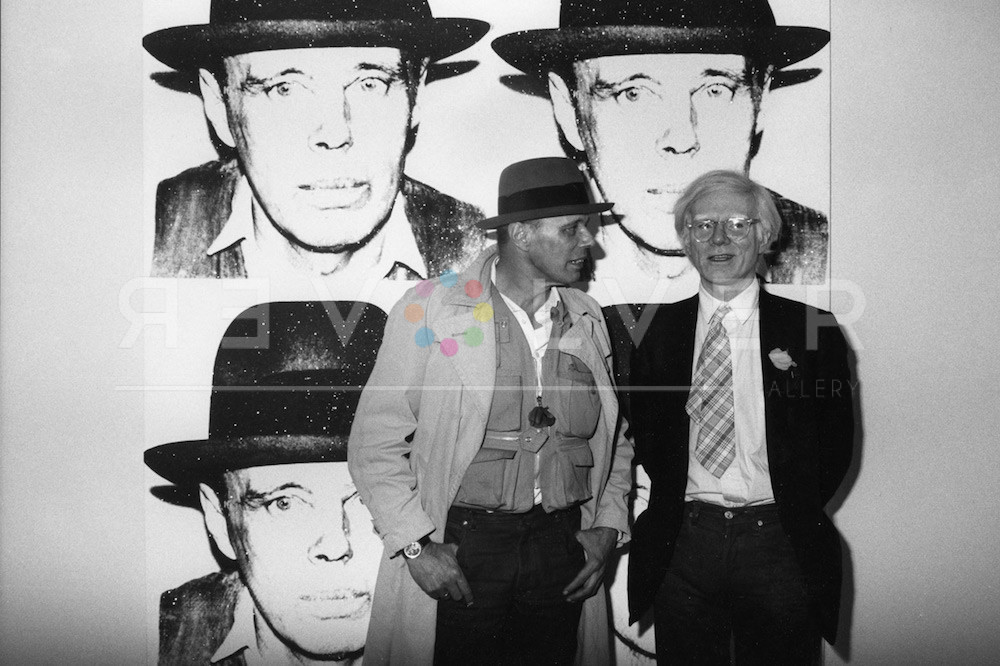
Warhol and Beuys were not intimate friends per se, but harbored a mutual admiration for each other as evidenced by the series of portraits Warhol did of Beuys in 1980 and commissions and requests Beuys made of Warhol, such as the poster Warhol made for the German Green Party (Die Grünen). Both artists also (along with Japanese artist Kaii Higashiyama) participated in the first documented transmission of art over fax machine in 1985.
Joseph Beuys in Memoriam 371 and other portraits of Beuys are perhaps amongst the more surprising works in Warhol’s oeuvre. Warhol and Beuys’ artistic approaches couldn’t be more different. The former pioneered the Pop Art vanguard which sought to wrestle representation back from the Abstract Expressionists and present a sort of objective physical reality. The latter was trying to broaden the definition of what art even was, possibly even moving beyond the material, creating highly abstract works and using performance art to express his ideas. What the two shared in their philosophy was a collapsing of the artist and the viewer. Beuys accepted anyone into his art classes, something that got him dismissed as lecturer at the Dusseldorf Academy of Art. Warhol saw everyone having a potential 15 minutes of fame and thought that the mass production of goods could deliver good art to anyone. They both asserted that art was not rarefied, but something that everyone had the ability to experience and create.
The format of Joseph Beuys in Memoriam 371 is stock Warhol. An image of Beuys in his characteristic outfit sits on a colored background. However, in this instance, the background consists of camouflage, which might have seemed shocking at the time. Warhol was the Prince of Pop and his deviations into abstraction were rare. What was this surprising motif and what did it have to do with Beuys? The answer may lie in the following year, 1987, when Warhol published what would be his last print series, Camouflage. (In that series, Warhol “popified” camouflage, something that, at the time, was not seen in pop culture and fashion nearly as often as it is today. But, considering Joseph Beuys in Memoriam, it appears that Warhol’s experimentation with camouflage dates back even farther.) Seen in retrospect, Beuys could be construed as an avatar of artistic innovation and freedom. He peers out from Warhol’s ultimate print work, seeming a shaman of what was to come.
Video: Joseph Beuys meets Andy Warhol (1979, Hans Mayer gallery in Dusseldorf).
Video: Joseph Beuys – How to Explain Pictures to a Dead Hair (1965, at the Galerie Schmela in Düsseldorf).
Photo of Warhol and Beuys courtesy of Schellmannart.com.