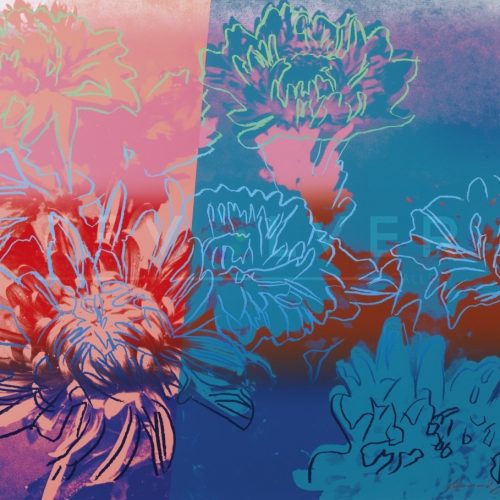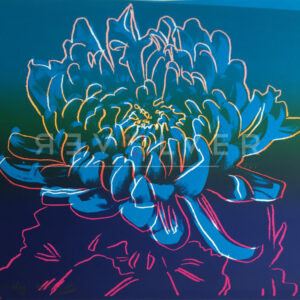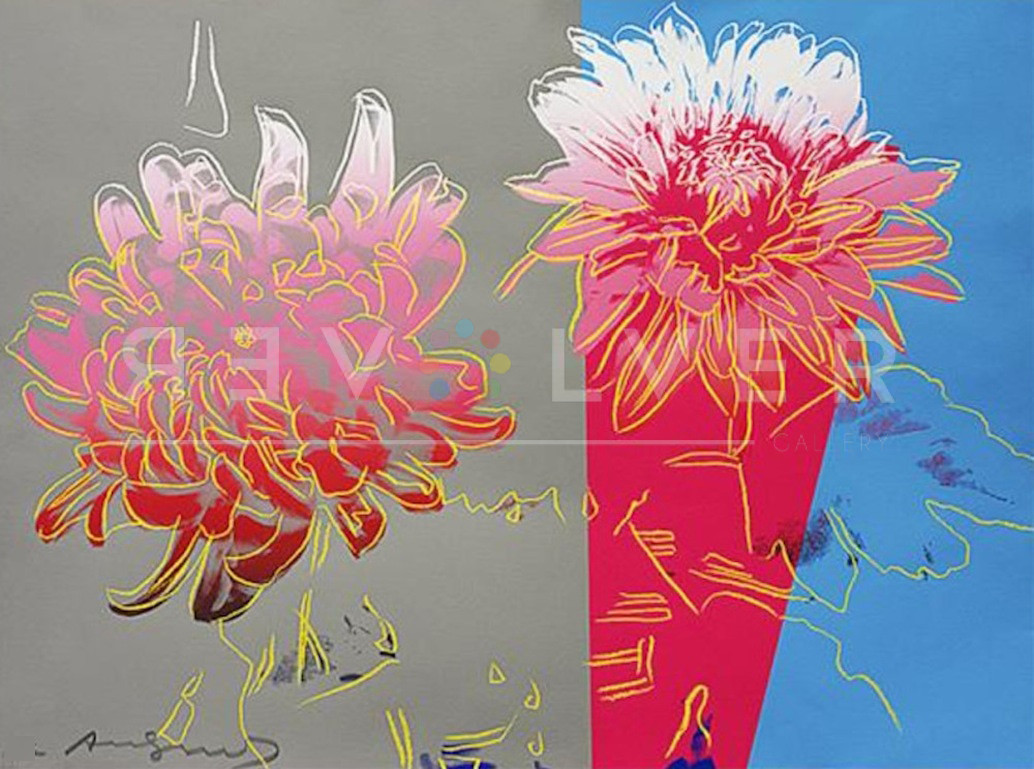
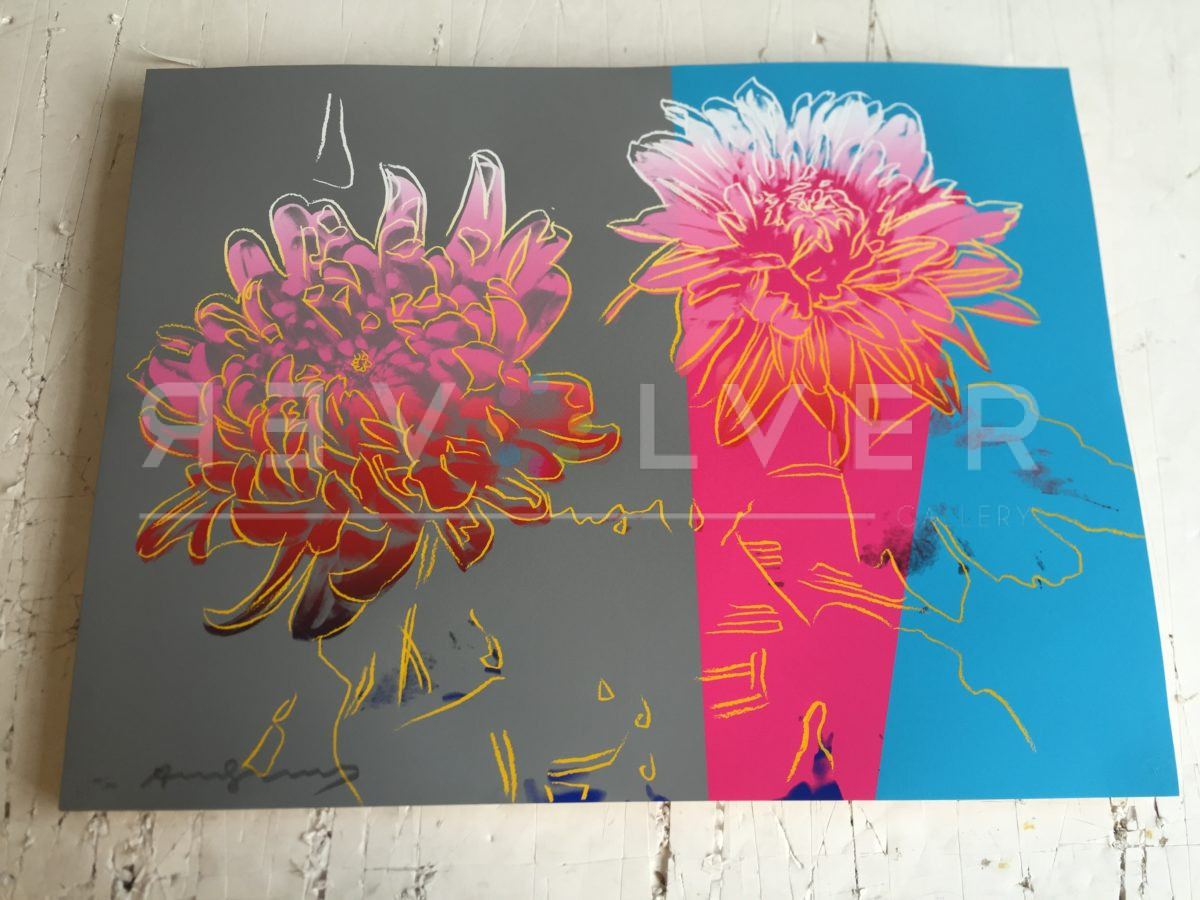
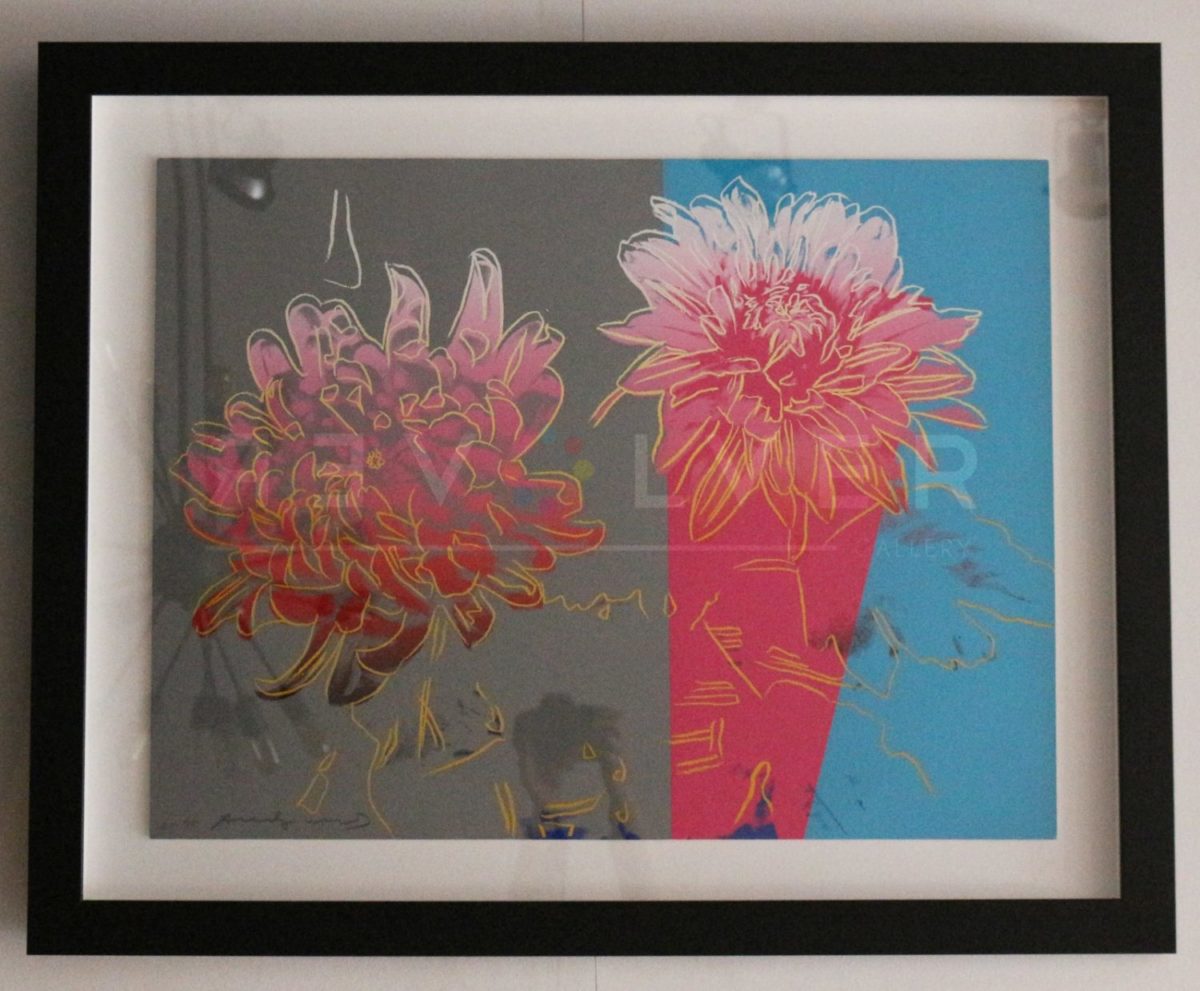
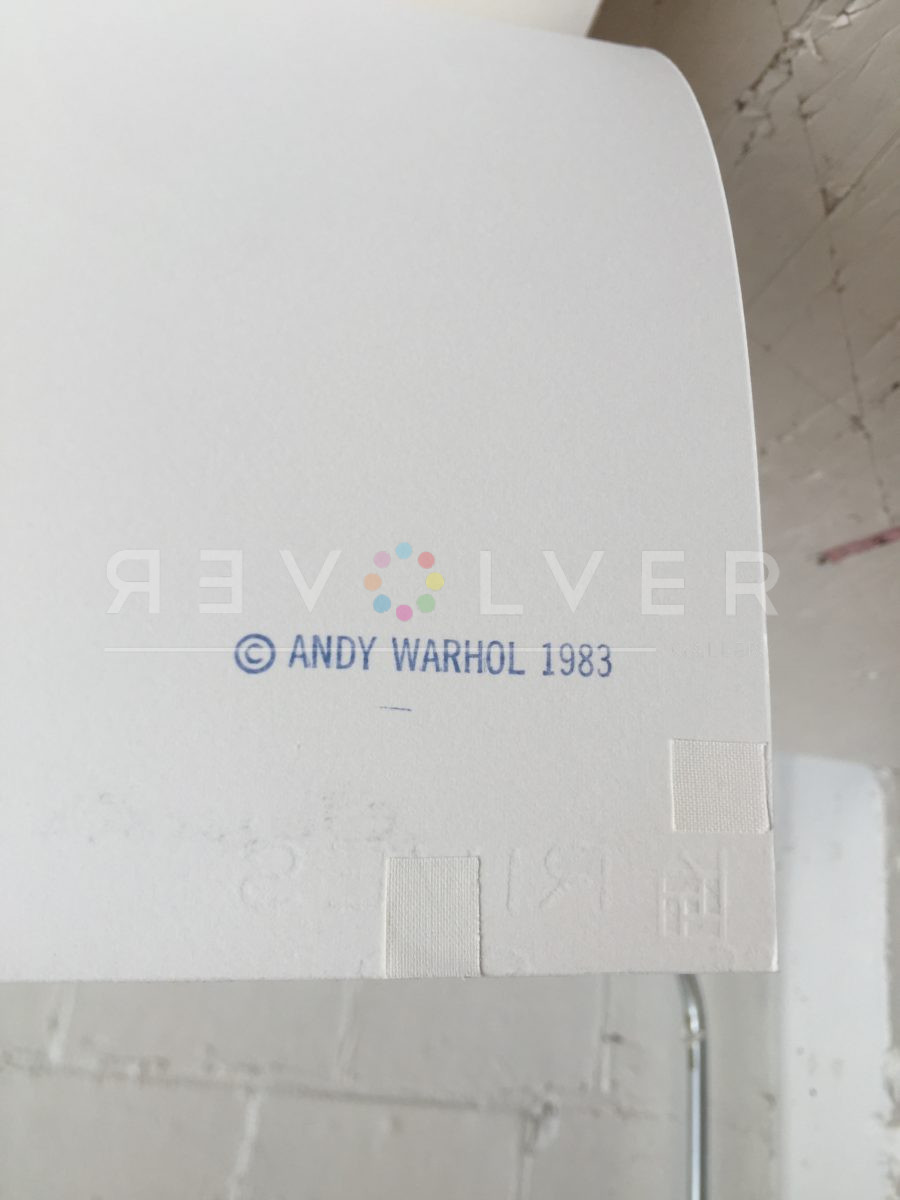
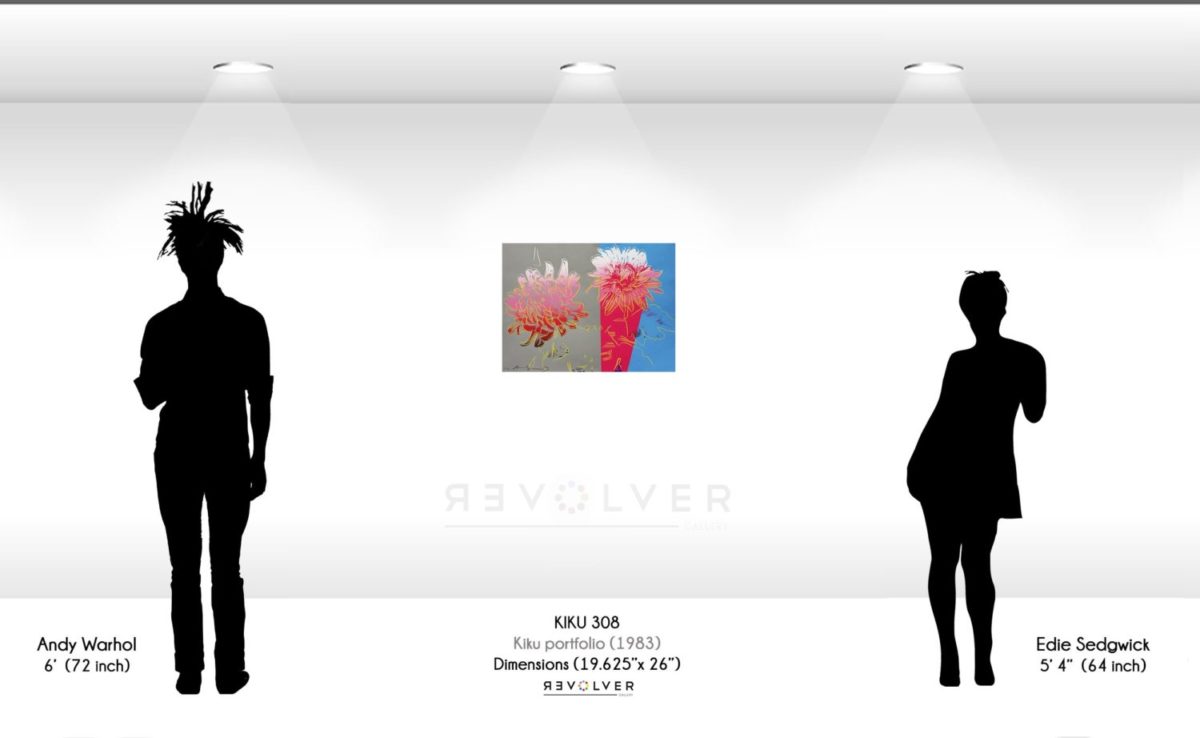
Kiku 308 is a screenprint by Andy Warhol created in 1983. The composition presents a tightly cropped chrysanthemum bloom. Warhol divides the image into contrasting sections that create strong visual balance. On one side, muted gray tones soften the flower’s shape. On the other side, bright blue and vivid magenta fields intensify the bloom. The petals appear layered and dense, with thin neon-like contour lines tracing each fold and curve. The color palette mixes cool and warm tones, creating sharp contrast. The outlines feel energetic yet controlled, guiding the viewer’s eye across the petals. The flattened perspective removes depth, which gives the image a graphic and modern feel. The bloom appears both delicate and bold through its exaggerated color and simplified form.
The print belongs to Warhol’s Kiku series, which centers on the chrysanthemum flower. Other works from the series include Kiku 307 and Kiku 309.
Kiku 308 by Andy Warhol as Part of His Larger Body of Work
Warhol returned to floral imagery throughout his career. He explored flowers as both visual subjects and design forms. Earlier, he created the well-known Flowers series using photo-based images. He cropped the blossoms and repeated them in bold colors. As a result, the flowers became flat and decorative while still recognizable. Likewise, the Flowers (Black and White) and Flowers (Hand-colored) portfolios show a looser and more experimental style. However, the Kiku series shows a more careful and polished approach. During the early 1980s, the Gendai Hanga Center in Tokyo asked Warhol to create works inspired by Japanese subjects. Because of this, Warhol focused on the chrysanthemum, a flower linked to Japanese culture and the Imperial House. The subject allowed him to combine Pop Art with traditional symbolism.
Warhol’s Use of Color and Line in Kiku 308
In Kiku 308, Warhol uses color as the main visual tool. Deep blue areas create weight and focus. At the same time, bright contour lines trace the petals and add movement. These outlines lead the viewer across the bloom and highlight its layered structure. In addition, Warhol simplifies the complex flower into bold shapes. This choice allows the image to work as both nature and graphic design. Warhol also relies on contrast. Strong color blocks separate the flower from the background. Furthermore, the flat space in Kiku 308 reflects Warhol’s interest in mass image production. The screenprint method supports this idea because it allows small changes in ink and tone. Therefore, each print feels lively while still belonging to the larger edition.
Historical Context and Legacy of the Kiku Series
The Kiku series marks one of Warhol’s late studies of flowers. Unlike earlier works that relied heavily on photographs, these prints draw from cultural exchange and global themes. The chrysanthemum carries strong ties to Japanese national identity. For this reason, Warhol’s version connects Western Pop Art with Japanese tradition. Collectors value the Kiku series because it shows Warhol’s ability to refresh familiar subjects. The prints also highlight his continued interest in color layering and clean design during the final years of his career. Today, Kiku 308 stands as a strong example of Warhol’s flower imagery. The print combines decorative beauty with bold design, which confirms Warhol’s lasting influence on modern printmaking.