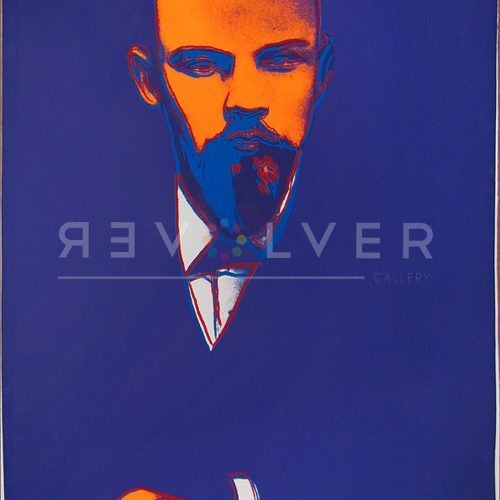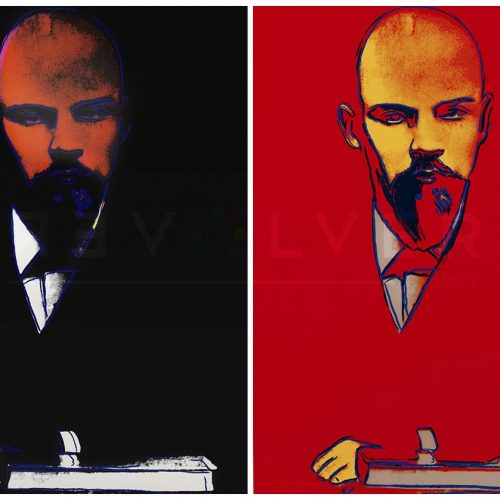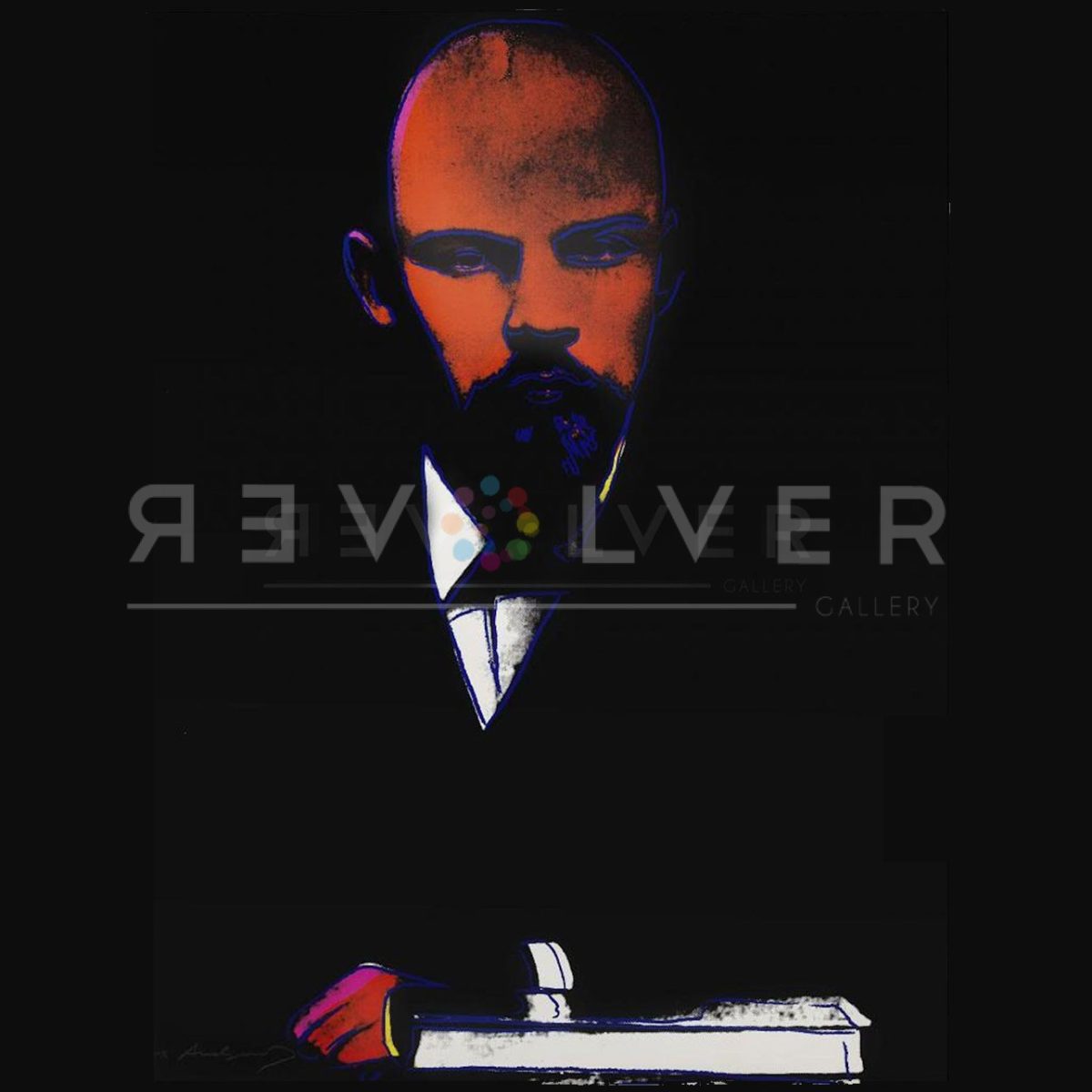
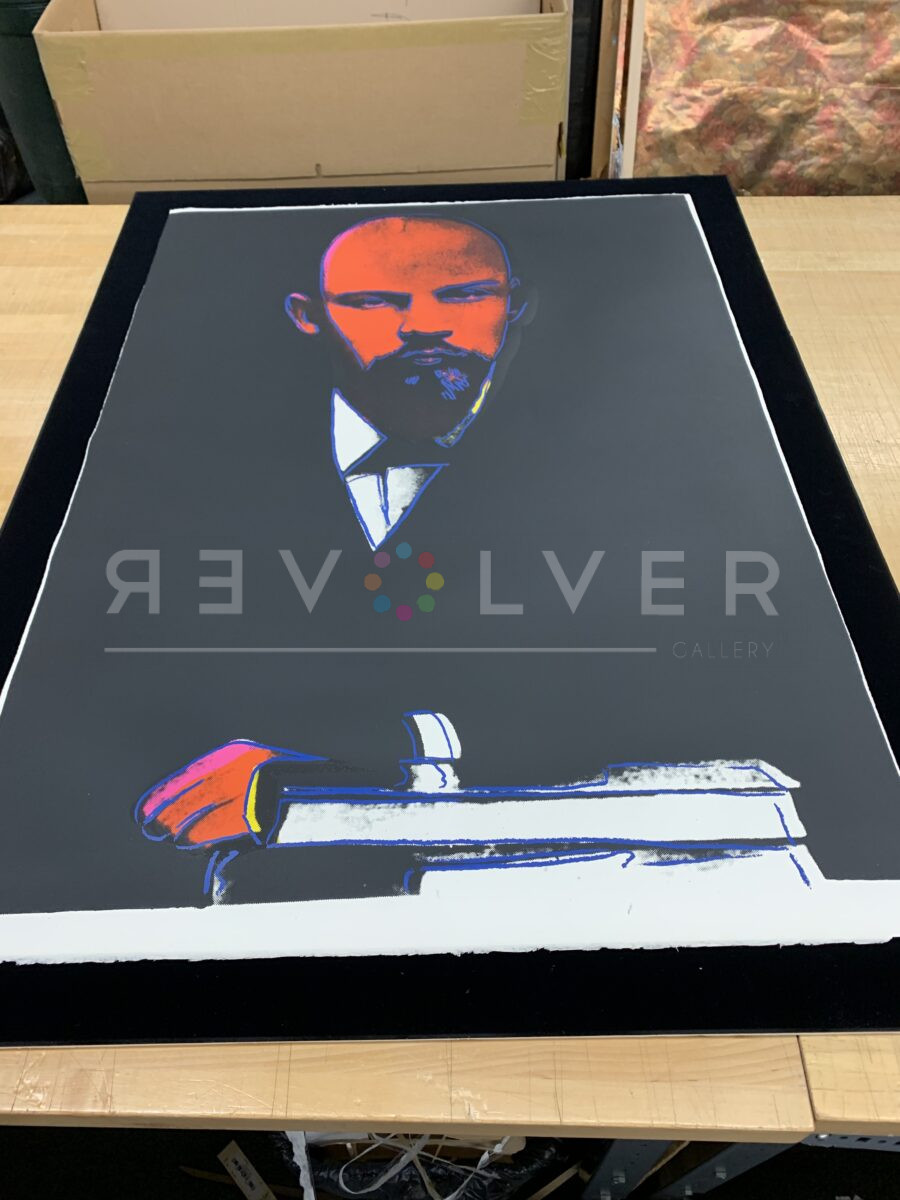
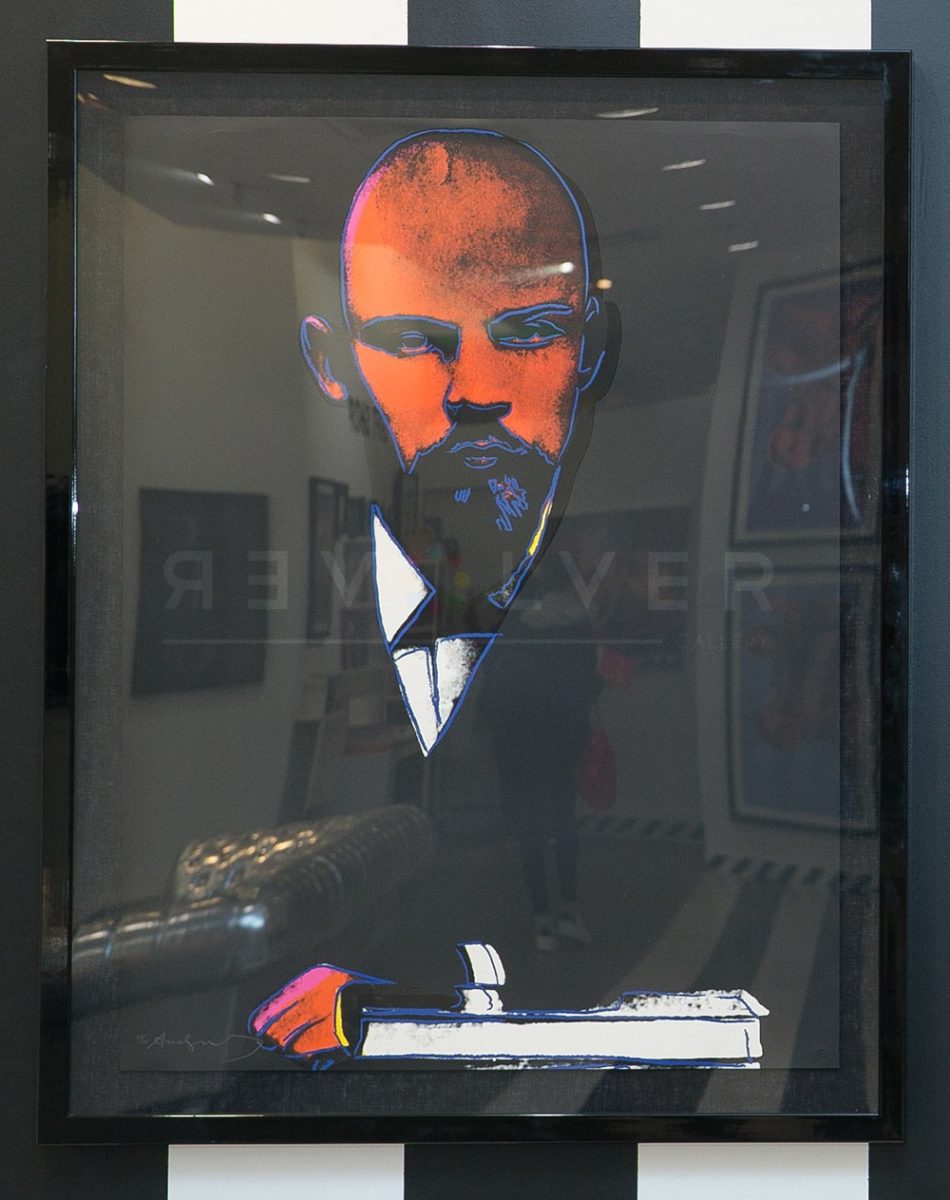
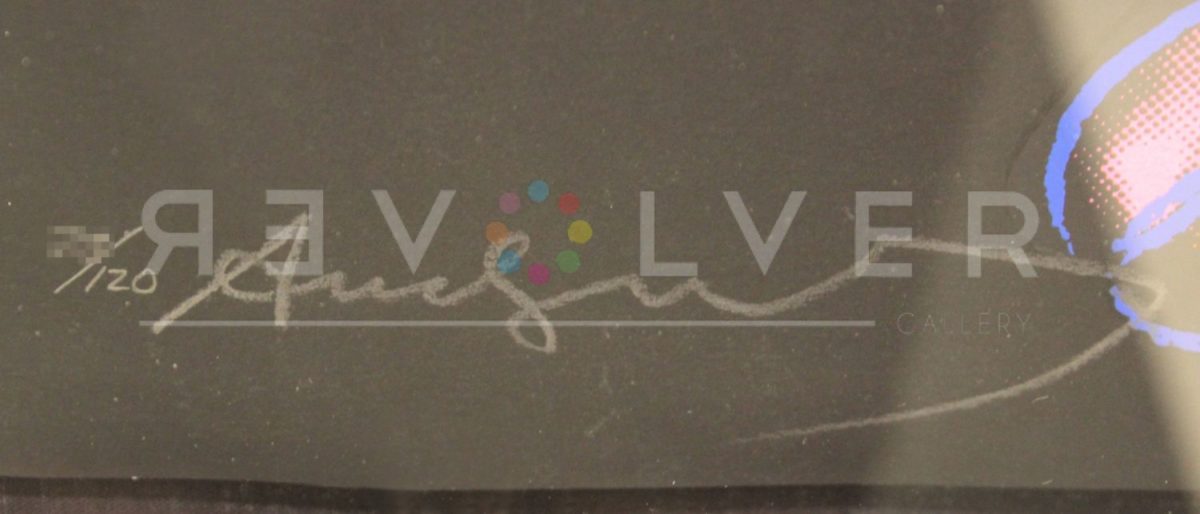
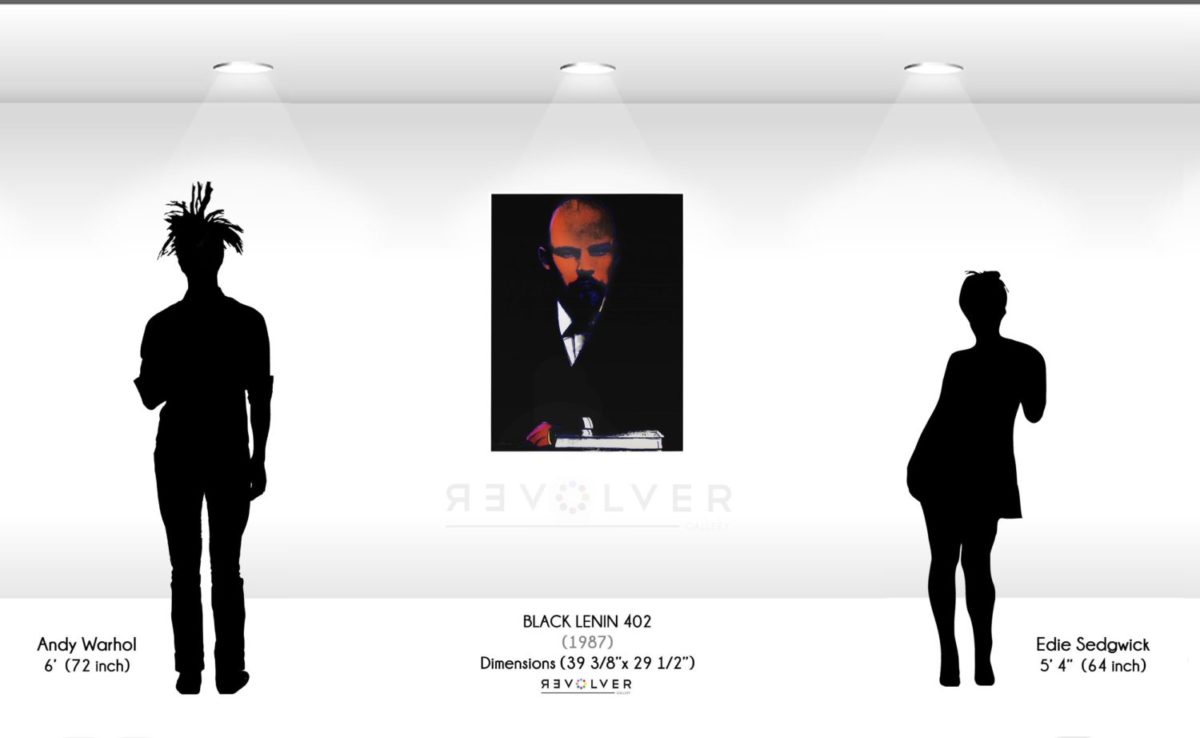
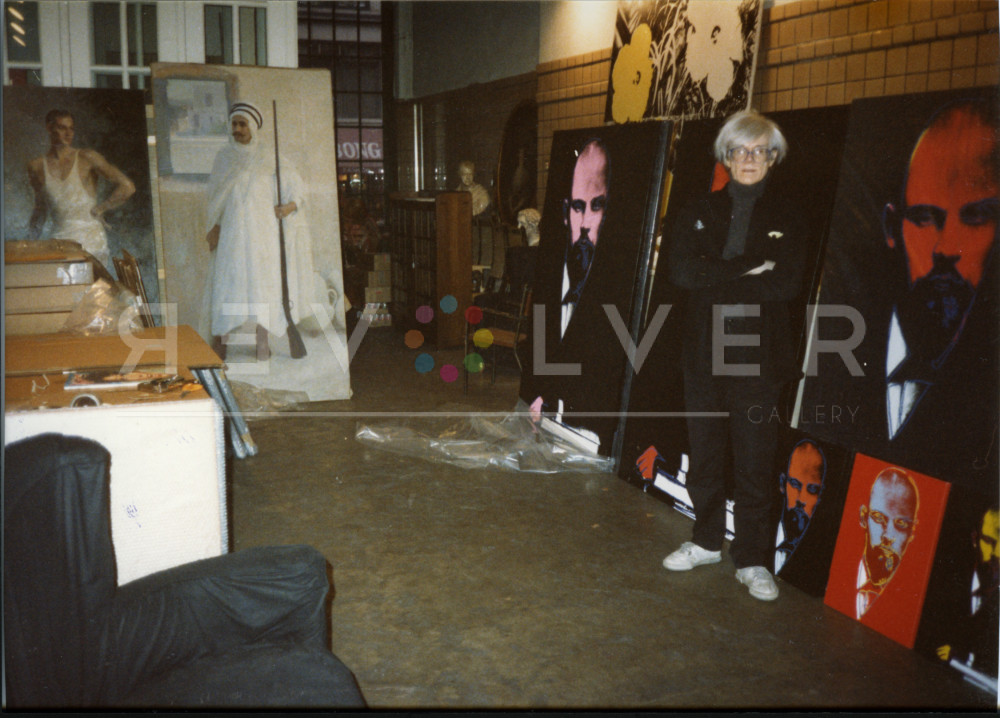
Lenin 402 (“Black Lenin”) by Andy Warhol is a masterful screenprint from the 1987 Lenin series, carrying profound historical significance in the artist’s body of work as one of his last prints. Warhol’s Lenin project, created just months before the artist’s death from complications after a surgery, features paintings, drawings, collages, and two print editions of 120 signed pieces, exemplifying Warhol’s fascination with political figures alongside iconic subjects. Red Lenin comprises the other 120 signed silkscreen prints.
In this exceptional artwork, Warhol’s deft use of predominantly black composition magnifies the presence of Vladimir Lenin, the influential leader of Russia’s communist revolution. The composition and skillful use of colors in “Black Lenin” create a striking visual effect, with the revolutionary leader seemingly emerging from the shadows. His face and hand appear illuminated in an orange-red reminiscent of a blood moon, while white shapes define Lenin’s shirt and the book upon which his hand rests. Warhol outlines the vivid blocks of color with hand-drawn blue lines, adding a dynamic and engaging quality to the artwork. The juxtaposition of colors accentuates the intelligence and strength of the political leader, adding depth and complexity to the portrait.
Lenin 402 (“Black Lenin”) stands as a testament to Warhol’s artistic prowess, showcasing his ability to capture the essence of historical figures while infusing his distinct Pop Art style. The print’s arresting and foreboding expression mirrors the intelligence and intensity of the revolutionary leader, leaving a lasting impression on the viewer. As part of the Lenin series, “Black Lenin” holds immense value for collectors, representing not only historical significance but also artistic brilliance. Its captivating portrayal of the iconic political leader and its symbolic use of colors make it a compelling addition to any art collection. This print exemplifies Warhol’s profound exploration of political themes and his impact on contemporary art.
Photo credit: Andy Warhol in front of the Lenin works at his Factory, by Bernd Kluser, February 1987. Copyright Galerie Klüser.