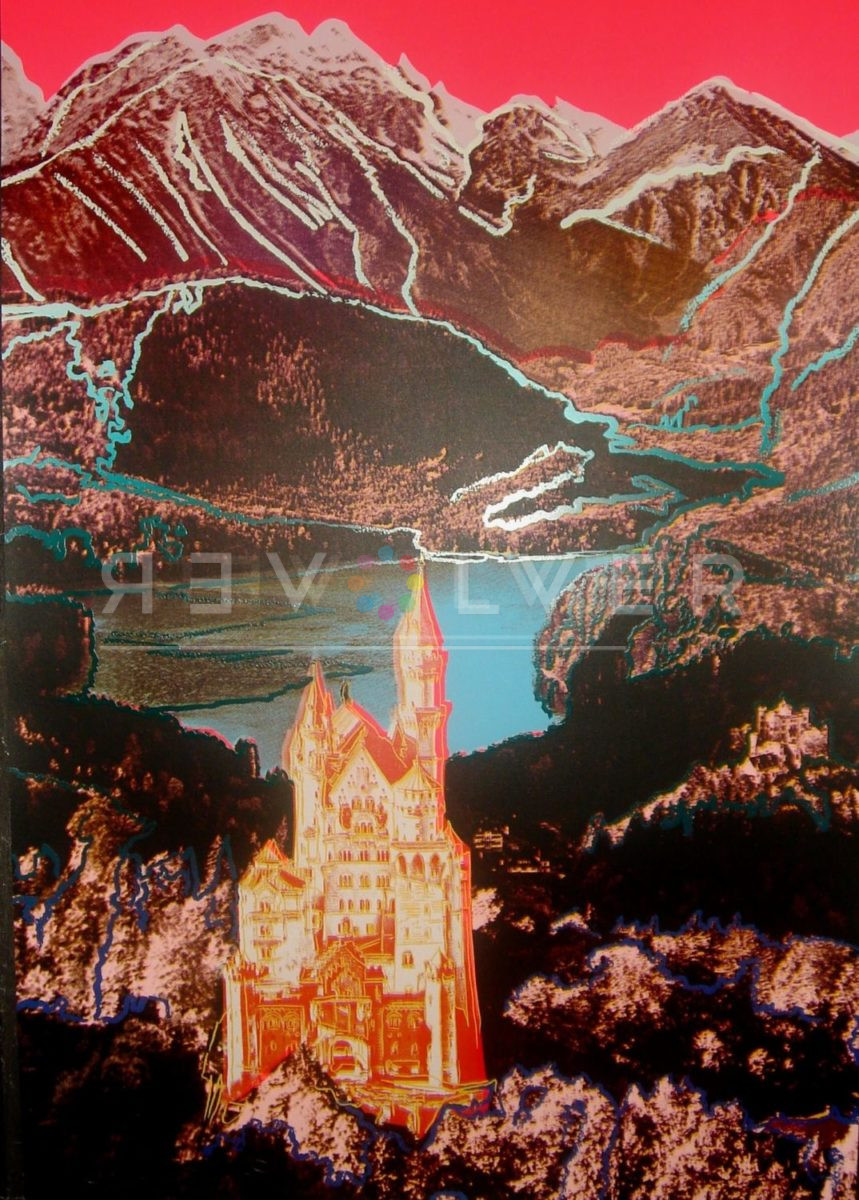
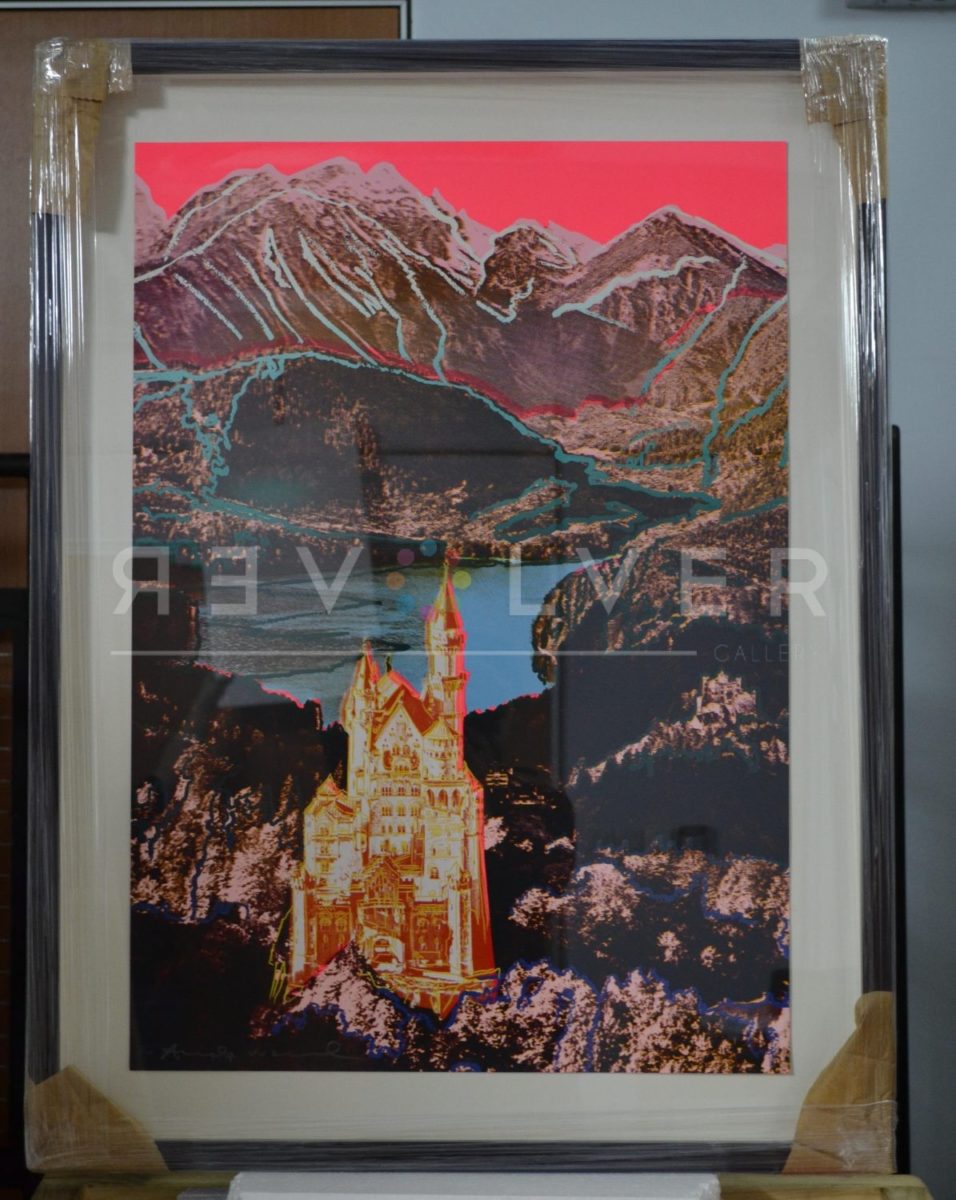
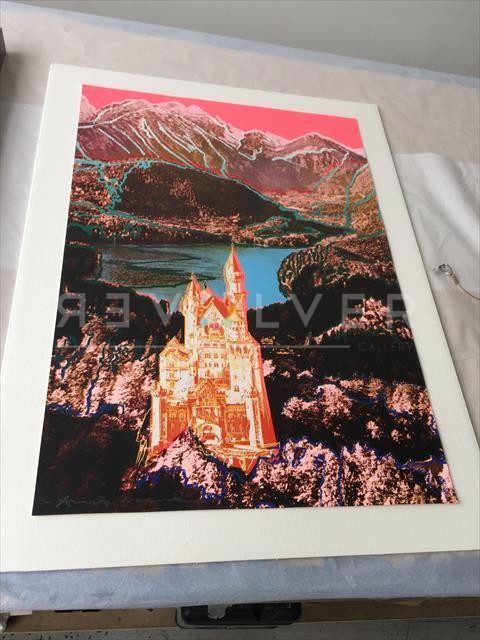
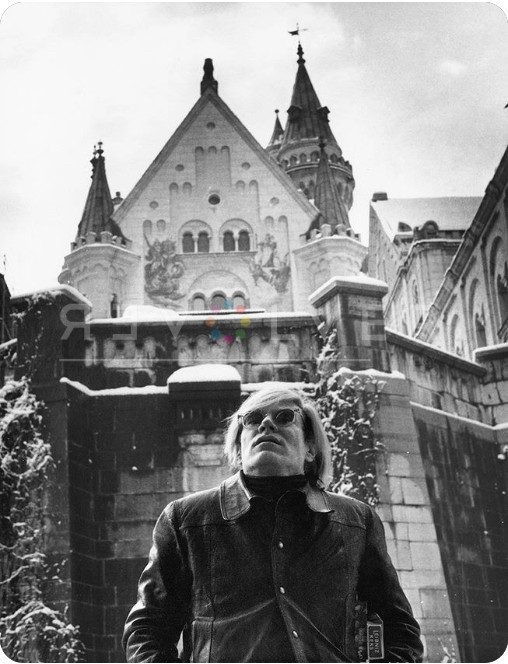
Neuschwanstein 372 by Andy Warhol was created to commemorate the 100th anniversary of the Bavarian Reinsurance Company in Munich, Germany. The Neuschwanstein Castle is perched over the Bavarian village of Hohenschwangau. It is a Neo-Romanesque palace that was built as a getaway home for King Ludwig II. After his death, it became open to the public and has had more than 61 million visitors. Due to its enchanting, majestic and larger than life qualities, it has been included in many films and is said to have been the inspiration for Disneyland’s Magic Castle.
Neuschwanstein 372 as Part of Andy Warhol’s Larger Body of Work
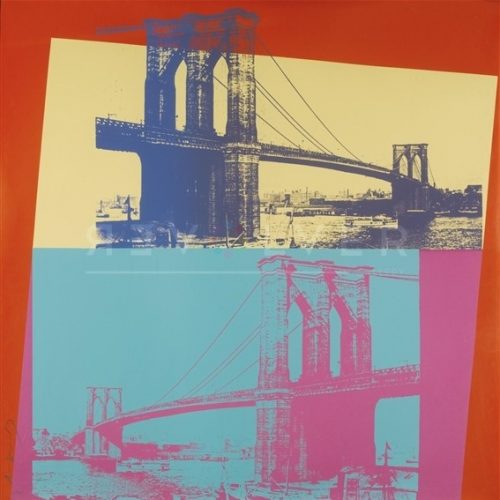
Warhol was inspired by the aesthetic qualities and historic relevancy of architecture, which is evident in his artwork that features historic buildings. Other architectural figures that Warhol has depicted include the Cologne Cathedral in Cologne, Germany and the Brooklyn Bridge in New York. However, rather than focus solely on the buildings architecture as he does in his other prints, in Neuschwanstein 372, Warhol zooms out of the iconic facade of the castle to include the scenic countryside in the background. The painting is surreal with a neon pink sky and mountains outlined in blue, that give the scene an enchanting aura.
Photo credit: Andy Warhol in front of Neuschwanstein Castle, Allgäu, Bavaria, 1971, Edition Leo Weisse © Galerie Krätz/ 2012.