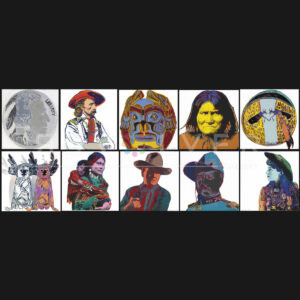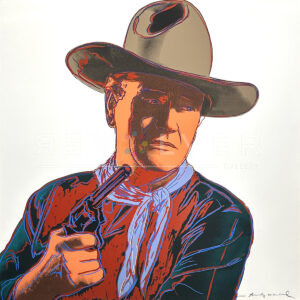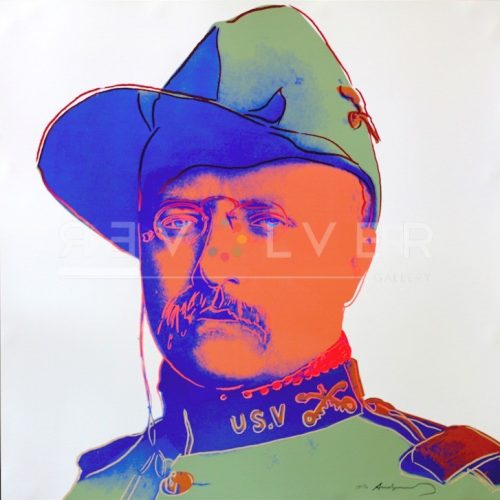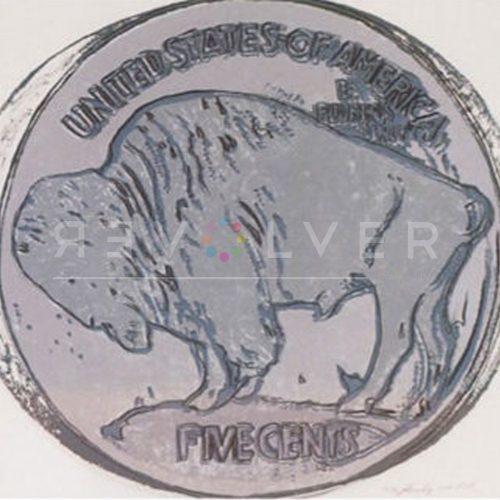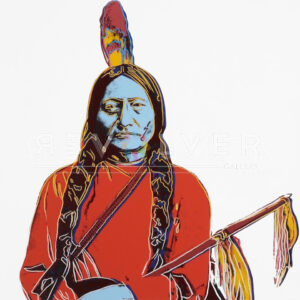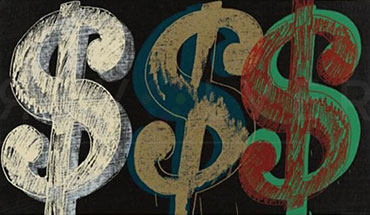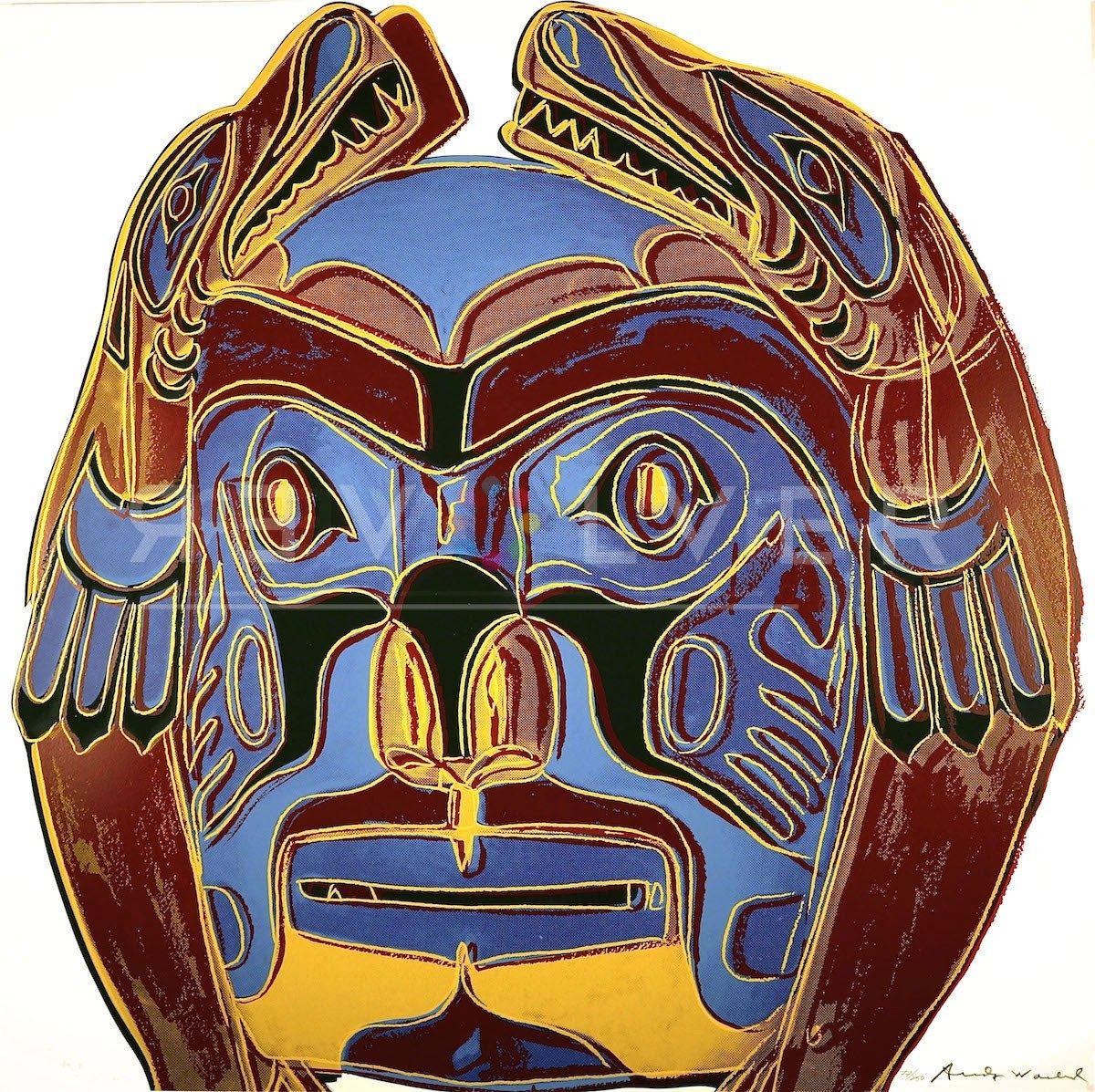
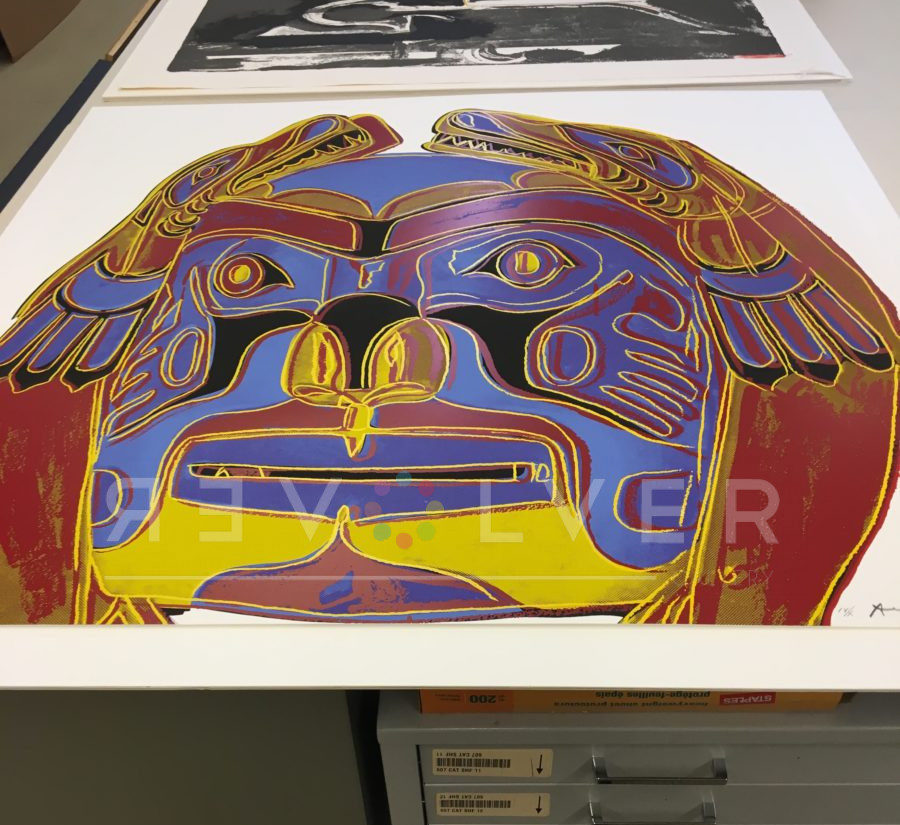
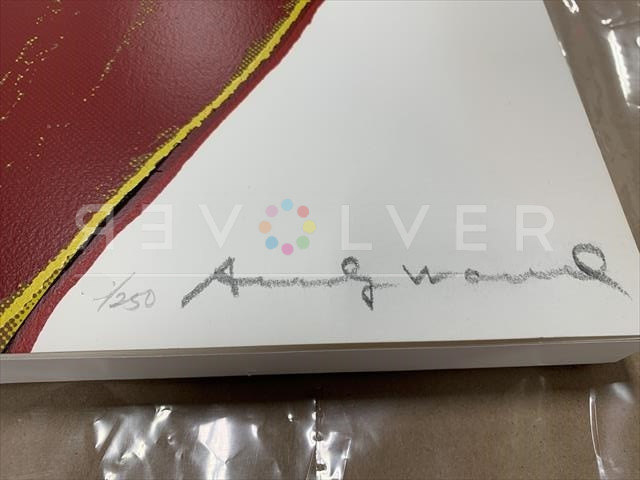
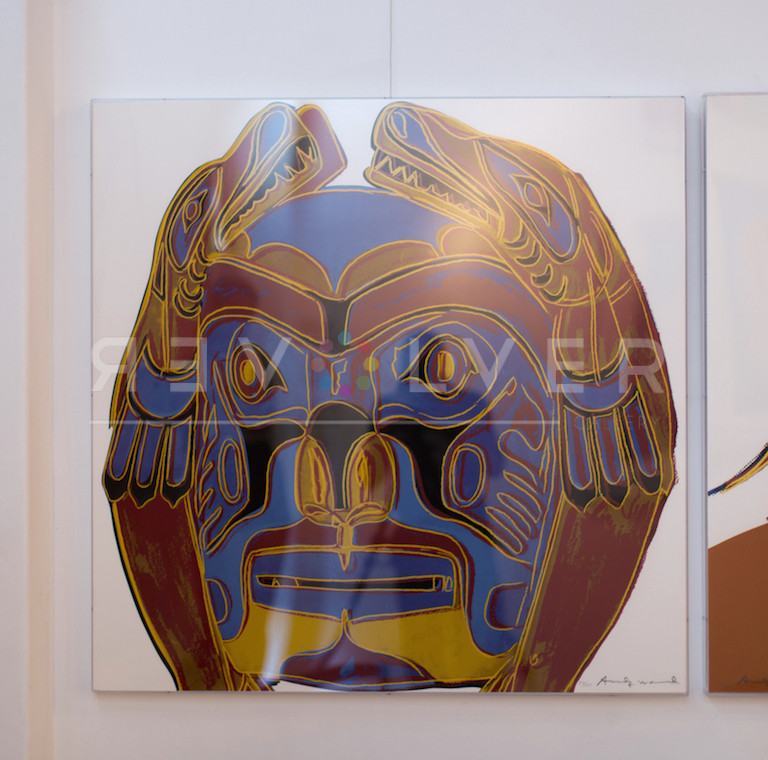
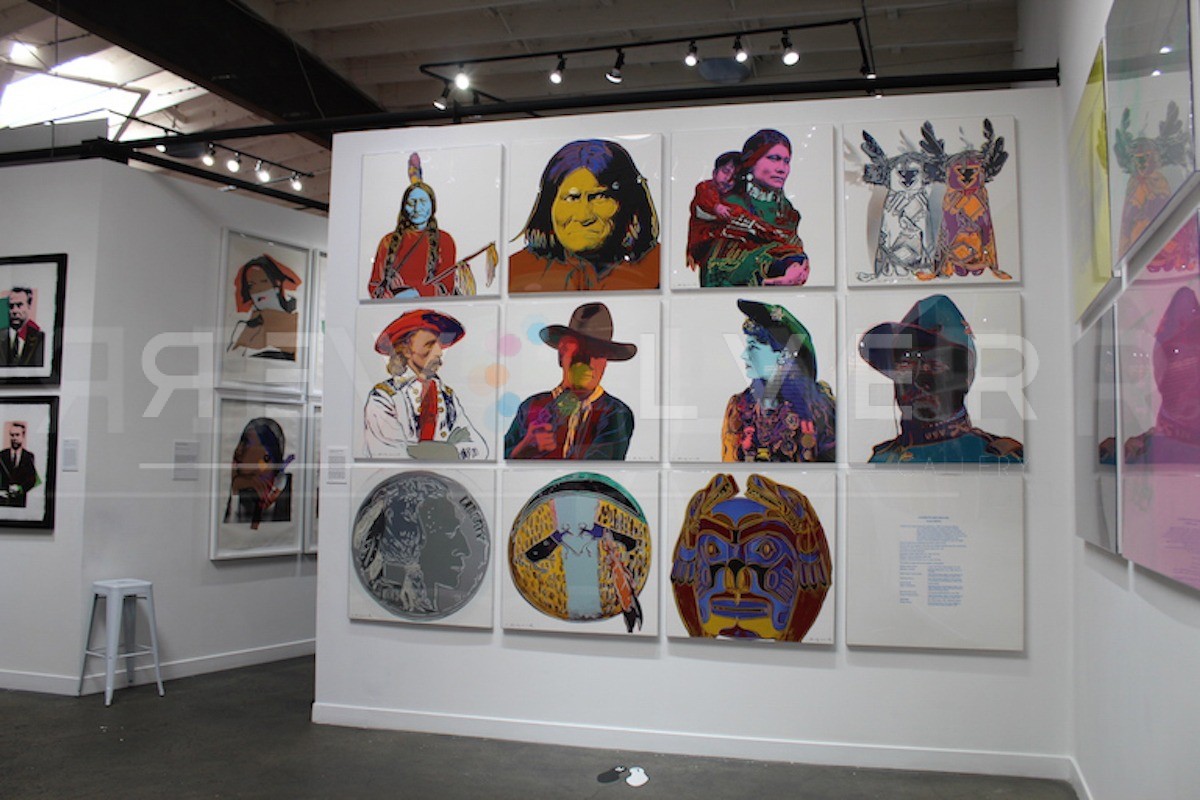
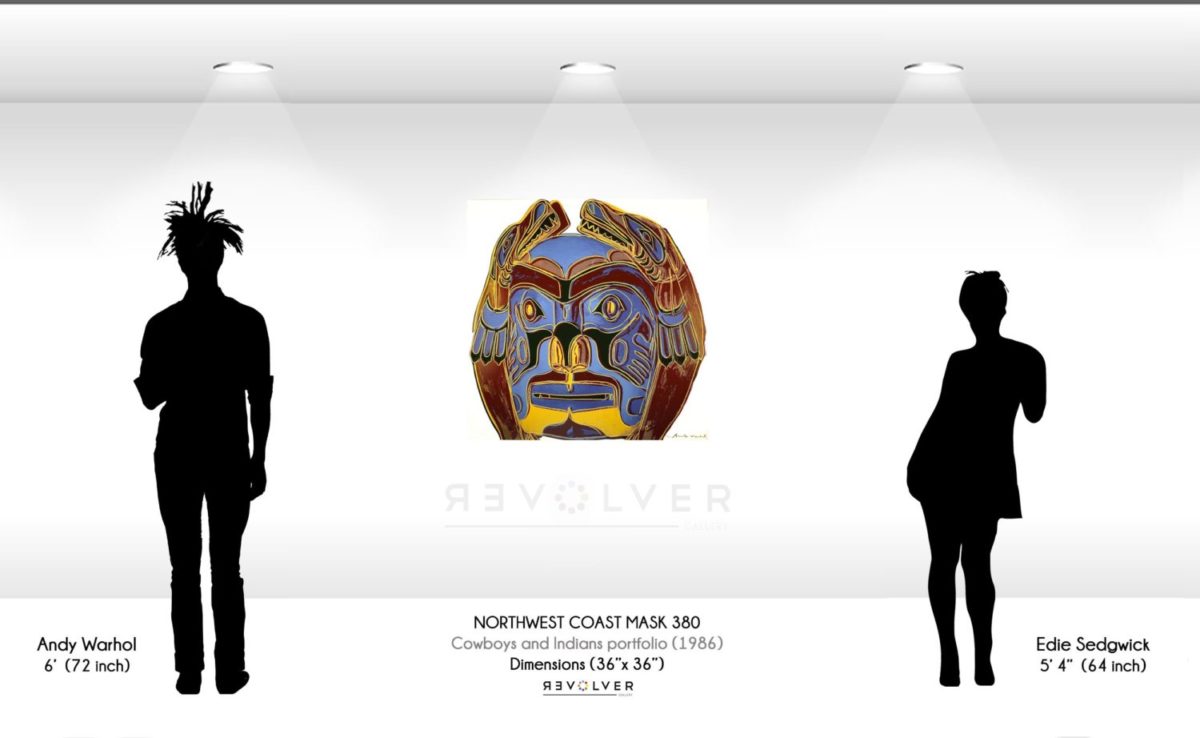
Northwest Coast Mask 380 is one of the ten screenprints included in Andy Warhol’s Cowboys and Indians portfolio. The portfolio was created in 1986 and explores the themes associated with the wild west. Portraying the American west similar to its portrayal in Hollywood and mass media, Warhol features notable western figures such as John Wayne, Annie Oakley, Geronimo, Teddy Roosevelt, and juxtaposes them with Native American figures and motifs. Aside from the Northwest Coast Mask 380, Warhol features other Native American imagery in the portfolio with works such as Indian Head Nickle 385, Kachina Dolls 381, and Plains Indian Shield 382.
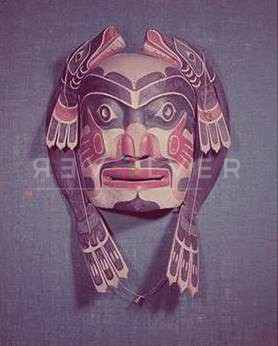
In Northwest Coast Mask 380, Warhol depicts a detailed representation of the traditional mask that was often worn for cultural celebrations in some indigenous community in the northwest. These masks often represent spirits, animals, and myths within Native American culture. When used in ceremonies and celebrations the masks are intended to connect the wearer to the spiritual world.
Warhol’s depiction in Northwest Coast Mask 380, along with other subjects, contains a stylized and Warholian portrayal that mirrors pop culture. Warhol’s decision to portray the subject matter in the Cowboy and Indians portfolio reflects how these themes are present in the media, and in our imagination, rather than striving to be historically accurate.
The romanticized depiction of the old west remained a constant interest throughout time. During the golden age of Hollywood, the western genre flourished. However, its representation of the west and figures associated with it often presented an inaccurate portrayal. Hollywood’s idea of the old west frequently followed a cowboys versus Indians trope, along with a heroic and idolized depiction surrounding the figure of the cowboy. This frequent portrayal, though entertaining to viewers, presented an essentialized version of western America. The impact mass media had through their representation of the west ultimately became more appealing than reality. This caused the history of Native Americans and their culture to be overshadowed, distorted, and subject to America’s own understanding.
The Cowboys and Indians portfolio reflects this fascination and inadequate portrayal. Merging Warhol’s known celebrity and pop culture art form with historical figures, he uses Pop Art to decontextualize the images. Rather than portraying each figure and motif in their own landscape, Warhol opts to focus on a detailed and stylized pop art portrayal of each image. Northwest Coast Mask 380 is a classic Warhol piece, and one of the most intriguing from the series.
Photo by: Mechanical mask representing Sisiutl (a sea serpent), c.1880-1920, Smithsonian National Museum of the American Indian.