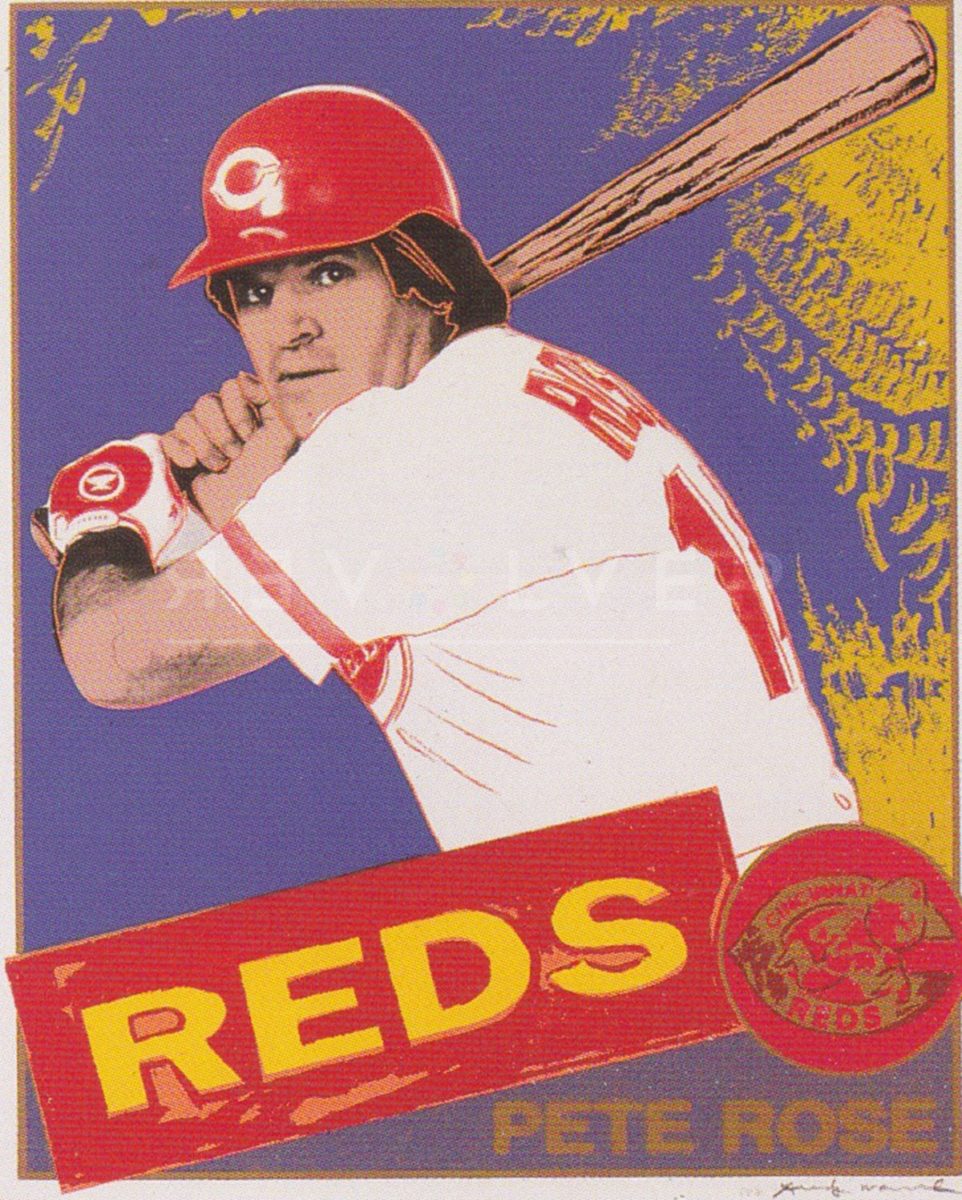
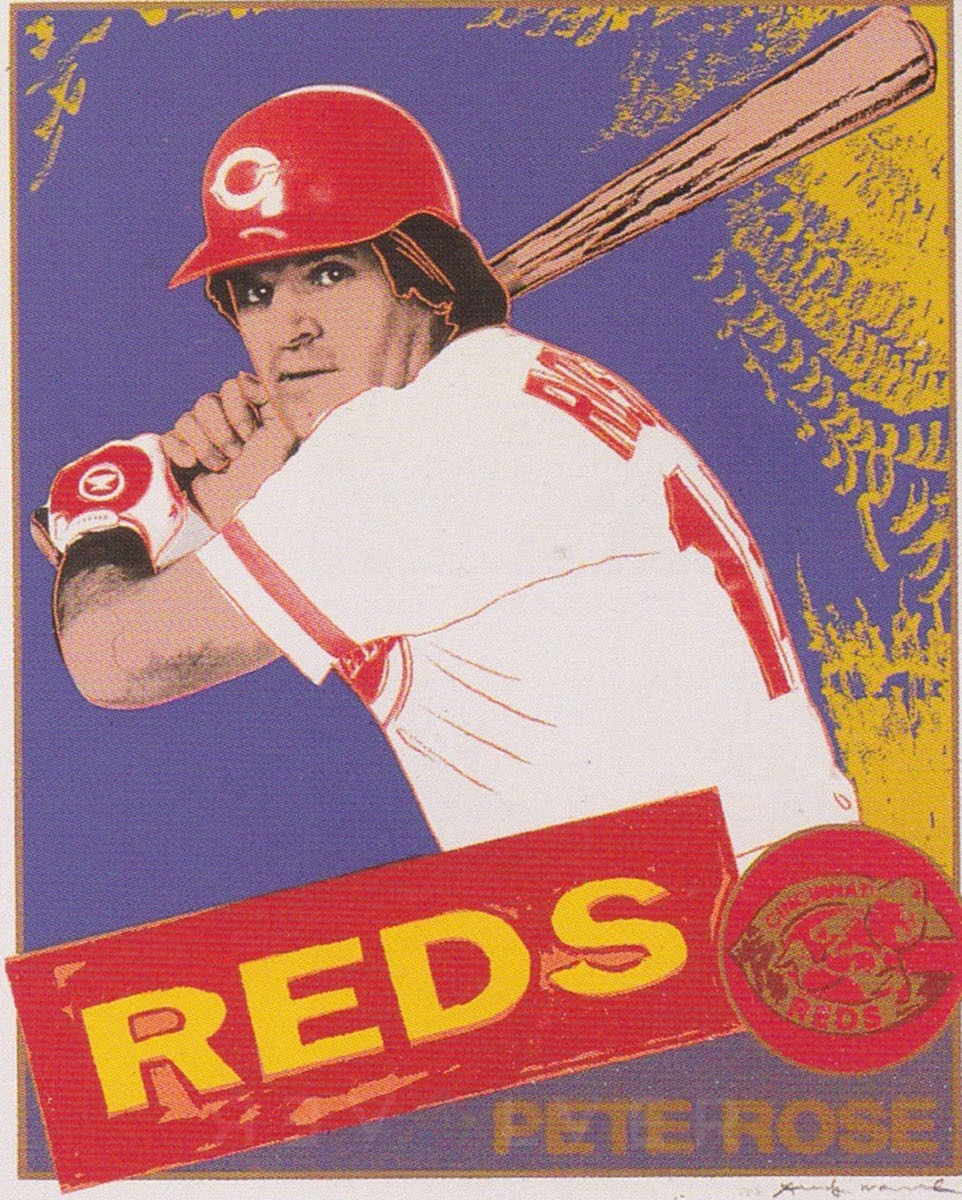
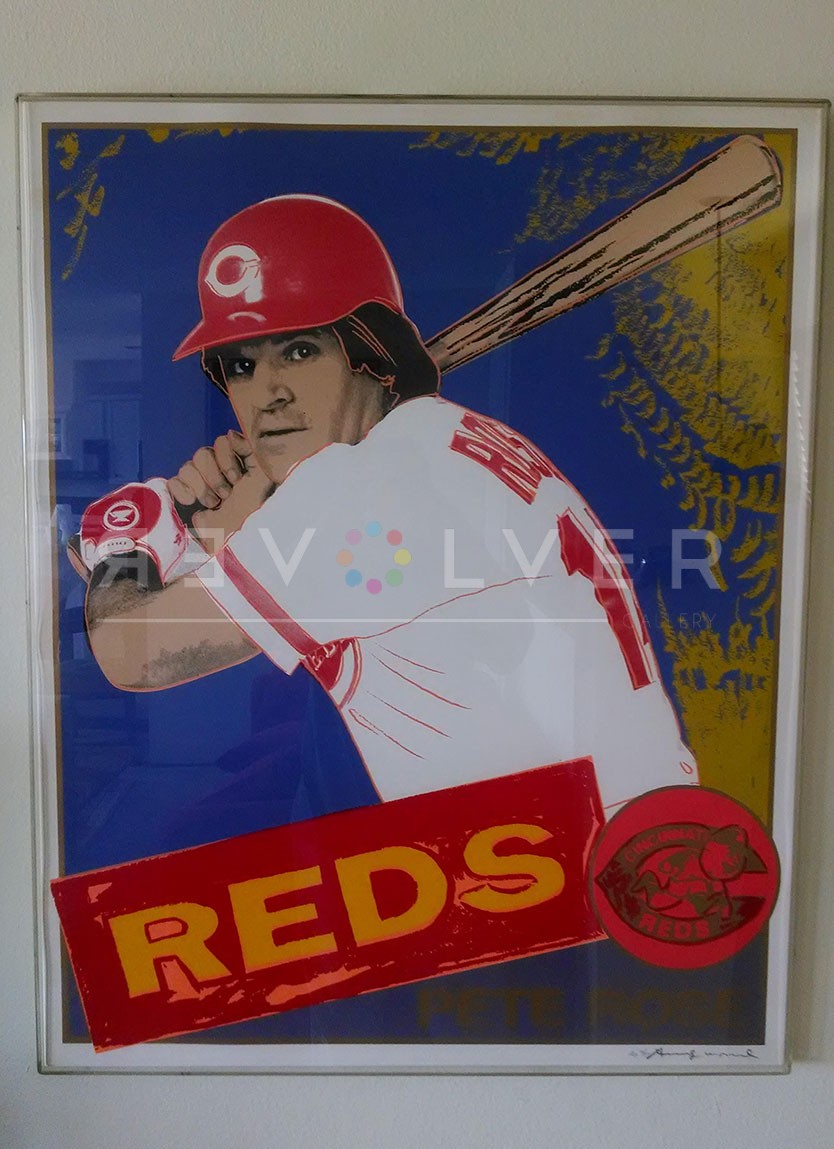
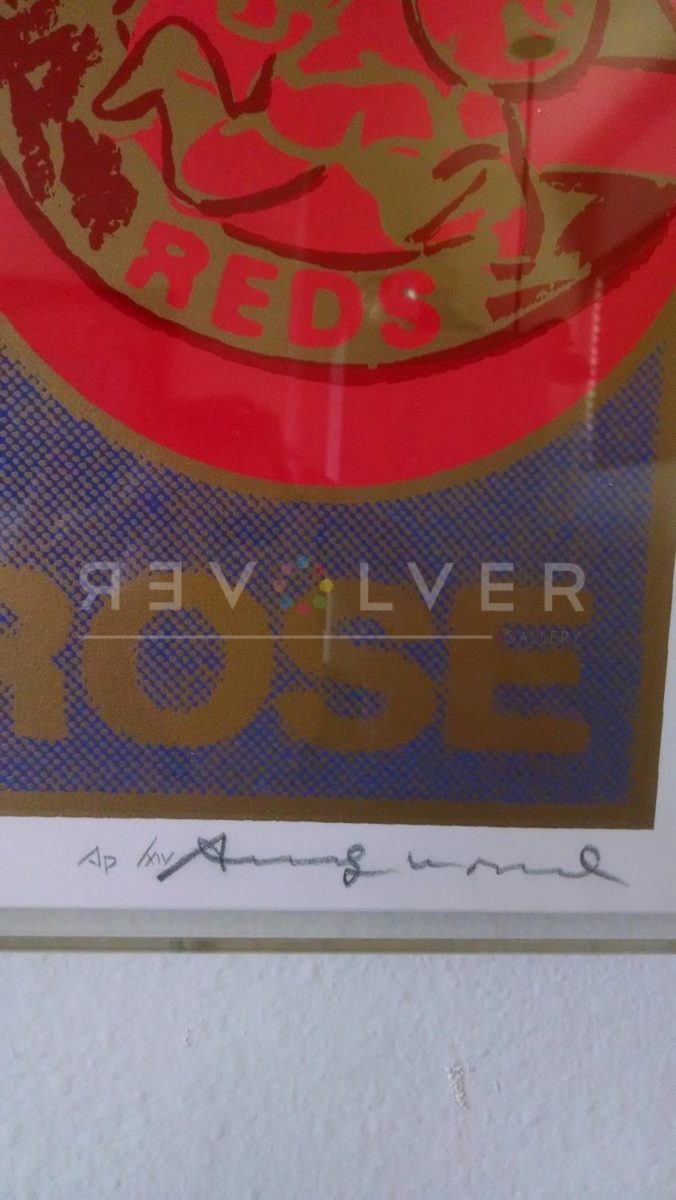
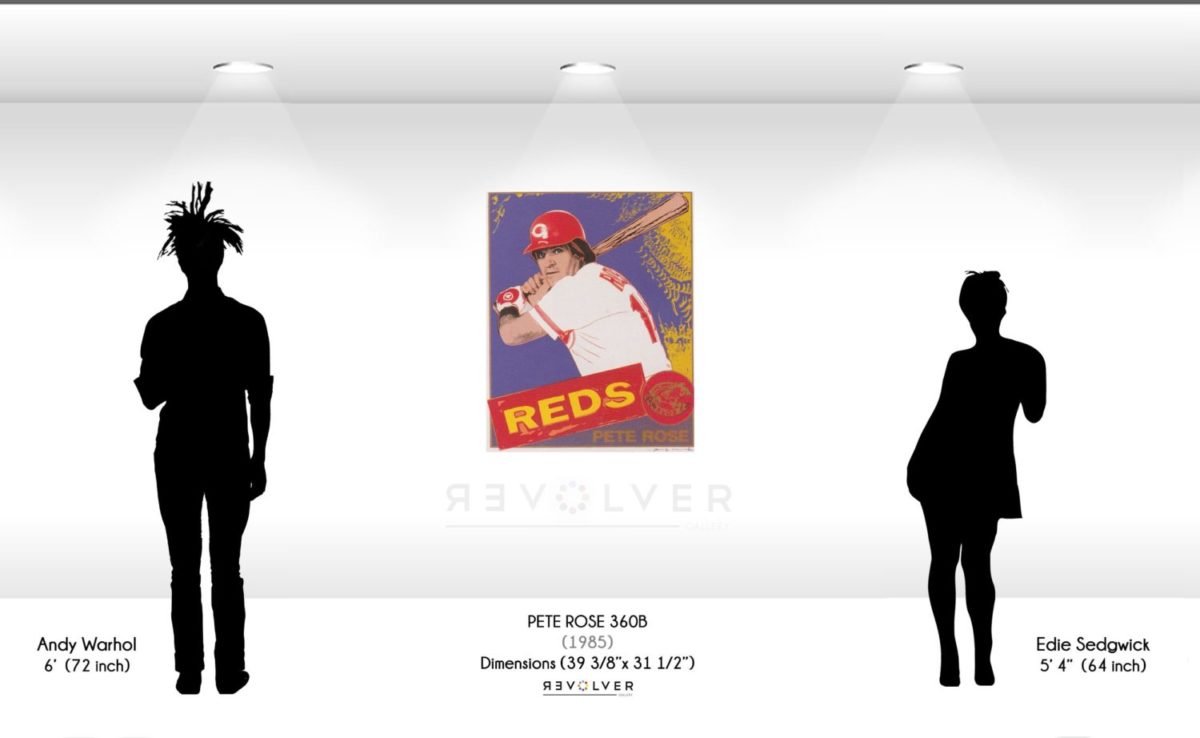
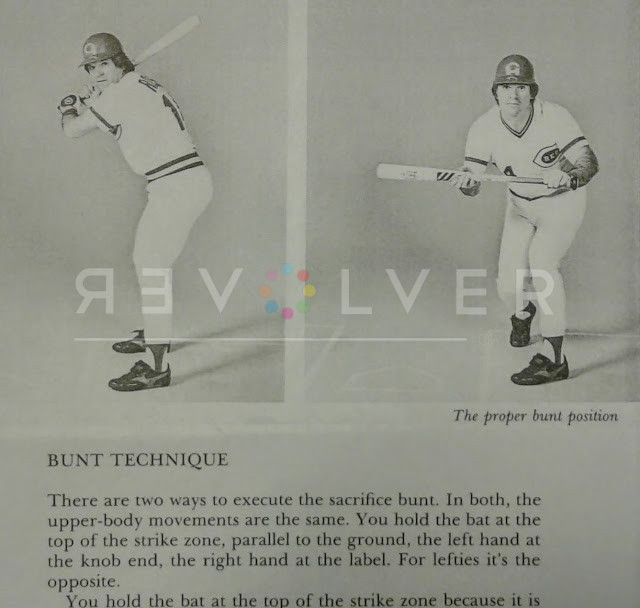
Pete Rose 360B was created by Andy Warhol in 1985, the year that Pete Rose broke the all-time hits record. Commissioned by the Cincinnati Art Museum, Warhol created an 4 image, acrylic on canvas screen print that was based off a photo by Cincinnati photographer, Gordon Baer. True to Pop Art style, the screen print mimics the style of a classic baseball card. Warhol produced 50 impressions of color screen prints of one of the four images. He used colors that exemplified who Pete was‐a colorful character. Warhol died two years after this commission and Pete Rose was banned from baseball for placing illegal bets.
Pete Rose 360B by Andy Warhol as Part of His Larger Body of Work
One of his late-period celebrity portraits, Warhol used acrylic paint on a canvas with four silk-screen images of Rose in a right-handed batting stance. The work is notable for being in the style of a baseball card. “It was so brilliant of Andy to make it into a baseball card,” said Carl Soloway, the Cincinnati Art Dealer who approached Warhol about creating the portrait. “And that’s so interesting because baseball cards are collectible and negotiable. So it was a statement about the commercialization of art, just like his soup cans are about the commercialization of branding.”
Photo credit: “Pete Rose on Hitting: How to Hit Better than Anybody”, 1985. Photo by Gordon Baer. Courtesy of Phungo.