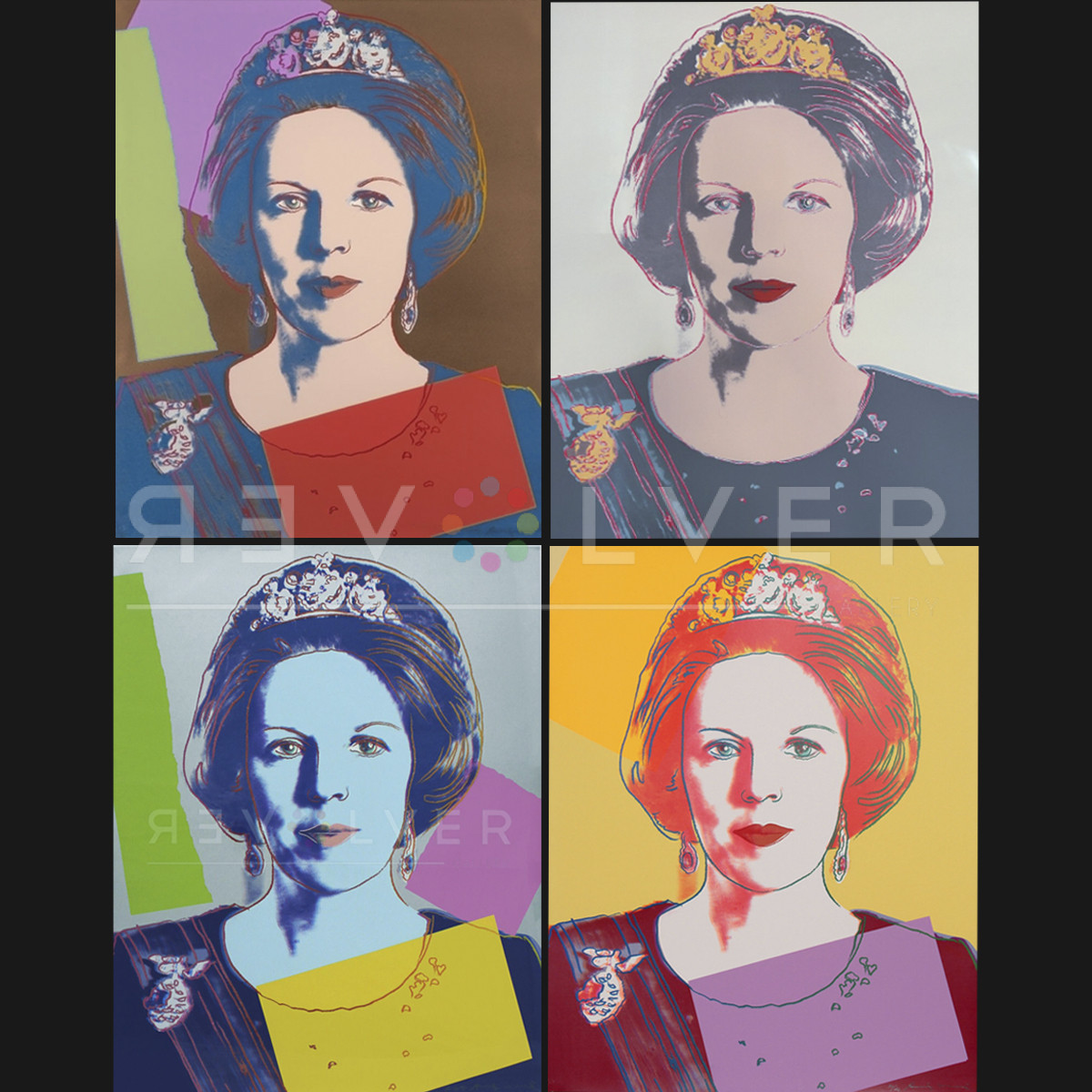
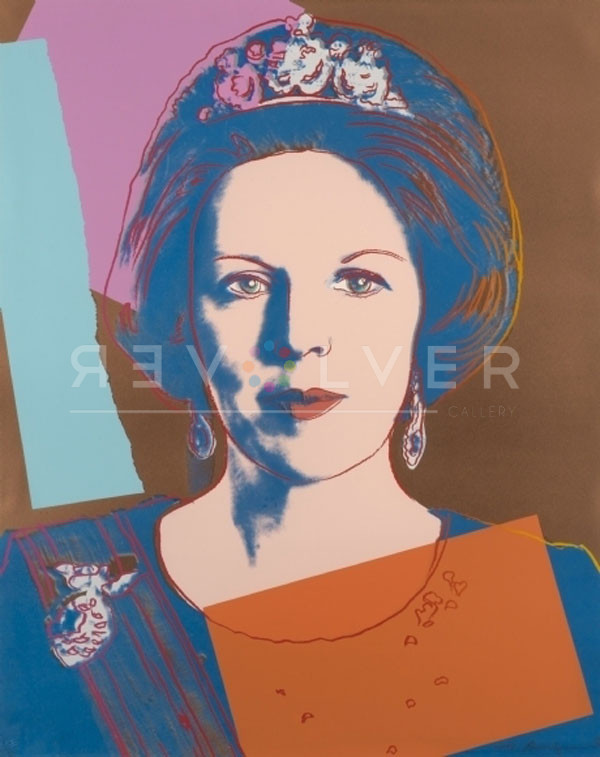
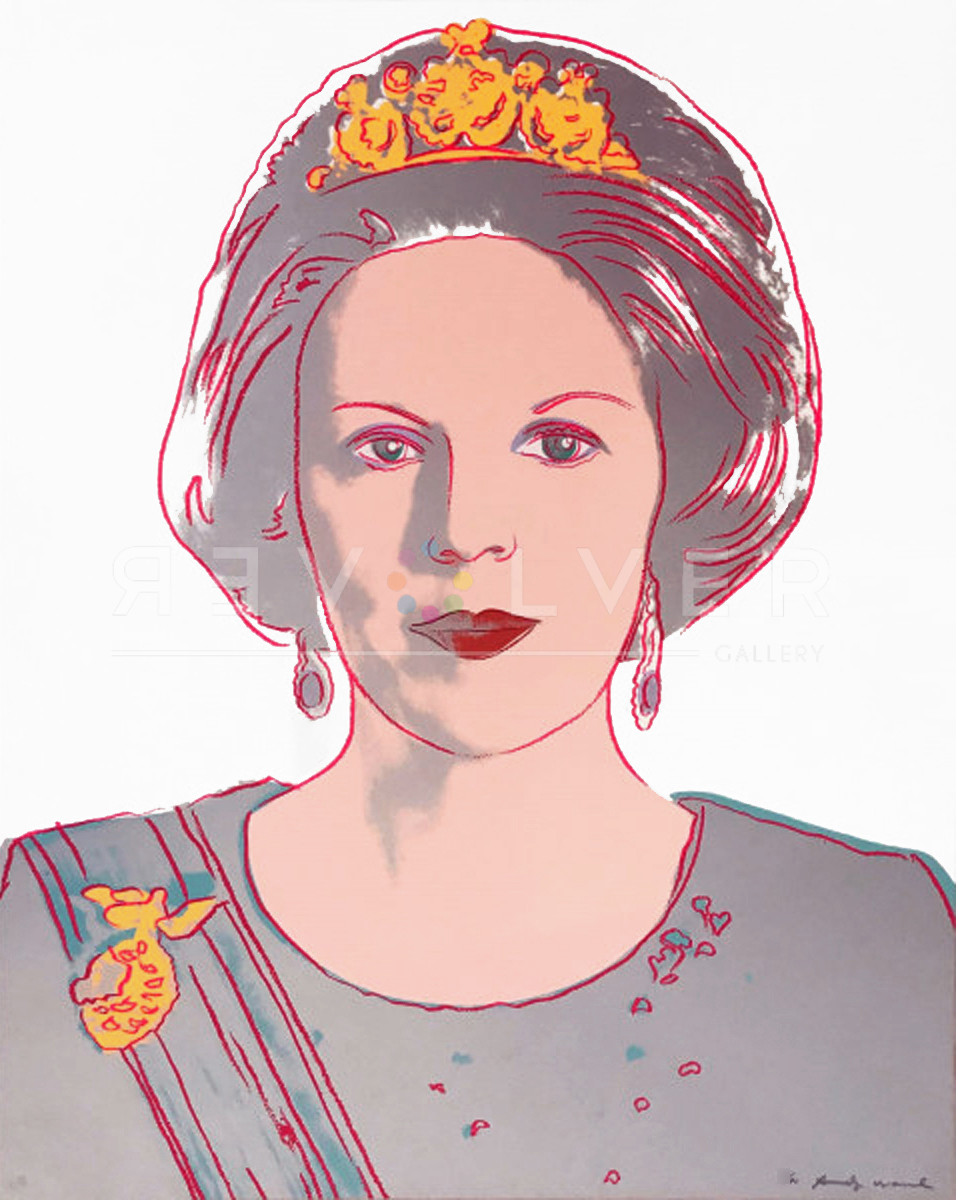
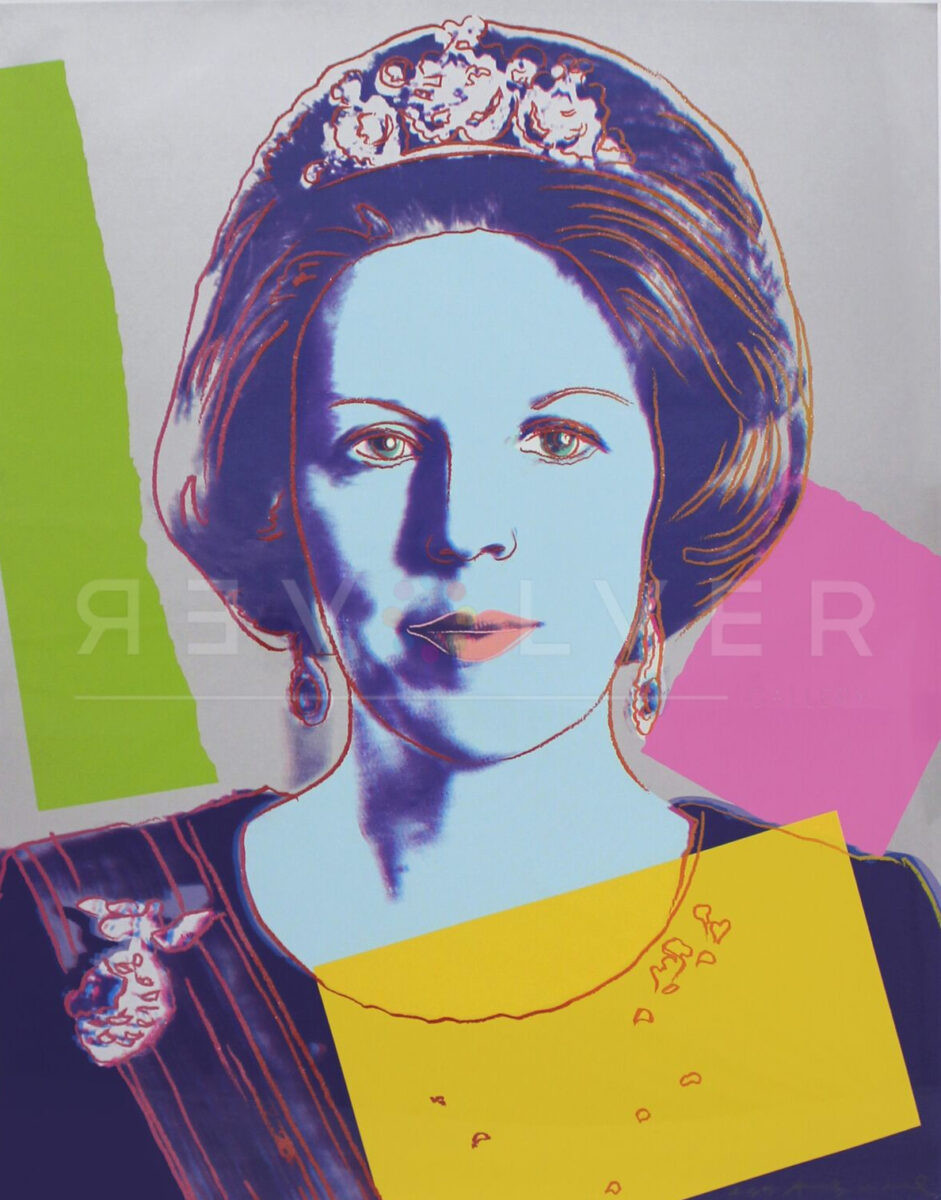
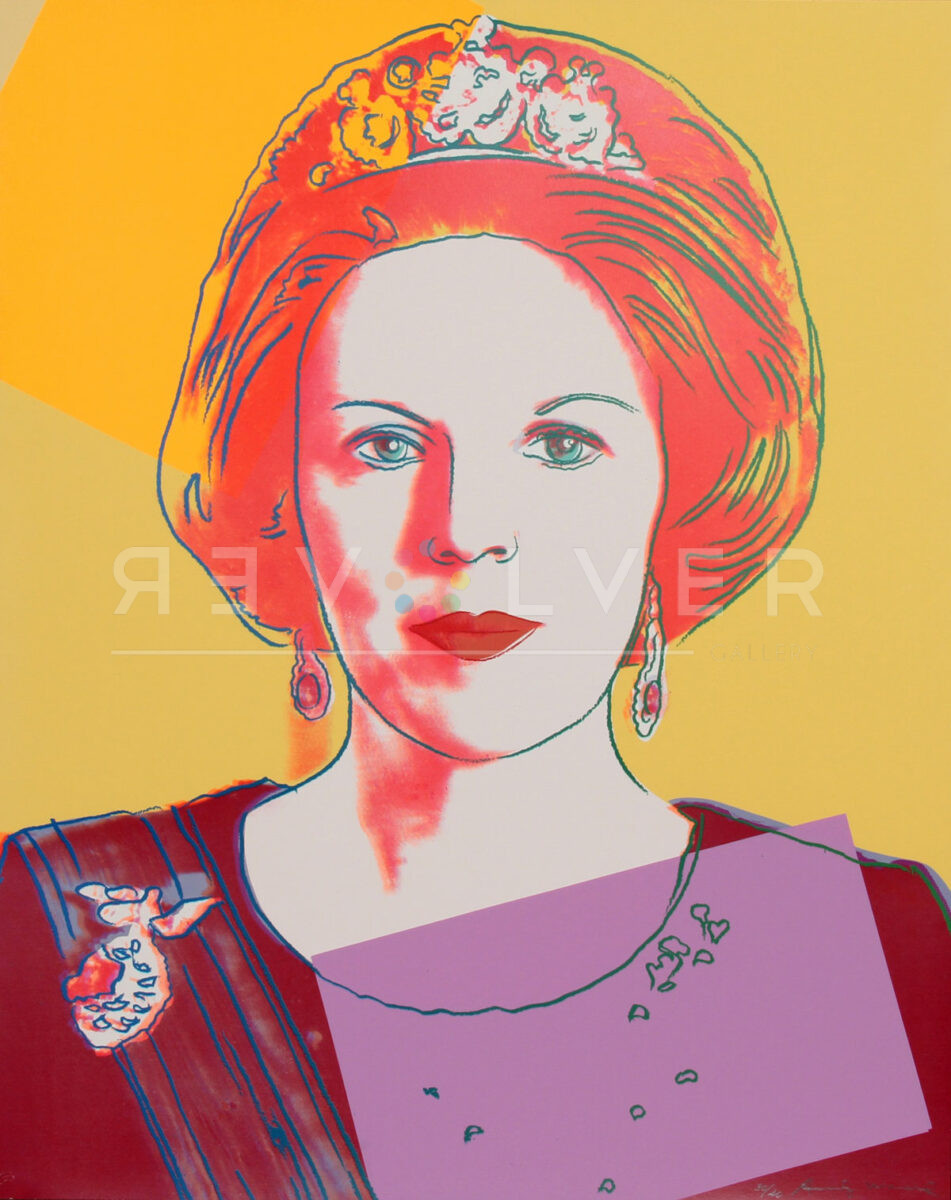
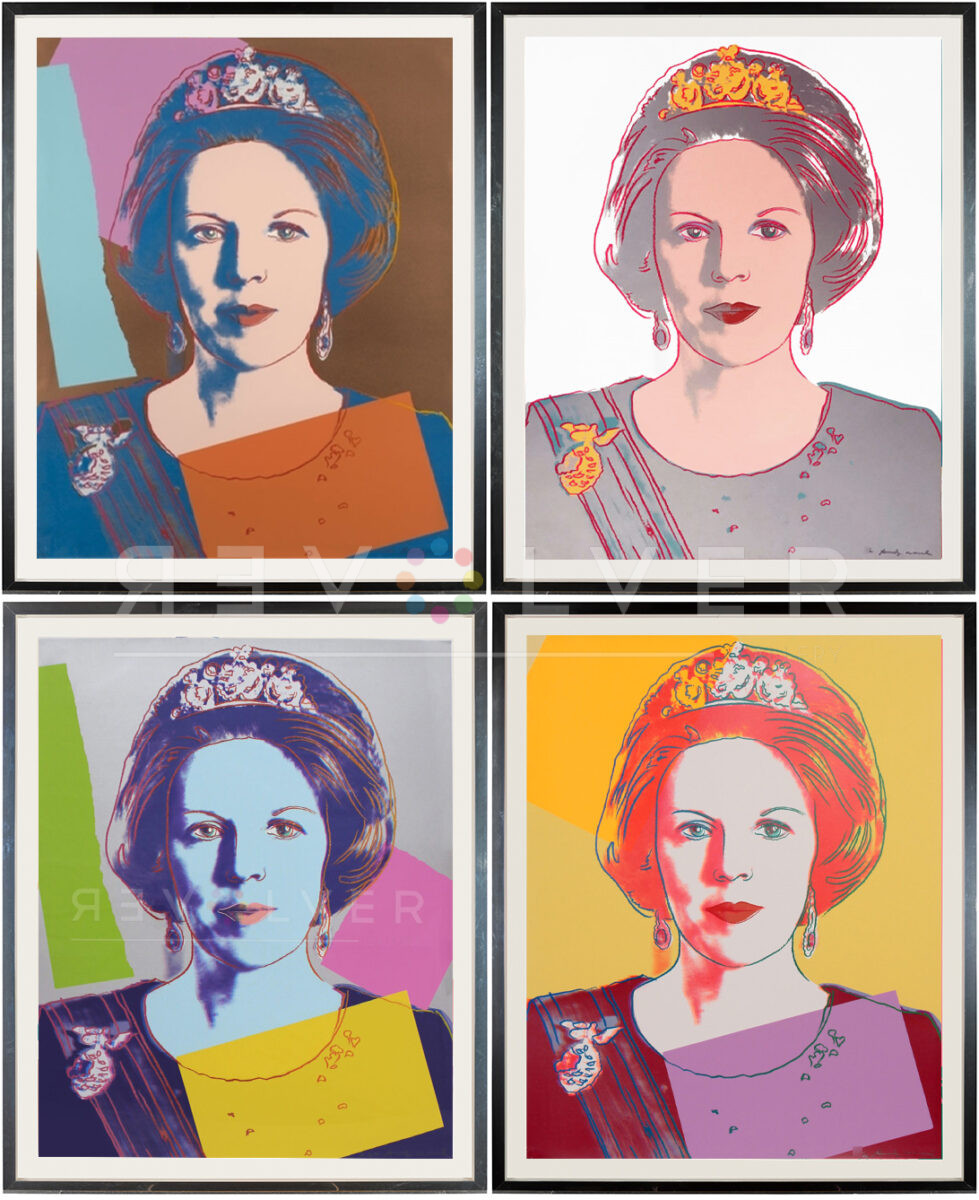
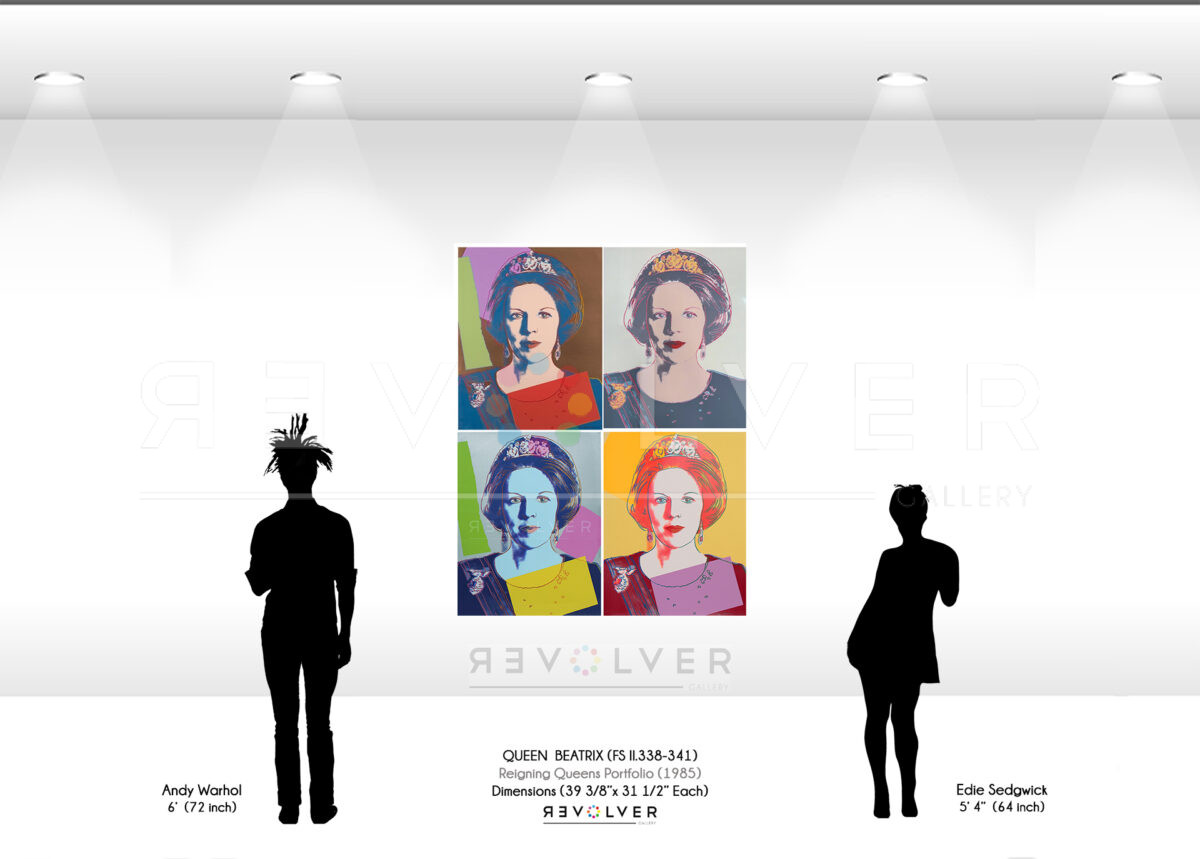
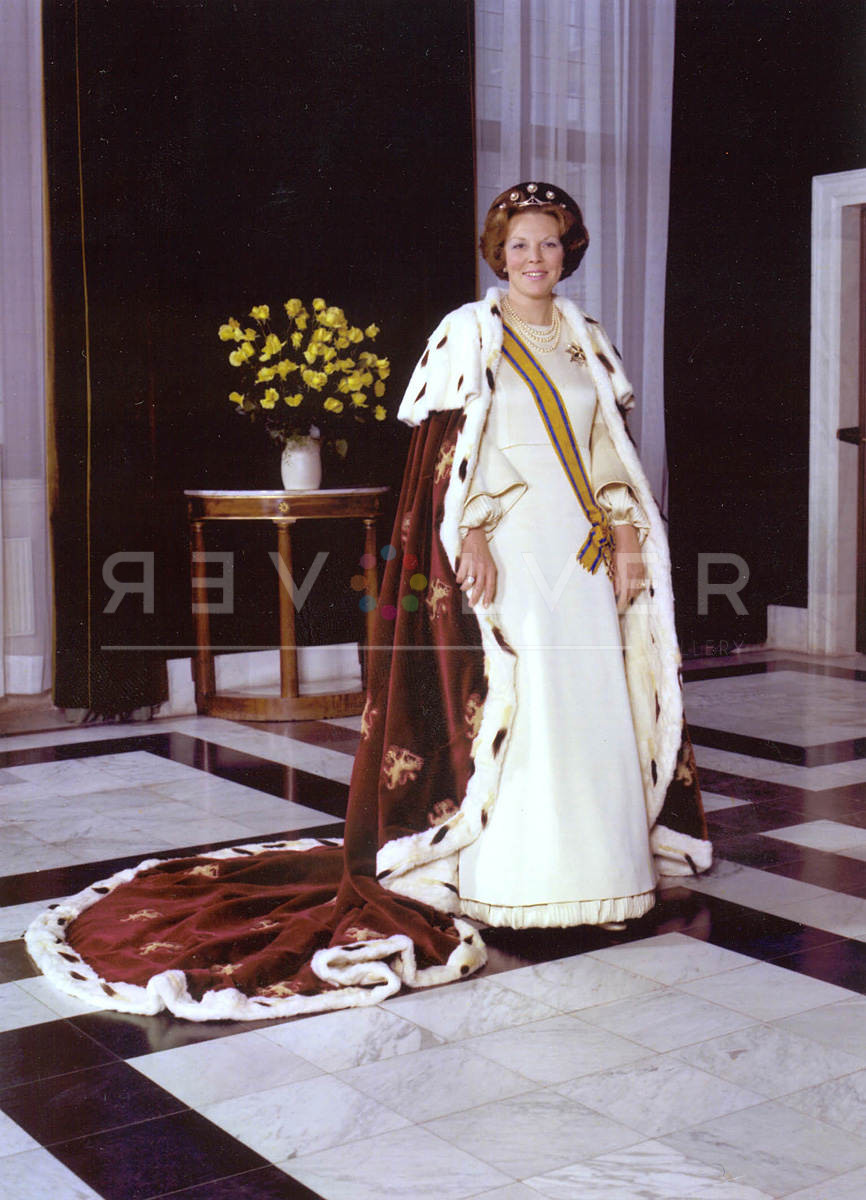
Queen Beatrix of the Netherlands comprises four screenprints from Andy Warhol’s Reigning Queens series from 1985. Included in the series are Queen Beatrix 338, 339, 340, and 341.
Queen Beatrix is a member of the Dutch royal family who reigned from 1980 until 2013, when she relinquished her monarchal power. She was preceded by her mother, Queen Juliana, who in 1980 also relinquished her power, making way for Beatrix to take the throne. When Beatrix abdicated in 1980, she was the oldest leading monarch the country had ever seen. She was succeeded by her son, Willem-Alexander, who is the current King of the Netherlands.
“I had my opening at Leo Castelli’s to go to, of the Reigning Queens portfolio that I just hate George Mulder for showing here in America. They were supposed to be only for Europe—nobody here cares about royalty and it’ll just be another bad review”. Warhol derived much of his work from American pop culture, but his catalogue also relates individualism and other social issues. Warhol focused on icons of royalty who ruled without a marriage as a symbol of female power and autonomy.
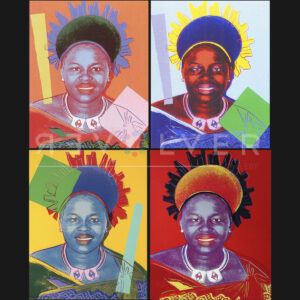
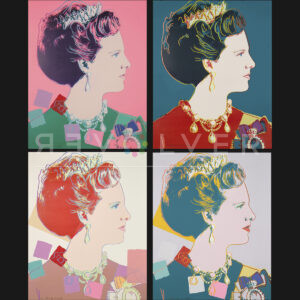
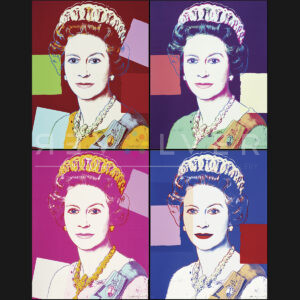
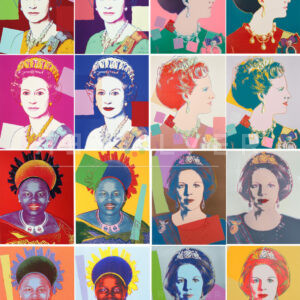
In his Reigning Queens series, Warhol depicted Queen Elizabeth II of the United Kingdom, Queen Beatrix of the Netherlands, Queen Ntombi Twala of Swaziland and Queen Margrethe II of Denmark. Warhol used official state photographs to create these screenprint portraits, and overlaid his signature abstract blocks of color to create the sense of modernism present in his pop art. He also separately printed elements to highlight jewelry in the photographs. These portraits are large and filled with bright colors, reflecting the position and power of the queens.
Warhol also created a “royal edition” of Reigning Queens which incorporated diamond dust. The by-product of the manufacture of industrial-grade diamonds, the dust in the royal edition gives the prints an extravagant effect.
While one of Warhol’s main inspirations was consumerism, his subjects were also often celebrities. During Warhol’s later years, instead of focusing on entertainment stars, such as the infamous Marilyn Monroe, he decided to create work based on a different kind of celebrity: the royal power. Along with queens, Warhol had an interest in other global figures and political leaders as well, such as John F. Kennedy, Vladimir Lenin, and Mao Zedong.
These prints also present Warhol’s interest in mass media and repetition, which are ever-present in Warhol’s artistic style as well as his philosophy. The repetition in Reigning Queens brings the eye to focus on each part of the queen with color guidance and collage techniques. Moreover, all of the images Warhol used to create the series are based on official state photographs, which are heavily mass produced—appearing on objects like coins, stamps, and state seals.
Photo credit: Queen Beatrix on her inauguration, 1980. Courtesy of the Royal House of the Netherlands.