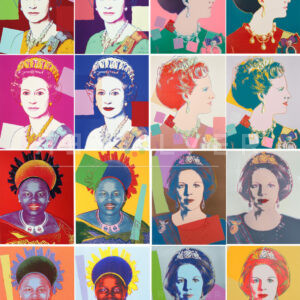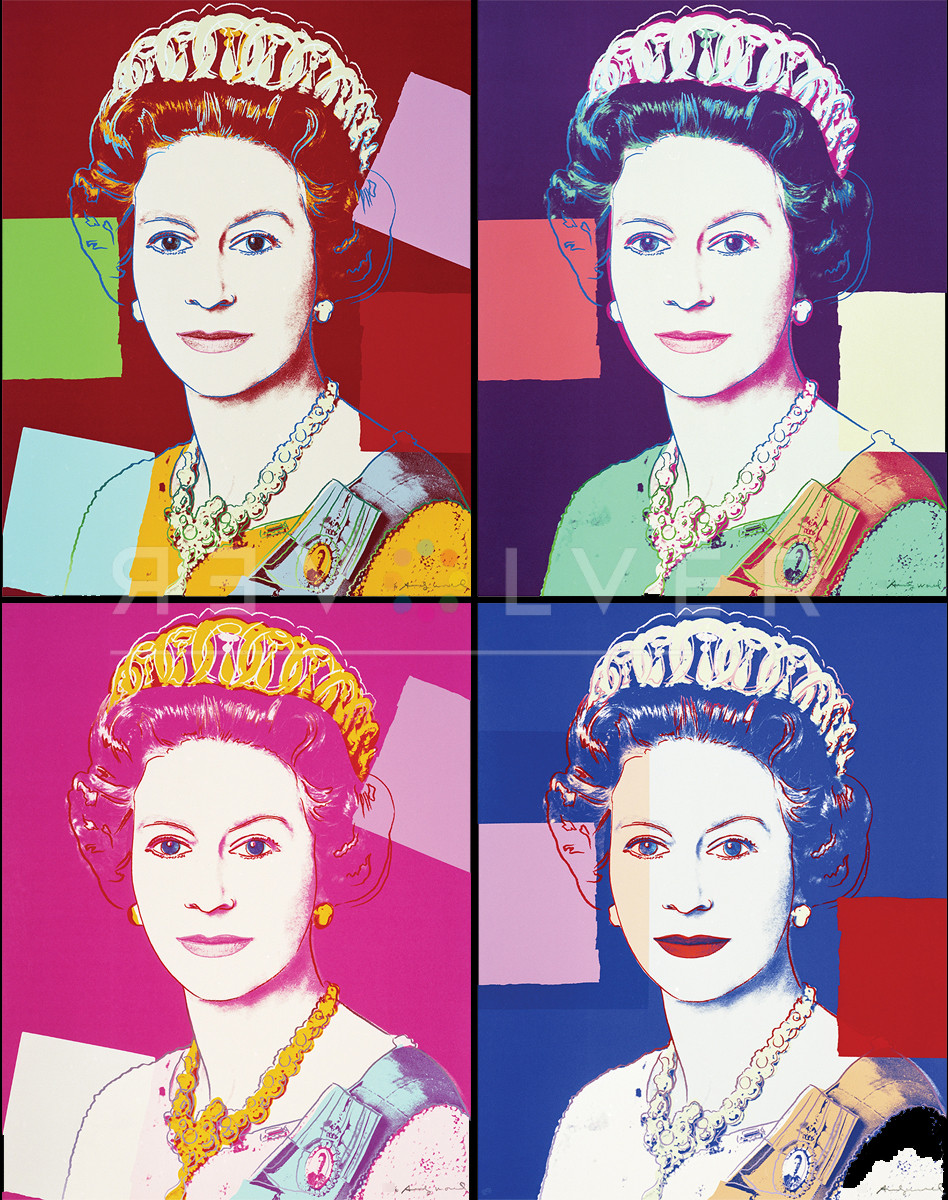
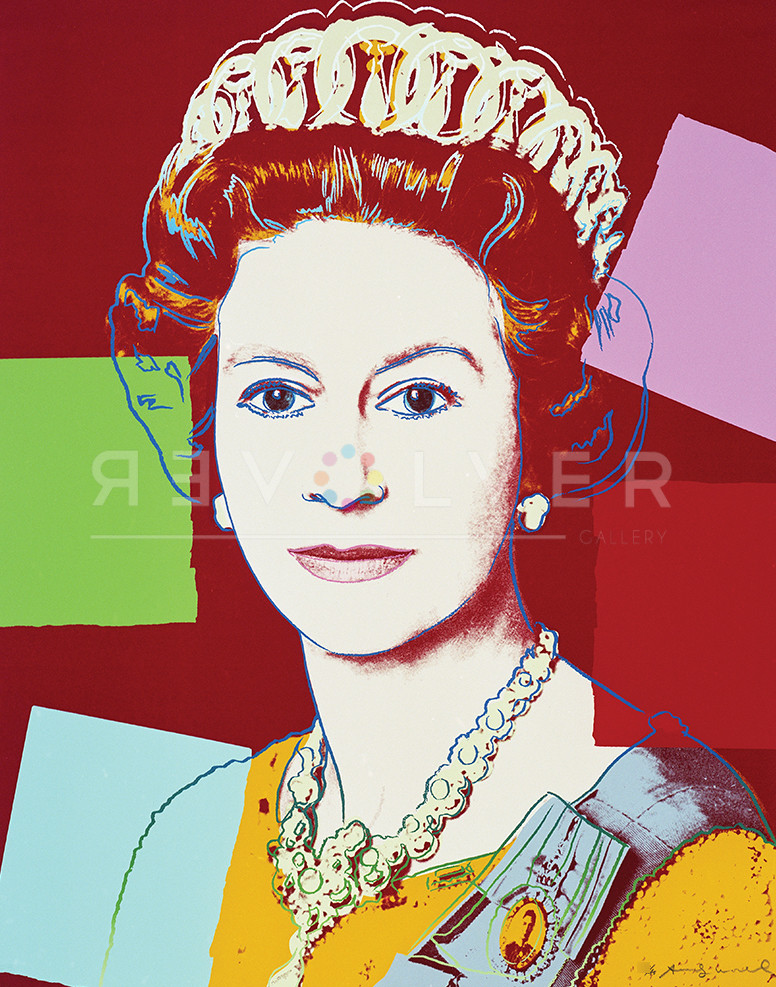
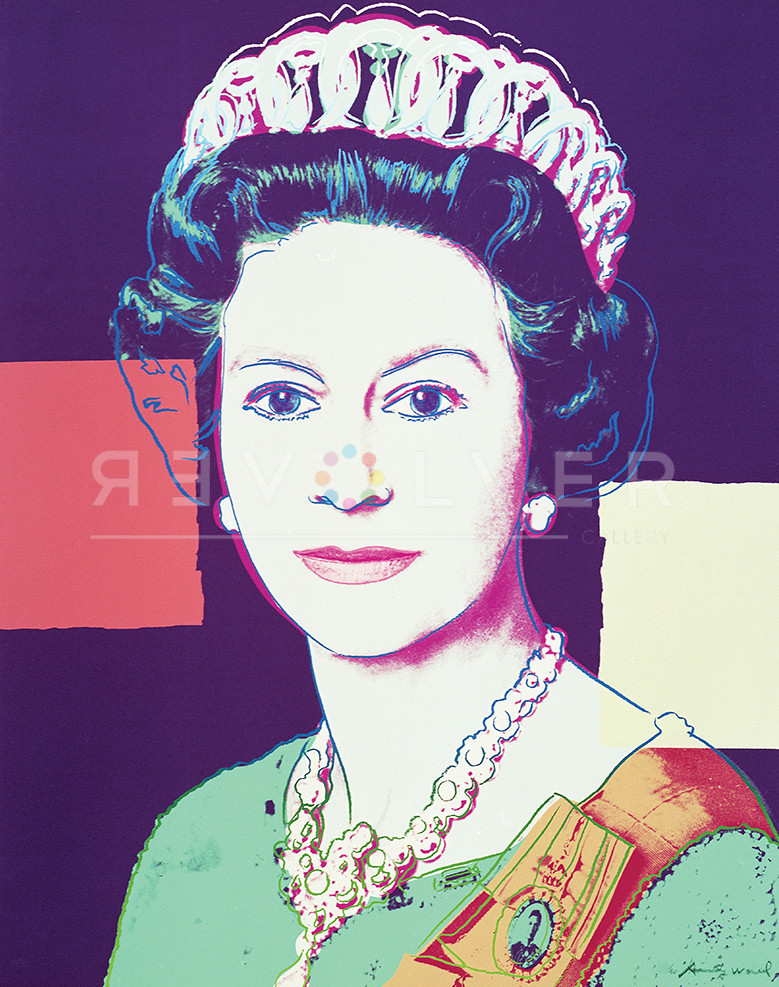
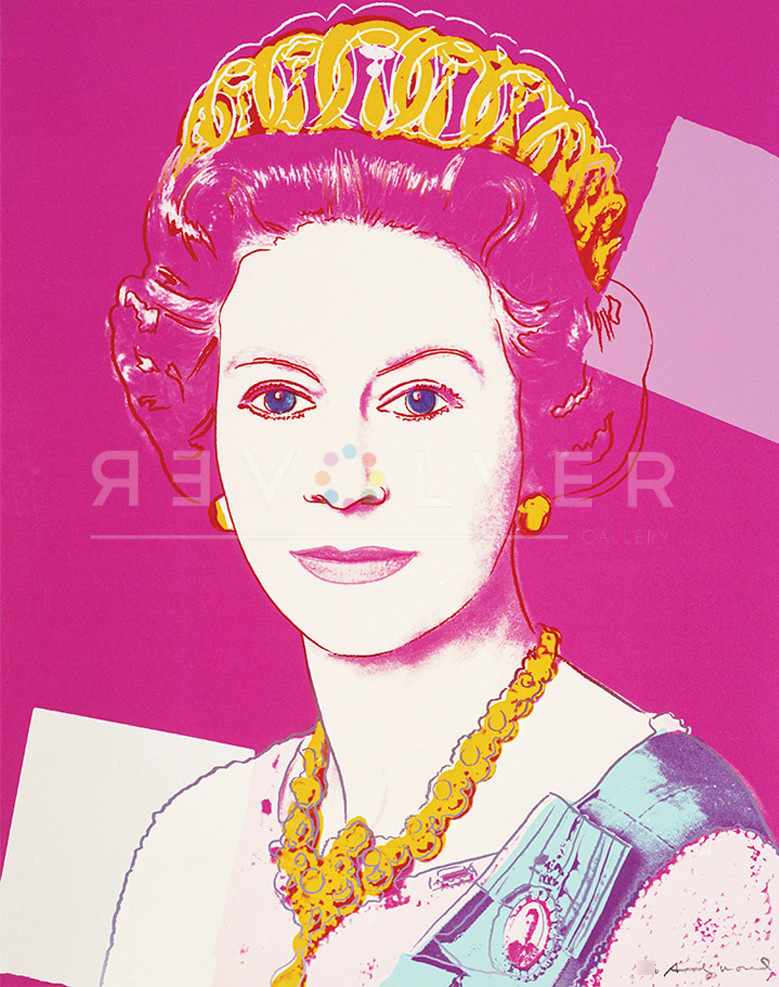
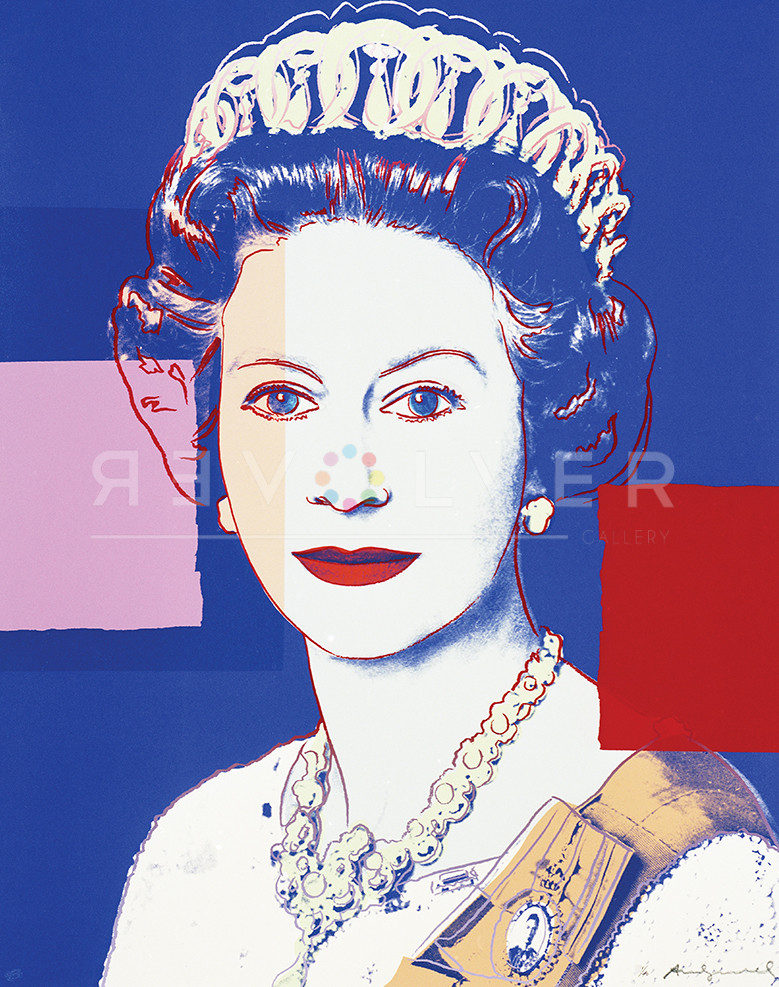
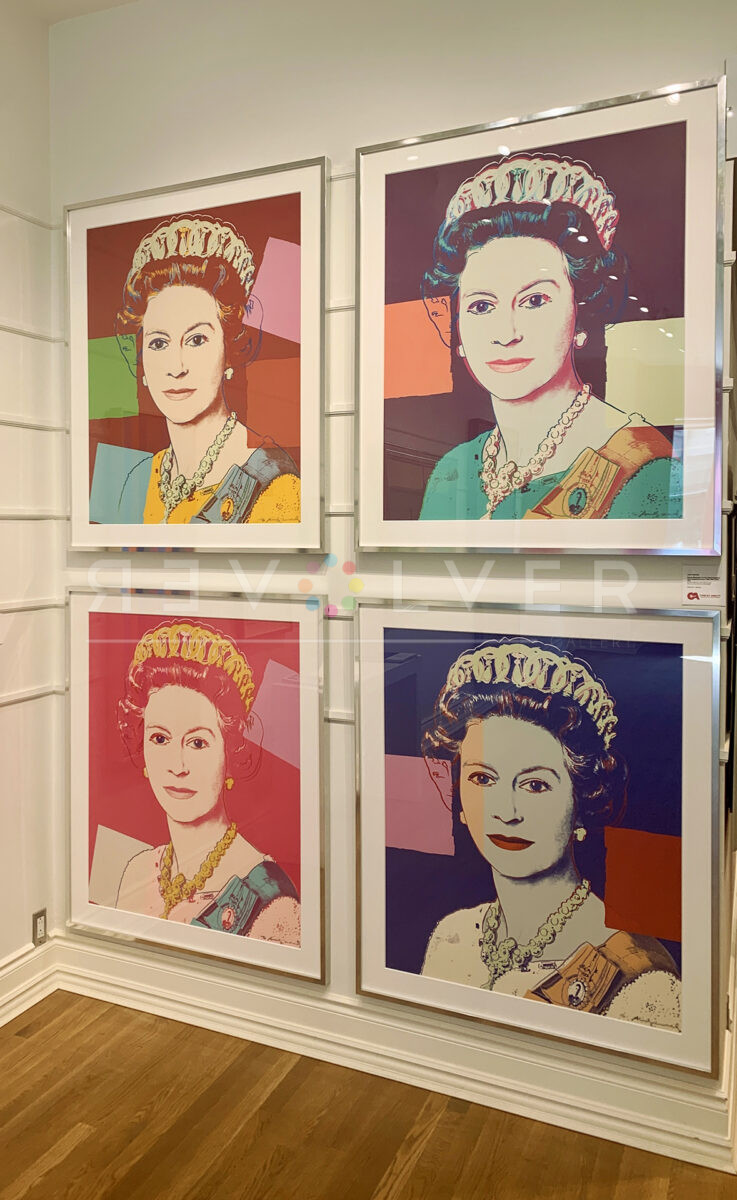
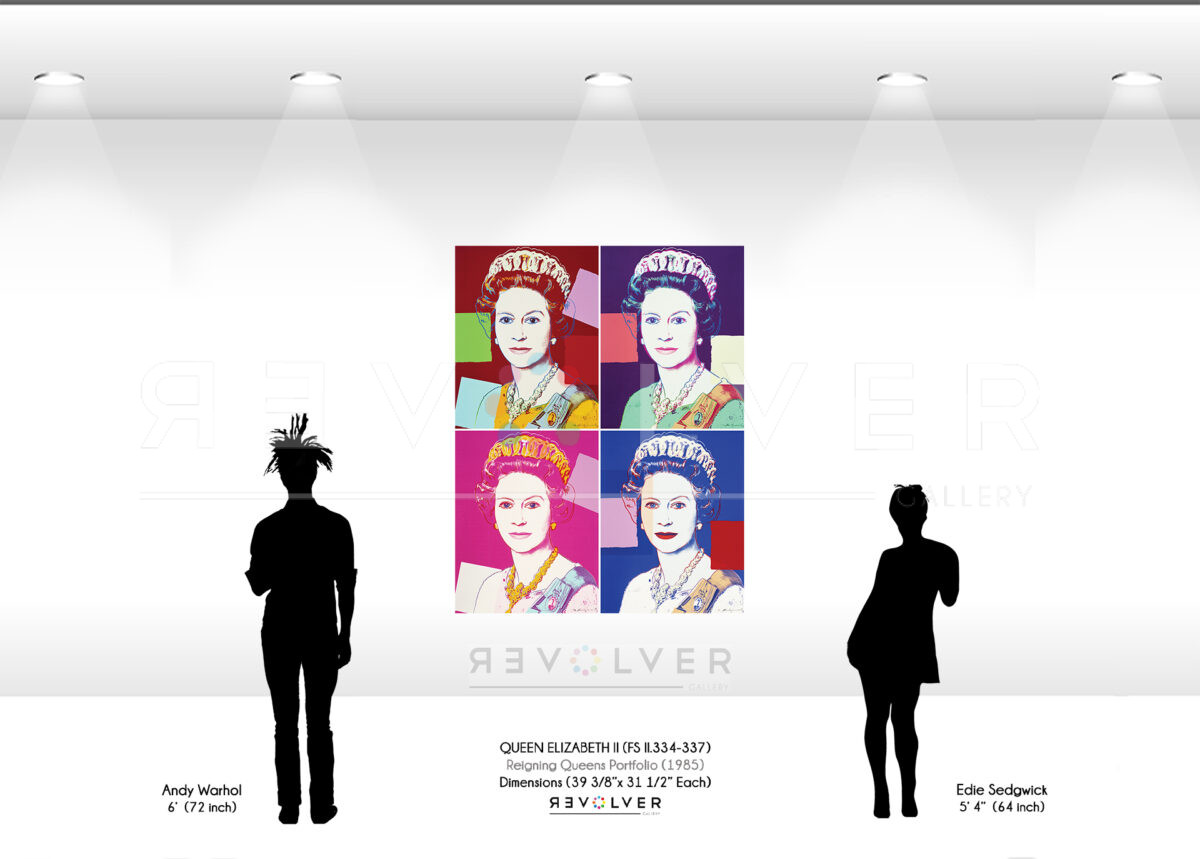
Queen Elizabeth II of the United Kingdom is a series of four screenprints by Andy Warhol, published in 1985, as part of Warhol’s larger Reigning Queens portfolio. The series contains Queen Elizabeth II of the United Kingdom 334, 335, 336 and 337, (FS.II 334-337) which are commonly referred to by their colors: red, purple, pink, and blue, respectively.
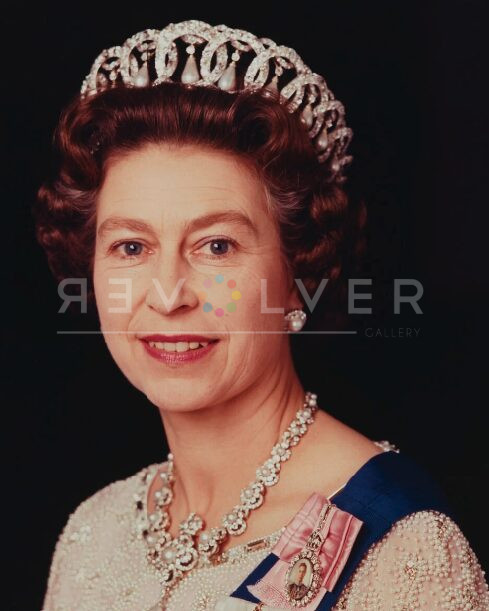
Warhol printed four portraits of Queen Elizabeth II using a photograph of her taken in April 1975 by Peter Grugeon; the same photo that would be published to celebrate her Silver Jubilee two years later. In the photo, The Queen wore the Vladimir tiara, Queen Victoria’s Golden Jubilee necklace, Queen Alexandra’s wedding earrings and King George VI’s Family Order, pinned to the Garter sash.
Queen Elizabeth II is one of the most recognizable and globally-popular public figures in modern history. She ruled from February of 1952 until her death on September 8th, 2022, making her the longest ruling British monarch of all time and the longest ruling female monarch of any state in history. She was well-traveled and well-respected, participating in hundreds of charities, making her impact in the government of the Commonwealth, and overall possessing an impeccable public service record domestically and abroad. The ruler, who celebrated her historic Platinum Jubilee in 2022, was born in 1926, furthermore making her an exceedingly long-lived royal as well. Many consider the end of the Queen’s reign to be the end of the traditional monarchy as we know it.
Queen Elizabeth’s publicly-expressed appreciation for Warhol’s portraits elevates them to a rare status in the art world. As the story goes, in 1982 Andy requested permission by missive to make a portrait of The Queen. The Queen’s secretary, Sir William Heseltine, replied ambiguously that, “While The Queen would certainly not wish to put any obstacles in Mr. Warhol’s way, she would not dream of offering any comment on this idea.”
Andy took this as an affirmative and began work using the royal photograph. Eventually, Warhol published 40 regular editions of the Queen Elizabeth print, along with 10 artist proofs, 5 printer’s proofs, and 3 hors de commerce (plus 30 trial proofs). He also published 30 ‘Royal Editions,’ made special with sprinklings of finely crushed glass that glittered under the light.
In 1985, Andy sent photos of the portraits to the Palace by way of his European dealer George Mulder. In Heseltine’s response, he mentioned that, “Her Majesty was most pleased and interested to see [them].” To celebrate the Diamond Jubilee in 2012 and the 60th anniversary of The Queen’s coronation in 2013, the Royal Palace bought four of the Royal Edition prints, giving Andy’s portraits the special distinction of being the only ones in The Queen’s gallery that she did not directly sit for.
Warhol’s portraits immortalize an iconic figure through various lenses. As is customary for their pop art rendering, Warhol colors The Queen and her background in unique, bold shades, making each print variation visually distinct. Some prints color the background and Her Majesty’s hair a bright bubblegum pink, accentuating femininity and youth alongside her regality. Others utilize purple to fall back on classic associations with royalty. One version even colors The Queen’s skin a pallid turquoise, reminding viewers that there are different shades to Her Majesty beyond just the ruler they know her as. The Royal Edition prints give the portraits a special connection to royalty and fine art as they simulate the visual appeal of diamonds and precious gems on the surfaces of their images. Furthermore, these variations deliver even more excitement to collectors, whose trophy hunt won’t be satisfied after acquiring only one version.
Photo credit: Official Portrait of Queen Elizabeth II of United Kingdom, 1975 © Peter Grugeon; Camera Press; On loan from American Friends of the National Portrait Gallery (London) Foundation, Inc.: Gift of Mr. Ford Hill.