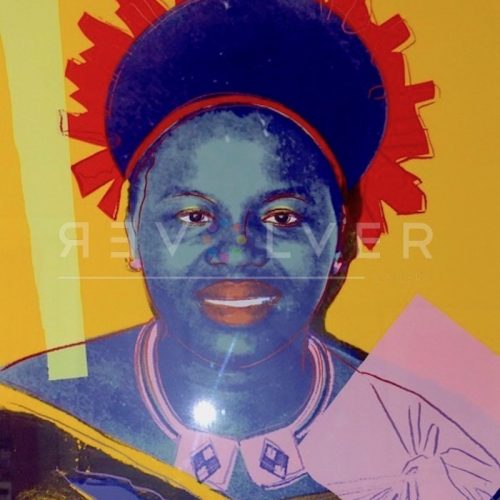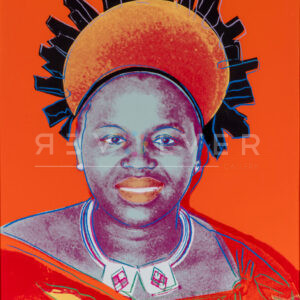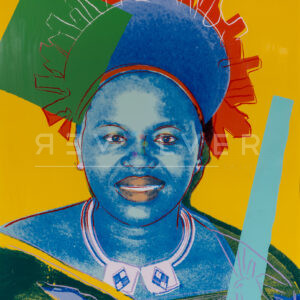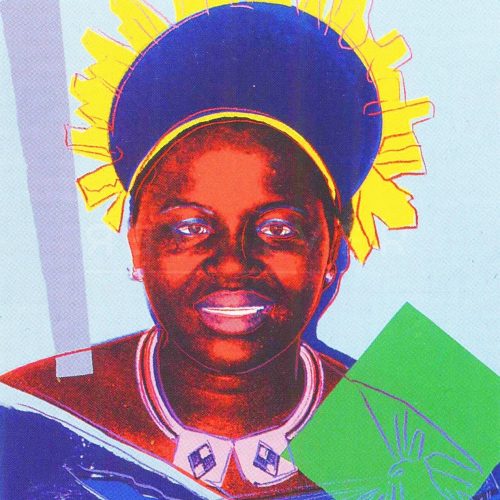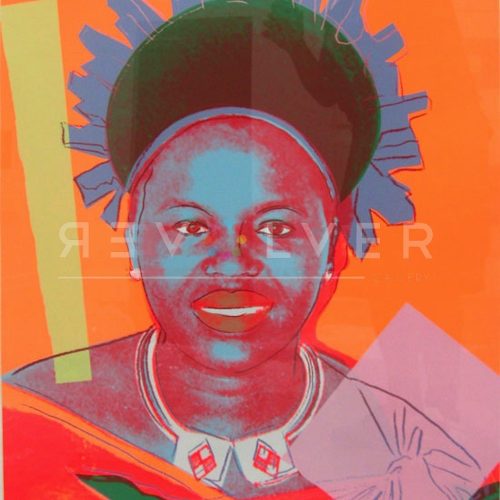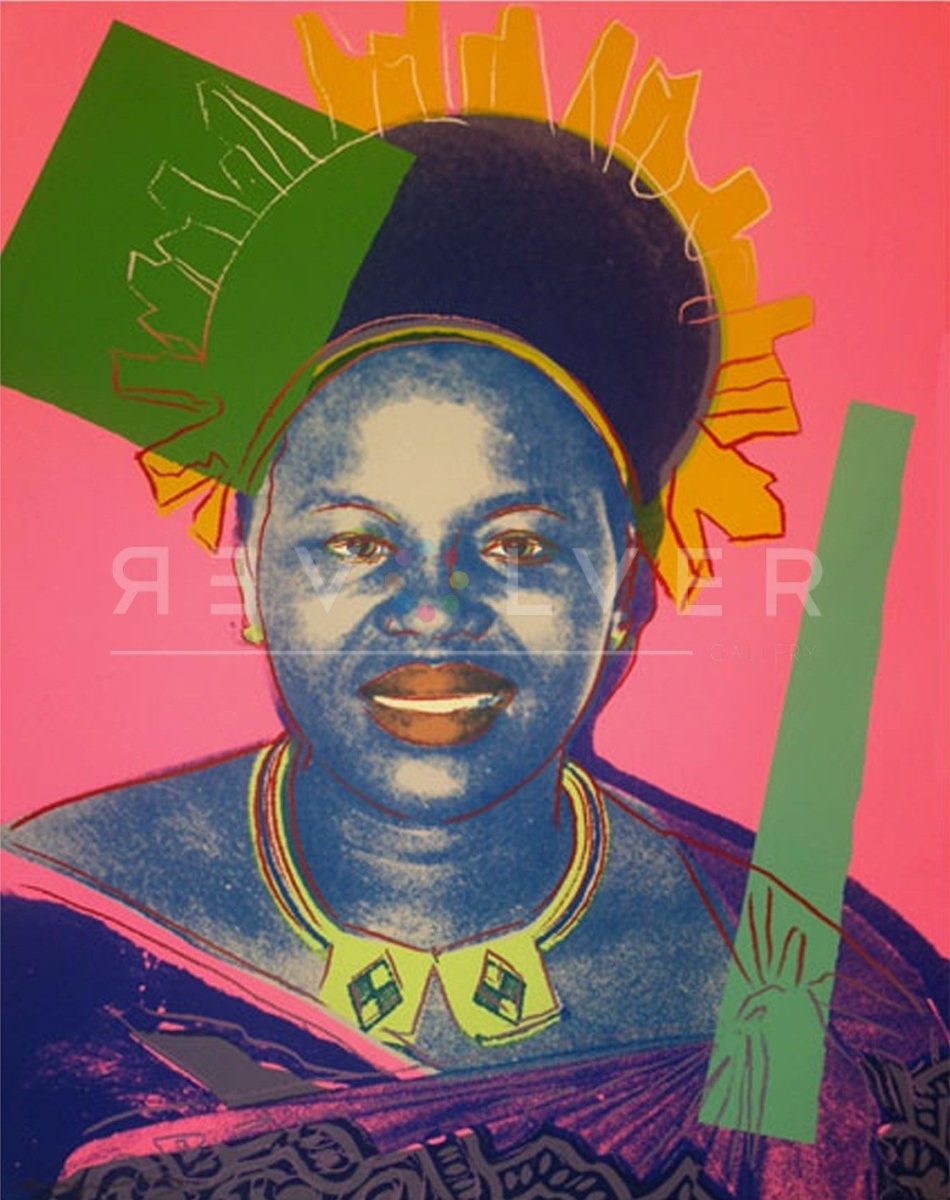
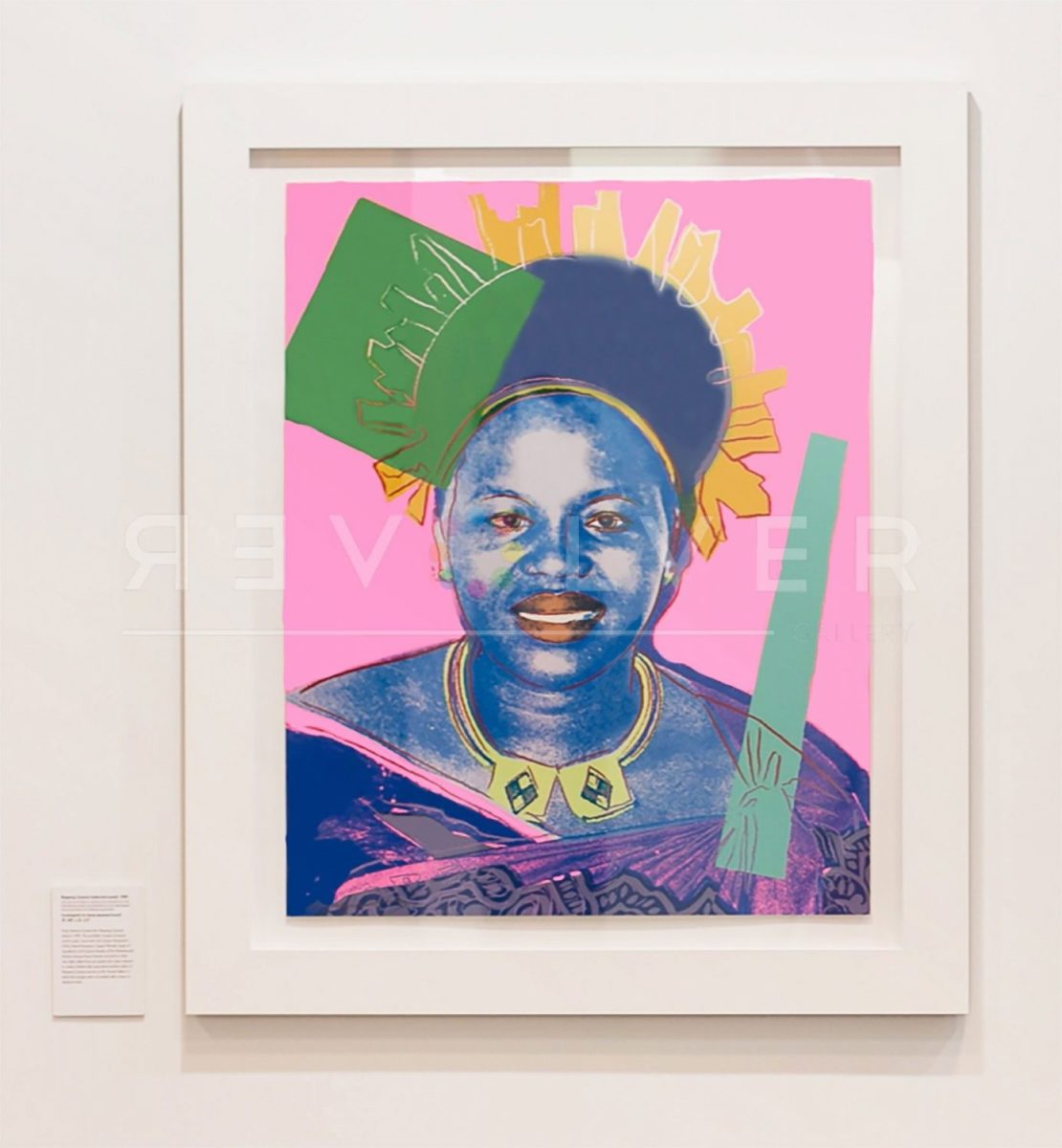
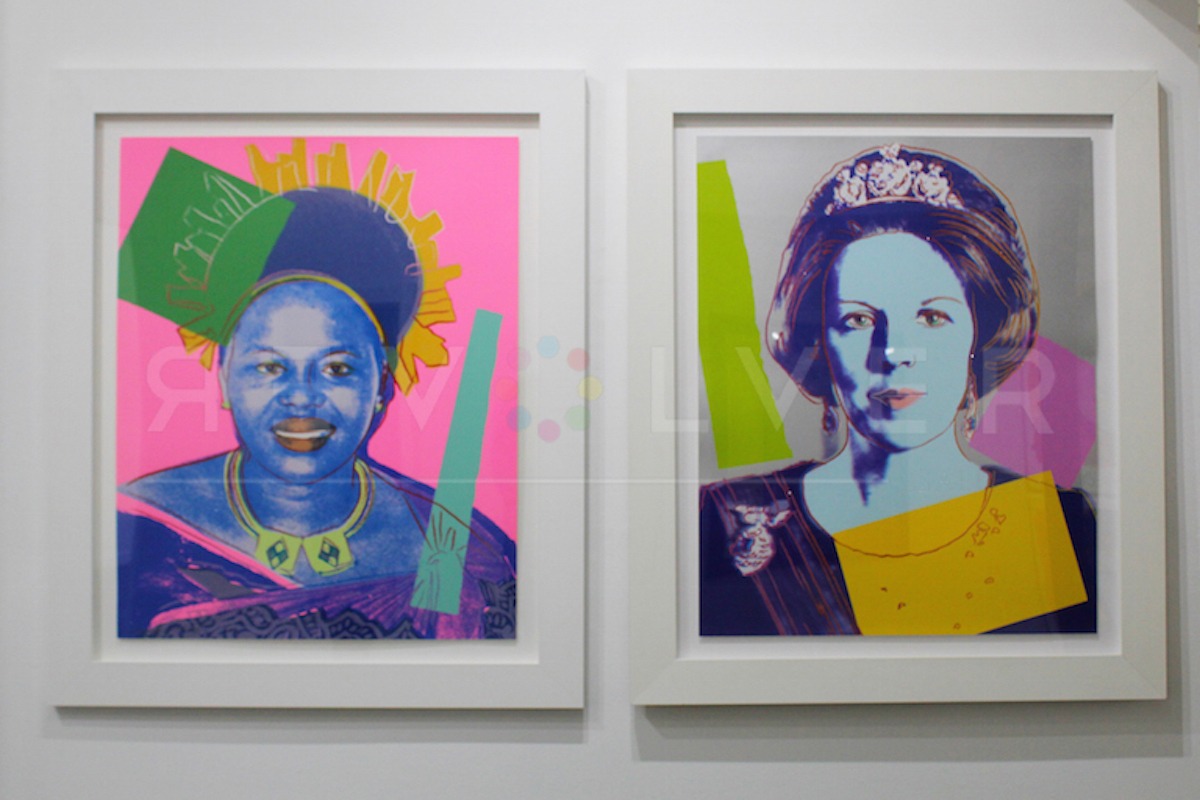

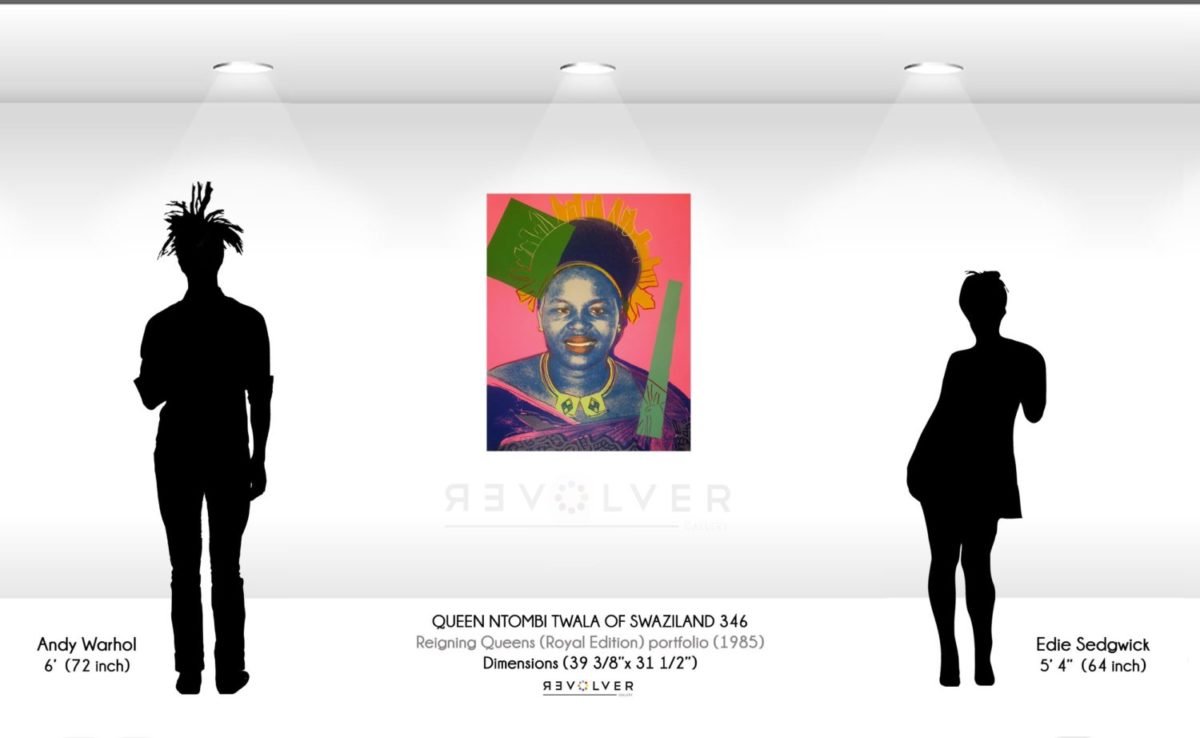

Queen Ntombi Twala of Swaziland 346 (Trial Proof) is one of 30 trial-proof screenprints as part of Andy Warhol’s Reigning Queens (Royal Edition) series. This particular print of the queen highlights her features in a deep blue against bright pink and green accents. Other queens in the series include Queen Margrethe II of Denmark, Queen Beatrix of the Netherlands, and Queen Elizabeth II of the United Kingdom. Warhol depicts these female monarchs in their own right, rather than as women who were married to a king. Warhol was vastly interested in fame of any kind, including that of presidents, dictators and monarchs. In addition to the Reigning Queens portfolio, Warhol also created prints of political leaders such as Alexander the Great, Vladimir Lenin and John F. Kennedy. This particular print of Queen Ntombi Twala highlights her features in a deep blue against bright pink and green accents.
Queen Ntombi Twala (Royal Edition) by Andy Warhol as Part of his Larger Body of Work
Andy Warhol created the Reigning Queens series during the mid-1980s, which was arguably his most prolific period. During this time, Warhol was forming bonds with a number of younger artists in the New York art scene including Jean-Michel Basquiat, Julian Schnabel and David Salle. Warhol saw a re-emergence of critical and financial success during this period of his life.
Photo credit: Queen Ntombi Twala in 2016. Unknown photographer.