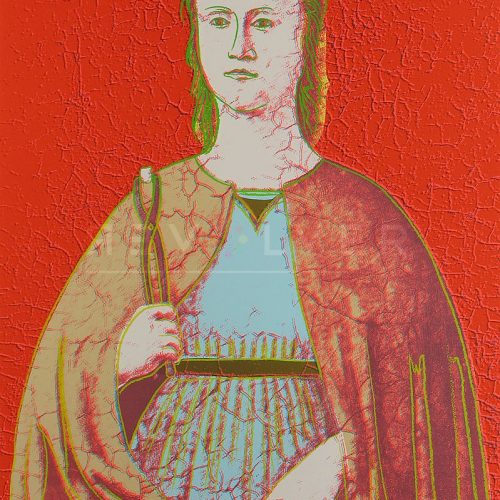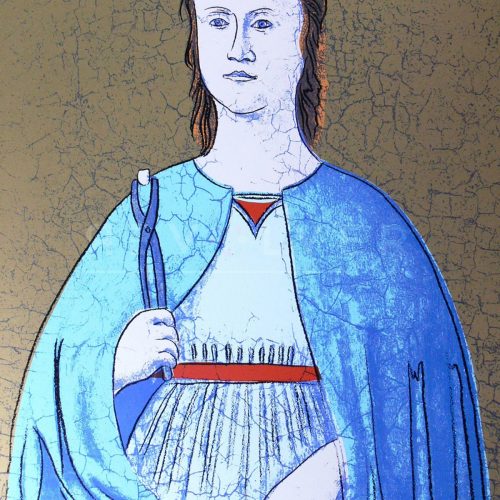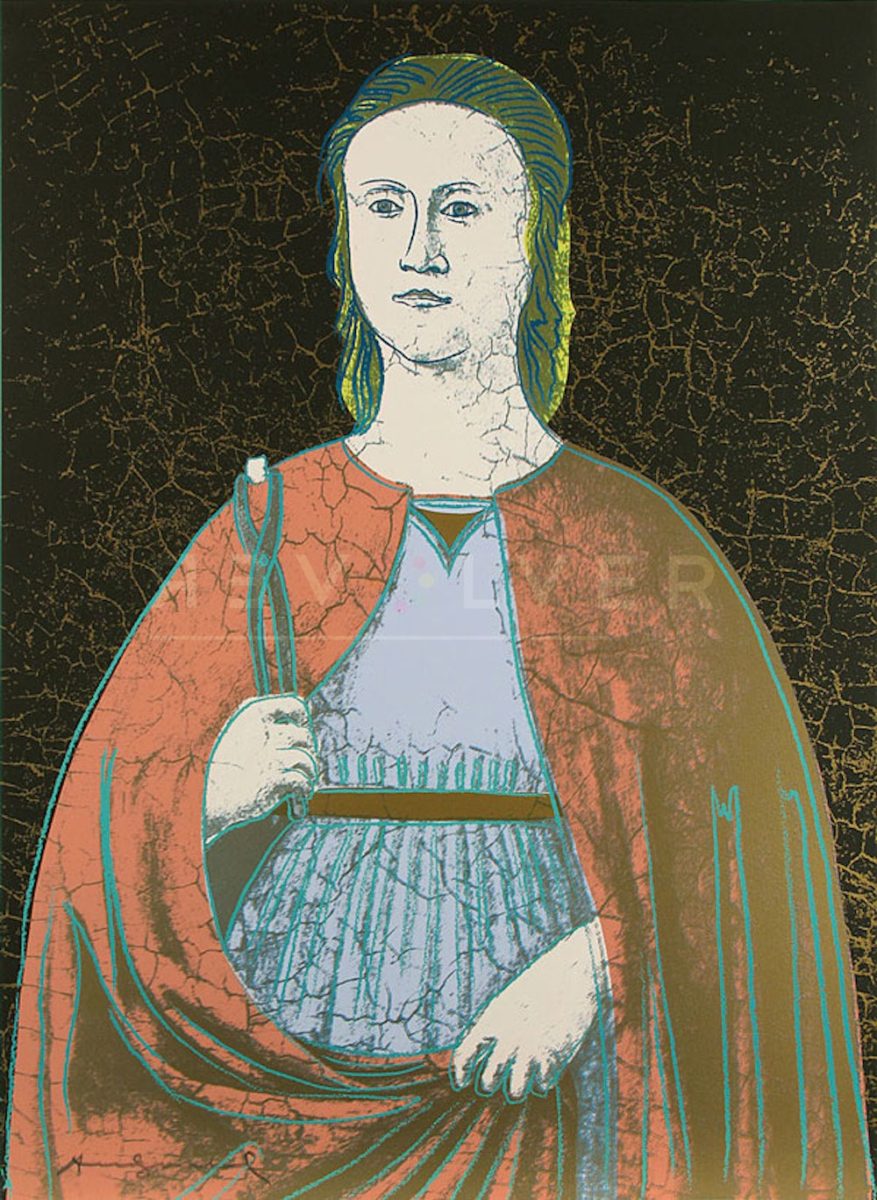
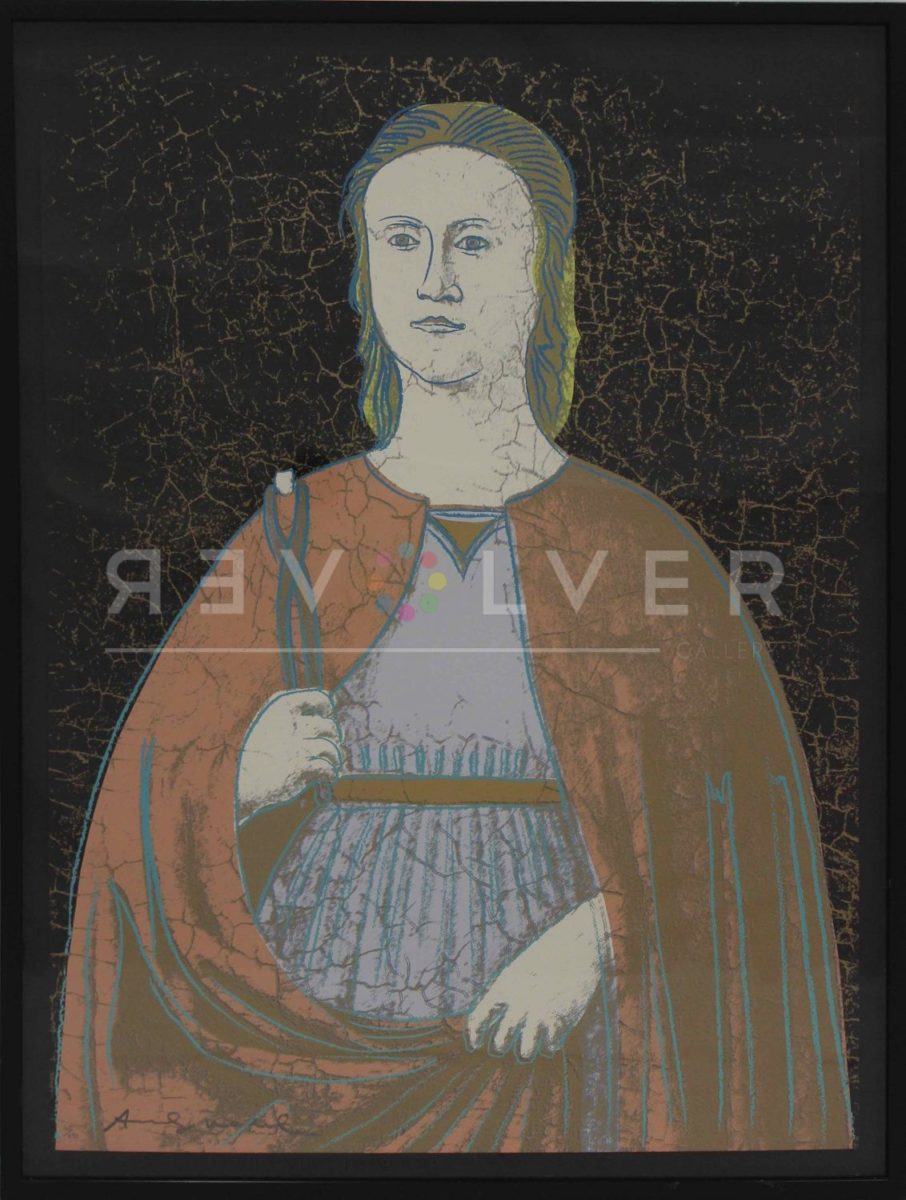
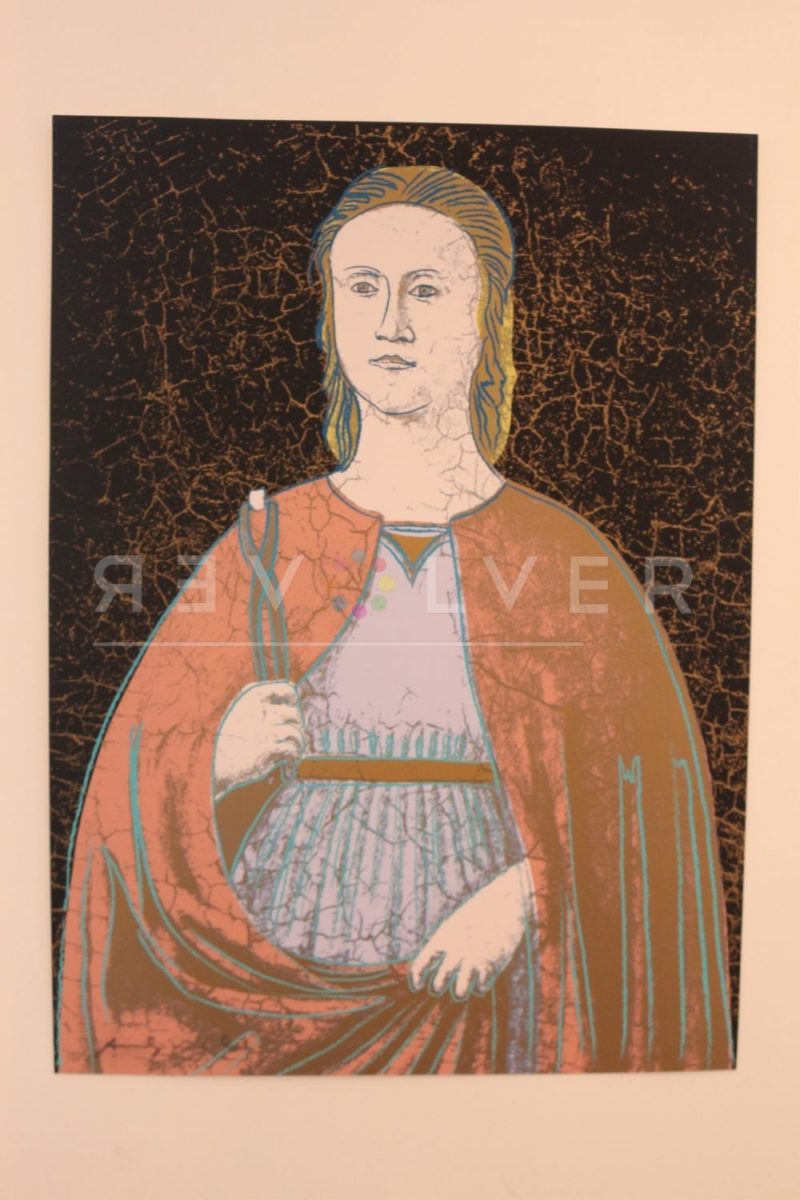
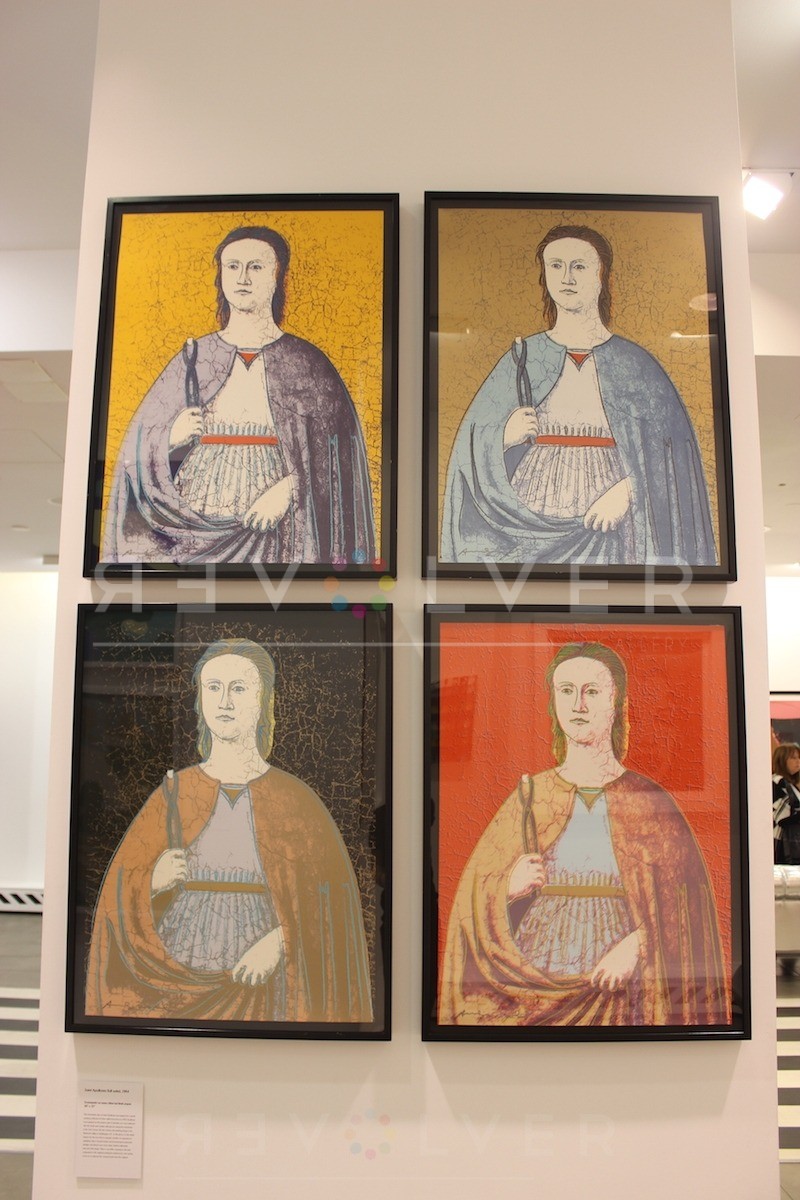

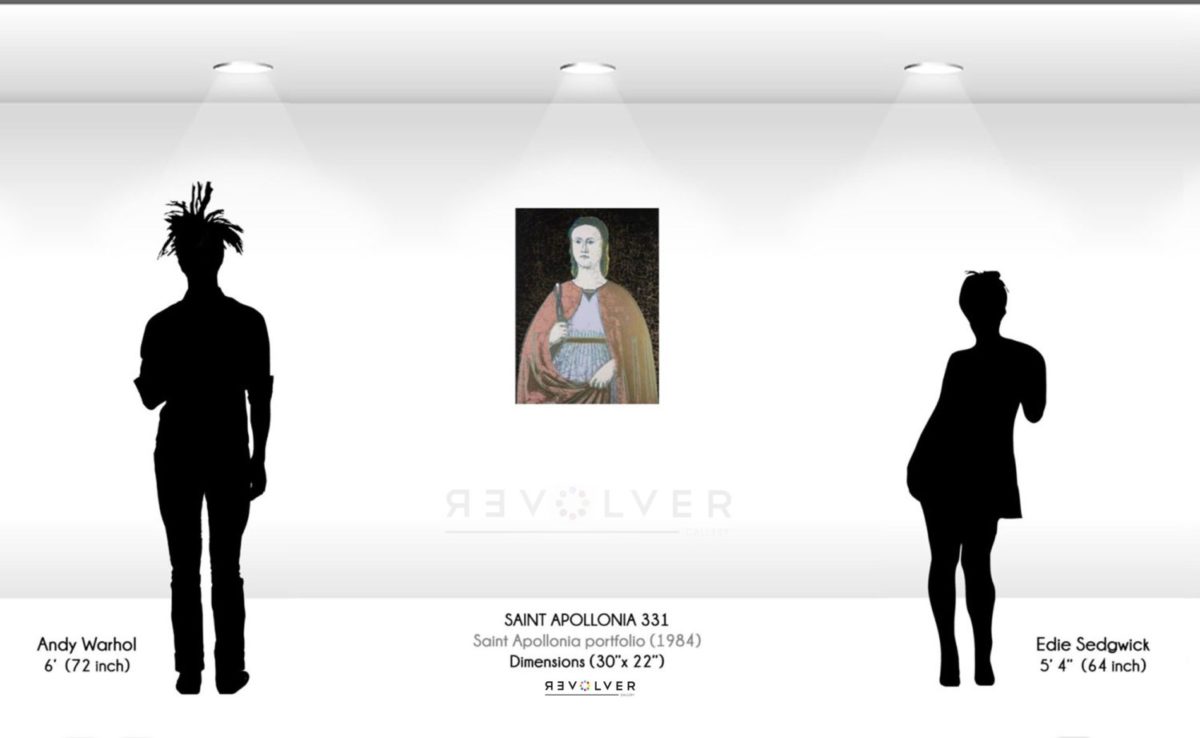
Saint Apollonia 331 by Andy Warhol is a screenprint from his 1984 Saint Apollonia portfolio. In the series, the “Prince of Pop” brings the patron saint of dentistry and toothaches into the 21st century, rejuvenating her by way of his Pop Art treatment. By recreating Saint Apollonia’s image, Warhol formally recognizes her greatness in the same way he immortalized celebrities and other famous figures in his artwork. The original portrait of Apollonia is attributed to the Italian painter, Piero della Francesca, circa 1455-1460.
Warhol’s Saint Apollonia 331 depicts one of the many virgin martyrs that suffered violent uprisings against Christians in Alexandria, Egypt in the middle of the 2nd century. According to the Catholic Church, Alexandrian mobs tortured Apollonia by breaking and pulling out all of her teeth. Because of the nature of her gruesome martyrdom, she has been venerated as the patron saint of dentistry and specifically, toothaches. As such, in Warhol’s Saint Apollonia, she is shown holding a tooth with a pair of pliers. A letter written by Dionysius, the Bishop of Alexandria, to Fabios, the Bishop of Antioch, details her fate: “These men seized her also and by repeated blows broke all her teeth. They then erected outside the city gates a pile of wood and threatened to burn her alive if she refused to repeat after them impious words (either a blasphemy against Christ, or an invocation of the heathen gods). Given, at her own request, a little freedom, she sprang quickly into the fire and was burned to death.”
In the Saint Apollonia 331 print, the saint maintains her stoic pose against earthy tones that bring out the bright highlights in her face and hair. Warhol attended Catholic church growing up and maintained his faith throughout his life. His devotion to Catholicism is likely what inspired works like Saint Apollonia 331. Unlike some of Warhol’s other renaissance recreations, (see Birth of Venus, St. George and the Dragon, and The Annunciation), Saint Apollonia involves very little cropping of the original painting. The print even retains the “cracks” from the original, and Warhol chose not to use vibrant, thick swathes of color that overlap like in many of his other works. Whether Warhol preferred the original cropping, or held particular admiration for Saint Apollonia and her original portrait is anyone’s best guess. But, as someone who was plagued by physical ailments, Saint Apollonia is an apt choice for Warhol, after all.
The original, five-century-old Saint Apollonia painting currently hangs in the National Gallery in Washington, DC. Revolver Gallery is in possession of all Saint Apollonia’s from Warhol’s series: see Saint Apollonia 330, 332, and 333.