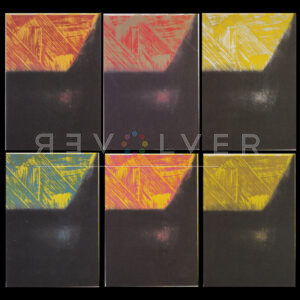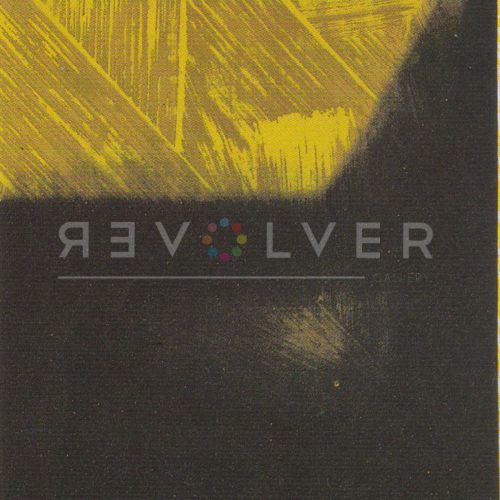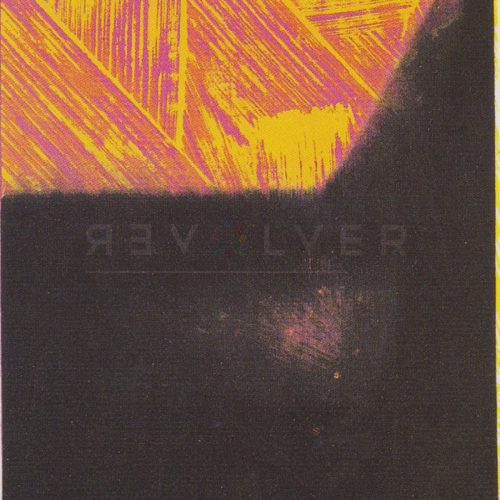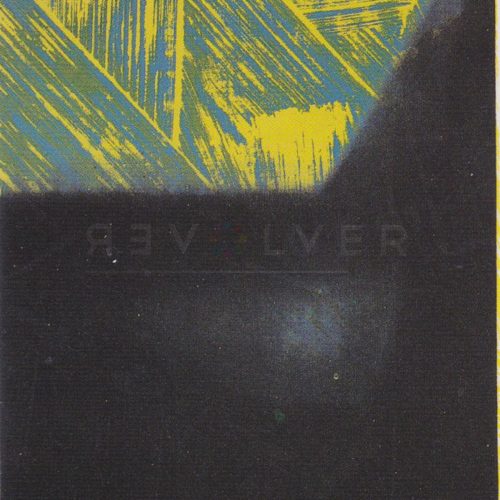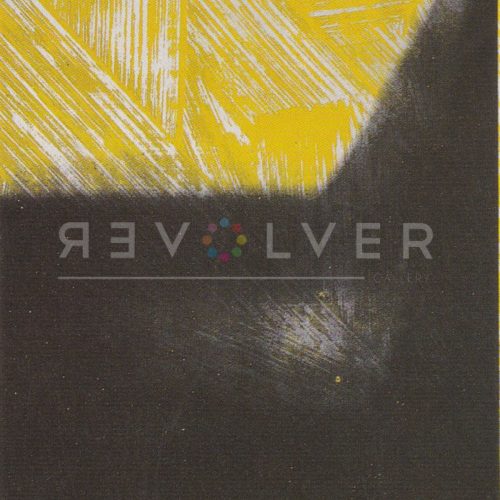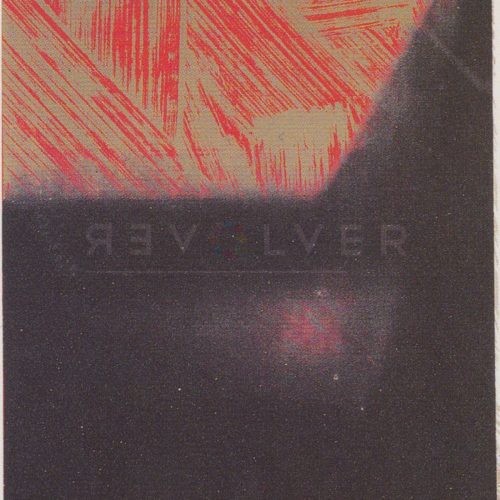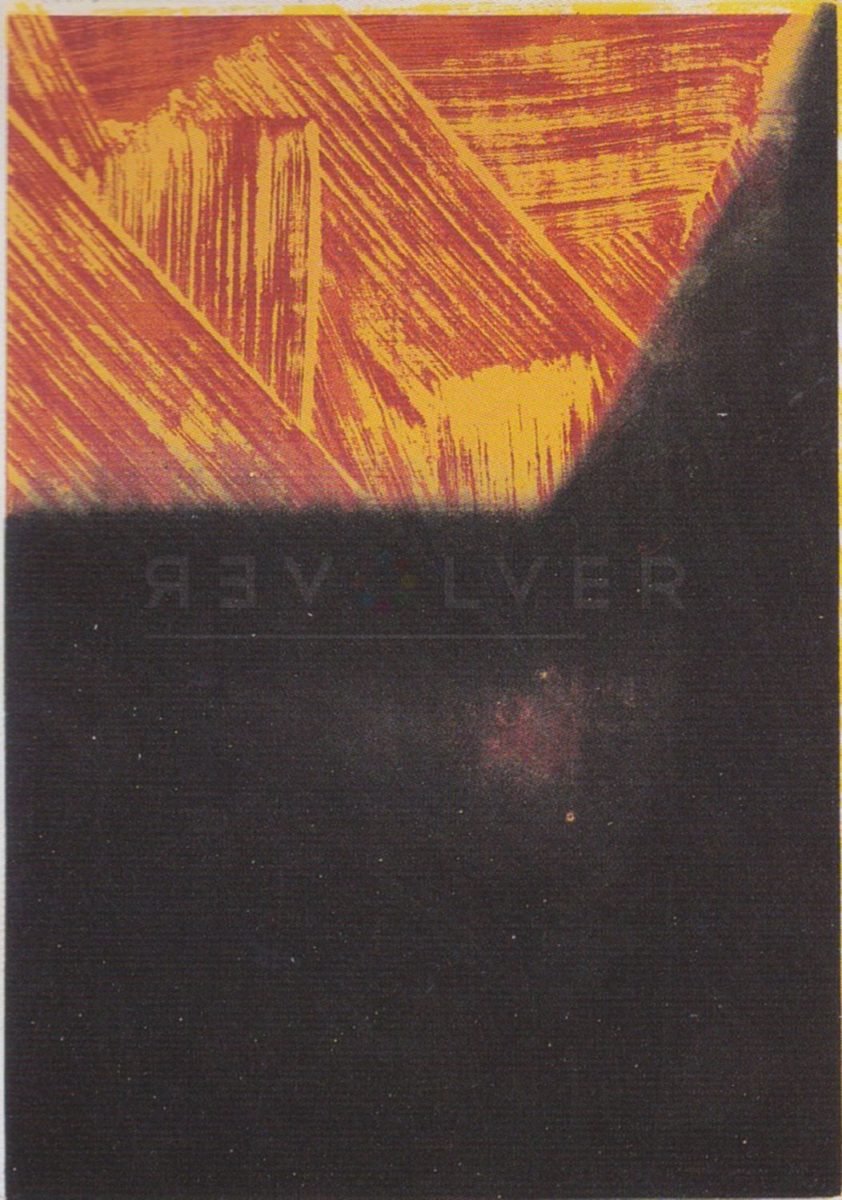
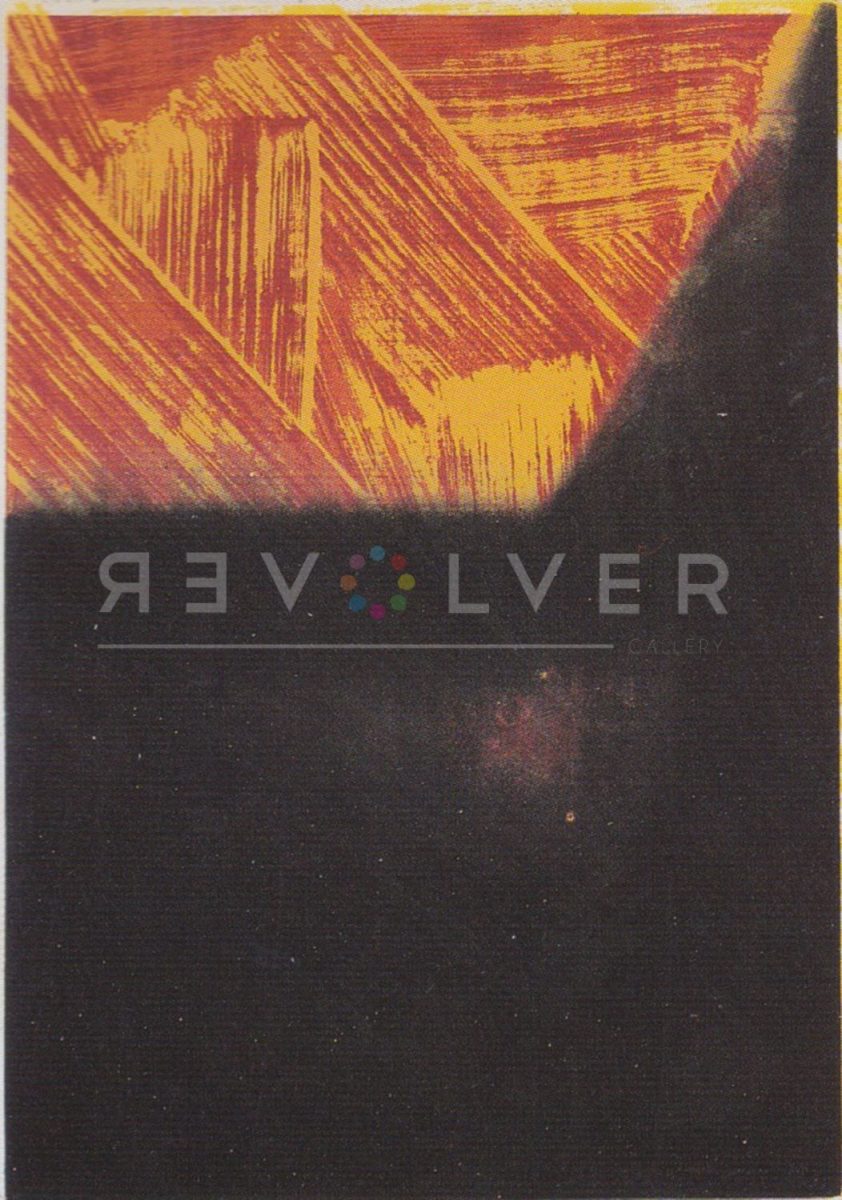
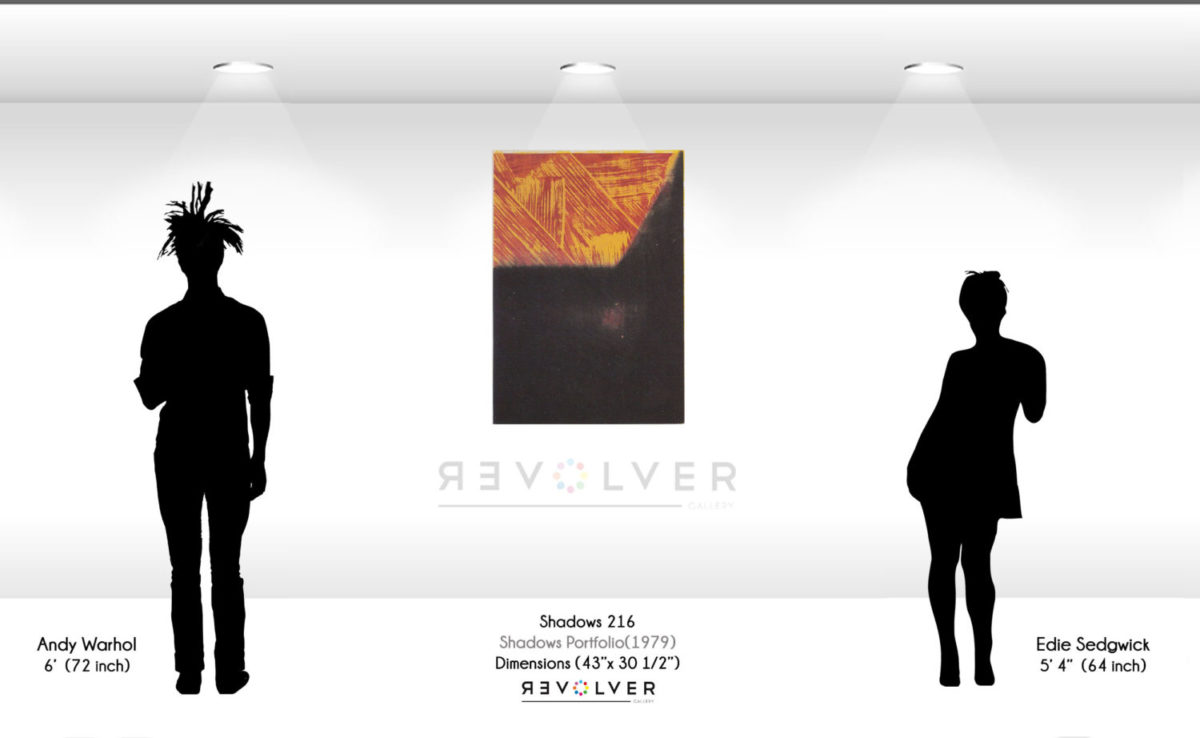
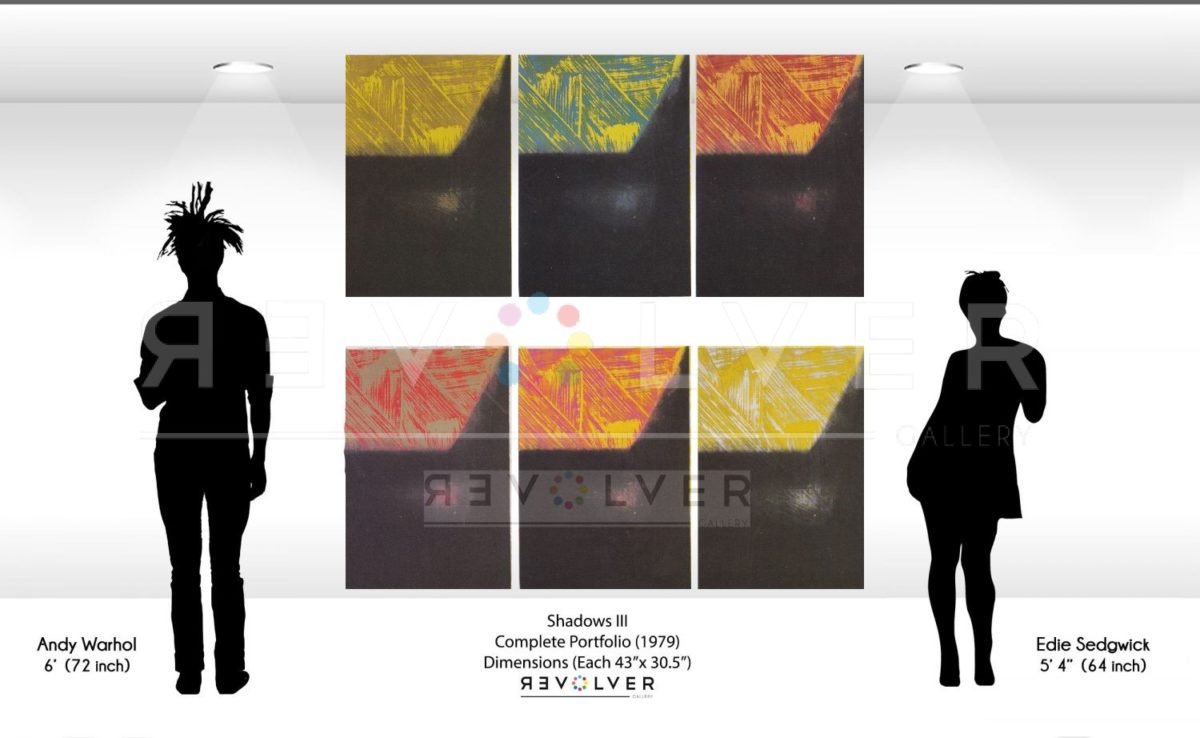
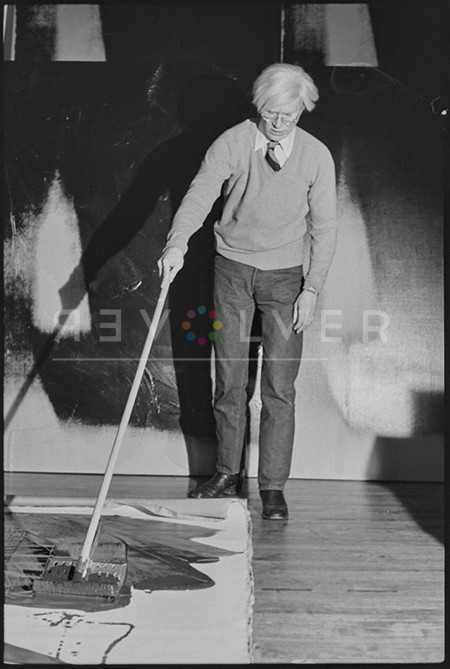
Shadows III 216 by Andy Warhol is one of six prints from his Shadows III portfolio, and a single piece of the larger 102-piece Shadows series of which this print is derived from. This piece features contrasting orange and black colors, with large sponge mop strokes texturizing the orange space. Warhol published Shadows III 216 in 1979 in collaboration with his preferred printer, Rupert Jasen Smith. The series was exhibited that same year at the Heiner Friedrich gallery in New York.
Speaking about Shadows, Warhol said, “Someone asked me if I thought they were art and I said no… disco décor.” Playing on this idea, it seemed that Warhol felt as if this series was more appropriate to be used as a kind of wallpaper, which was exemplified when he later staged a fashion shoot with his Shadows series as the backdrop. He also said he dreamed of having his Shadows grace the walls of Studio 54. The pieces become even more appropriate for such a setting through Warhol’s incorporation of diamond dust, adding a sparkly charm to the prints. (Warhol also used diamond dust in works like Double Mickey Mouse, Shoes, and his Grapes portfolio.)
According to previous MOCA director Philippe Vergne, Warhol himself never saw all 102 pieces of the Shadows series together. Moreover, Warhol left no instructions on the order in which to hang them and since the pieces are not numbered, they can be hung at random. Perhaps leaving room for play, he allowed viewers to have a new experience each time the panels are installed. This idea evokes a new concept, which is not seen in any of Warhol’s other works, as most of his pieces, although are made in a series, are meant to hang individually.
Although Shadows III 216 diverts from the traditional mass media objects that Warhol famously created, the series illustrates his interest in creating works that all bear the same compositional aspects, yet are still able to hold onto their individual uniqueness. Shadows III 216 incorporates diamond dust, adding a sparkling effect to the print and making the series even more appropriate to hang on the walls at a disco club.
Warhol’s Shadows III 216 series is a direct continuation of the first and second portfolios as it features similar compositional imagery and color schemes. This piece was just one of many that Warhol created from a shadowy photograph in his studio. Although Warhol undermined the artistic quality of this series, many viewers felt that the cumulative effect of the numerous prints hung together was powerful and truly something new. This series, created within the last decade of Warhol’s life, marks a shift in Warhol’s artistry from his earlier Pop Art works of mass-produced objects and glamorous celebrities to a mysterious foray into abstract art later in his career.
Photo credits:
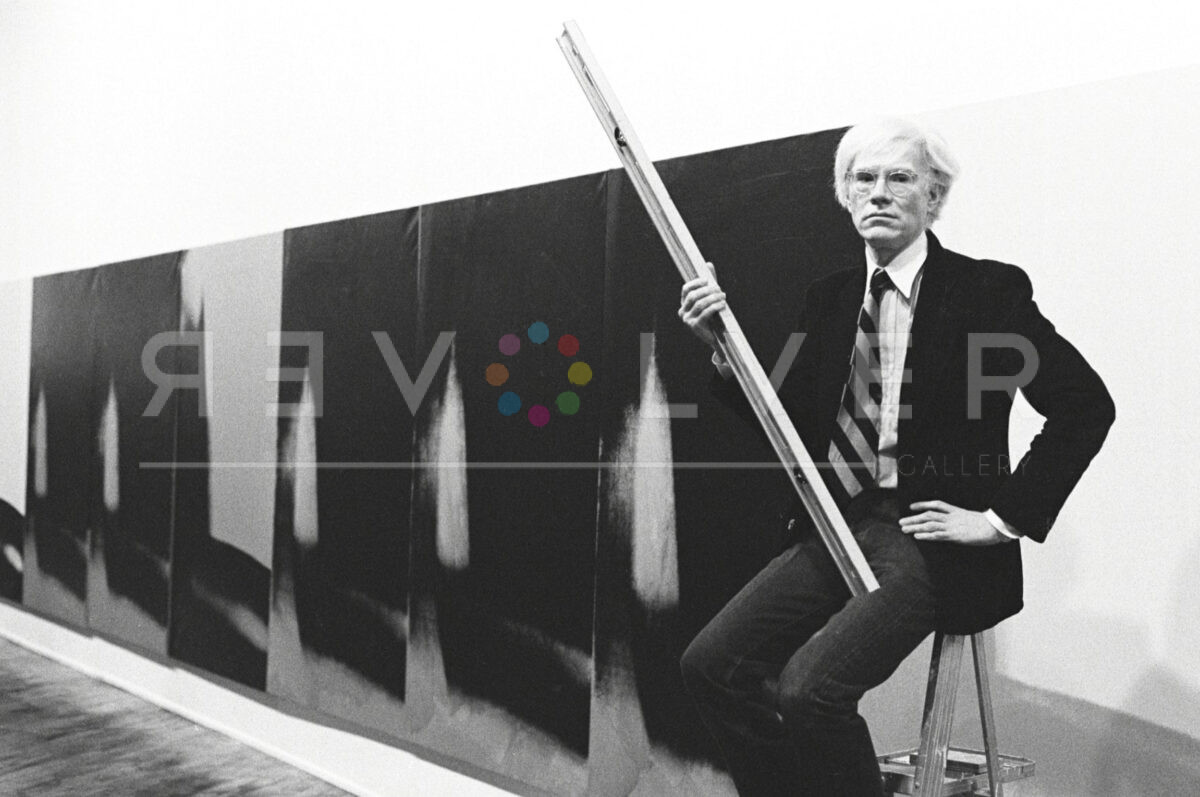
- Arthur Tress, Andy Warhol, 1979. Image: © Arthur Tress, © Courtesy Dia Art Foundation, New York, Artwork © 2021 The Andy Warhol Foundation for the Visual Arts, Inc. / Artists Rights Society (ARS), New York.
- Warhol priming Shadow paintings, 1979. Image and Artwork: © 2021 The Andy Warhol Foundation for the Visual Arts, Inc. / Artists Rights Society (ARS), New York.