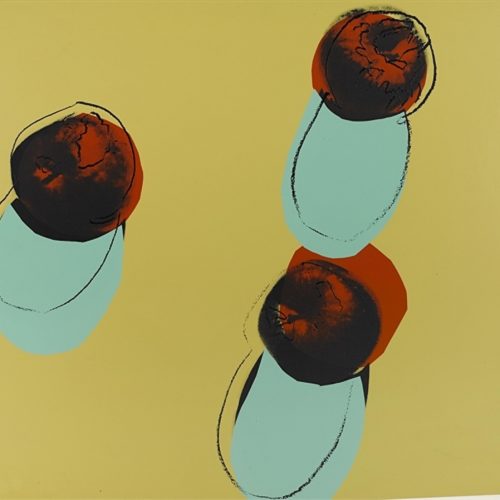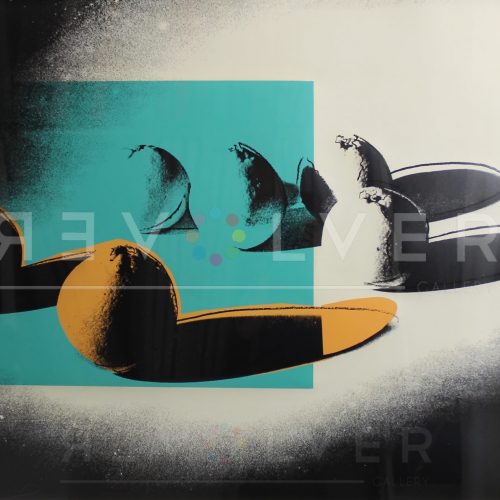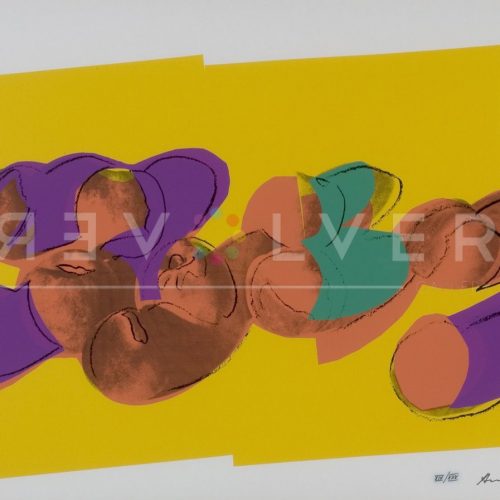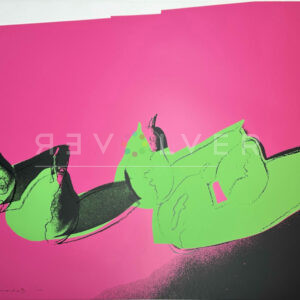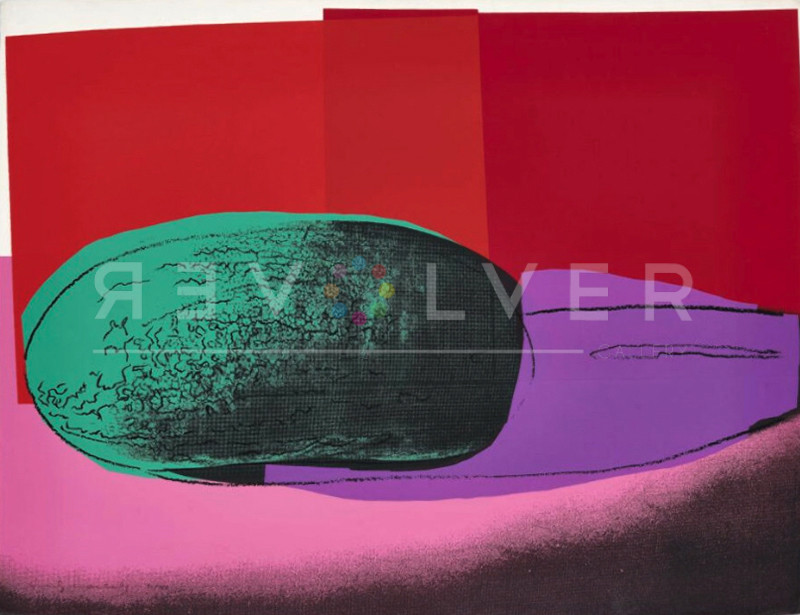
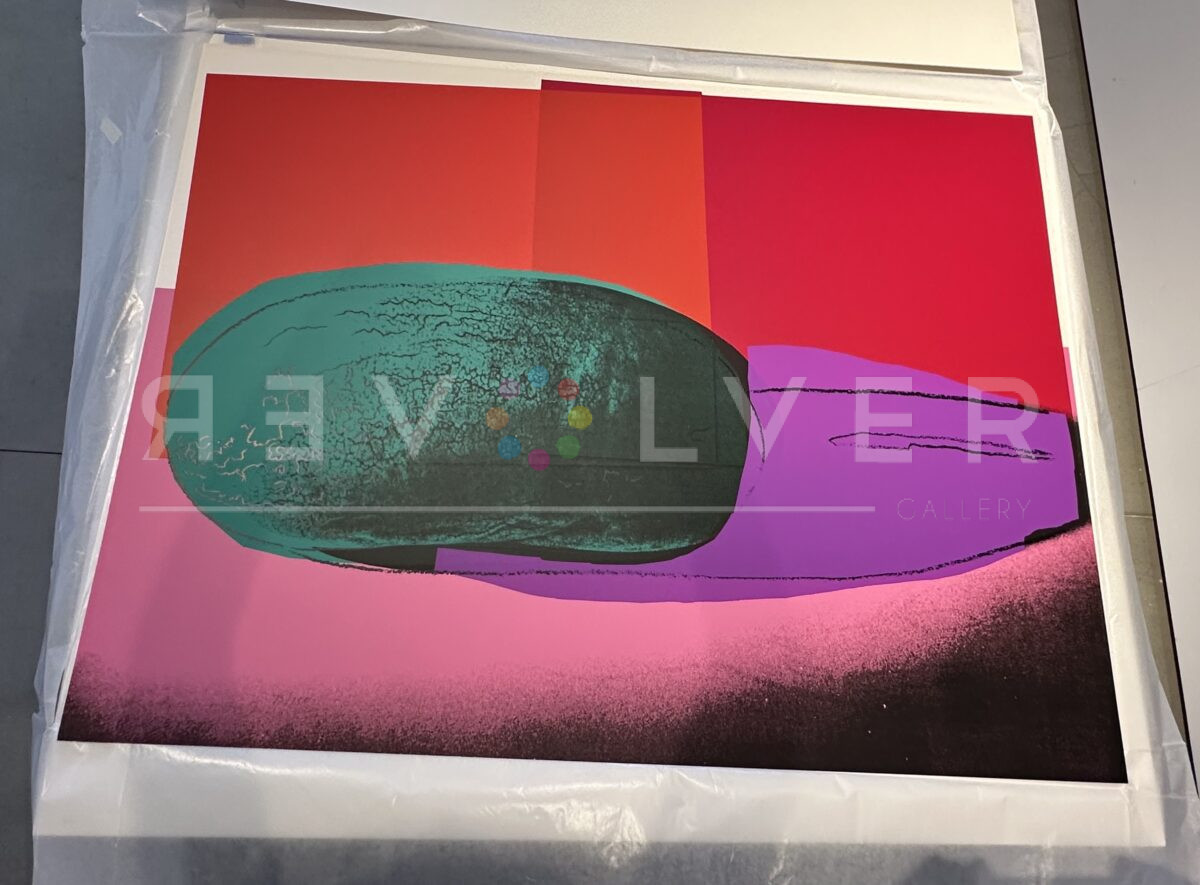
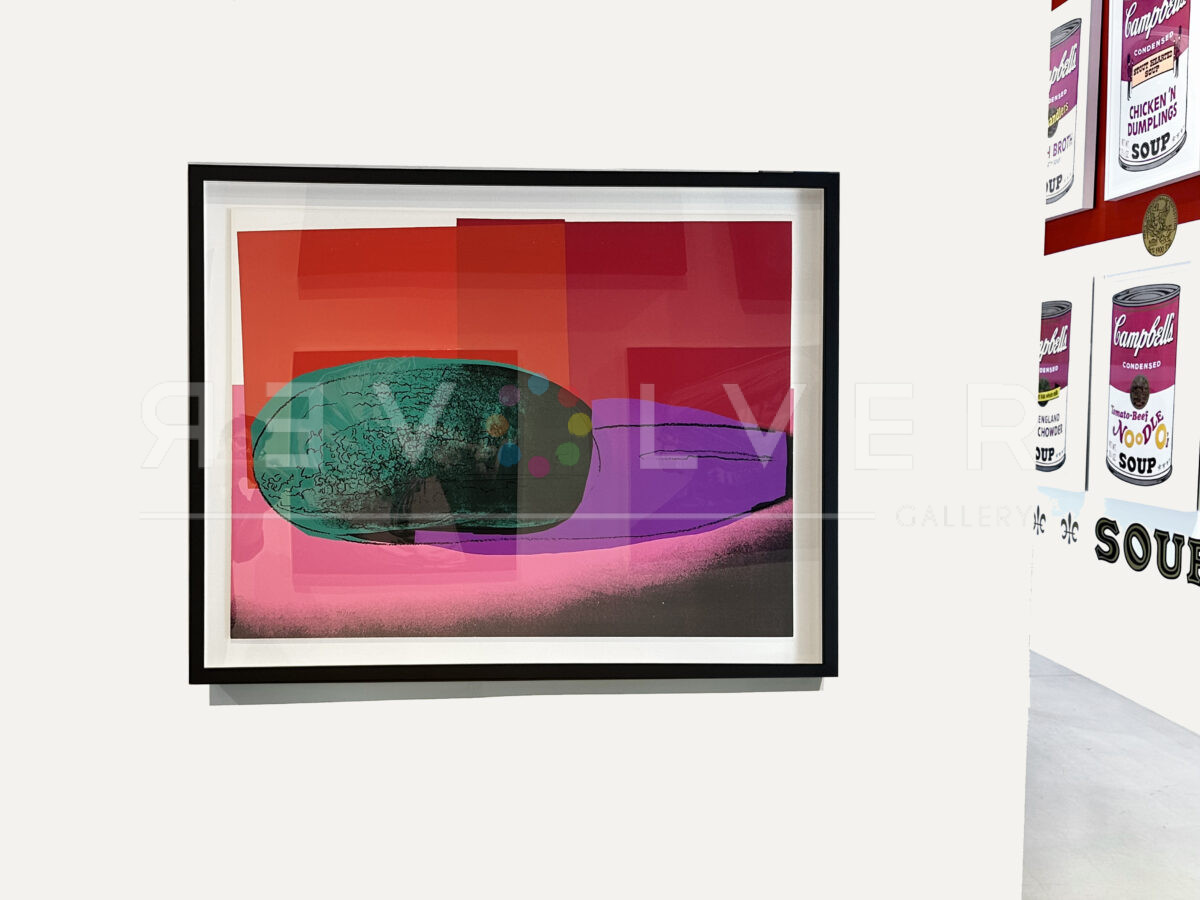
Andy Warhol’s Space Fruit: Watermelon 199 is part of his Space Fruit: Still Lifes series that he created in 1979. During this series, Warhol focuses on his use of colorful shadows, giving the fruit more of a 3D perspective. Unlike some of his other Space Fruit works, the subject of this piece is hardly recognizable as a fruit because of the abstract color and shapes showcased in the print. However, the turquoise Warhol paints on the fruit and the vibrant fuchsia and red he paints in the background create relevance to the colors associated with the fruit as a means of defamiliarization.
Space Fruit: Watermelon 199 by Andy Warhol as Part of His Larger Body of Work
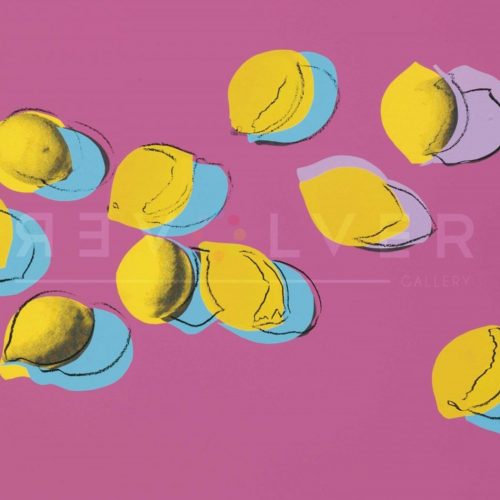
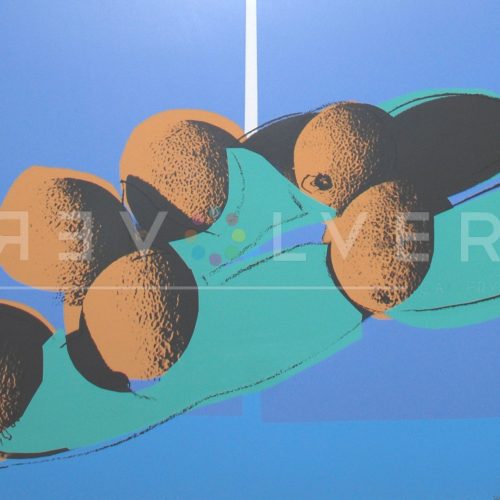
This series marks a shift of Warhol’s interest from commercial products to historically more typical subjects of art and still life. Warhol takes the same approach to his Space Fruit series as he does to his Flowers and Skulls portfolios, taking traditional props and isolating each element in some of his most famous portfolios. The use of color and abstract composition throughout the series displays an almost cubist approach to art––taking something familiar and presenting it in a different light. Each subject in the portfolio is almost recognizable as the fruit being portrayed; however, they become more abstract and obscured throughout the series, making the viewer wonder if the subject is even fruit at all.