Andy Warhol - Untitled 12 F.S. II 120 jpg
Untitled 12 120 unframed
Detail of Andy Warhol's signature on Untitled 12 120
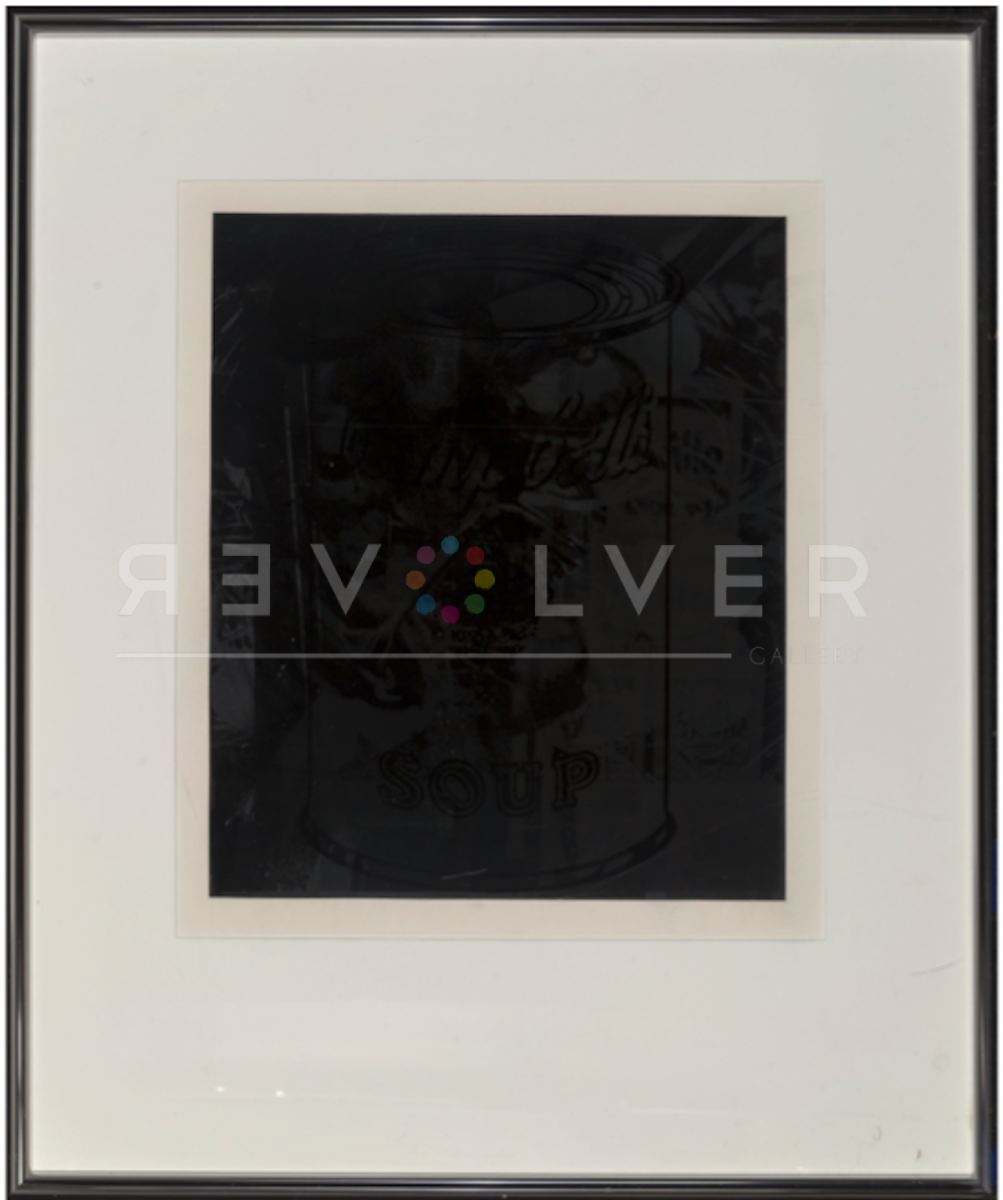
Andy Warhol - Untitled12_FS II.120_framed
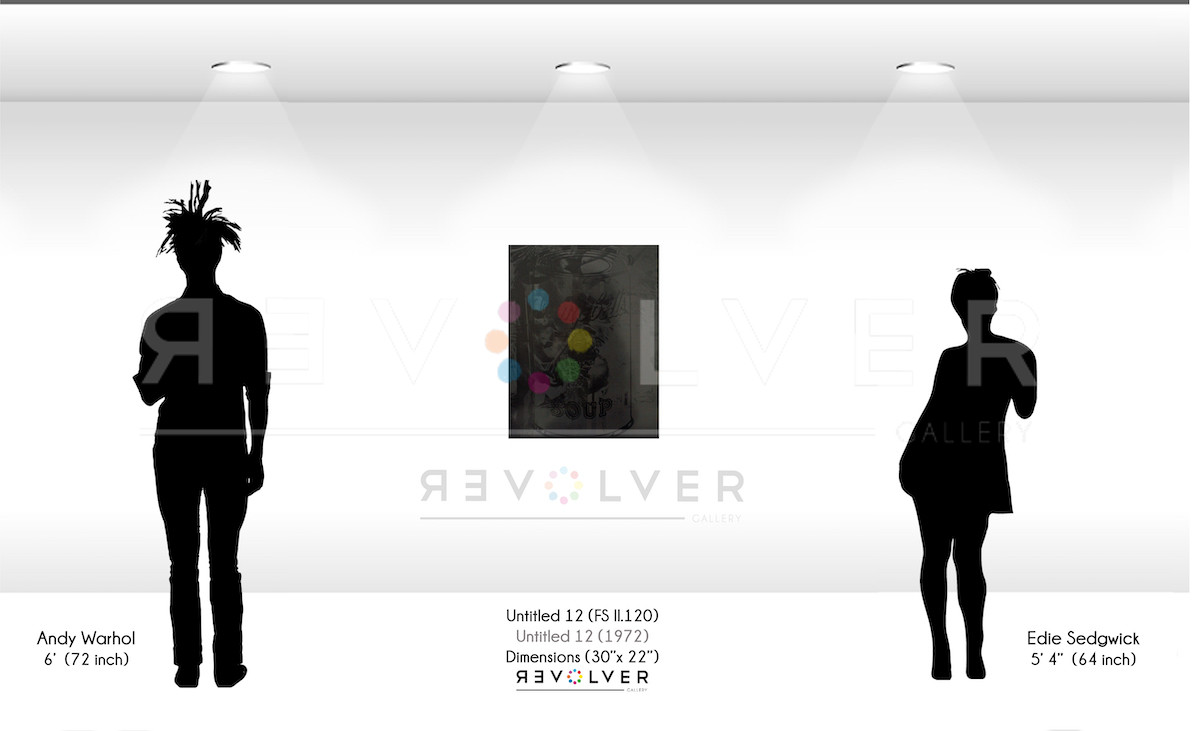
Picture of Untitled 12 (FS II.120), 1974, by Andy Warhol, Andy and Edie Sedgwick Size Comparison.
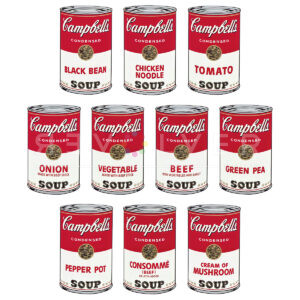
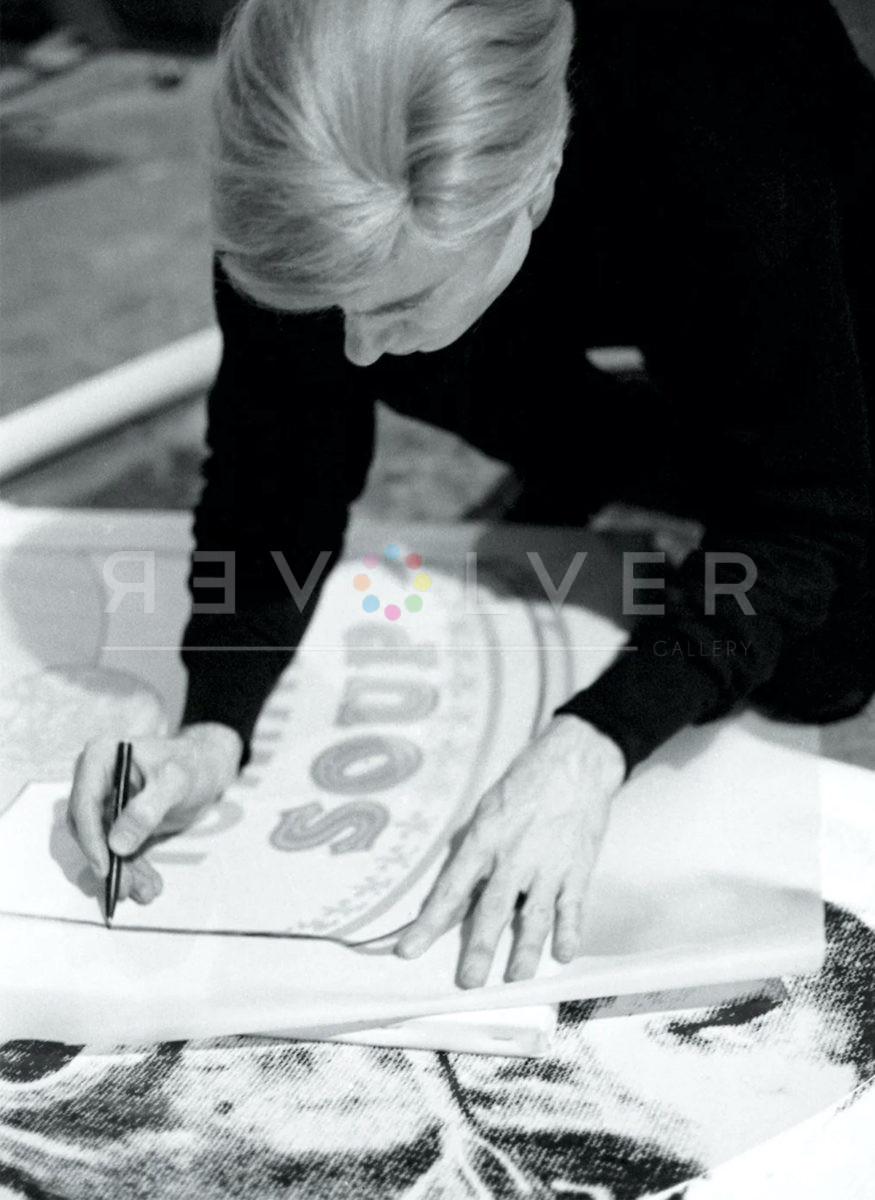
GIFT SHOP Campbell’s Soup Cans II Complete Portfolio by Andy Warhol Andy Warhol - Hot Dog Bean F.S. II 59 in situ jpg Andy Warhol Campbell soup II complete portfolio. Andy Warhol printing Campbells Soup Cans Campbell’s Soup Cans II Complete Portfolio Catalog Title: Campbell's Soup Cans II Complete Portfolio (FS II.54-63) Year: 1969 Size: 35" x 23" | 88.9 x 58.4 each Medium: Portfolio of ten screenprints on paper. Edition: Portfolio of 10. Edition of 250 signed in ball-point pen and numbered with a rubber stamp on verso. There are 26 AP signed and lettered A-Z in ball-point pen on verso. Call for Price Text for Price Email for Price The Campbell’s Soup Cans II complete portfolio by Andy Warhol comprises 10 prints of the iconic Campbell’s Soup Cans series. It is his third work rendering the common American pantry item. It follows his breakout thirty-two-piece series, Campbell’s Soup Cans (1962), and the 1968 Campbell’s Soup Cans I (1968). The Campbell’s soup label had become high art in Warhol’s series. Moreover, the portfolio reinforced both the brand a pop culture icon, and Warhol’s reputation as the “Prince of Pop Art.” Uniformity and Detail in the Soup Can Prints The Campbell’s Soup Cans II screenprints show a variation of 10 different Campbell’s soup flavors. Each can rest in the center of its frame, where it aligns exactly with the other sets of images. This symmetry and regularity gave the entire portfolio a uniform, mass-produced aesthetic that Warhol aimed for. The cans appear graphic and animated like the labels on the actual soup cans. They also share bold shades of red, yellow, and white with black print lettering that resembles the true Campbell’s style. Warhol decided to include hyper-realistic detailing of shadows and refracting light on the tin lids, making each can slightly unique to its counterpart. The works’ likenesses to one another are further broken with different flavors, slogan designs, and colors. The Campbell’s Soup Cans II complete portfolio expands creatively from Campbell’s Soup I with bolder, brighter colors. The addition of slogans and catchphrases connect viewers to the product, with more versatility with shape and directionality. For example, flavors like Hot Dog Bean, Vegetarian Vegetable, and Tomato-Beef Noodle O’s included playful taglines. Campbell’s Soup Cans II, like the original series, was created via silkscreening. Warhol used silkscreening, a process rooted in advertising for its precise and bold graphics. Warhol repurposed this tool for fine art. Therefore, the portfolio is both an extension of Warhol’s business-art motif and a refinement of his earlier soup can projects. Warhol’s Personal Connection to Campbell’s Soup Campbell’s Soup was a convenient staple in Warhol’s daily life. “I used to drink it,” he famously said. “I used to have the same lunch every day, for 20 years, I guess, the same thing over and over again.” It was ultimately the perfect image to replicate and produce on a broad scale. However, the very simplicity of the subject invited criticism. Detractors called it too commercial, too repeatable, and too impersonal to be considered high art. As apathetic Campbell’s Soup Cans II may have seemed to some, it questioned the belief that art must be deeply expressive or transcendent. Instead, the Campbell’s Soup Cans II complete portfolio reflected everyday life and recognizable social norms. Ultimately, the Campbell’s Soup Cans II prints and Warhol’s previous soup cans helped to redefine art. By transforming a supermarket staple into a subject for reflection, he forced viewers to reconsider both consumption and creativity. As a result, Warhol’s soup cans defined an era where the conventional and the mundane could become extraordinarily powerful tools (via Pop Art). Campbell’s Soup Cans II Complete Portfolio as Part of Andy Warhol’s Larger Body of Work Warhol’s collection of prints representing Campbell’s soup cans is arguably his most iconic and widely recognized endeavor. The Campbell’s Soup Cans portfolios represent many themes that Warhol continued to work with throughout his career, including the powerful role that mass consumption plays in postwar society. Moreover, the semi-mechanized process he used to create these works is a staple characteristic of his creative process. This series helped to usher in the Pop Art movement that endures today, renewed and rediscovered by artists such as Damien Hirst and Jeff Koons. Photo Credits: Andy Warhol tracing Campbell’s Soup silkscreen, The Factory, New York City, circa 1965. © Estate of Nat Finkelstein. © 2021 The Andy Warhol Foundation for the Visual Arts, Inc. / Licensed by DACS, London.

Untitled 12 120

Catalog Title: Untitled 12 (FS II.120)
Year: 1974
Size: 30” x 22” | 76.2 x 55.8 cm
Medium: Screenprint on Arches Paper
Edition: Edition of 100, 13 AP, 3 PP, signed, numbered, and dated '74 in ball-point pen on verso; AP and PP are not dated. Published in the portfolio For Meyer Schapiro, containing works by twelve artists on the occasion of his seventieth birthday.
Name(Required)
This field is hidden when viewing the form

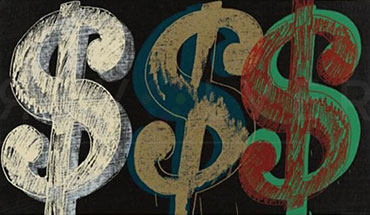
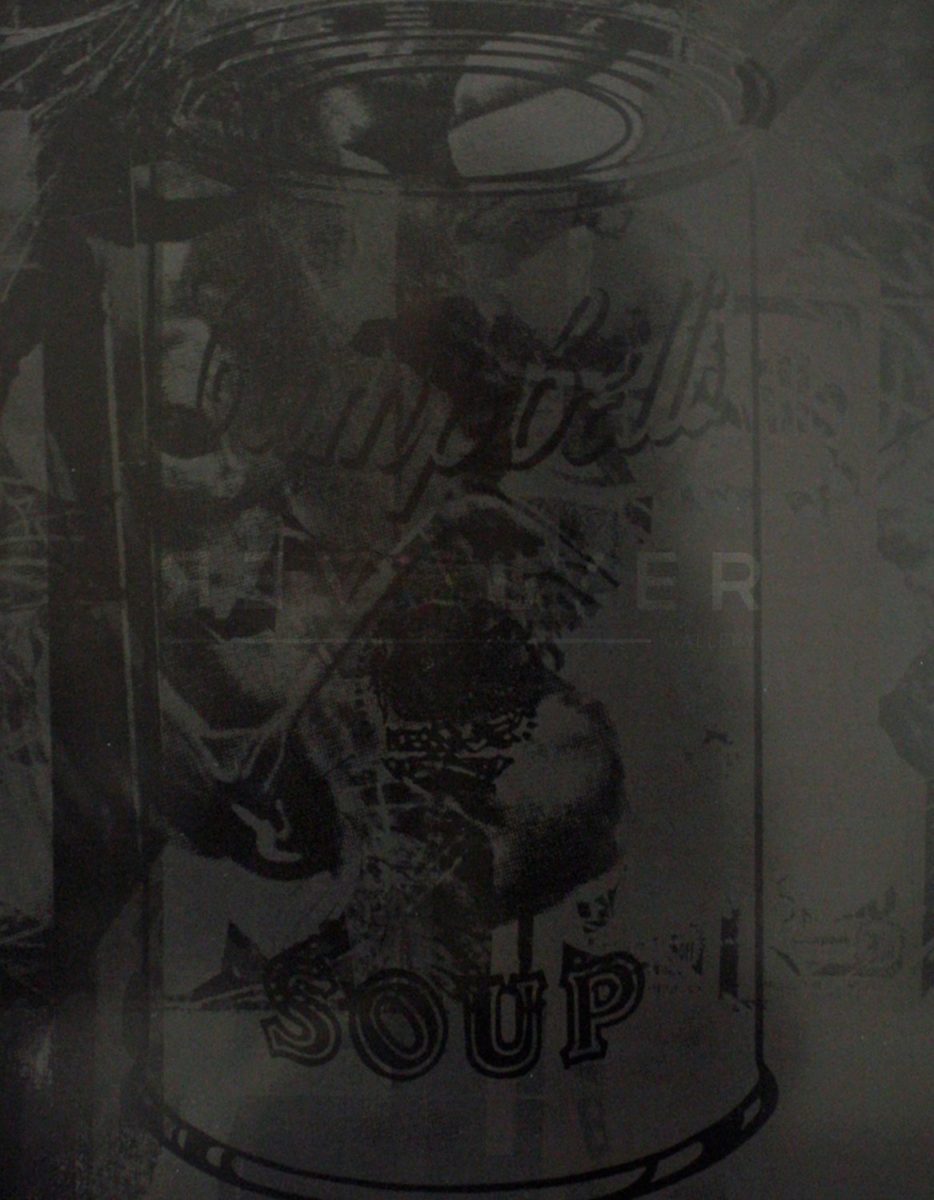
Untitled 12 by Andy Warhol comes from a published portfolio of twelve works by various artists entitled For Meyer Schapiro to commemorate art historian’s Schapiro’s seventieth birthday. It was published by the very specific “Committee to Endow a Chair in Honor of Meyer Schapiro at Columbia University,” New York. This particular work is a collage of some of the most iconic imagery in Warhol’s work including the electric chair, the Campbell’s soup can, and the dollar sign. Although Untitled 12 120 has a dark composition, one is able to distinguish the different nuances of the work through the contrasting shades of light and dark that Warhol so excellently executed.

Untitled 12 as Part of Andy Warhol’s Larger Body of Work

This work is a part of portfolio with twelve other artists. It is unlike Warhol’s other works as it lacks Warhol’s signature bursts of color. What makes this work unique is that it is a collage of his most famous works, such as the cow, Brillo boxes and Campbell’s soup cans. This piece stands out as an homage to his earlier works, but is unique in that it illustrates more Abstract Expressionistic elements than those of the Pop Art movement.
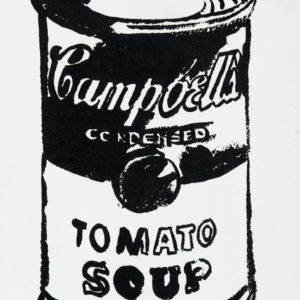
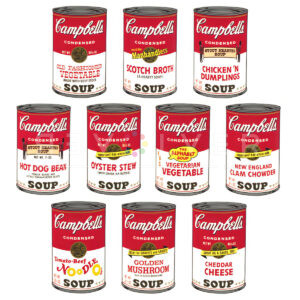
 

Photo Credit: Andy Warhol tracing Campbell’s Soup silkscreen, The Factory, New York City, circa 1965 © Estate of Nat Finkelstein © 2021 The Andy Warhol Foundation for the Visual Arts, Inc. / Licensed by DACS, London

Share this page:

Related Works