Original Albert Einstein Screen Print by Andy Warhol from Ten Portraits of Jews of the Twentieth Century
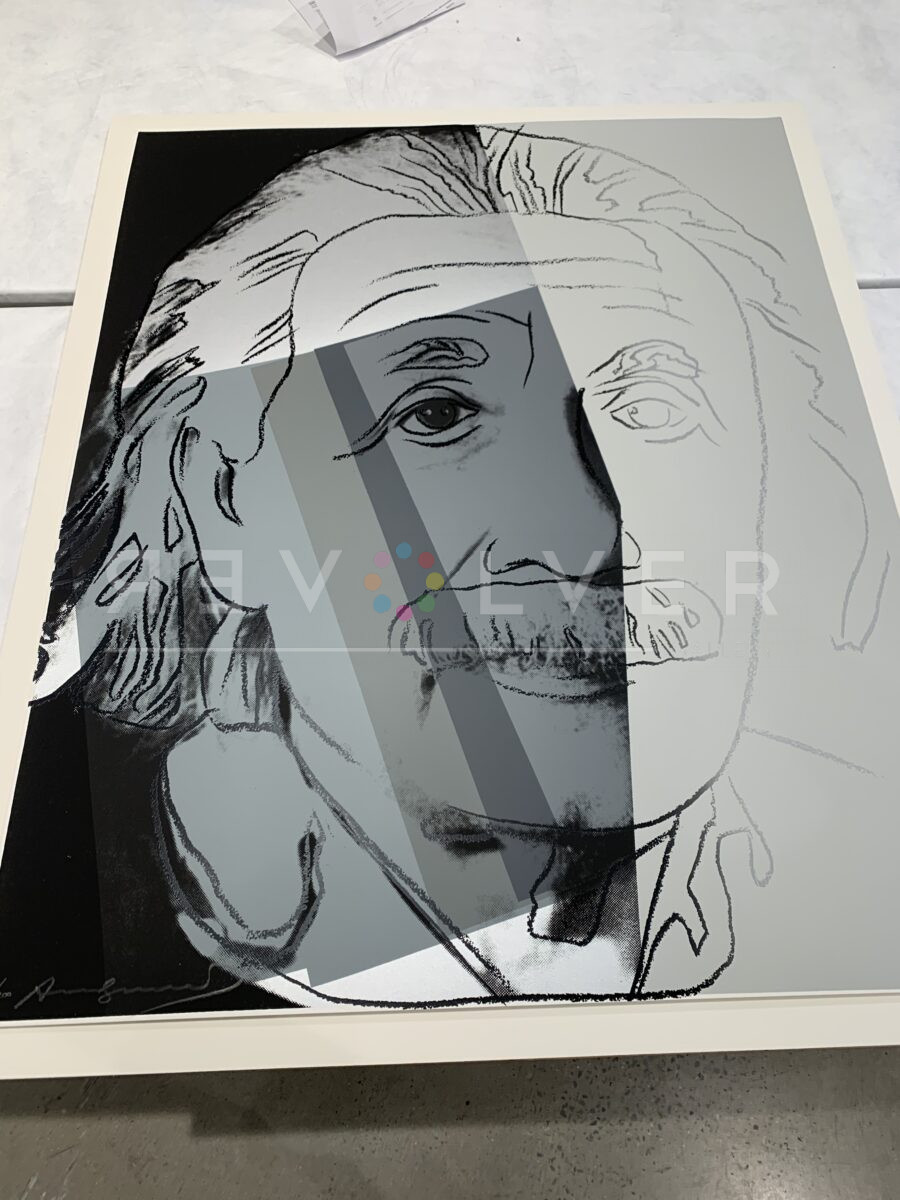
Albert Einstein by Andy Warhol out of frame
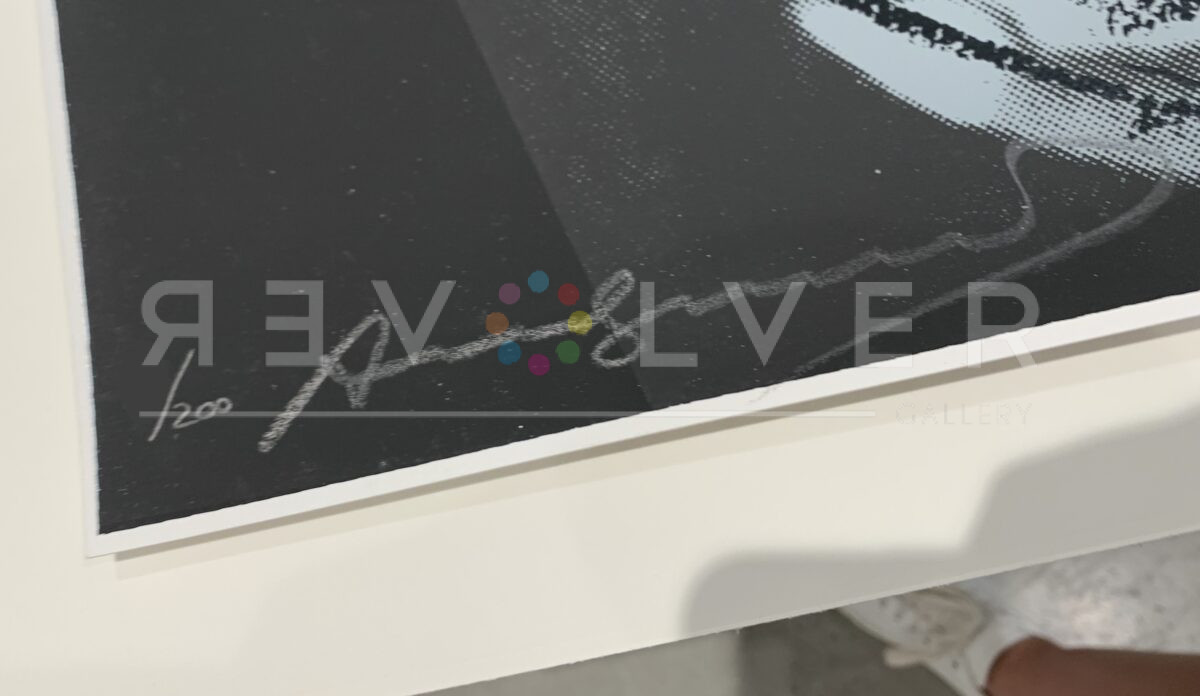
Warhol's signature on the albert einstein print
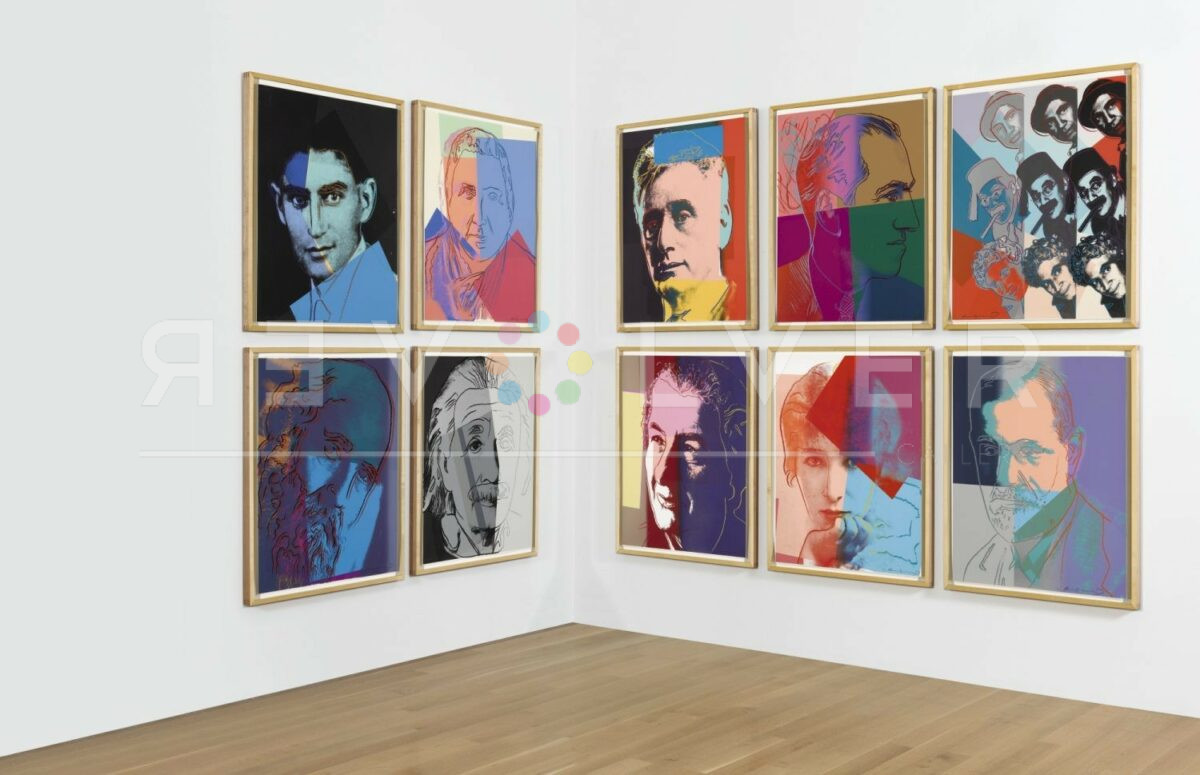
Andy Warhol Ten portraits of famous jews hanging on gallery wall.
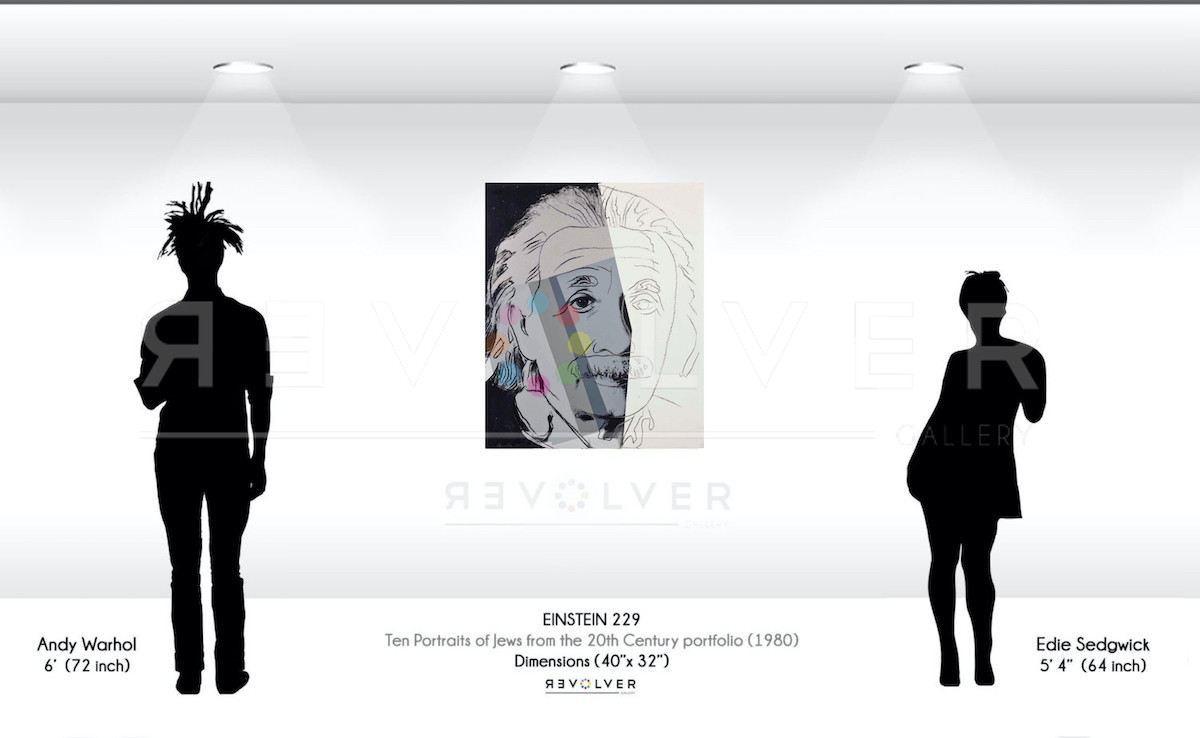
Picture of Albert Einstein (FS II.229), 1980, by Andy Warhol, Andy and Edie Sedgwick Size Comparison.
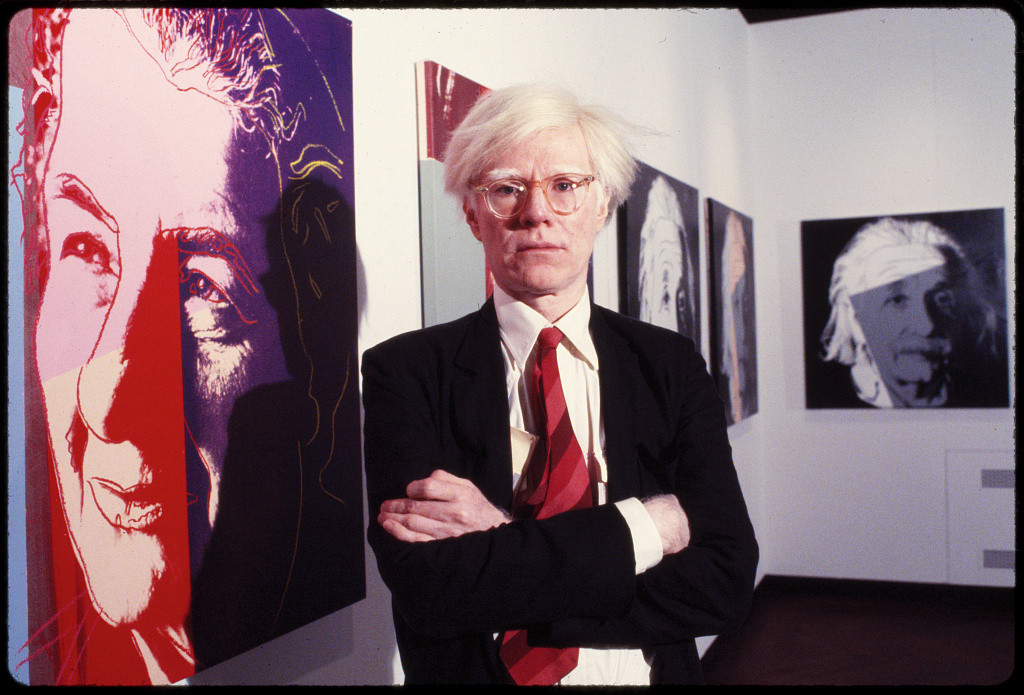
Andy Warhol standing with screen prints from his Ten Famous Jews of the Twentieth Century series.

Albert Einstein 229

Catalog Title: Albert Einstein (FS II.229)
Year: 1980
Size: 40" x 32" | 101.6 x 81.3 cm.
Medium: Screenprint on Lenox Museum Board
Edition: Edition of 200, 30 AP, 5 PP, 3 EP, 25 TP, signed and numbered in pencil. Portfolio of 10.
Name(Required)
This field is hidden when viewing the form

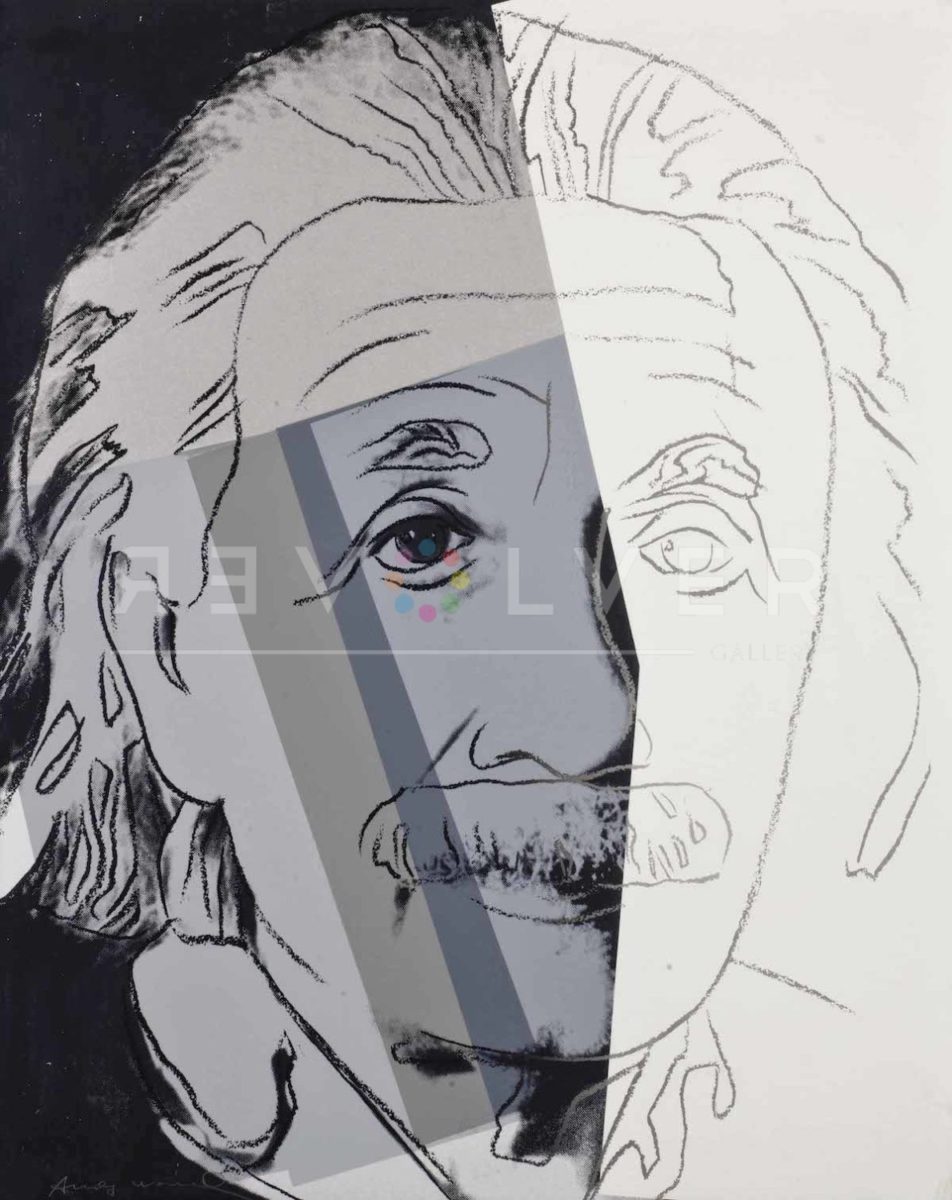
Albert Einstein 229 by Andy Warhol shows the physicist’s face split down the middle. On the left, a block of cool greys and soft blacks shadows his eye and mustache. On the right, Warhol leaves the image as a sparse line drawing on a pale ground. Loose black strokes suggest Einstein’s unruly hair and wisened eyes. The composition feels both analytical and ghostly, as if Warhol were measuring and then dissolving Einstein’s public image.

Albert Einstein 229 and the Ten Portraits of Jews of the Twentieth Century

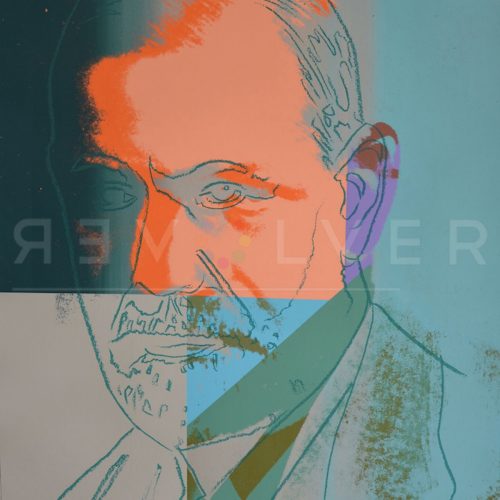
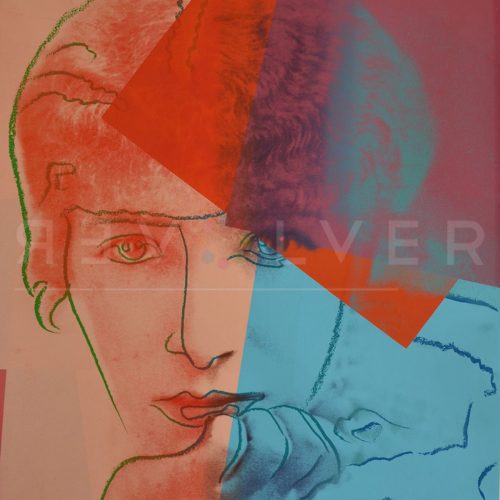
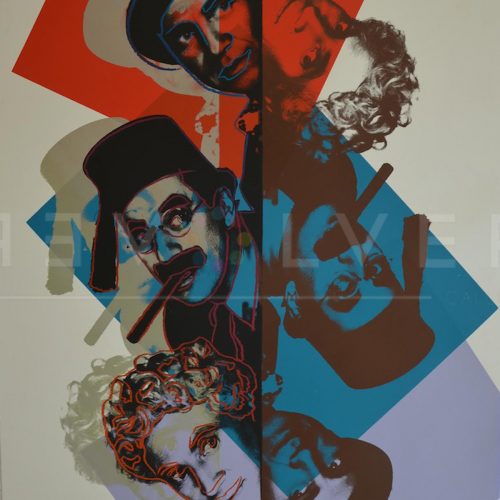
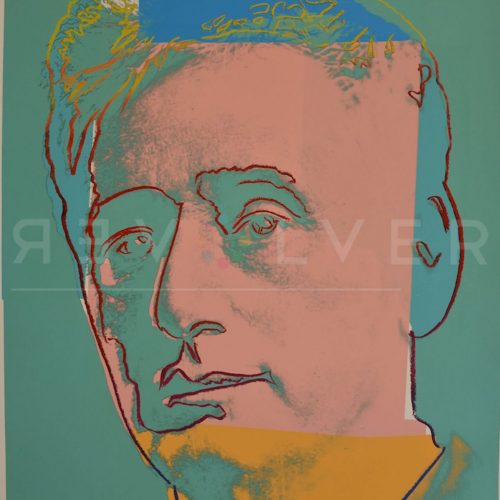
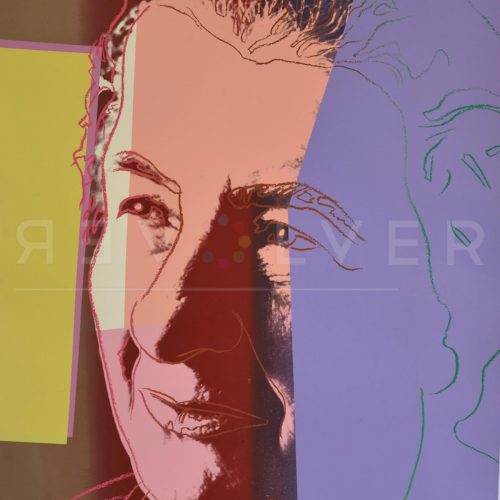
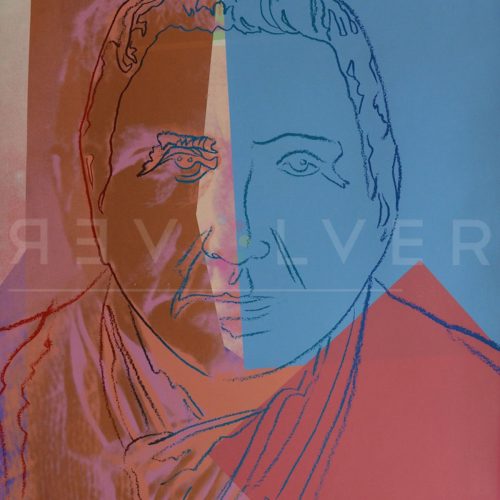
Warhol created Albert Einstein 229 in 1980 as part of his portfolio Ten Portraits of Jews of the Twentieth Century. In this series, he assembled a pantheon of influential Jewish figures whose ideas and performances reshaped modern life. The portfolio includes the German-born theoretical physicist Albert Einstein alongside Sarah Bernhardt, Louis Brandeis, Martin Buber, Sigmund Freud, George Gershwin, Franz Kafka, the Marx Brothers, Golda Meir, and Gertrude Stein. Together, their achievements in science, politics, music, literature, and theater marked key turns in twentieth-century history. Warhol treated the group as a kind of secular altar piece to modern genius.

Color, Line, and Warhol’s Late Portrait Style

In Albert Einstein 229, Warhol plays with the tension between photographic likeness and abstract design. The grey panel that slices through Einstein’s face reads almost like a laboratory instrument, while the rest of the portrait reduces him to a network of contour lines. As a result, the picture feels analytical rather than sentimental. Warhol’s restrained palette of blacks, whites, and greys differs from his earlier, more saturated celebrity portraits. In addition, the asymmetrical layout—one half shaded, one half open—echoes Einstein’s own role as a boundary-breaker who bridged classical physics and radical new theories of space and time.

Historical Context and Legacy

By 1980, Warhol had spent two decades turning public figures into icons. With Ten Portraits of Jews of the Twentieth Century, he shifted from movie stars and rock musicians to thinkers whose influence spread through ideas rather than mass entertainment. Einstein, whose general theory of relativity transformed our understanding of gravity and cosmology, offered Warhol a different kind of celebrity: intellectual, almost austere. Consequently, the artist downplayed decorative detail. Instead, Albert Einstein 229 emphasizes the structure of it’s subject’s face, as though mapping the mind behind it. The portfolio first appeared at the Jewish Museum in New York. At the time, it sparked debate about taste, identity, and the commercialization of cultural heroes. Even so, it has since become one of Warhol’s most discussed late projects.

Albert Einstein 229 in Warhol’s Larger Body of Work

Albert Einstein 229 occupies a crucial place in Warhol’s late portraiture. It shows how he could adapt his Pop vocabulary—silkscreen, repetition, and bold graphic shapes—to subjects associated with intellect rather than glamour. For collectors, the print brings together two towering names of the twentieth century and distills them into a single, quietly charged image. Within Warhol’s larger body of work, it stands as a thoughtful tribute to modern science and a reminder of how powerfully a single face, reduced to line and shadow, can carry the weight of an era.

Photo credit: Andy Warhol at the Jewish Museum, 1980. Photo by Bernard Gotfryd.

Share this page:

Related Works