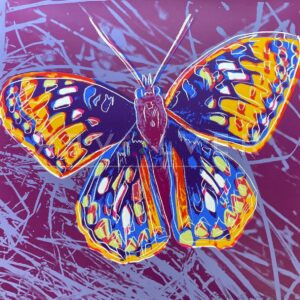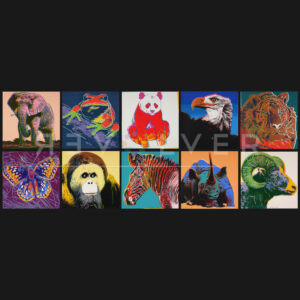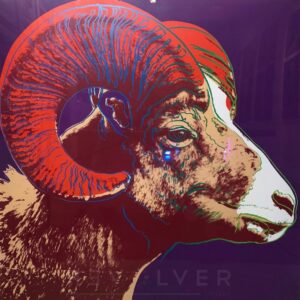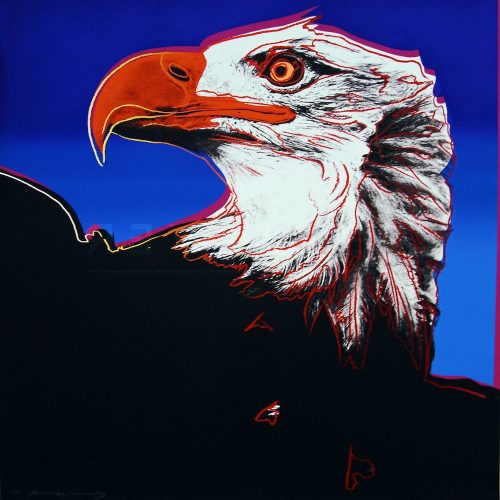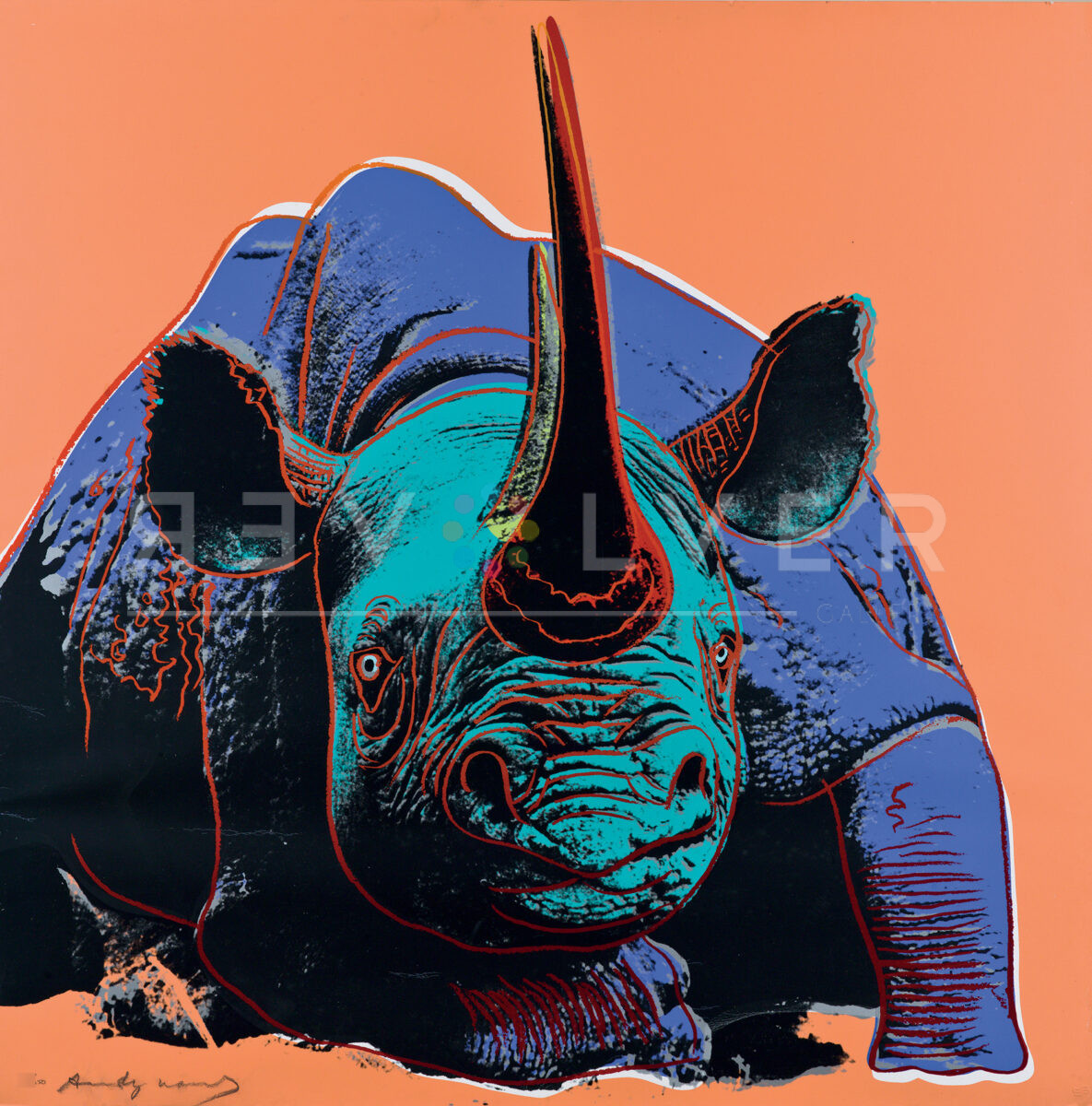
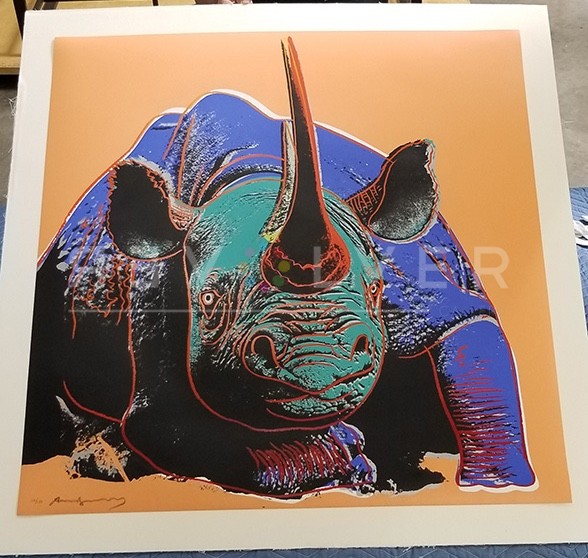
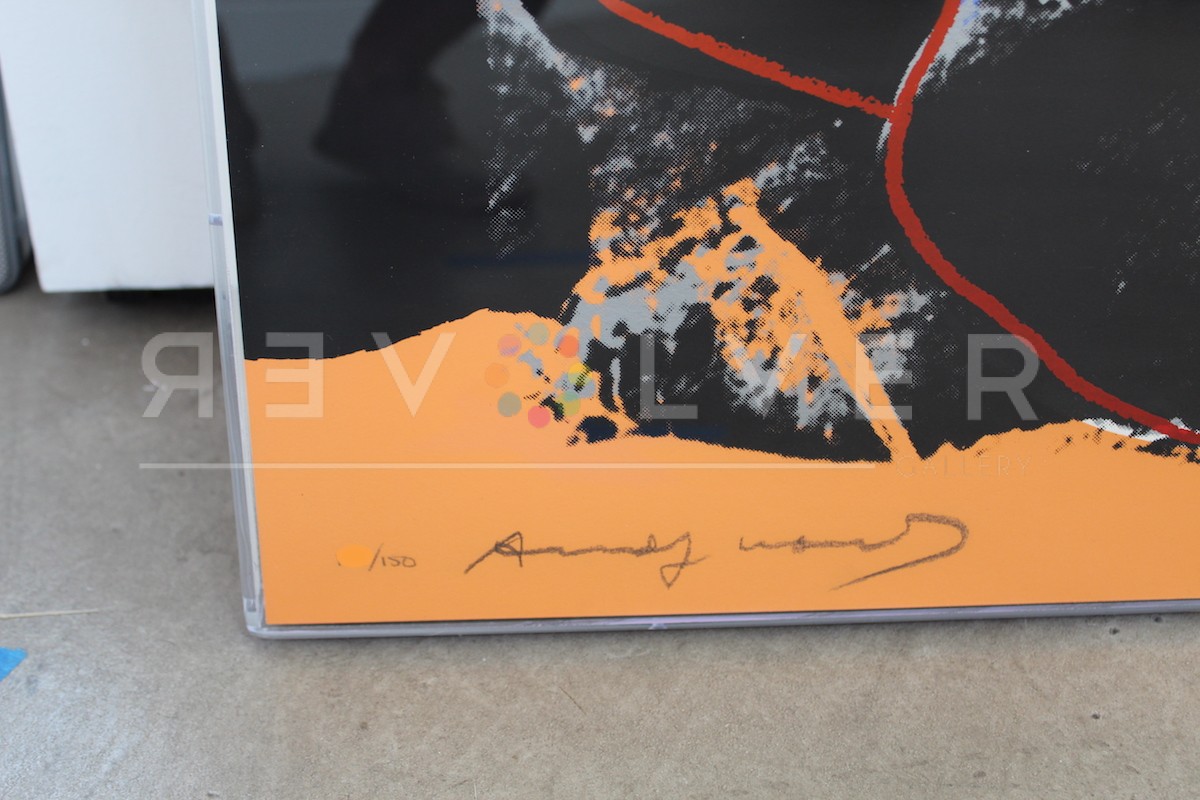
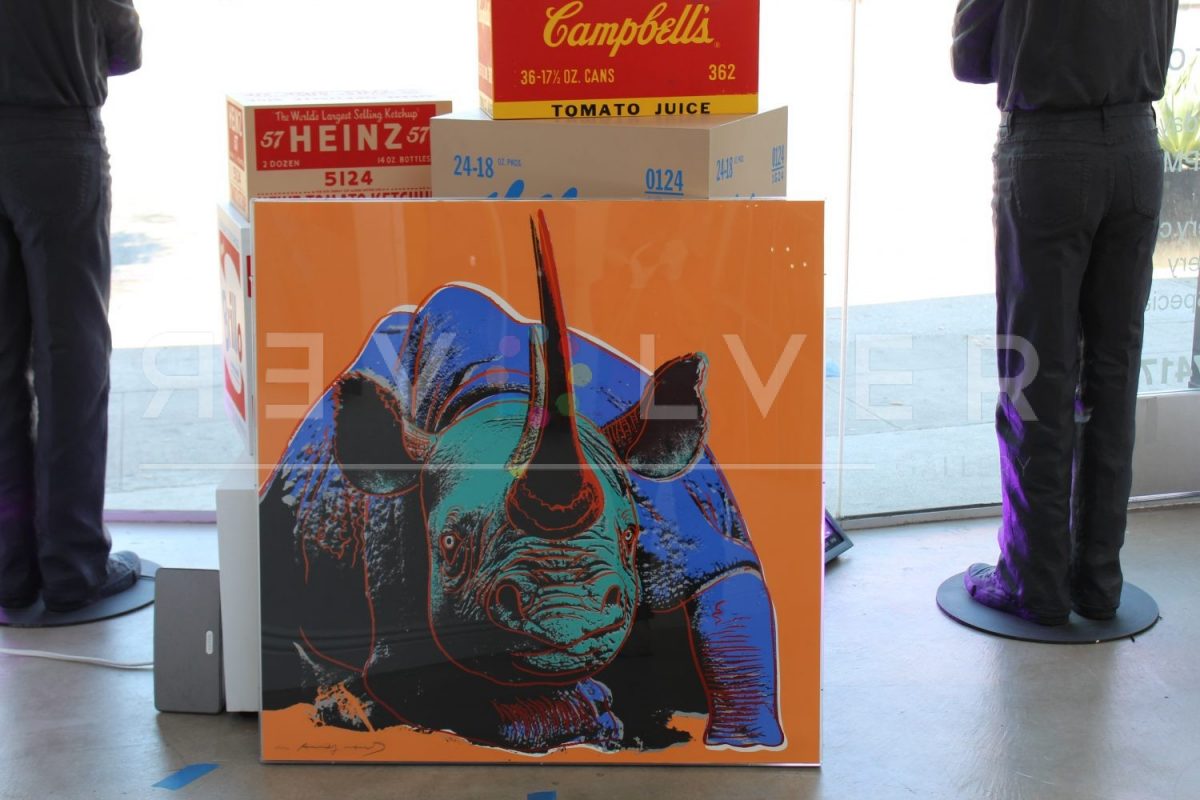
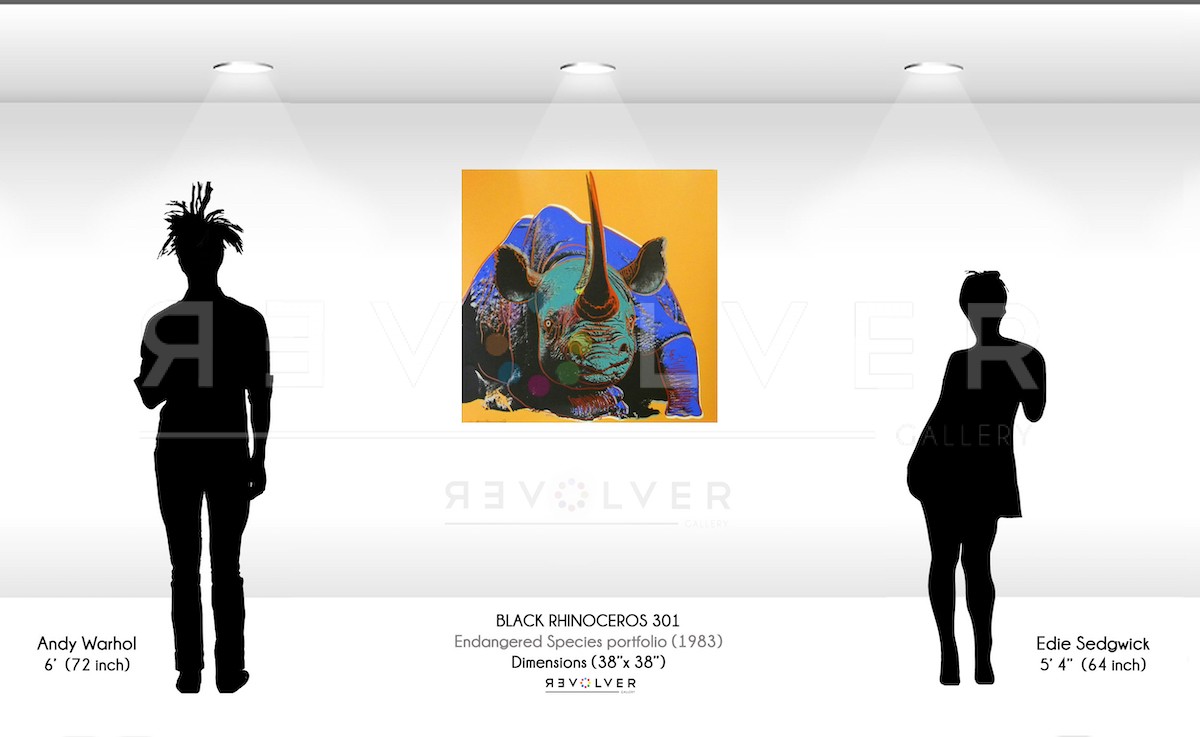
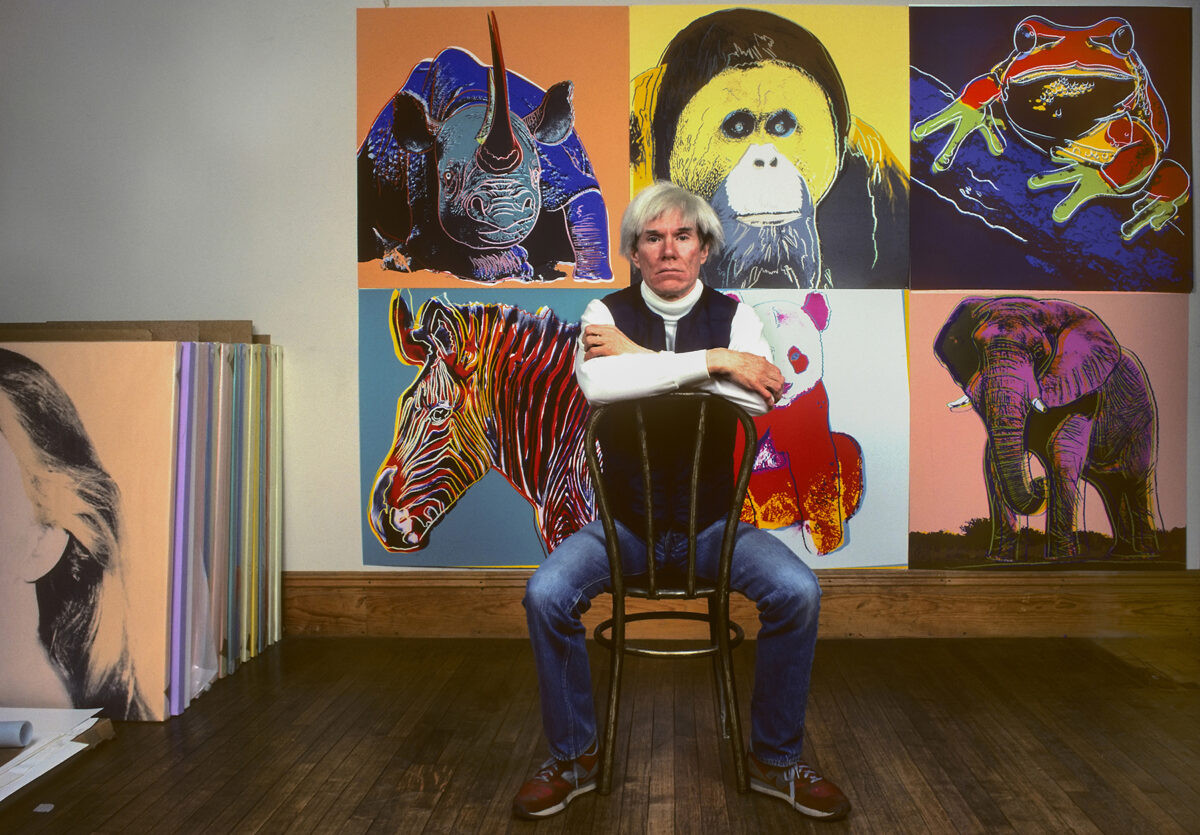
Black Rhinoceros 301 by Andy Warhol is a screenprint from Warhol’s 1983 Endangered Species portfolio. This series features, as its name would suggest, animals that were in danger of becoming extinct at the time of its premiere. Gallerist Ronald Feldman and wife Frayda Feldman (who are also known as environmental activists) commissioned Warhol to create the series to raise environmental consciousness. The distinction of “endangered” animals only became a reality 10 years prior to the series’ completion with the passing of the United States Endangered Species Act of 1973.
The focus of Black Rhinoceros 301, the black or hook-lipped rhinoceros, is still considered endangered, and critically so. There are actually between five and eight subspecies of the black rhinoceros, depending on classification scheme, with upwards of three of them already extinct. Historically, these rhinos inhabited much of the entirety of Sub-Saharan Africa but now are constrained mostly to lower parts of Middle, Eastern, and Southern Africa. This massive reduction in numbers and range involves a combination of factors including illegal poaching, changes in habitat due to civil disturbances, and particular challenges faced in captivity.
For Black Rhinoceros 301, Warhol sourced his image from a 1982 New York Times article about the devastating impacts poaching had had on black rhino populations over prior decades. Indeed, this particular rhino looks defeated, seemingly hunched over and leaning on its right forelimb in an act of learned helplessness. It also gazes intensely at the viewer, expressing either shock or pleading. This is corroborated by the blue and teal covering its body and head, respectively, bringing with them the melancholy that darker blues can invoke. Even this is heightened by the contrast provided by the peachy monochromatic background, almost making the rhino seem out of place. A central focus point, however, is the rhino’s front horn, simultaneously red and black. It stands out defiantly, an avatar, perhaps, of the animals fighting spirit and refusal to be eradicated. What we may be witnessing then is a battle stance, a pose adopted right before a final charge.
Andy Warhol’s Endangered Species series is undoubtedly one of the artist’s most cherished works. Black Rhinoceros 301 is indicative of Warhol’s 1980s masterpieces, when the artist reached the peak of his Pop Art technique, after years spent honing screenprinting, layering, contrast, and overall design. In recent years, the Endangered Species series has become especially adored by fine art collectors everywhere. Other popular works from the series include Giant Panda, and Siberian Tiger.