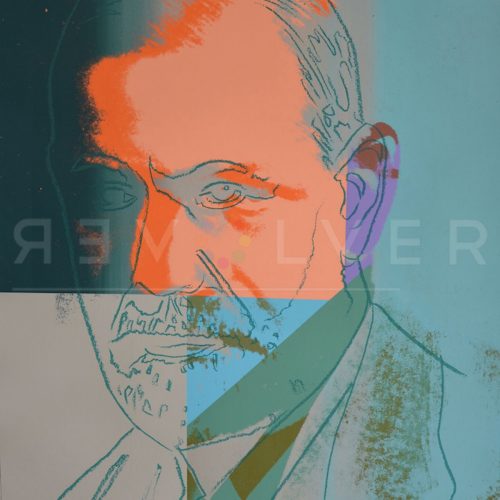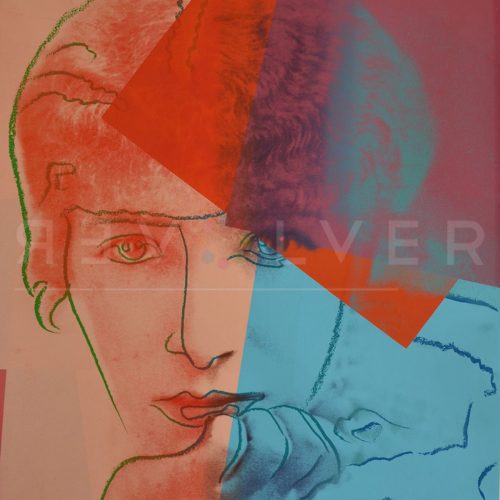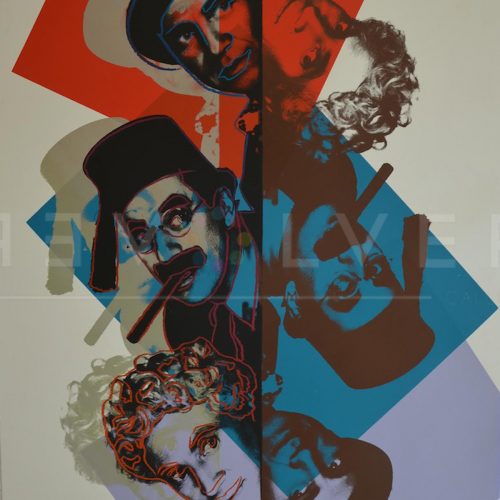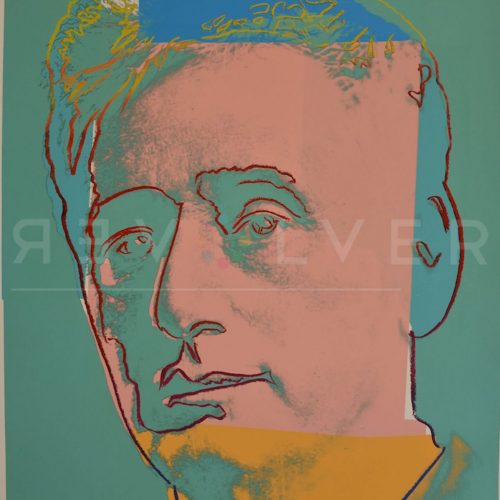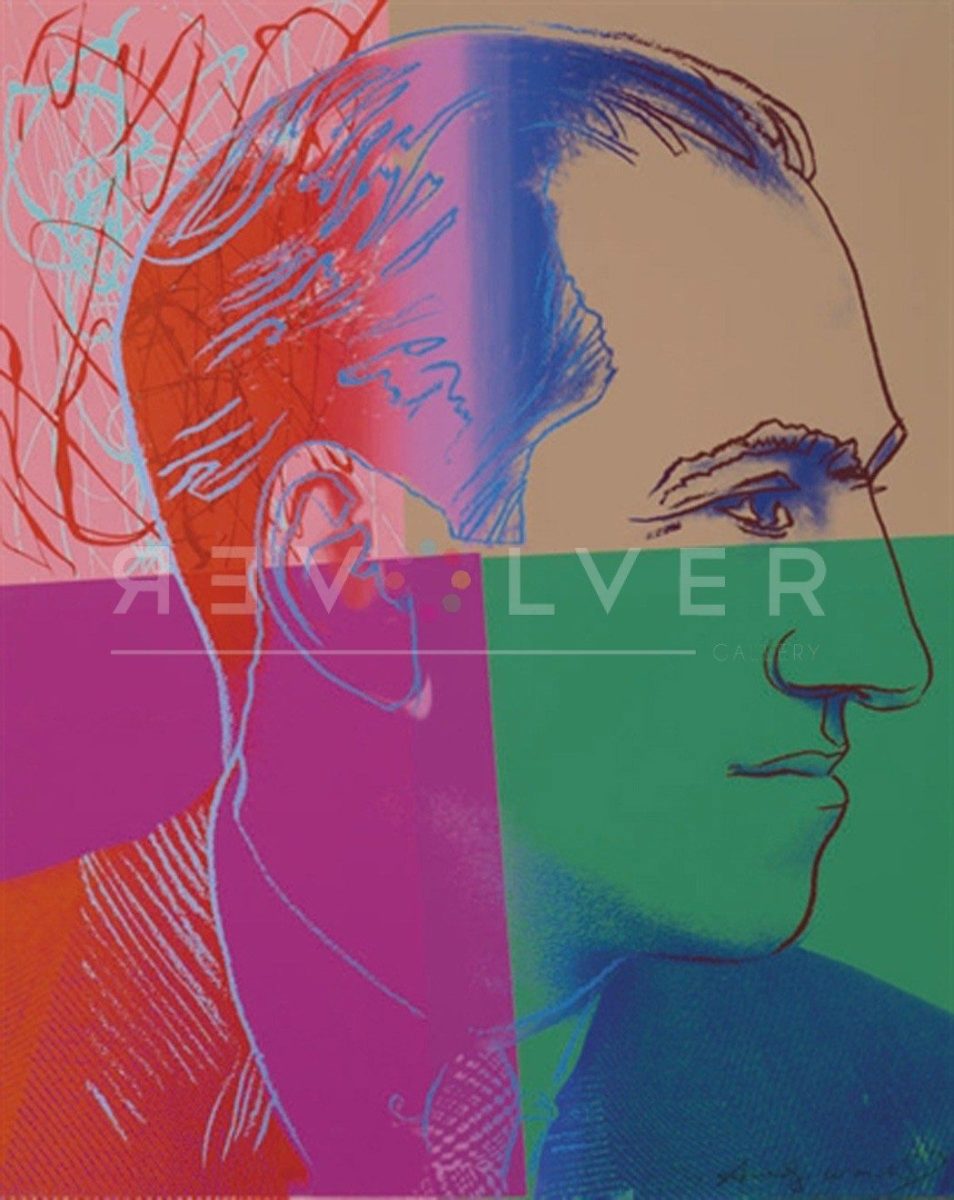


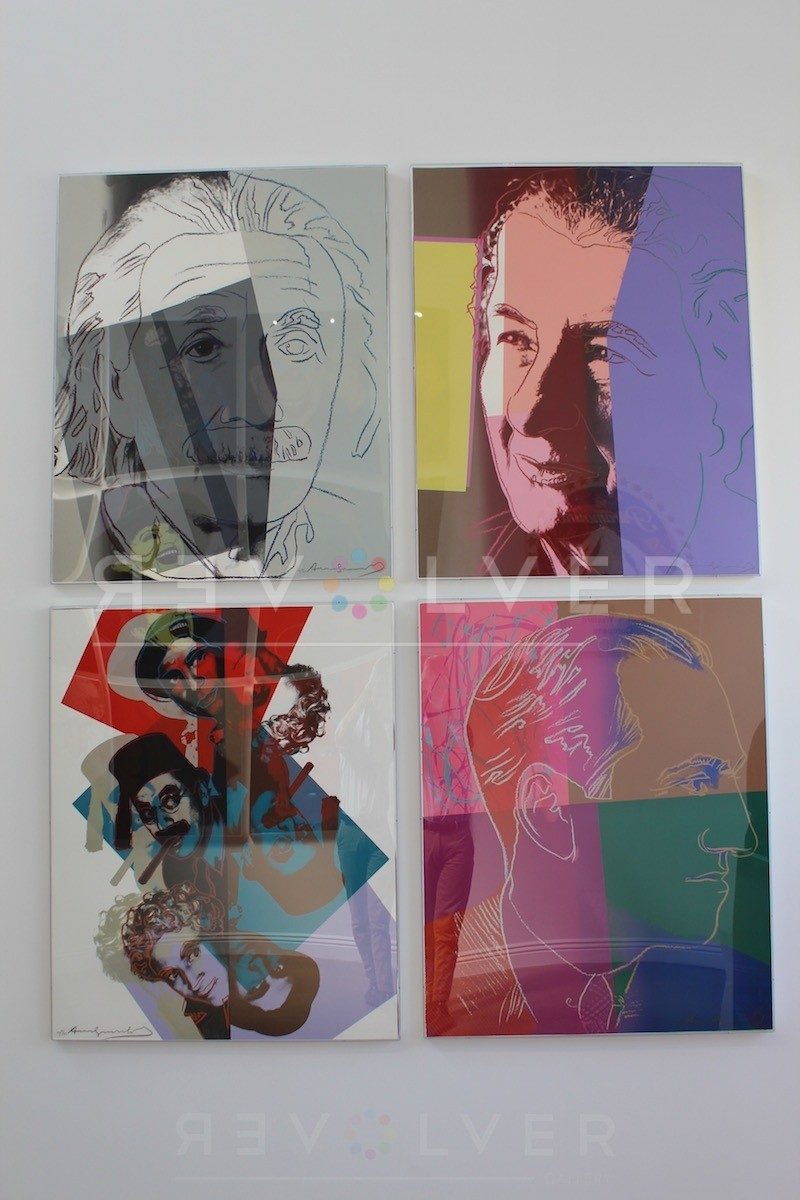
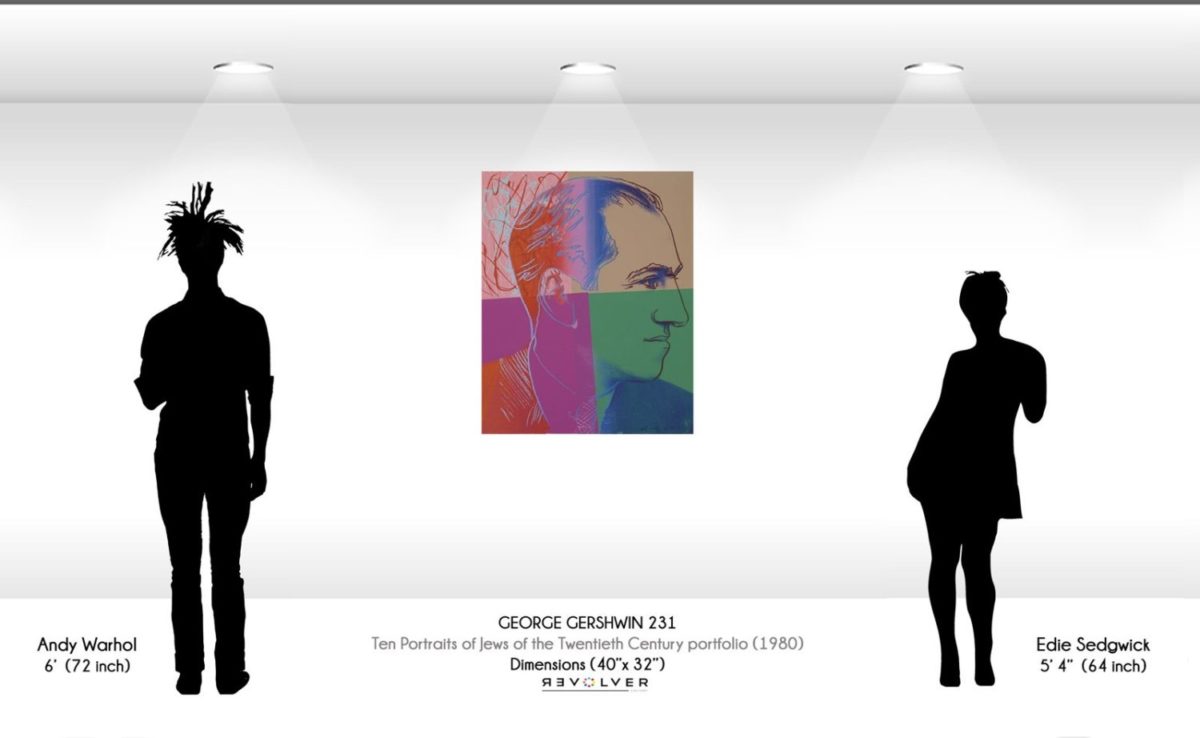
George Gershwin 231 by Andy Warhol is a vibrant pop art portrait of one of the most influential American composers and pianists of the 20th century. Part of the Ten Portraits of Jews of the 20th Century portfolio from 1980, this artwork captures the essence of Gershwin, a Brooklyn-born maestro whose compositions like “Rhapsody in Blue” and “An American in Paris” have become synonymous with American music.
Gershwin’s audacious 1935 opera, “Porgy and Bess,” with its predominantly African American cast, showcased his innovative spirit, challenging the norms of his era. His genius lay in his ability to seamlessly blend different musical genres, from classical to jazz. Collaborations with his brother Ira on Broadway and Hollywood showcased his versatility, ensuring his influence persisted long after his untimely death in 1937.
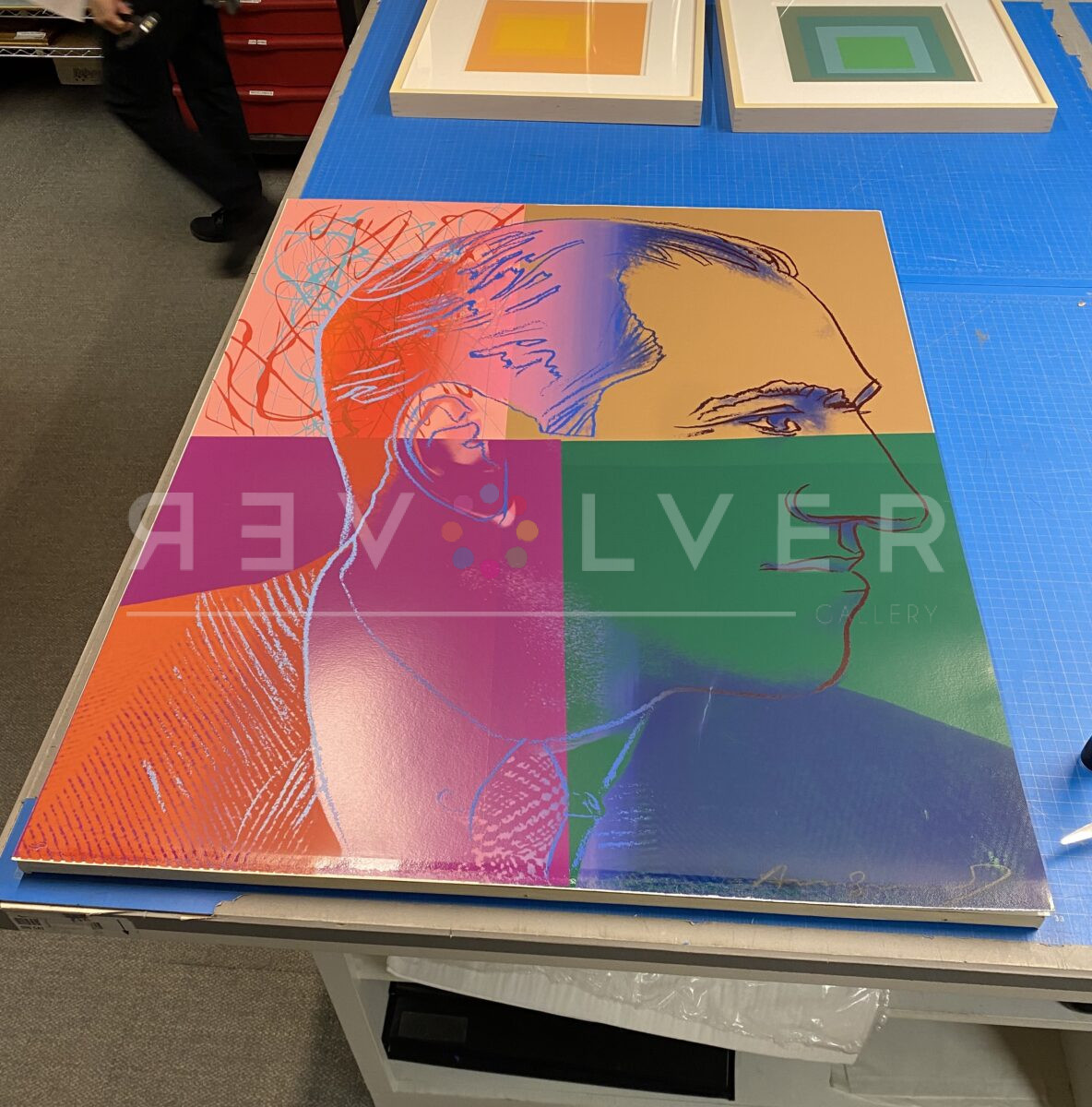
Warhol’s George Gershwin 231 is a visual symphony. Divided into vibrant quarters, the portrait presents Gershwin in profile, his gaze directed towards the future, perhaps symbolic of his forward-thinking musical approach. Warhol’s use of bold colors, hand-drawn lines, and layering techniques infuses the portrait with life, elevating Gershwin to the iconic status of Warhol’s other subjects like Marilyn Monroe or Elvis Presley.
However, among the “Jewish geniuses” in this series, Gershwin stands out for a unique reason. He shares a connection with another of Warhol’s muses, Mick Jagger. Warhol created portraits of Jagger and designed album covers for the Rolling Stones, such as Sticky Fingers. Interestingly, Warhol’s association with Gershwin dates back to his early days as a commercial illustrator in the 1950s. He crafted the artwork for two of Gershwin’s records, “Porgy and Bess” and “Rhapsody in Blue.” This intertwining of music and art showcases Warhol’s multifaceted talent and his deep appreciation for musical pioneers.
As part of Warhol’s Ten Portraits of Jews of the 20th Century, Gershwin’s inclusion underscores his monumental impact on music and culture. While Warhol often focused on celebrities and the glamorous world of Hollywood, this series delves deeper, highlighting individuals whose legacies transcend fleeting fame. Gershwin’s ability to bridge the gap between popular and classical music, much like Warhol’s talent for merging high art with popular culture, makes this portrait a fitting tribute.