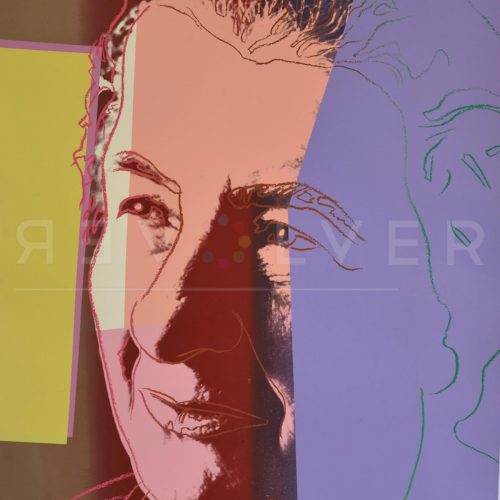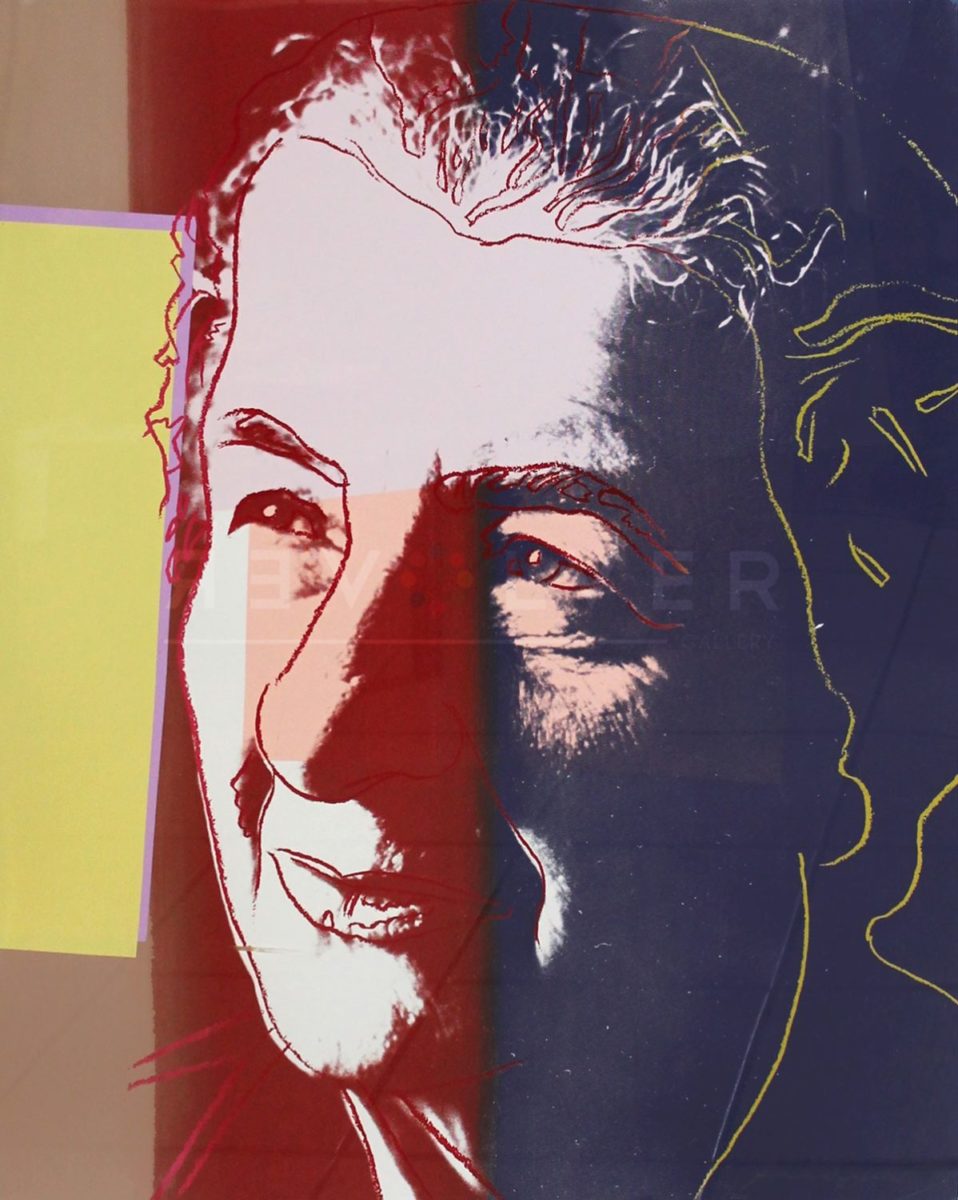
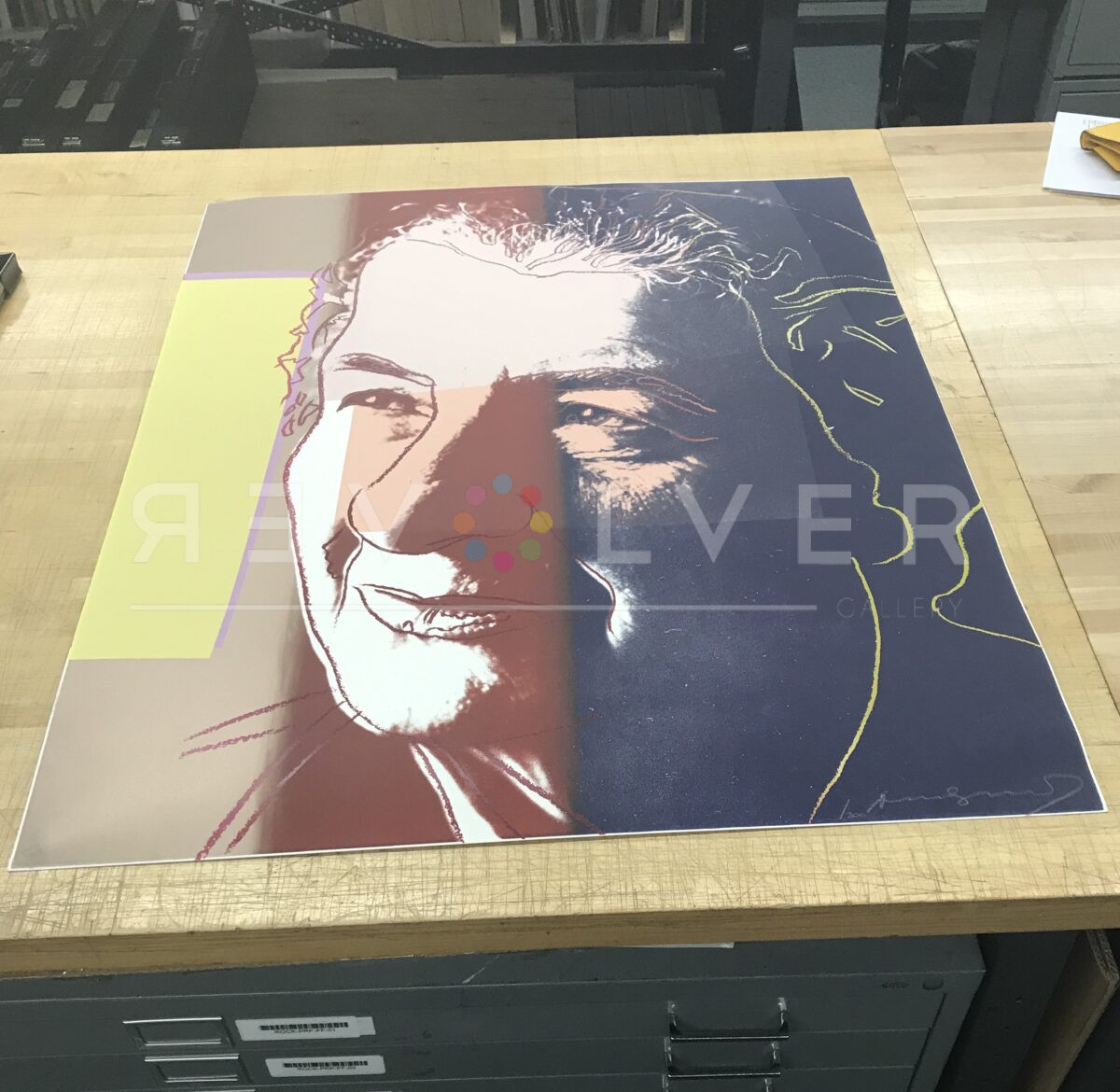
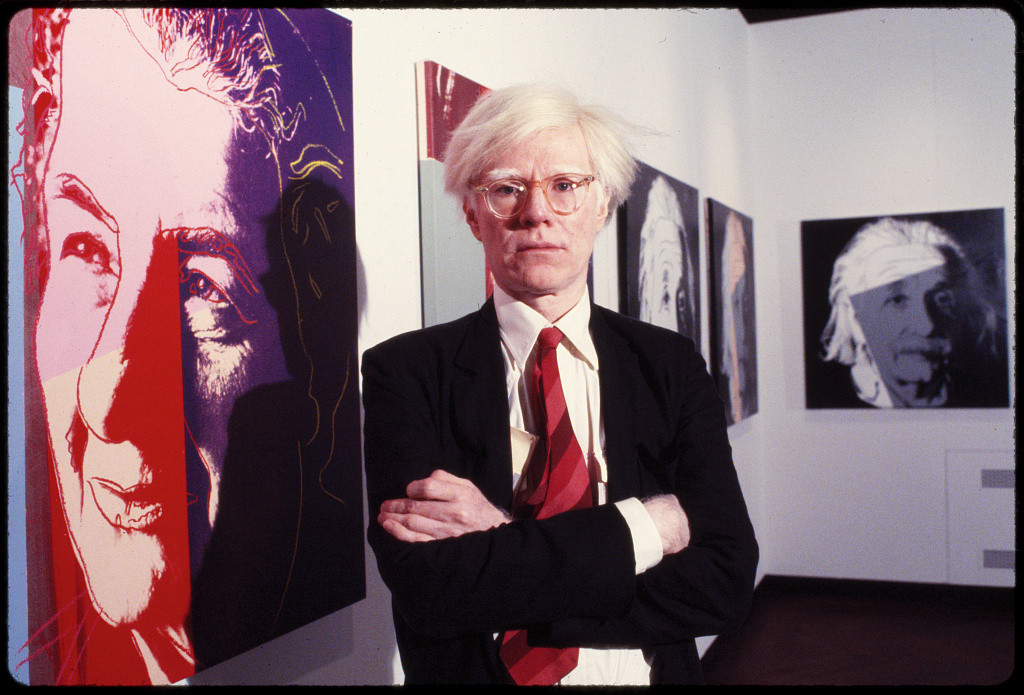
Golda Meir by Andy Warhol out of frame
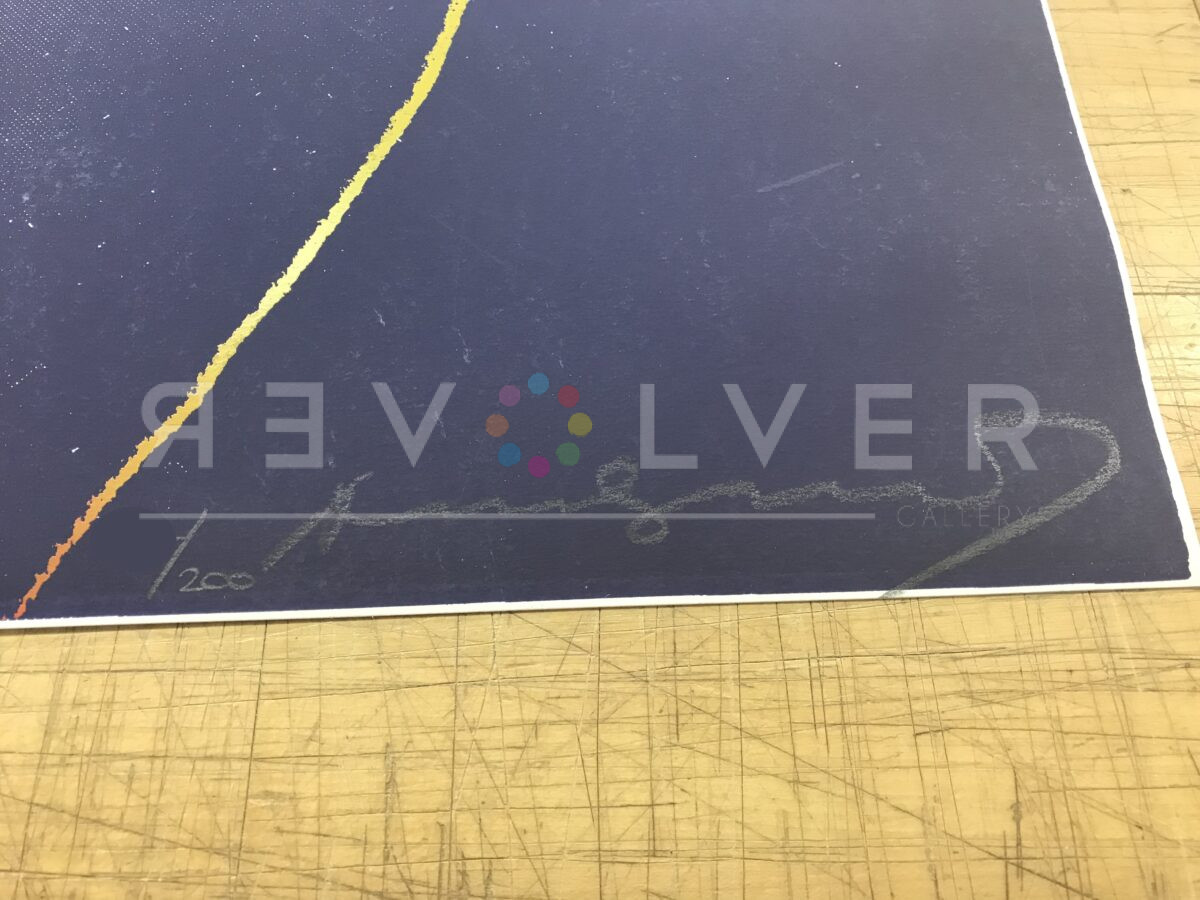
Warhol's signature on the golda meir screenprint
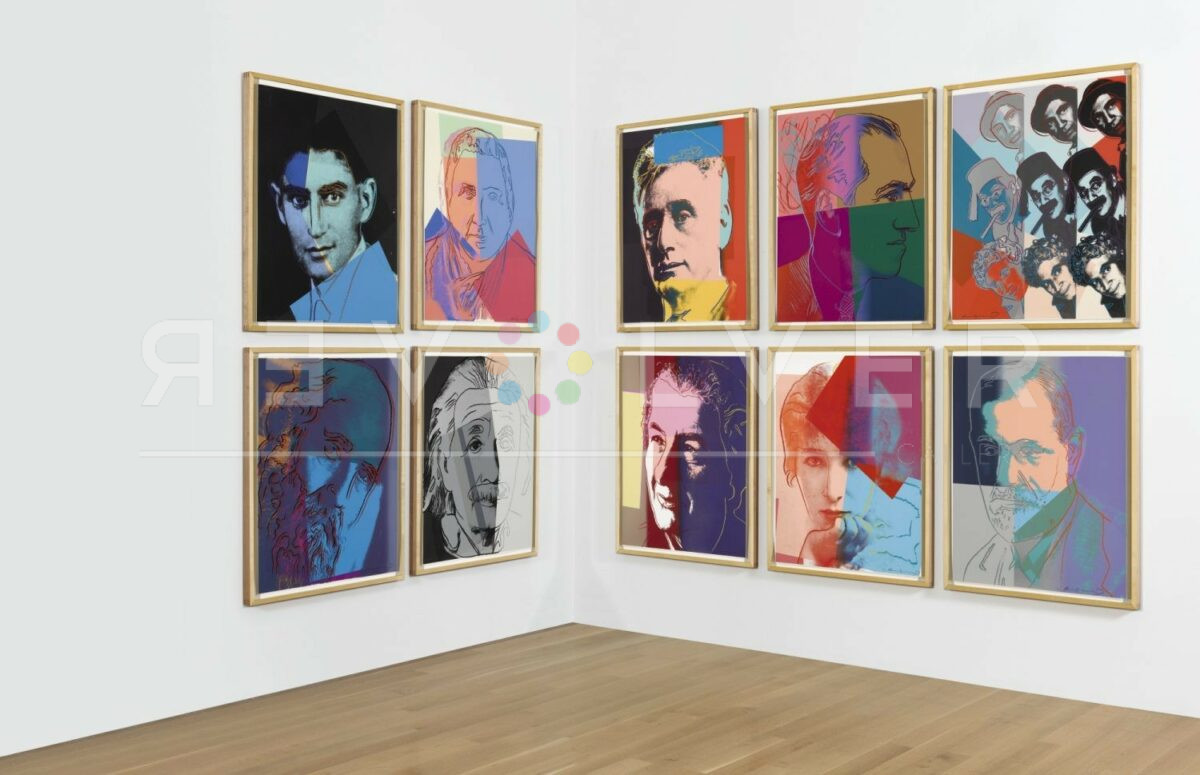
Andy Warhol Ten portraits of famous jews hanging on gallery wall.
Andy Warhol Golda Meir 233
Andy Warhol standing with screen prints from his Ten Famous Jews of the Twentieth Century series.

Golda Meir 233

Catalog Title: Golda Meir (FS II.233)
Year: 1980
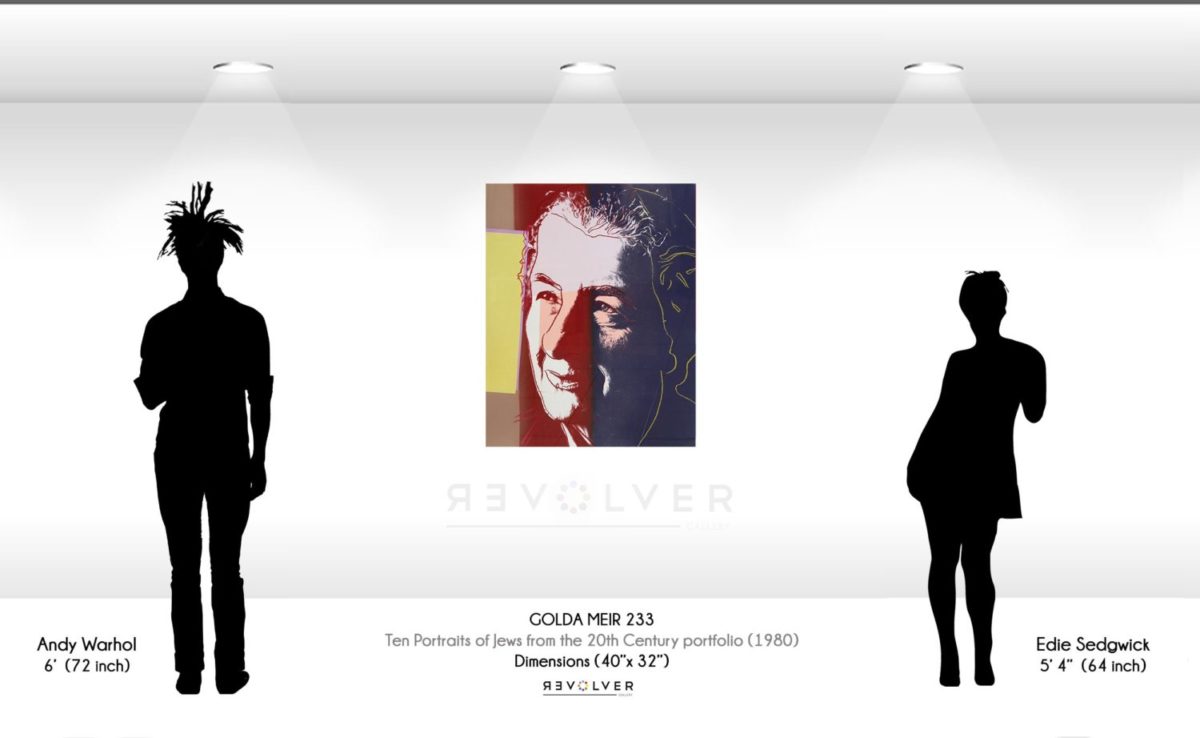
Size: 40" x 32" | 101.6 x 81.3 cm.
Medium: Screenprint on Lenox Museum Board
Edition: Edition of 200, 30 AP, 5 PP, 3 EP, 25 TP, signed and numbered in pencil. Portfolio of 10.
Name(Required)
This field is hidden when viewing the form

Golda Meir 233 by Andy Warhol is a 1980 screenprint from his Ten Portraits of Jews of the 20th Century series. The portrait depicts Israel’s first female Prime Minister in vibrant tones of red, violet, and gold. Warhol outlines Meir’s face in fine yellow lines against a layered background of color blocks, combining photographic realism with abstraction. Her expression, both reflective and commanding, captures the strength and complexity of a historic leader. The result is a portrait that merges political legacy with Pop Art immediacy.

Golda Meir: Life and Legacy

Golda Meir was an Israeli politician who became the fourth Prime Minister of Israel—and the first woman to hold the office. She was also the third woman in the world to serve as a national leader. Born in Kyiv, Ukraine, Meir immigrated to the United States with her family in 1906, settling in Milwaukee, Wisconsin. Her early dedication to the Labor Zionist movement shaped her lifelong political path. In 1921, she and her husband made aliyah to Palestine, where they joined a kibbutz and became active in the formation of the new state. By 1948, Meir had raised millions of dollars to support Israel’s independence. Later, she served as Minister Plenipotentiary to Moscow, then as Labor and Foreign Minister, before becoming Prime Minister in 1969. Following the Yom Kippur War, Meir resigned from her post, leaving behind a complex and powerful legacy.

Golda Meir 233 in Warhol’s Larger Body of Work

Warhol’s Ten Portraits of Jews of the 20th Century series marked a departure from his usual focus on pop culture icons. Instead of movie stars or musicians, he portrayed thinkers, writers, and political leaders whose influence shaped the 20th century. Through this series, Warhol used his signature silkscreen process to explore a different kind of fame—one based on intellect, activism, and historical impact rather than glamour. His choice of bright color palettes and abstract overlays gives the series a sense of energy and reverence.

In Golda Meir 233, Warhol captures dignity rather than dazzle. He transforms Meir’s likeness into an emblem of perseverance and vision, suggesting that moral authority can be as iconic as celebrity. The work reflects his enduring fascination with power, representation, and the surfaces through which history is remembered.

Photo Credit: Andy Warhol at the Jewish Museum, 1980. Photo by Bernard Gotfryd.

Share this page:

Related Works