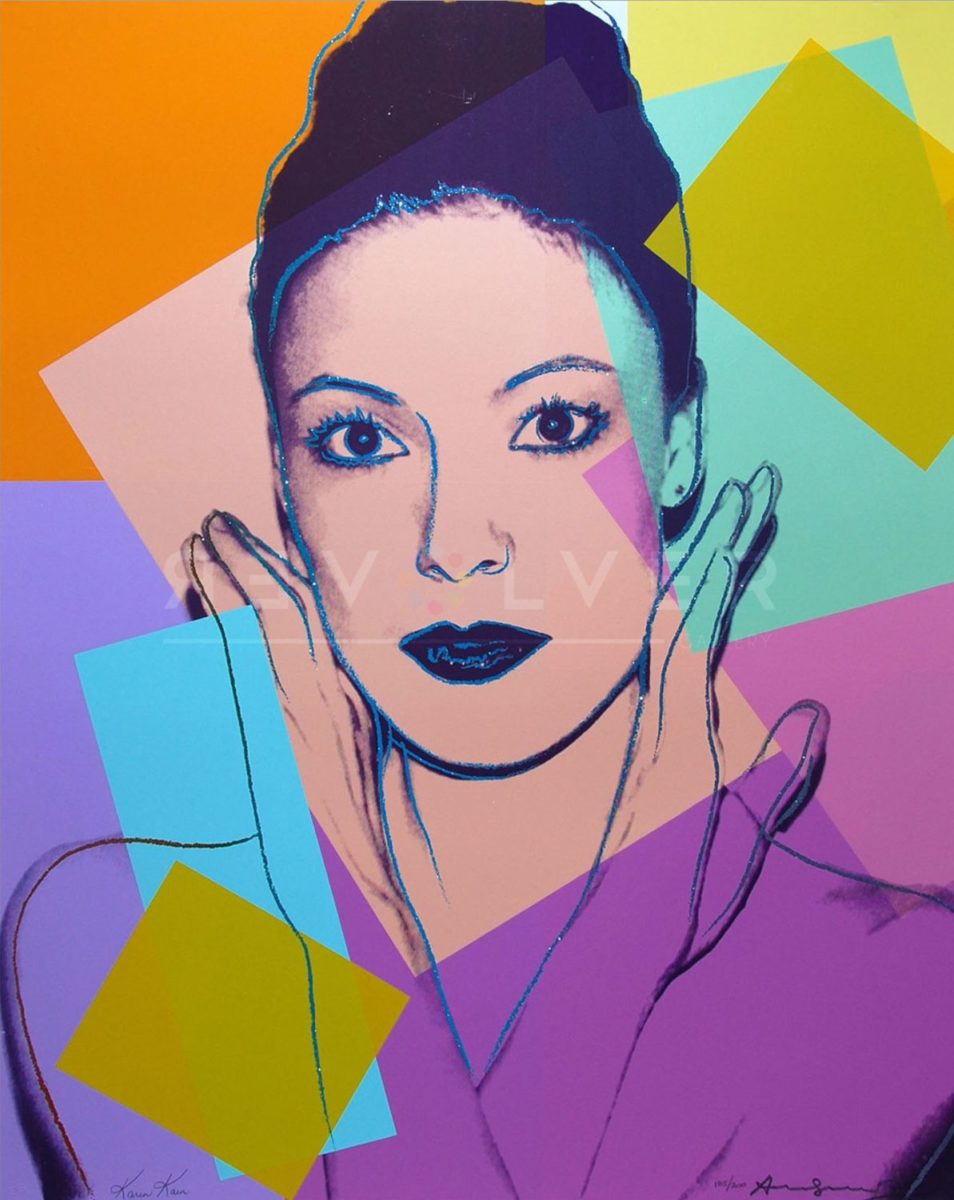
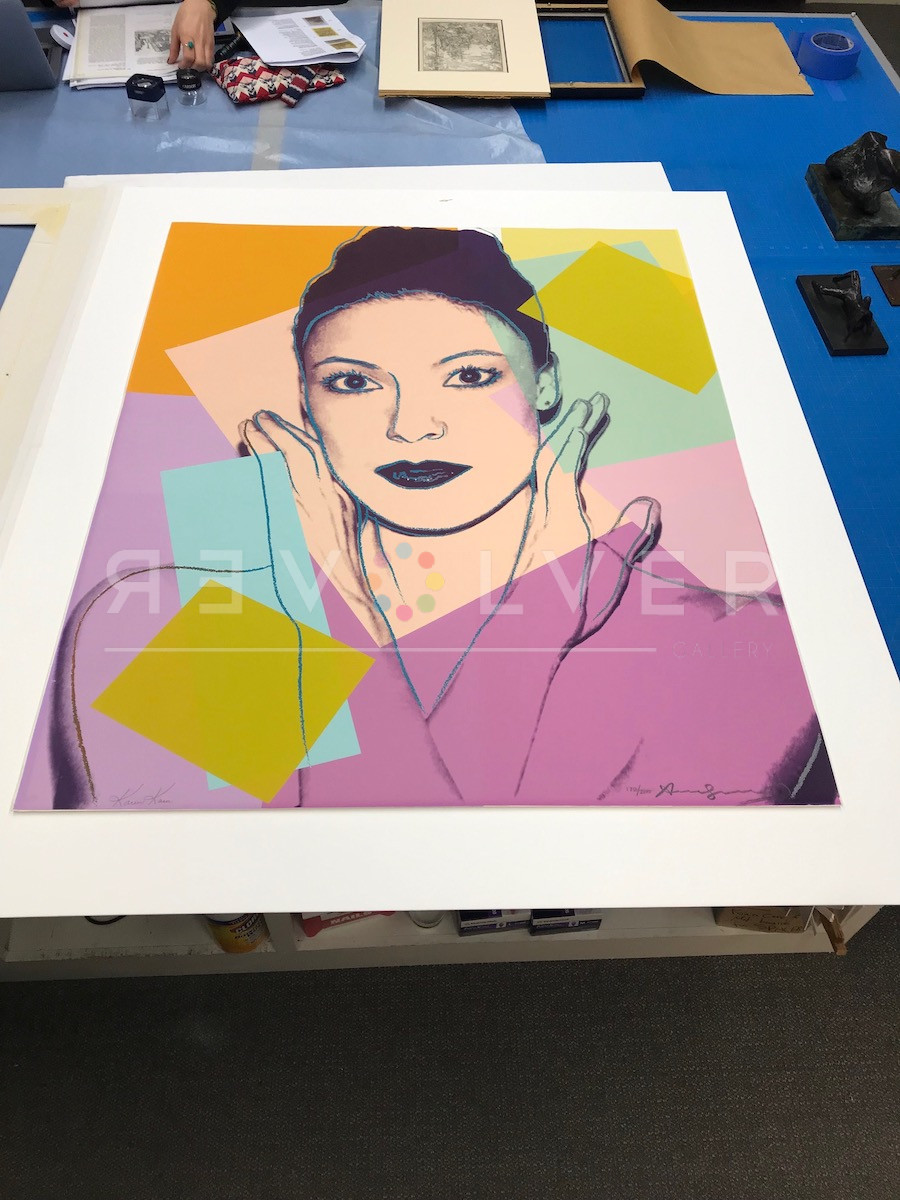
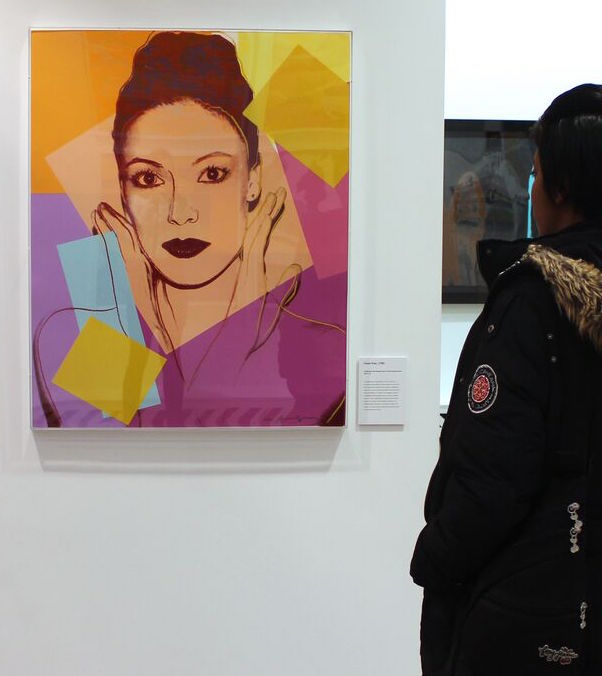

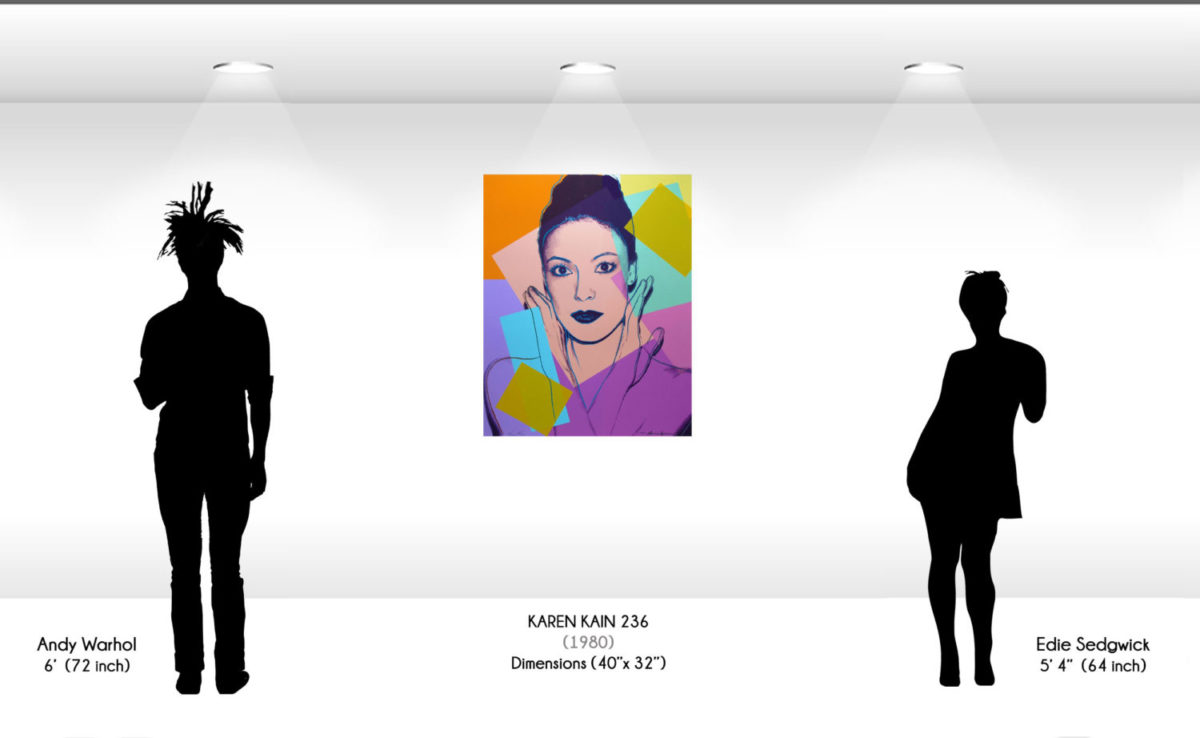

Karen Kain is a Canadian ballet dancer who trained at the National Ballet School of Canada, where she later became the artistic director. Karen Kain 236 is based off a photograph of the dancer. The portrait is embellished with blocks of vibrant yellows, oranges, purples and blues. The bright colors superimposed on the portrait give the work a collage feeling. However, the abstract color palette seems to exist primarily outside of Kain’s face, with a more realistic skin tone in the center of the portrait. This technique, coupled with the use of linework, brings attention to the intensity of Kain’s facial features such as the eyes, nose and mouth.
Karen Kain 236 by Andy Warhol as Part of His Larger Body of Work
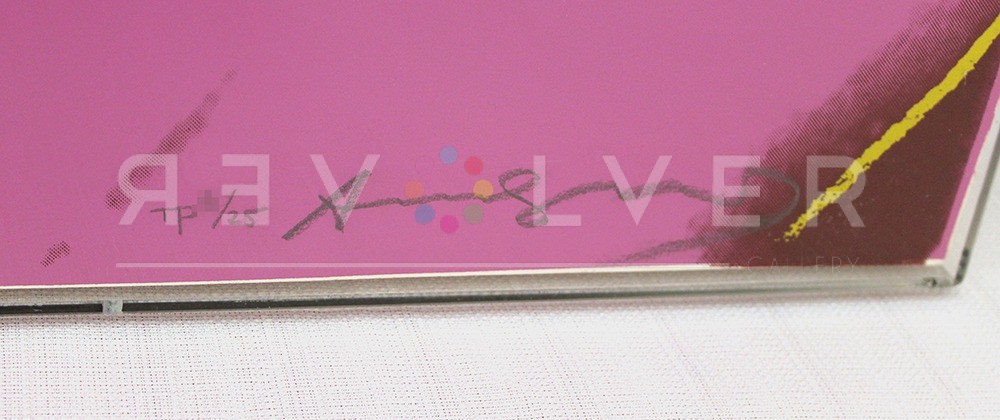
Karen Kain is a colored screenprint created with diamond dust on Lenox museum board in 1980. Kain captivated Warhol as she did to audiences around the world who watched her as a principal ballet dancer in the National Ballet of Canada. The screenprint was based off of a Polaroid taken by Warhol in his famed studio, which was known as The Factory. Kain admitted to taking many years to warm up to the portrait done of her. The print of her now proudly hangs in her dining room.
Photo credit: Andy Warhol’s polaroid of Karen Kain taken in 1980.