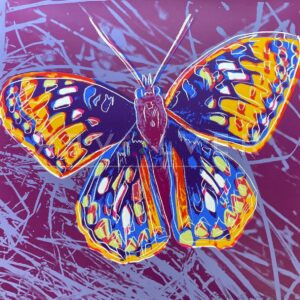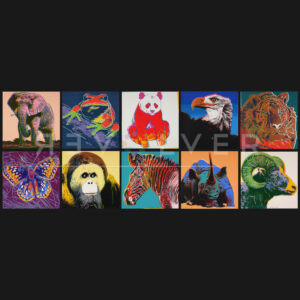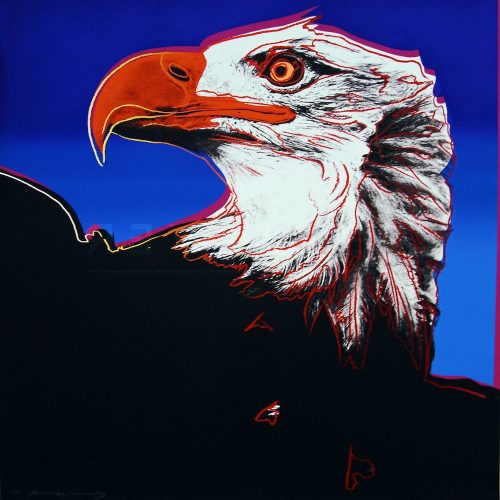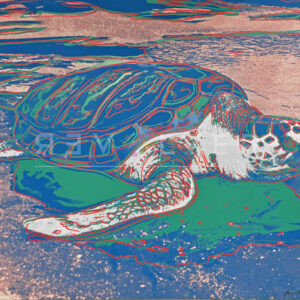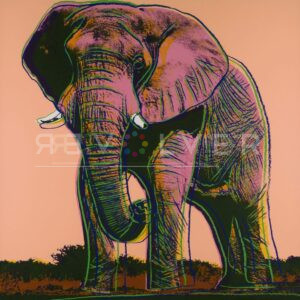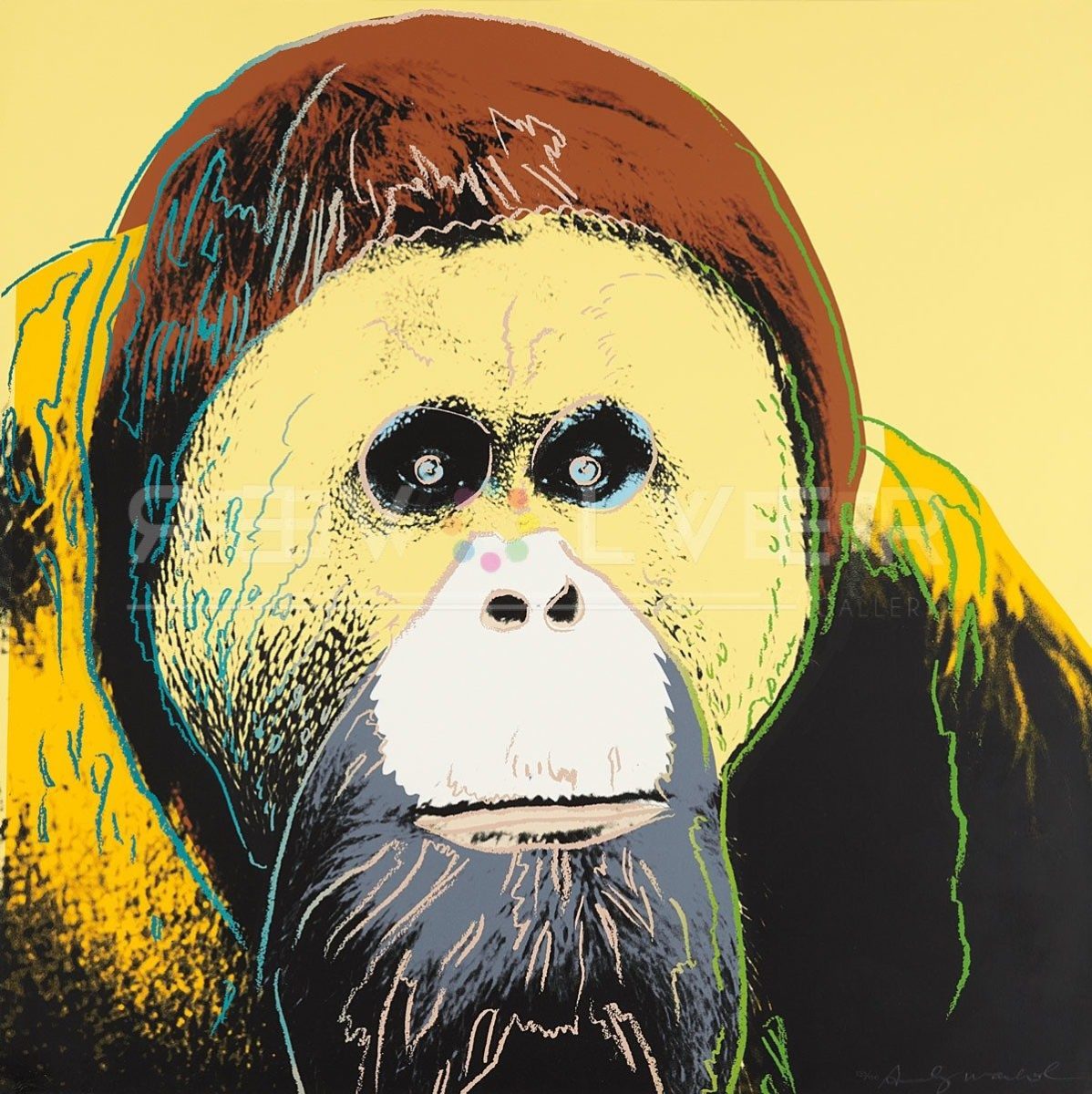
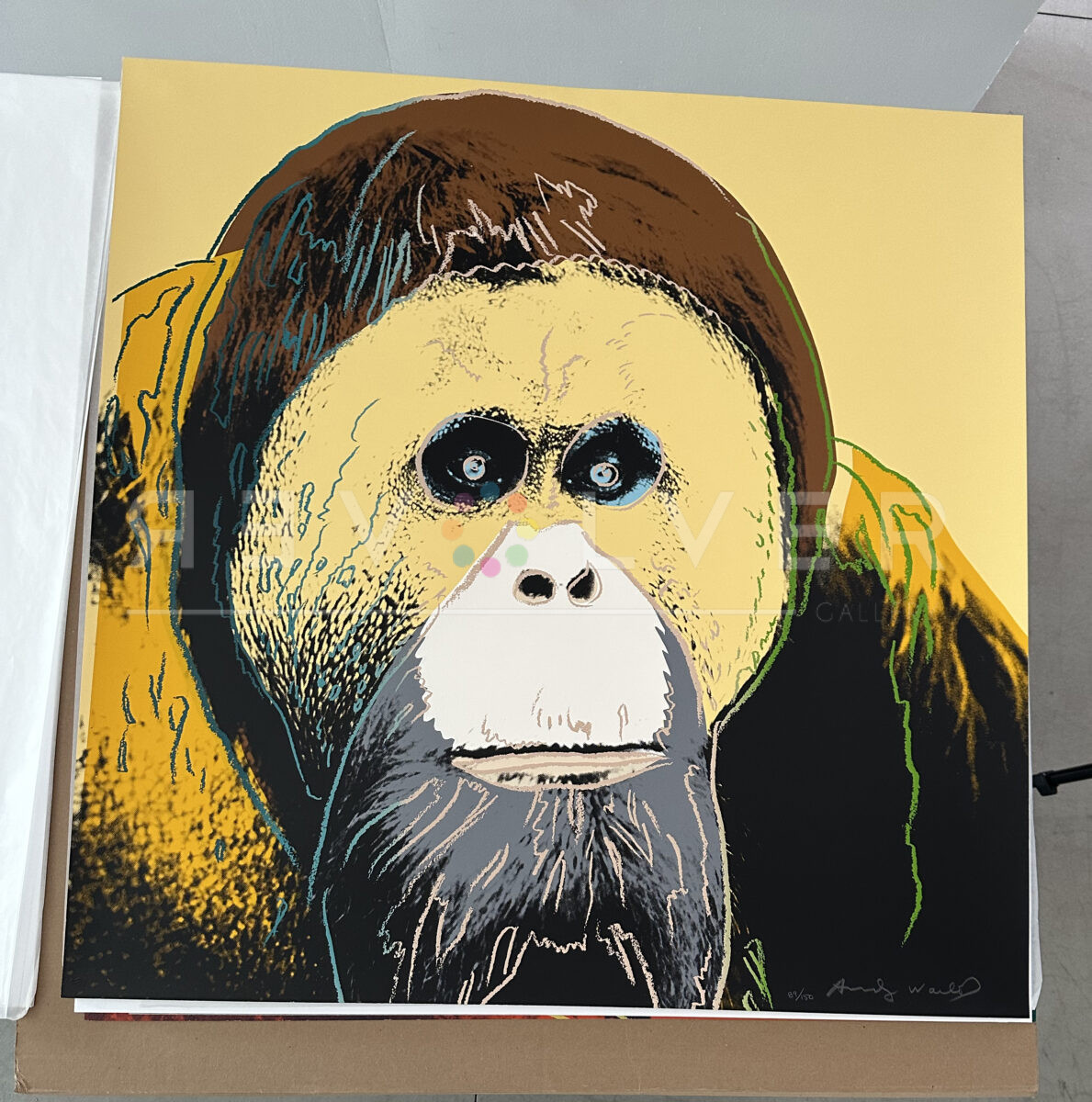
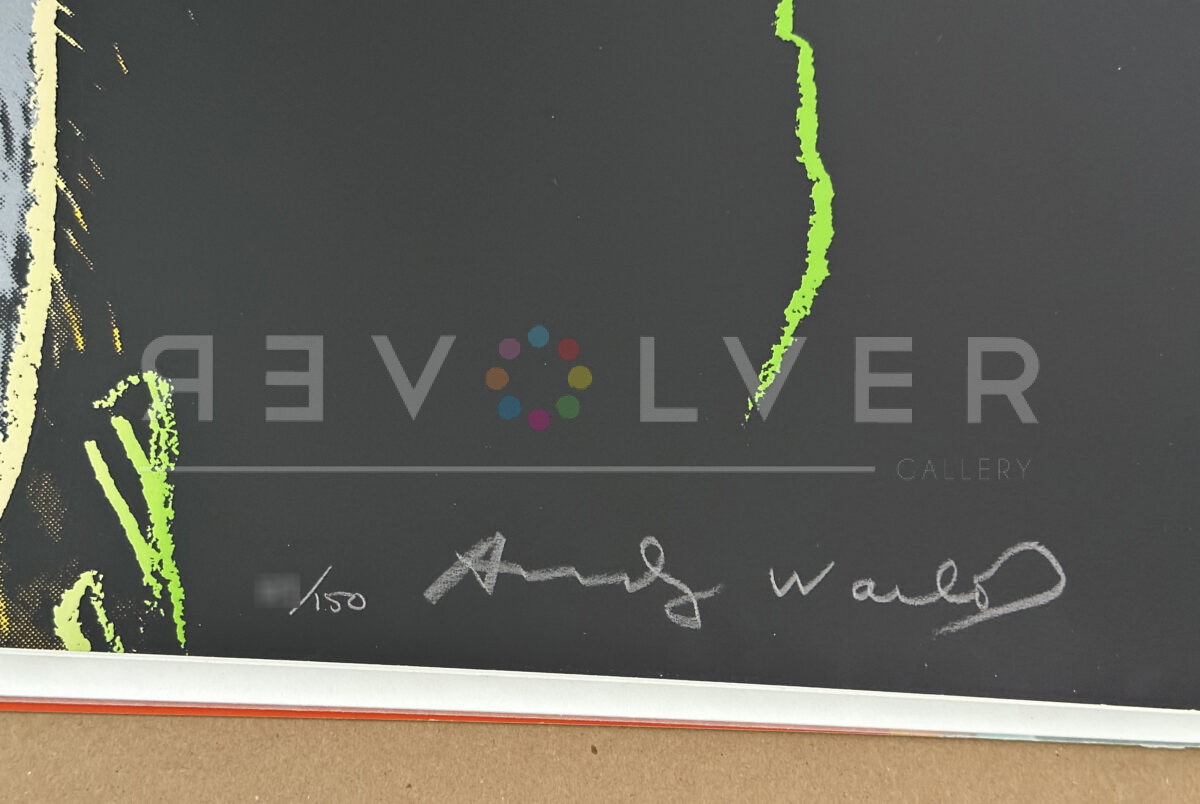
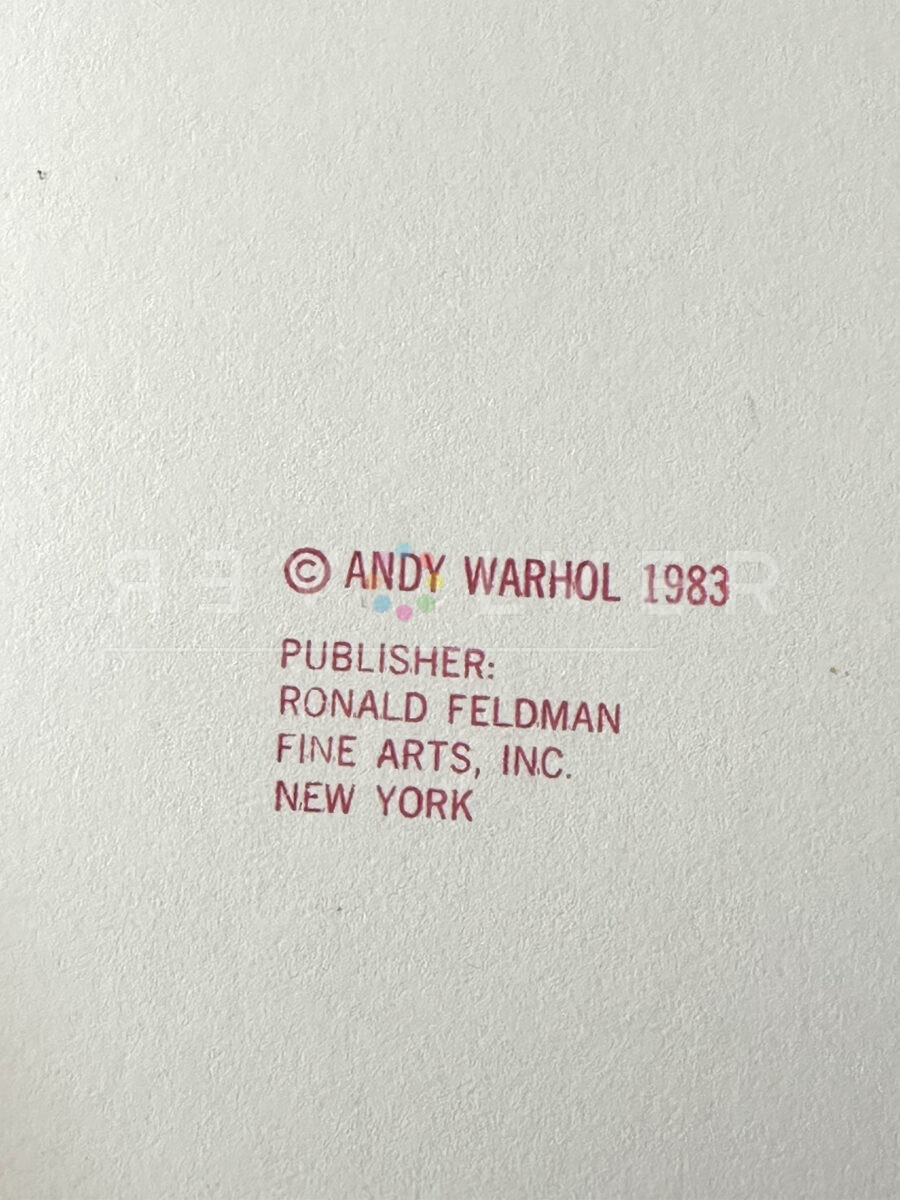
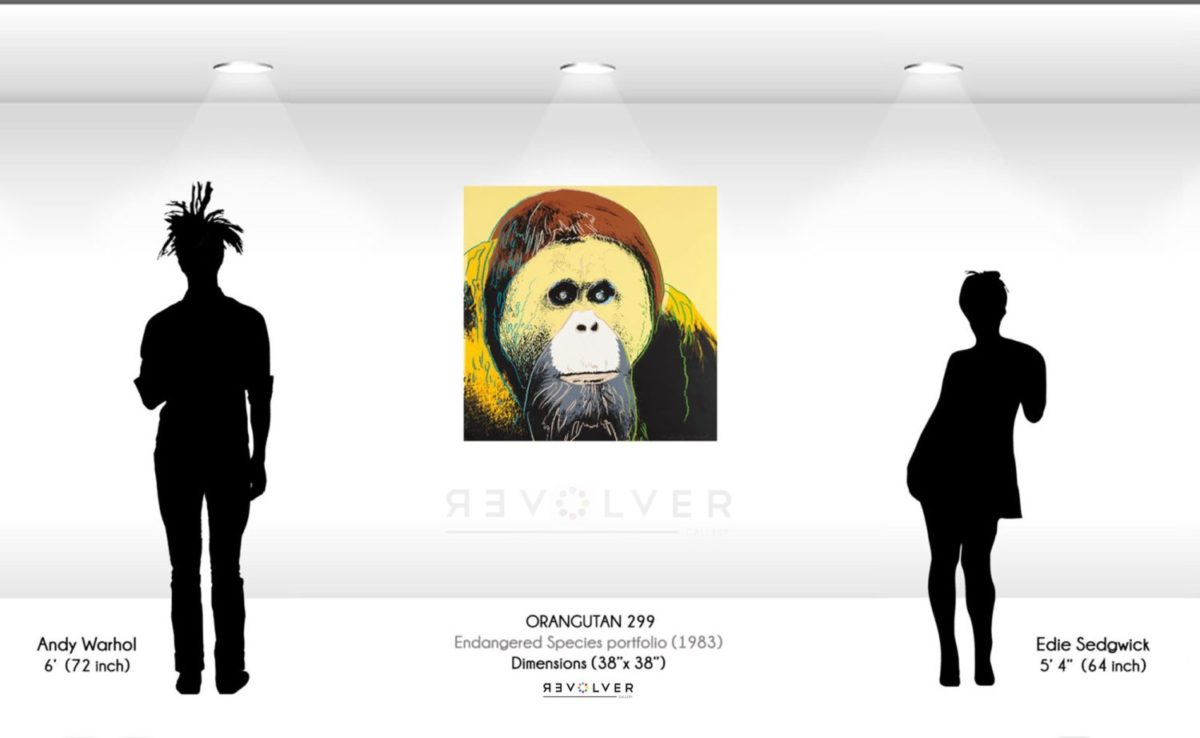
Andy Warhol’s Orangutan 299 is a screenprint from the artist’s Endangered Species portfolio, published in 1983. The portfolio depicts animals that were under threat of extinction due to events like loss of habitat or genetic variation. Commissioned by art dealer and gallerist, Ronald Feldman, Warhol selected a group of ten animals then believed to be under such a threat as designated by the United States’ Endangered Species Act of 1973. One such animal is the orangutan, unfortunately still considered to be critically endangered. It consists of two previously recognized species, the Bornean and Sumatran varieties, and a recently discovered third species, the Tapanuli orangutan, which is the most at risk. Because it engages in tool use and distinctly cultural dynamics, the orangutan is considered one of the most intelligent of its ape kin. Also, true to its name, which is derived from the Old Malay language, the orangutan looks like a ruddy, hirsute human high in the rafters of the jungle.
Orangutan 299 is the only primate in Warhol’s series. Perhaps because of the aforementioned resemblance to humans, it may be its most arresting piece. Warhol’s Orangutan 299 presents an equally eerie and sobering picture. The ape seems to be lost in thought, staring downward and vacantly at something out of frame. Its eyes are highlighted with a powder blue but also with drawn grey concentric circles, adding weight to its seemingly forlorn expression. The color choices reflect the ape’s muted disposition; instead of Warhol’s typical high contrast Pop, we witness an array of light yellows, grays, and white. The nose and upper mouth doused in white make the grey-colored beard below it stand out more, and again, enhance its human-like qualities. The brown of the animal’s head does its job of grounding the print, presenting a color that more closely resembles that of the actual orangutan. It, however, sits surrounded by yellows, a far cry away from the verdant greens of the canopies of its native environment.
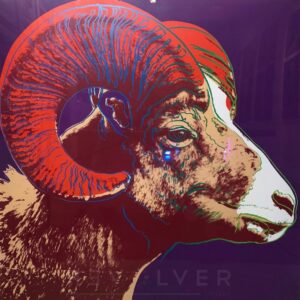
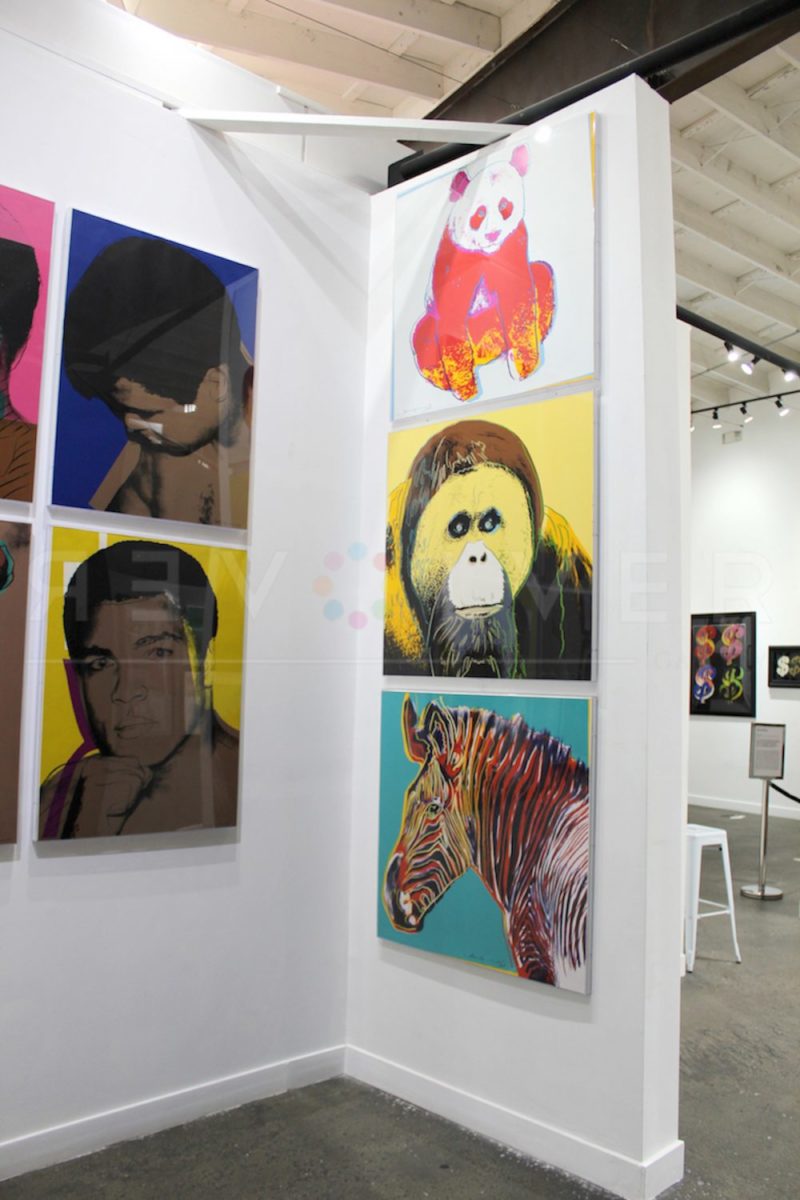
Andy Warhol’s Orangutan 299 is a masterpiece that is indicative of his work in the 1980s, when he reached his artistic climax after honing his screenprinting, coloring, and layering skills throughout his career. The Endangered Species portfolio is one of Warhol’s most admired works, and has become especially adored by collectors in recent years. Some other prints in the series include Grevy’s Zebra and Bighorn Ram.
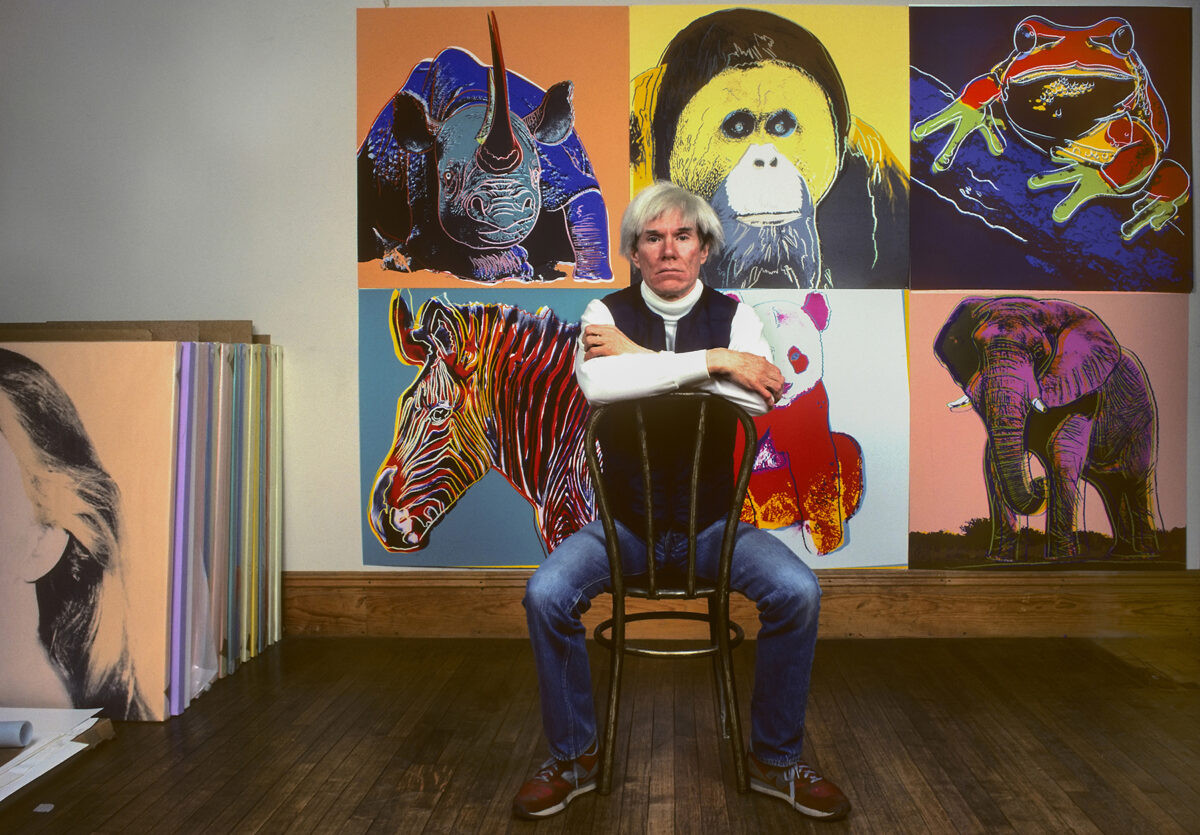
Photograph of Warhol with Endangered Species screen prints taken by Brownie Harris, 1982, The Factory, NYC.