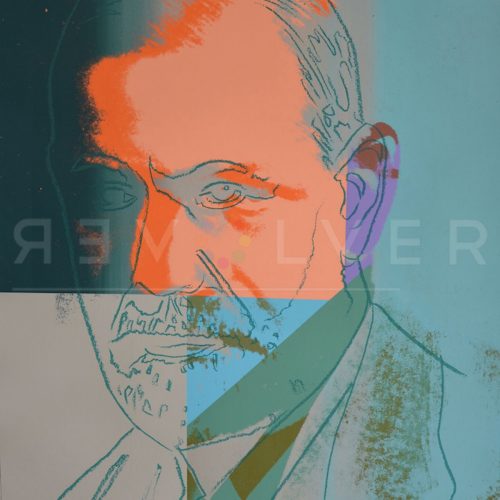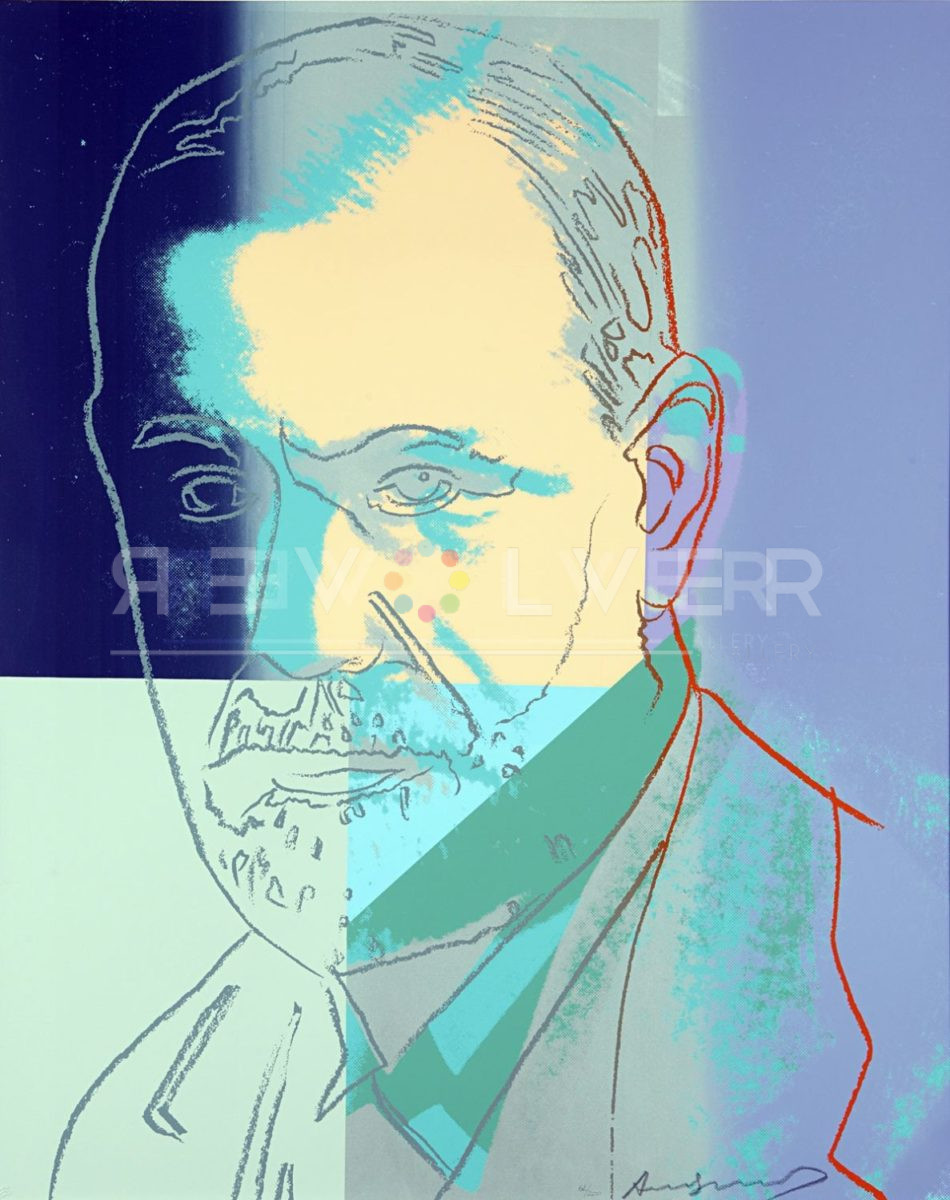
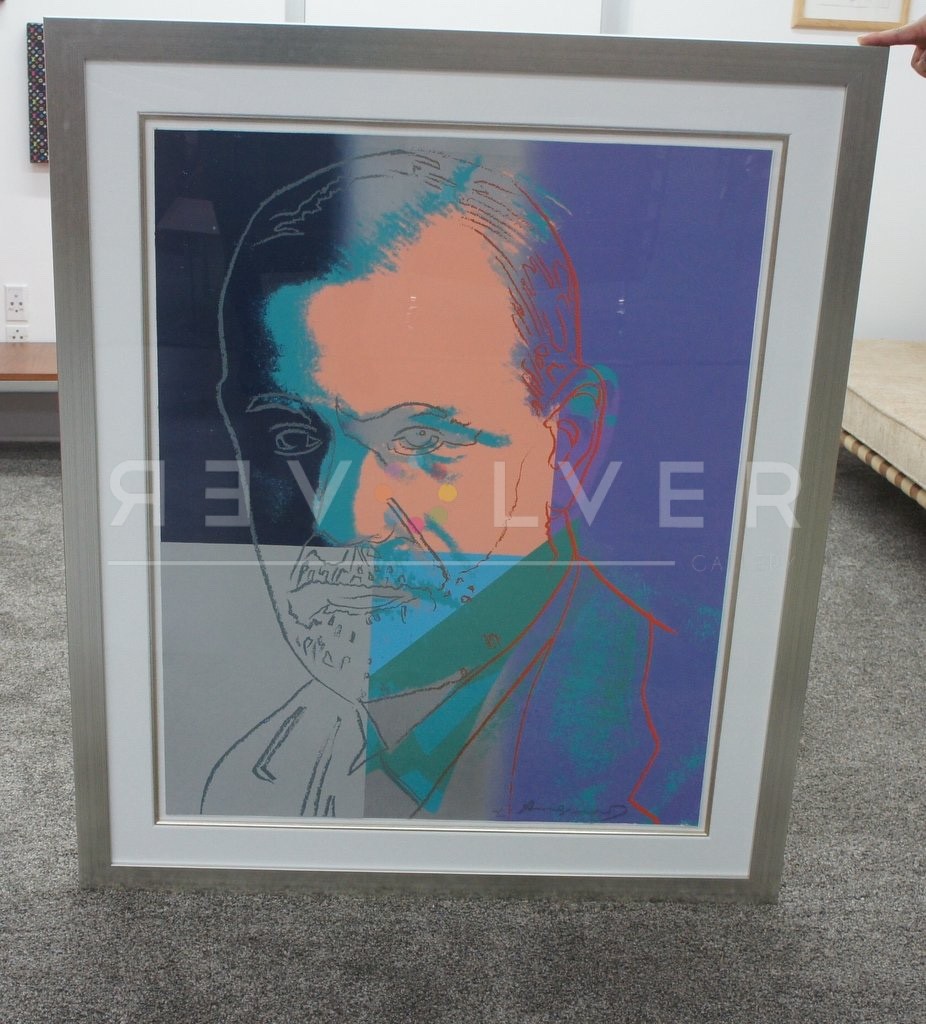
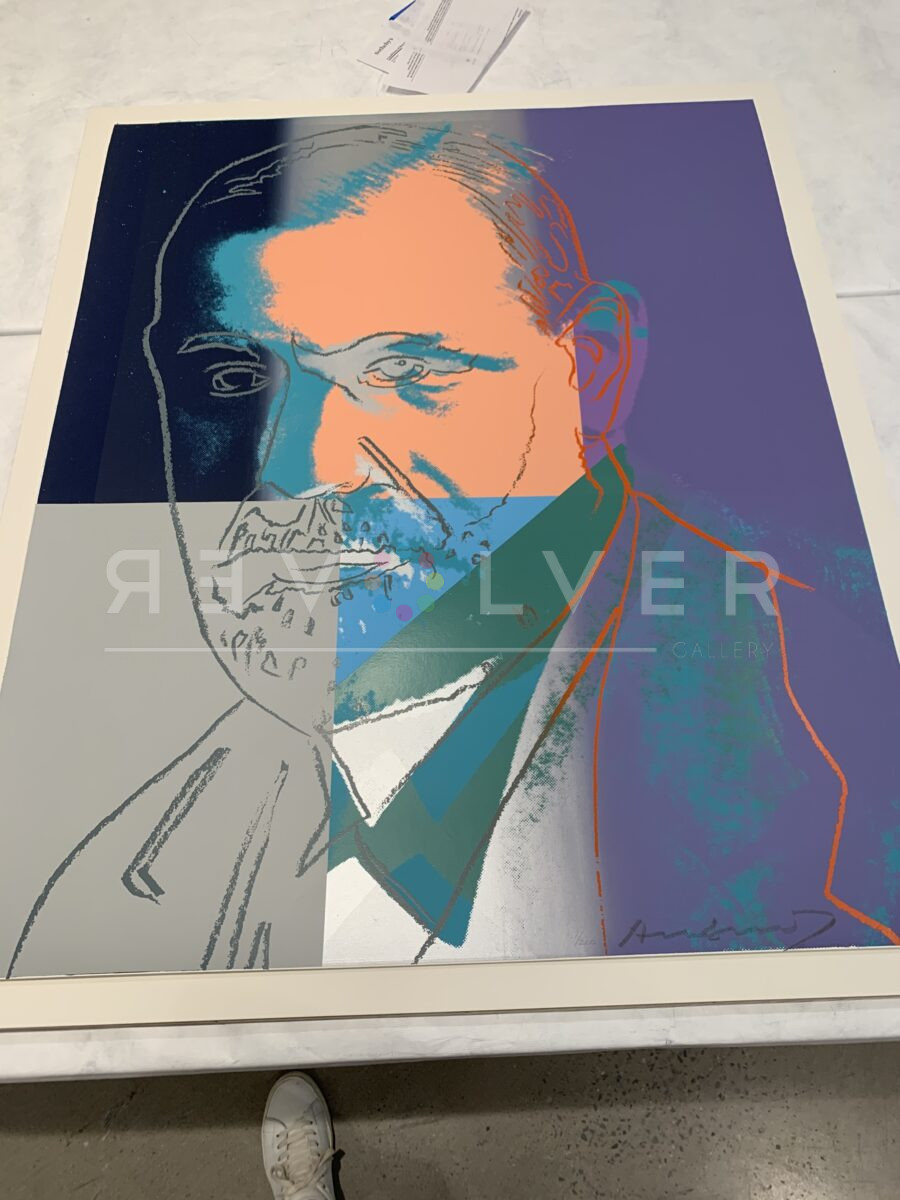

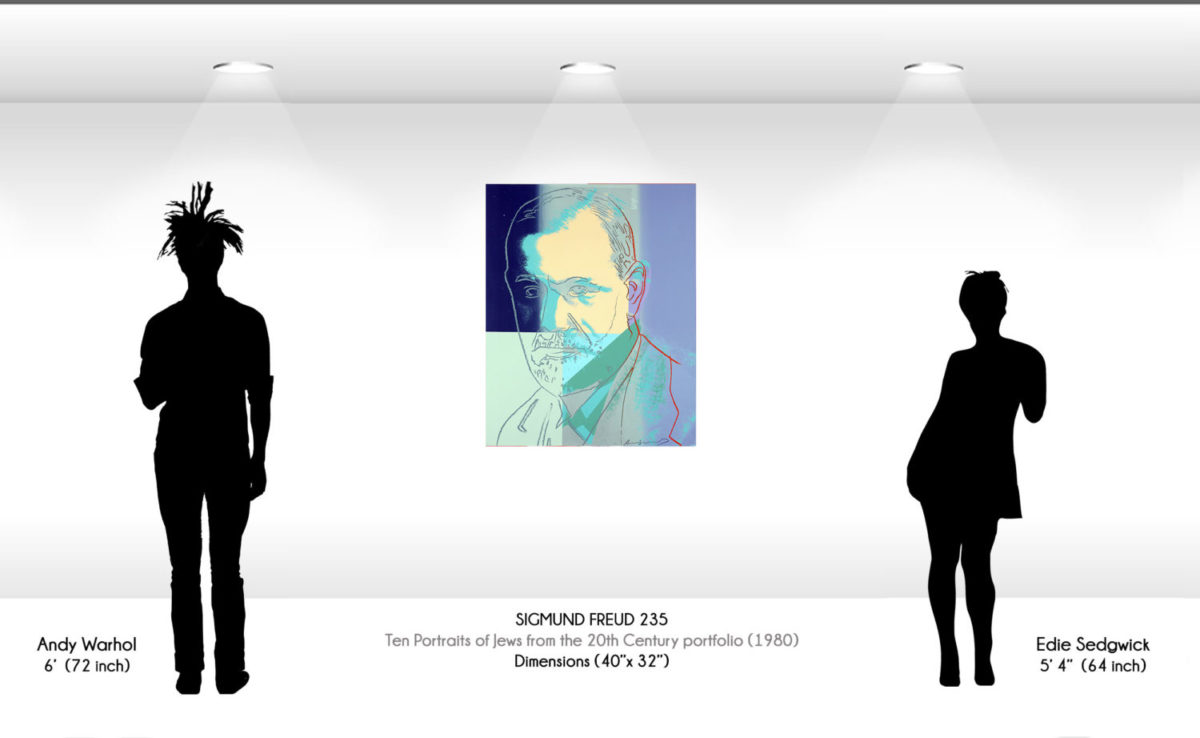
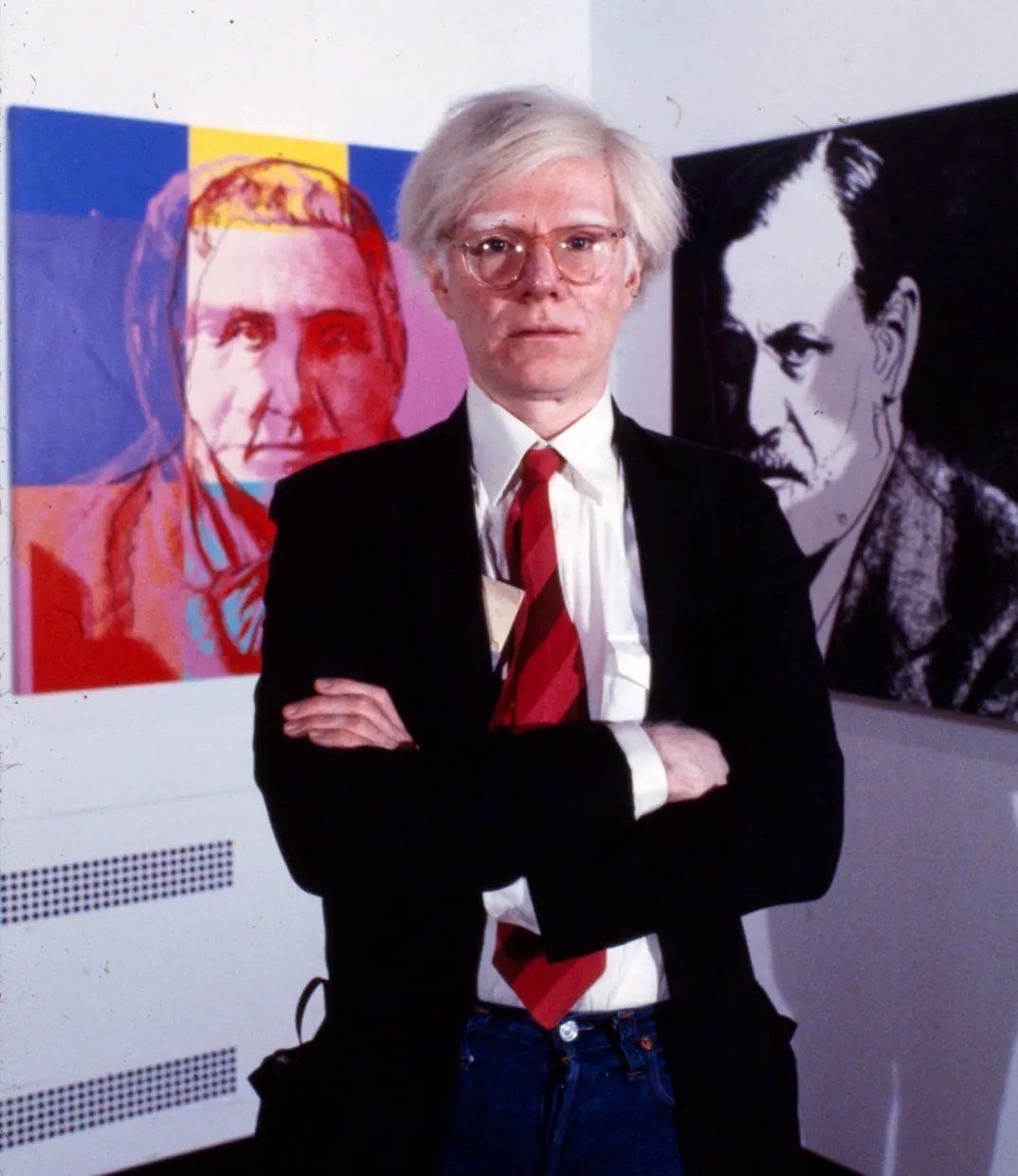
Sigmund Freud 235, created by Andy Warhol in 1980, is a captivating representation of the famous father of psychoanalysis. This portrait, part of the Ten Portraits of Jews of the 20th Century series, diverges from Warhol’s usual subjects of celebrities and pop icons. Instead, it delves into the world of intellectual giants, presenting Freud in Warhol’s signature Pop Art style.
Sigmund Freud (1856–1939), an Austrian neurologist, is celebrated as the pioneering figure in psychoanalysis. His groundbreaking work on the subconscious mind, dream analysis, and the Oedipus complex has left an indelible mark on the fields of psychology and psychiatry. Freud’s theories, such as the concept of transference, revolutionized the treatment of mental disorders. Despite facing persecution from the Nazi regime and eventually fleeing to the United Kingdom, Freud’s influence persisted, shaping the course of psychological thought and practice.
In Sigmund Freud 235, Warhol employs a blend of vibrant colors, with dominant shades of purple and blue. The portrait captures Freud’s contemplative demeanor, with red and gray crayon-like outlines sketching his face. This deliberate misalignment of lines is a hallmark of Warhol’s style, creating a dynamic tension between realism and abstraction.
While Freud wasn’t a celebrity in the conventional sense, his impact on the 20th century was profound. Warhol’s fascination with fame and celebrity is evident in his works, but with Freud, he ventures into the realm of intellectual legacy. The portrait resonates with Warhol’s exploration of the boundaries between fame, legacy, and cultural impact.
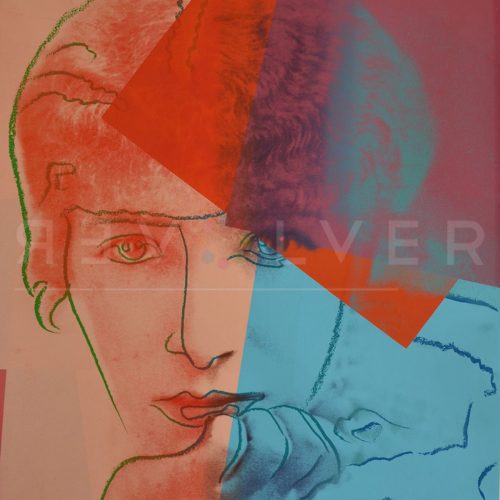
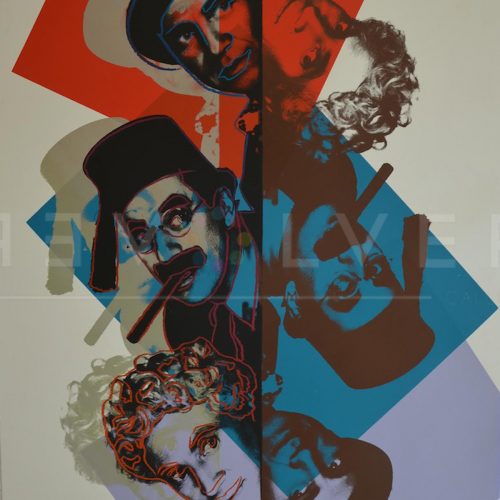
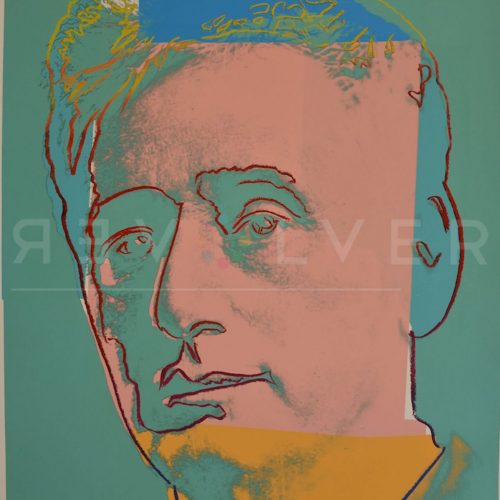
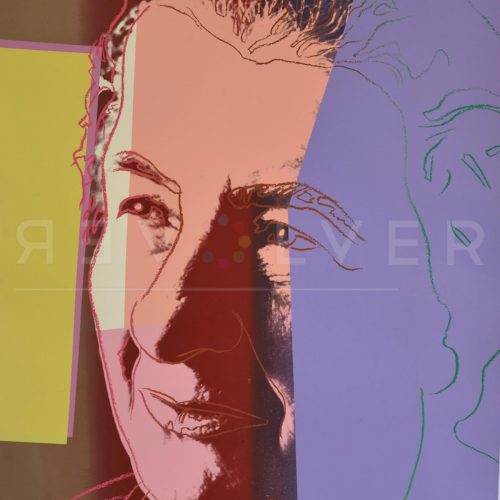
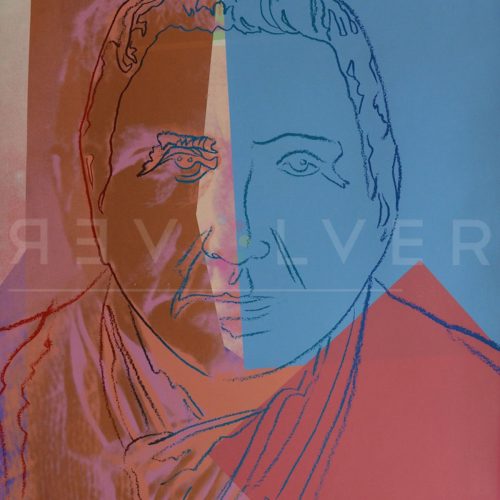
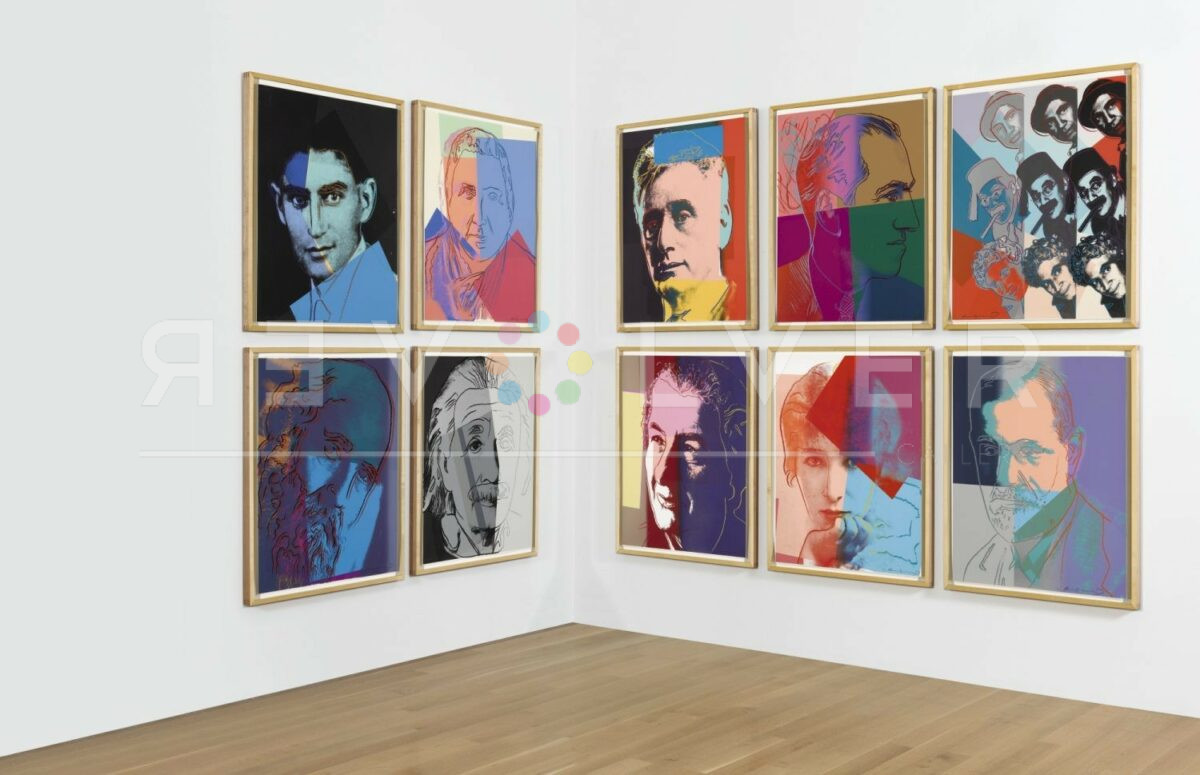
Sigmund Freud 235 is one of the ten prints in Warhol’s collection dedicated to iconic Jewish figures of the 20th century. Although the art dealer Ronald Feldman influenced Warhol’s choice of subjects, the series as a whole reflects Warhol’s interest in individuals who shaped the cultural and intellectual landscape of their time. Including Freud, alongside other luminaries like Albert Einstein and Gertrude Stein, underscores Warhol’s recognition of the profound influence these figures wielded. It’s a testament to Warhol’s versatility as an artist, seamlessly transitioning from depicting Hollywood stars to intellectual giants.
Andy Warhol’s Sigmund Freud 235 is more than just a portrait; it’s a fusion of Pop Art aesthetics with the legacy of one of the 20th century’s most influential thinkers. It stands as a testament to Warhol’s ability to capture the essence of his subjects, whether they be pop icons or intellectual trailblazers.