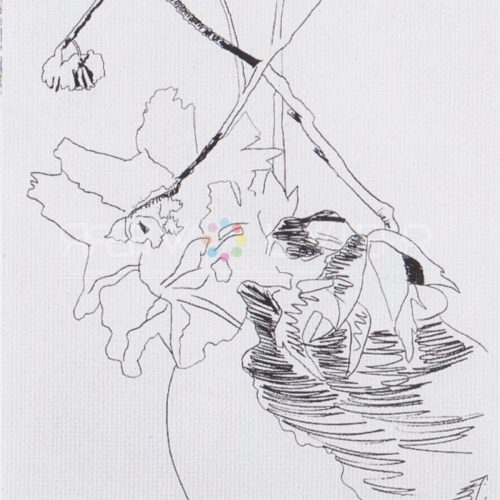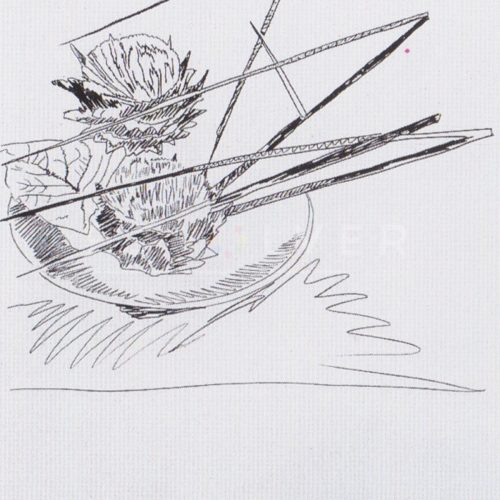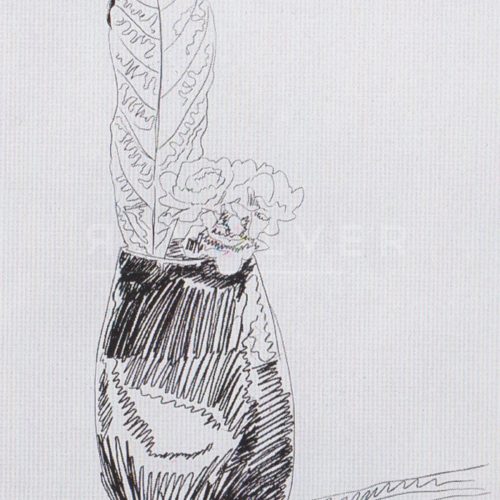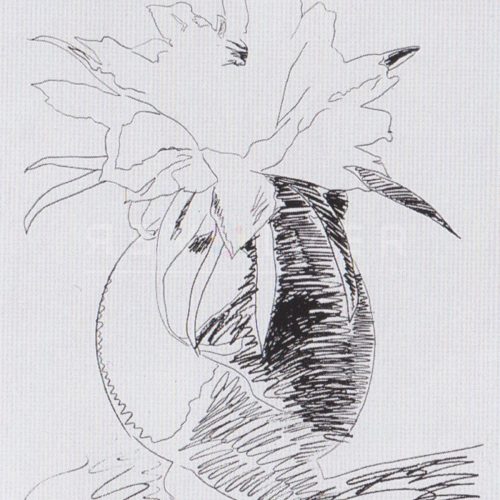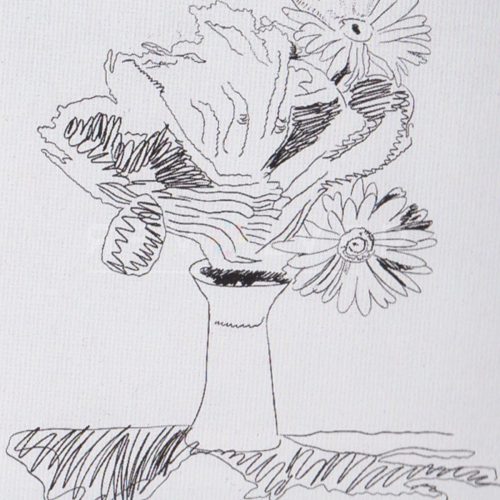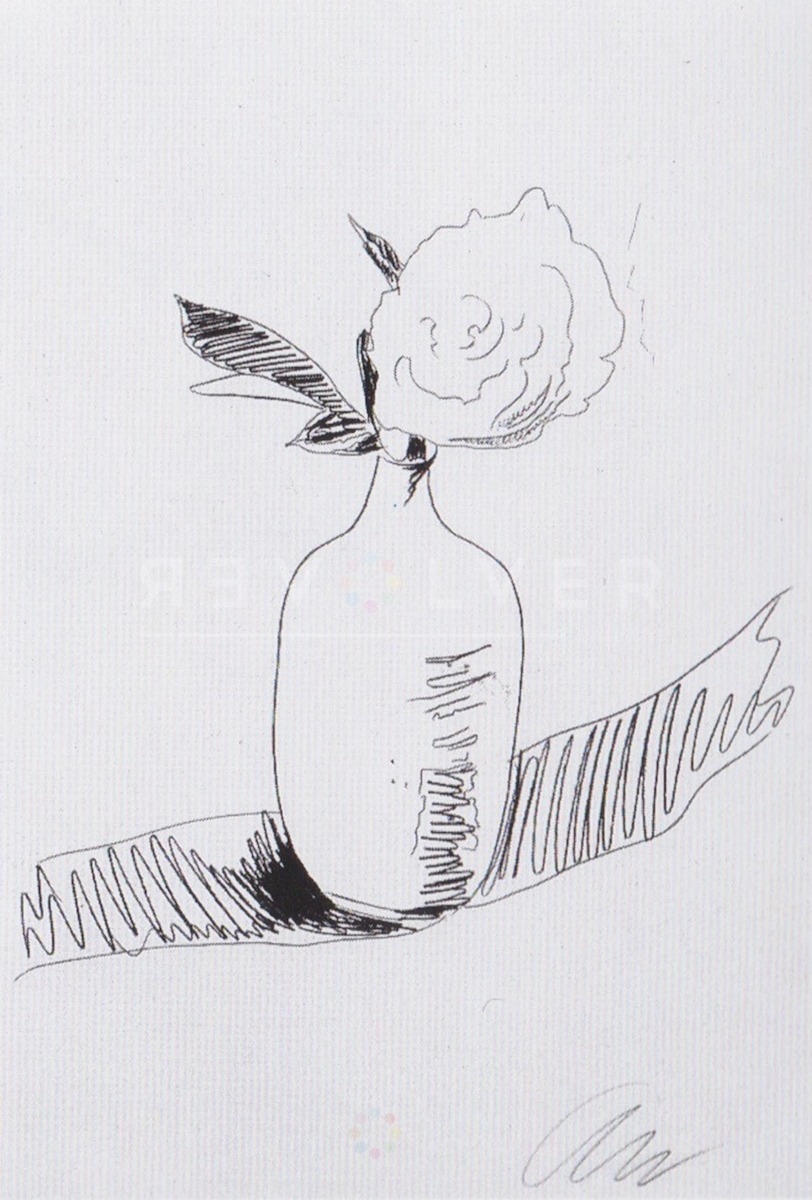
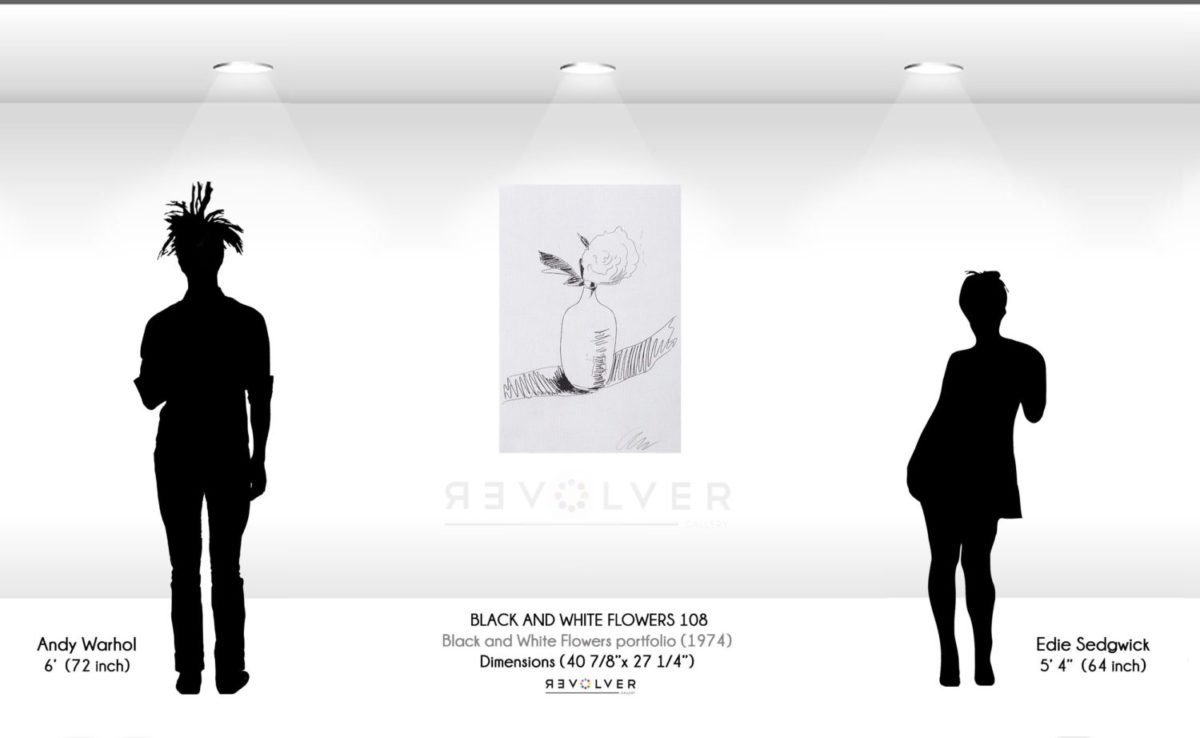
Flowers (Black and White) 108 by Andy Warhol is part of a portfolio that consists of ten screenprints that were based on images found in a wallpaper catalogue called Interpretive Flower Designs. In 1974, Warhol produced two portfolios of flower prints, including Flowers (Black and White) and Flowers (Hand-Colored). Much like Warhol’s 1950s work, these portfolios use his signature hand-drawn look to create these series. Flowers (Black and White) features the same images as the Flowers (Hand-Colored) portfolio, but the images are presented in black and white for an emphasis on line and composition.
Flowers (Black and White) 108 by Andy Warhol as Part of His Larger Body of Work
Warhol continuously revisited flower imagery as a subject matter throughout his entire career in almost every medium. Compared to Warhol’s Flowers series from 1970, the hand-drawn quality of Flowers (Black and White) 108 is more delicate and thematically different than many of his other subjects, which shows Warhol’s ability to incorporate and experiment with different methods. When comparing this portfolio with his others that feature screenprints delineated by thick, machine-printed lines and brilliant colors that purposefully hide the artist’s influence, these prints are closer to being more reflective of Warhol’s personal touch and less like the product of a printing machine.
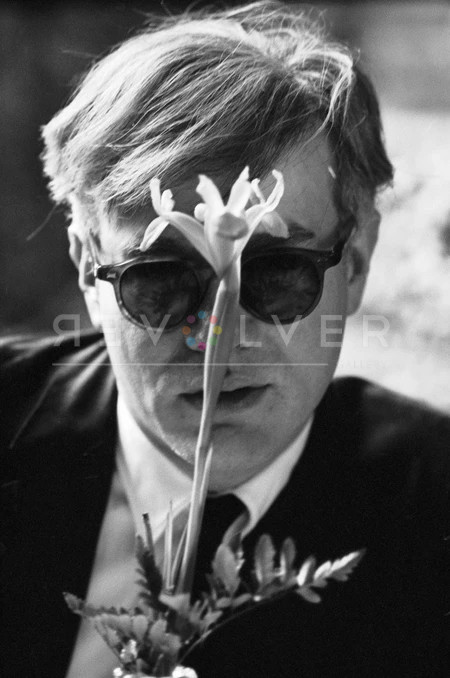
Photo credit: Andy Warhol (with flower), 1963. Photography by Dennis Hopper