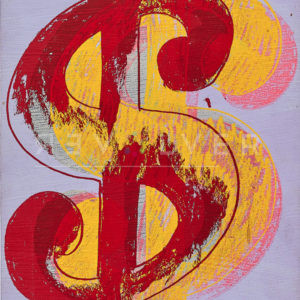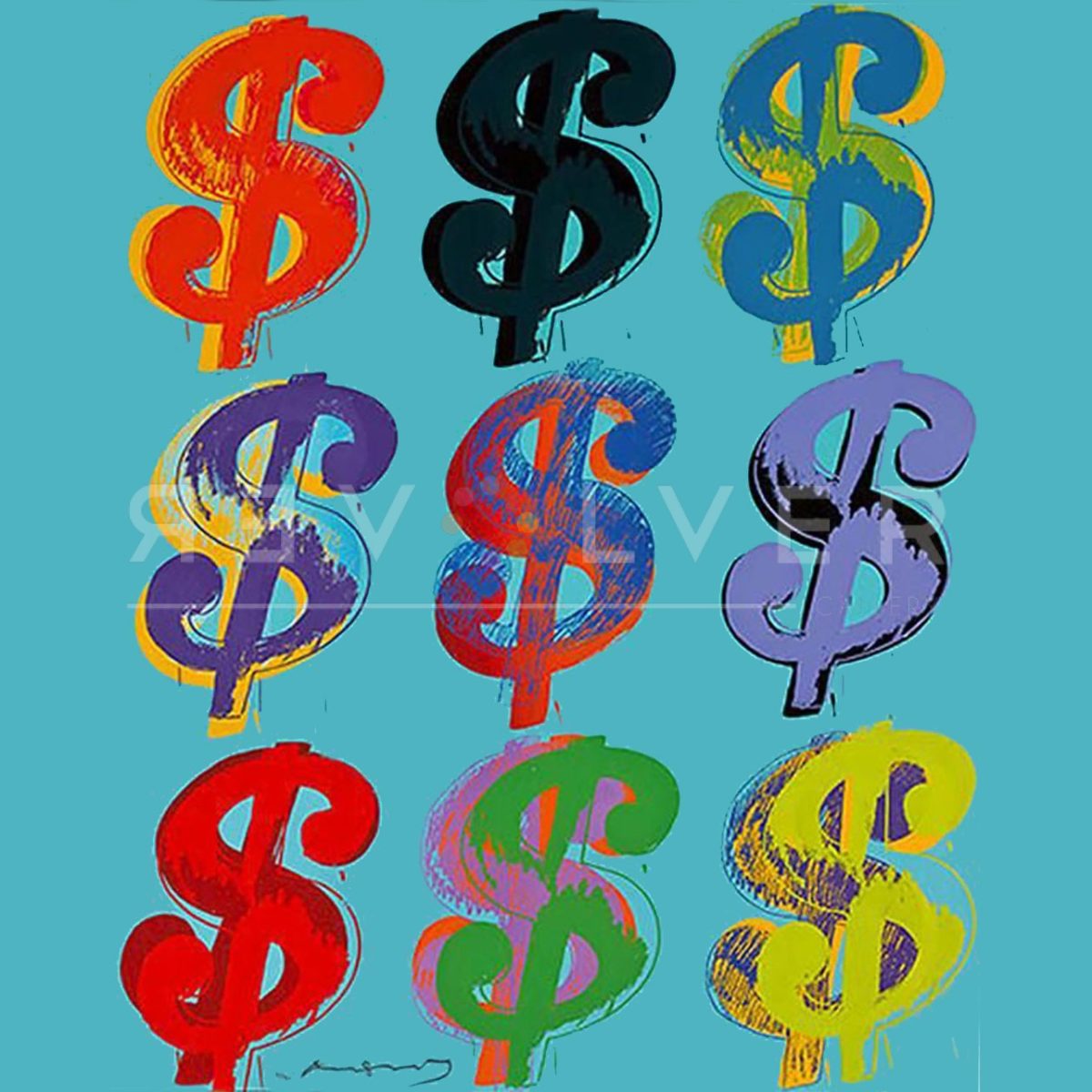
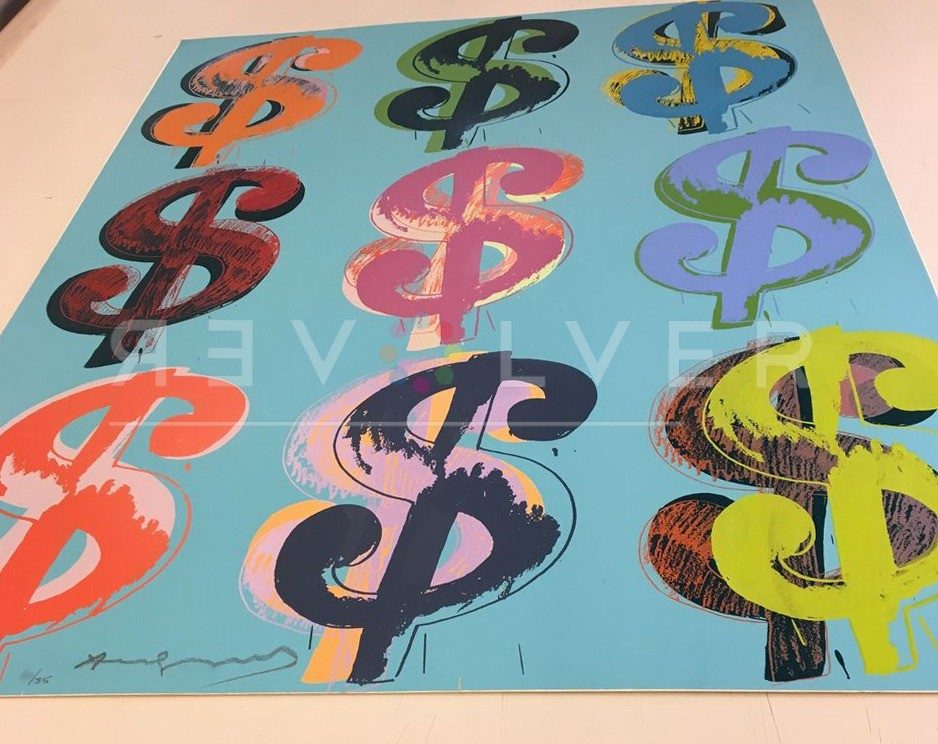
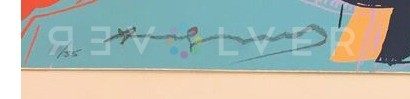
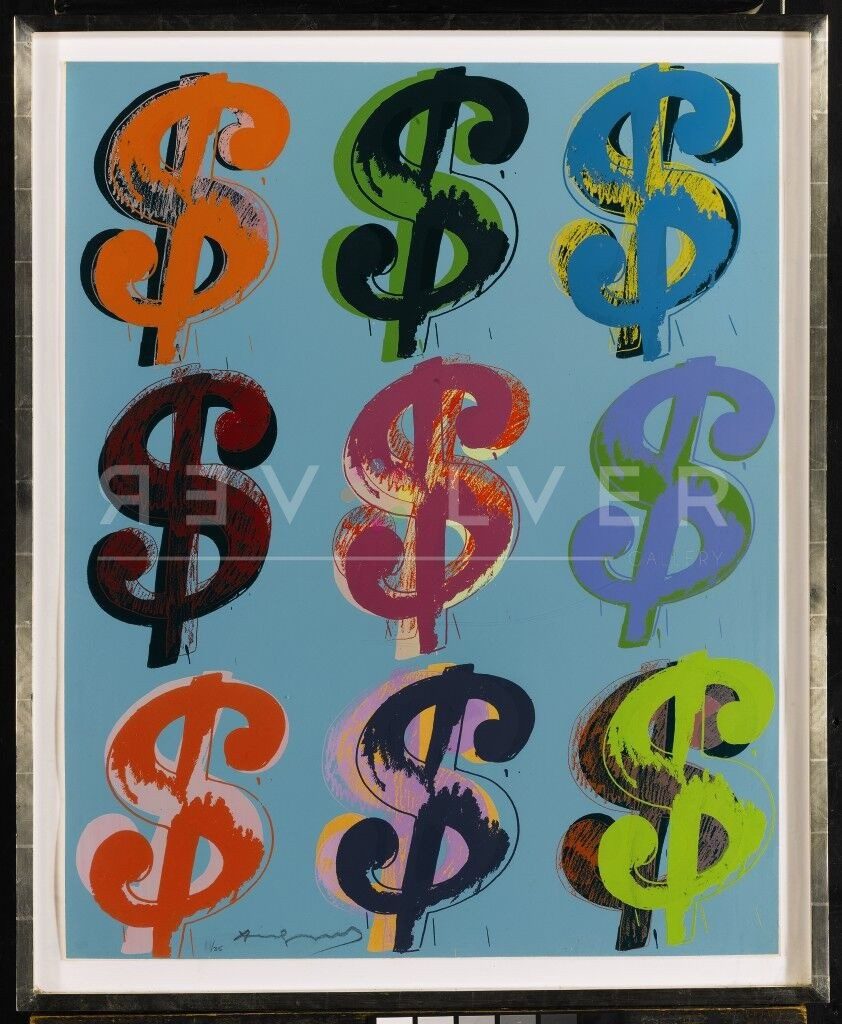
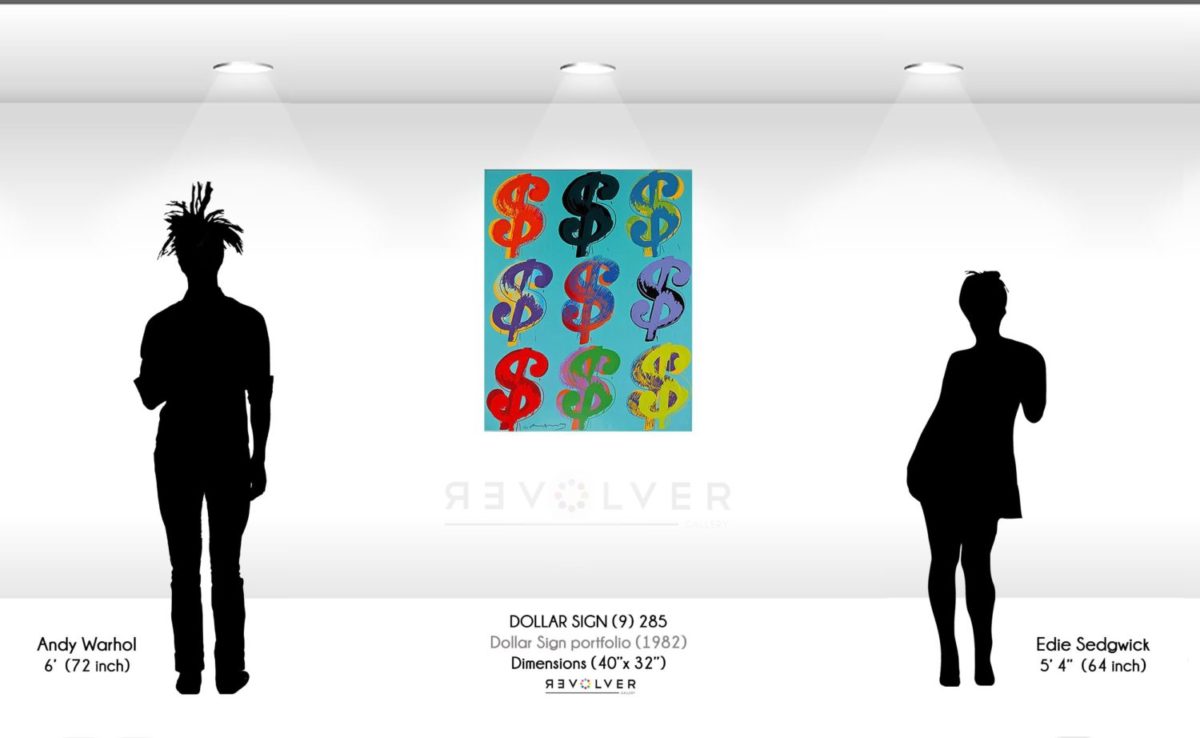
Dollar Sign (9) 286 by Andy Warhol is one of two screenprints from Warhol’s 1982 Dollar Sign (9) portfolio. Dollar Sign (9) is also part of Warhol’s larger Dollar Sign collection, which includes many screenprints of the symbol. The portfolio explores Warhol’s interest in value, wealth, currency, and iconography that surrounds the symbolism of the dollar. Warhol, known for his imagery centered around commercial and celebrity imagery, subtly departs from such imagery in the Dollar Sign portfolio while still holding on to themes from prior works. Further, known for his quote, “I like money on the wall,” Warhol does just that with this portfolio.
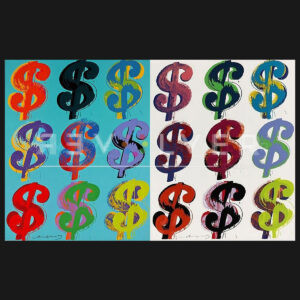
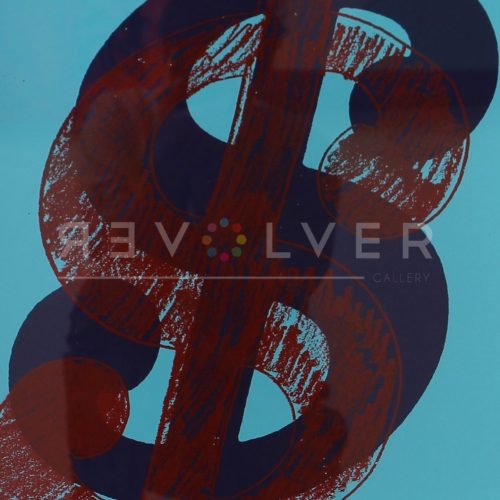
In Dollar Sign (9) 286, Warhol illustrates the currency sign in warm, cool, and vibrant colors ranging from shades of orange, blue, green, and red. He arranges the symbols in a 3×3 array against a solid light blue background, depicting them in a comic-like style that results in a campy appearance. Departing from his usual artistic methods and source image references, Warhol created his own source image for this series. In a sense, we see Warhol return to his practice as a commercial illustrator by hand-drawing the large scale symbol.
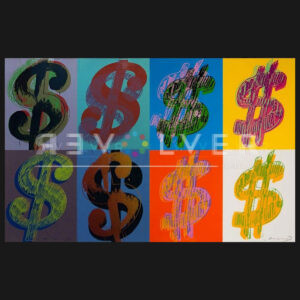
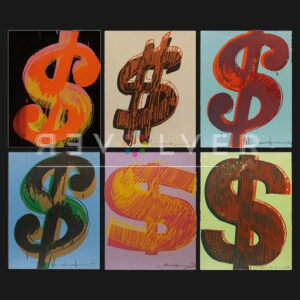
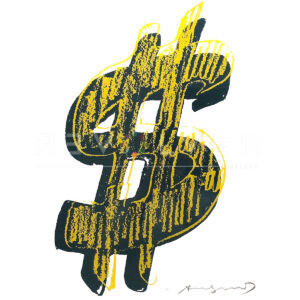
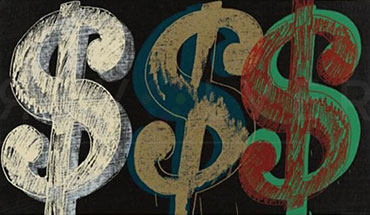
The entire Dollar Sign collection comprises many iterations of the central motif. Originally a portfolio made up of six screenprints featuring only one dollar sign printed at a small scale, the series contains various scales and numbers of dollar signs on each print. Dollar Sign (1), Dollar Sign (Quad), and Dollar Sign (9) are all part of the larger collection. Notably, in all of these works, Warhol truly affirms his love affair with money. Famously, Warhol said that “making money is art,” a statement which attests to his self-proclaimed business artist persona.
Dollar Sign (9) 286 captures the essence behind the American symbol and embodies the connotations that come with it. The dollar sign is a universally recognized symbol that holds a commonly shared meaning among people. The powerful symbol evokes ideas of value, wealth, consumerism, commodification, and the ideology of the American dream. Ironically, Warhol made the portfolio during an economic downturn in the United States in the early 1980s.
Moreover, Dollar Sign (9) 286 also reflects Warhol’s relationship and attraction to wealth from a young age. Growing up with little means of income in industrial Pittsburgh, Warhol started illustrating imagery of money. He drew images of cash growing from trees and plants, exhibiting his fascination and desire for wealth. This fascination stuck with Warhol all throughout his career. “Say you were going to buy a $200,000 painting” Warhol said. “I say you take that money, tie it up, and hang it on the wall. Then when someone visited you the first thing they would see is money on the wall.”
Fascinated by wealth and commercialism, Warhol embodies both in Dollar Sign (9) 286. He captures the recognition and value placed upon the dollar sign, highlighting how it receives similar idolization as if it were a celebrity. Warhol, known for his celebrity portraits of Mick Jagger, Marilyn Monroe, and others, portrays the dollar sign in a similar, celebrated manner. Finally, Andy Warhol’s Dollar Sign (9) 286 is the artist at his most tongue-in-cheek, representing his art as the commodity it will become once landed in the art market.
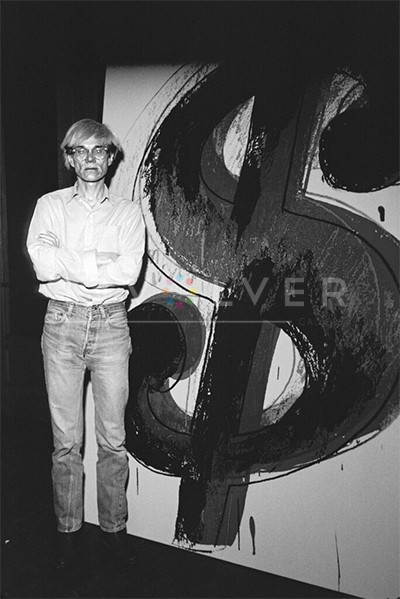
Photo credit: Andy Warhol with Dollar Sign painting, New York, 1982. Image: © Santi Visalli, Artwork: © 2022 The Andy Warhol Foundation for the Visual Arts, Inc. / Licensed by DACS, London