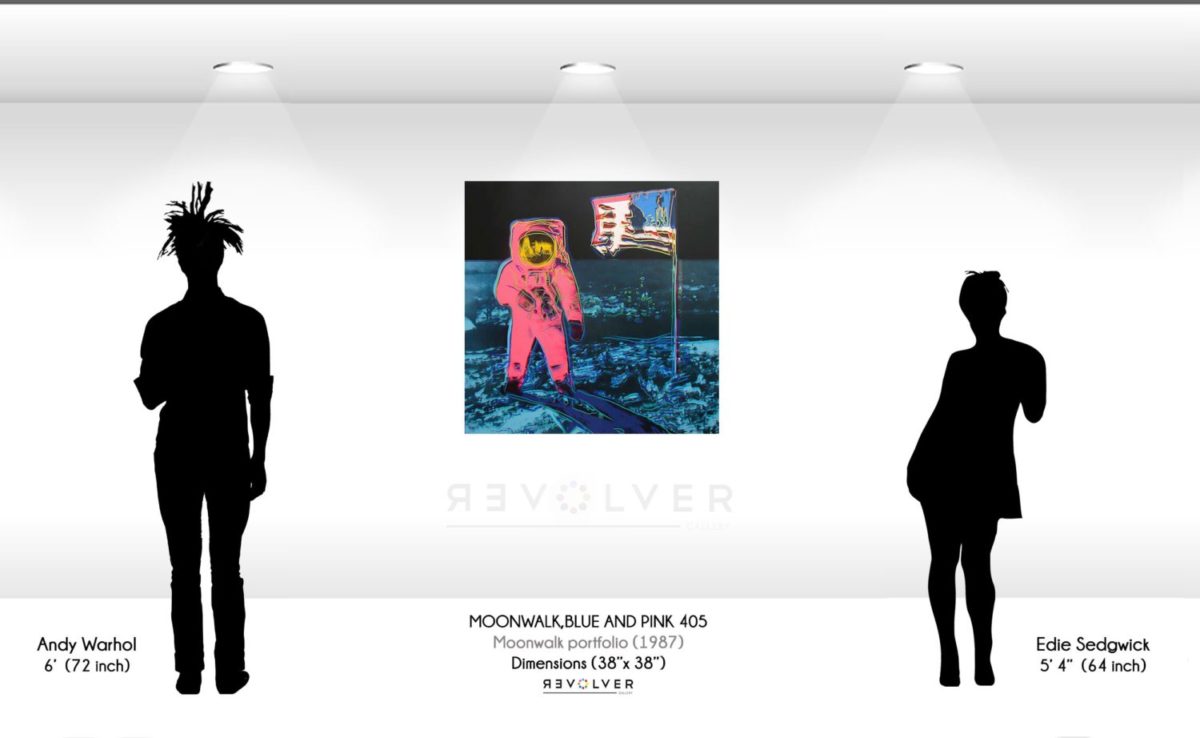
Andy Warhol - Moonwalk, Blue and Pink (FS II.405) jpg
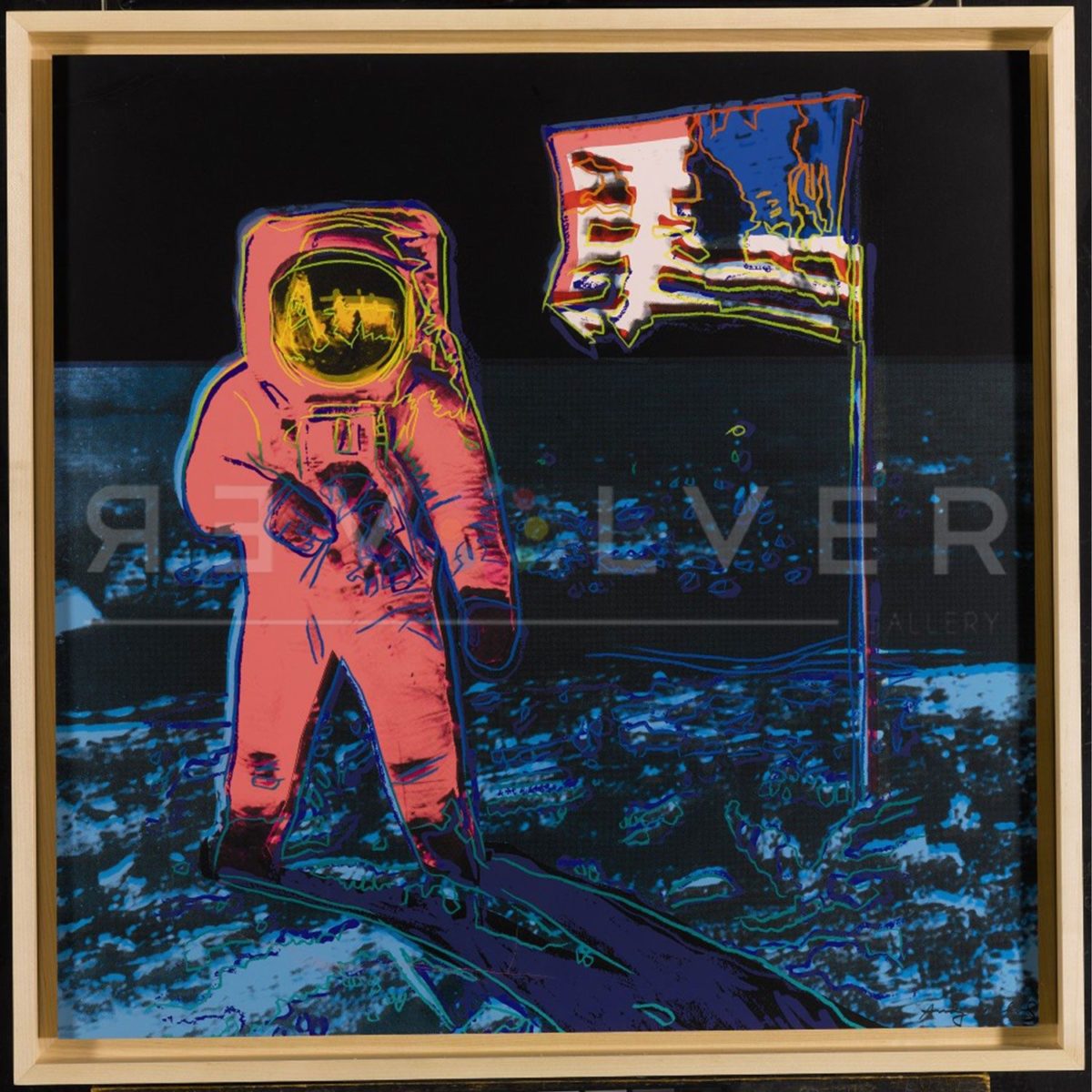
Andy Warhol Moonwalk 405 screenprint in frame, with Revolver Gallery watermark.
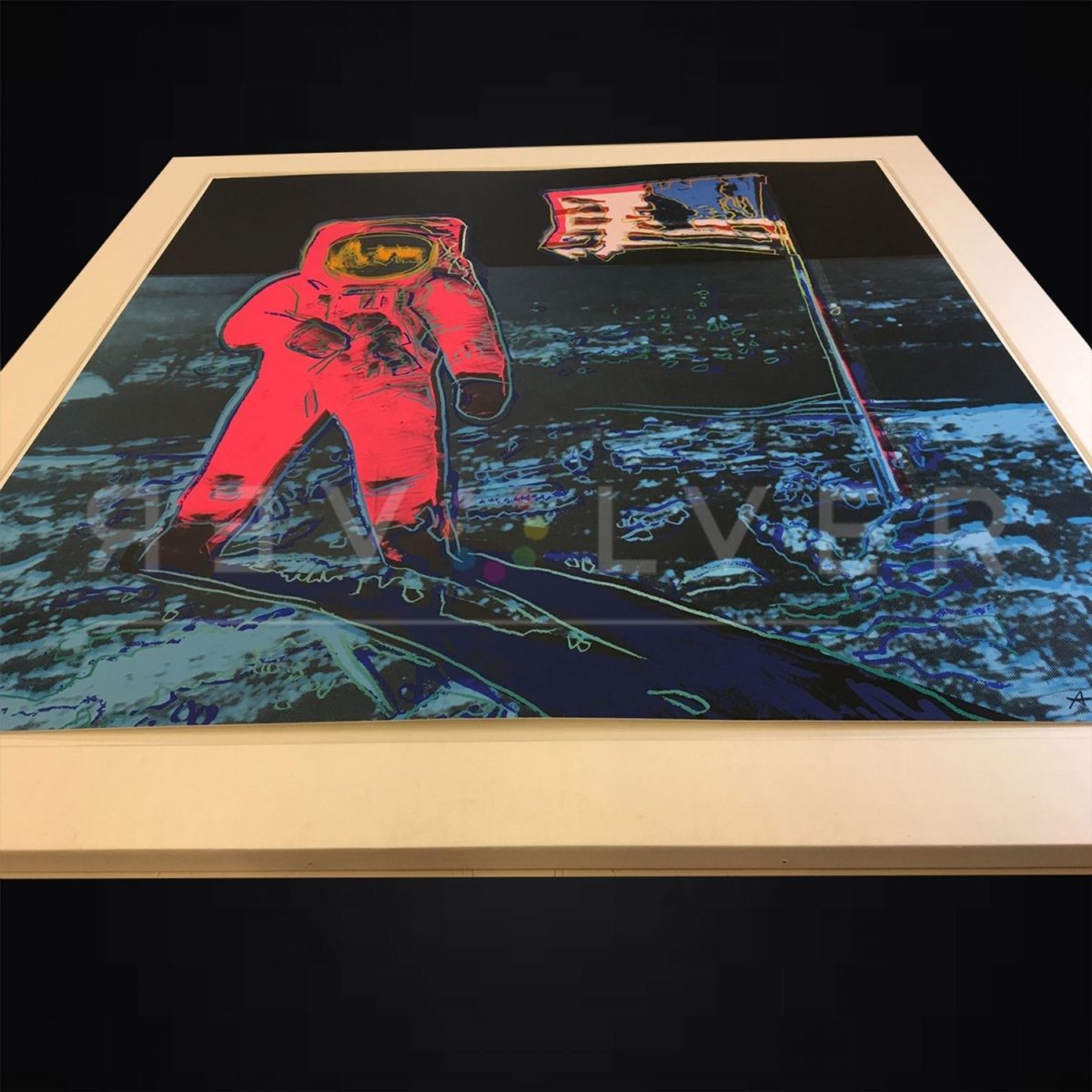
Andy Warhol Moonwalk 405 canvas laying on a table. Stock photo with Revolver Gallery watermark.
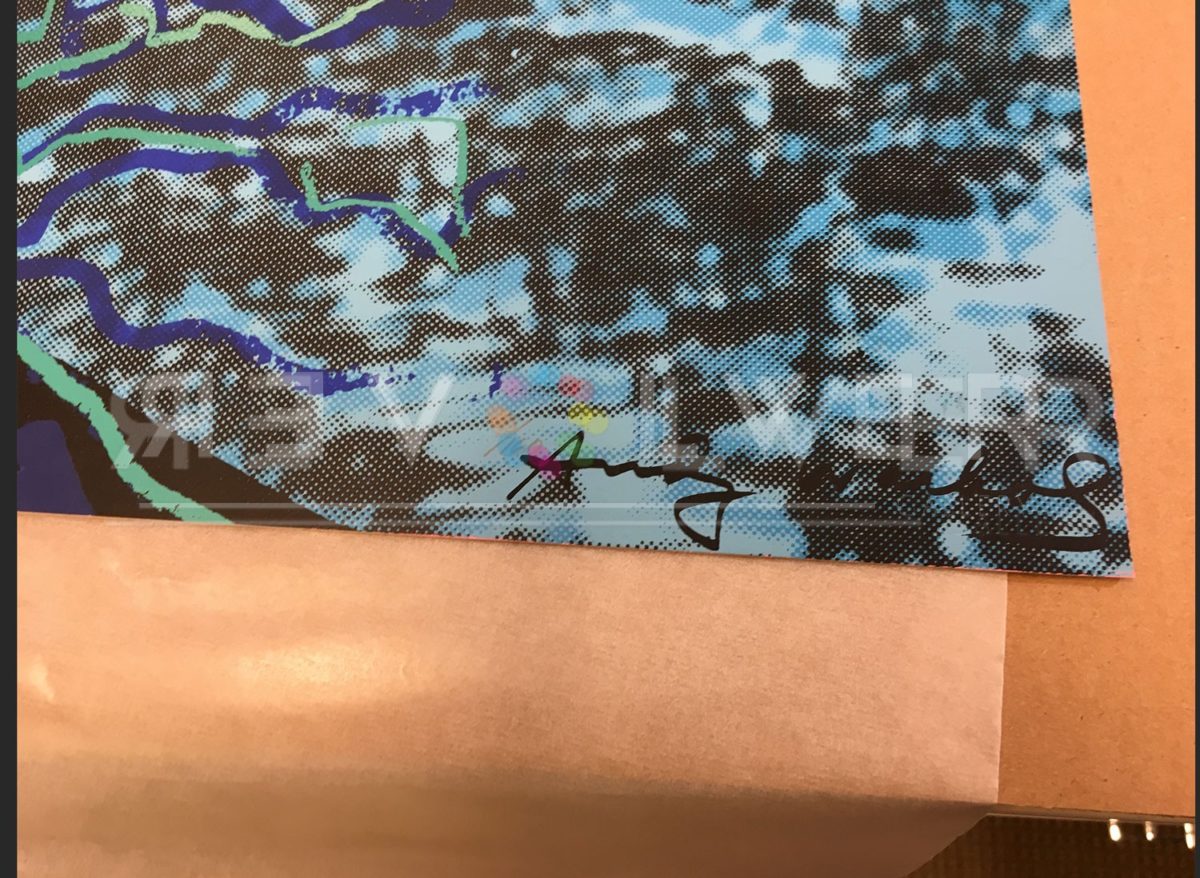
Andy Warhol's signature on the front of Moonwalk 405, stock photo with Revolver watermark.
Andy Warhol Moonwalk blue and pink 405
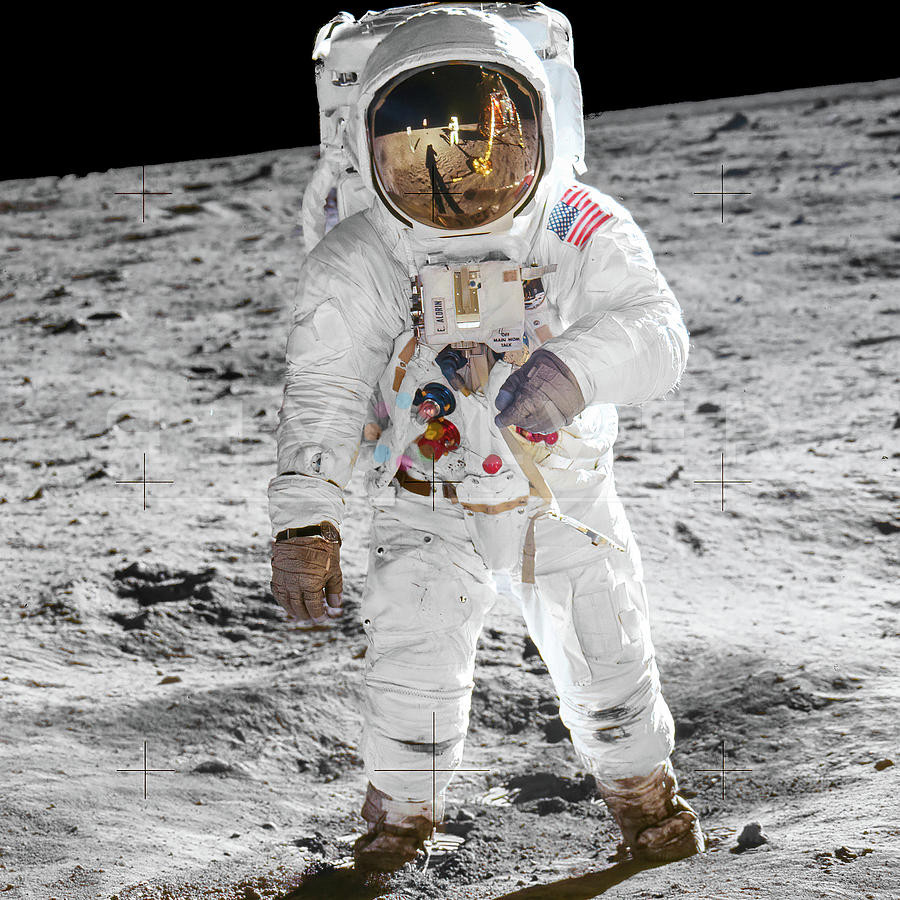
Original photograph of Buzz Aldrin standing on the moon.
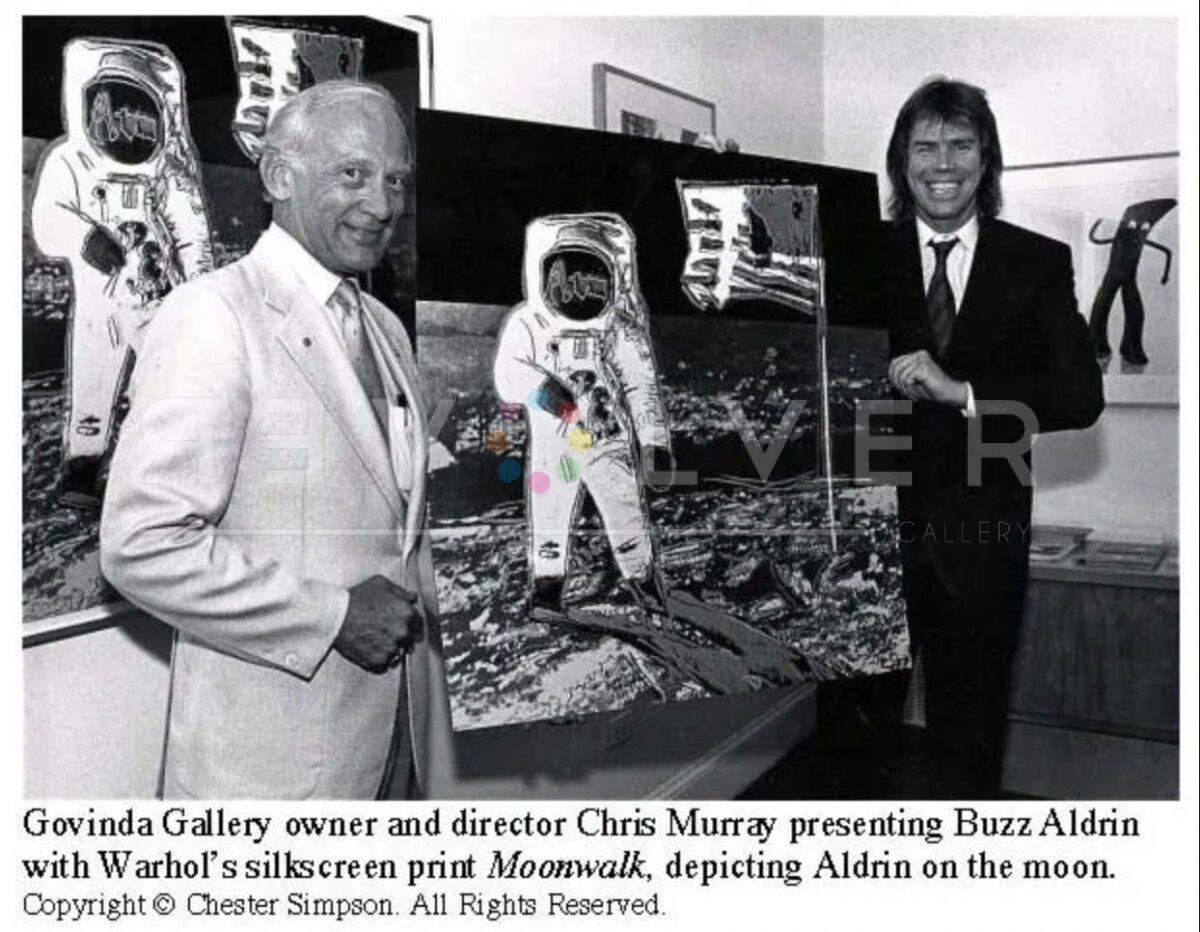
Chris Murray presenting Buzz Aldrin with one of Andy Warhol's Moonwalk screen prints.

Moonwalk 405

Catalog Title: Moonwalk, Blue and Pink (FS II.405)
Year: 1987
Size: 38" x 38" | 96.5 x 96.5 cm
Medium: Screenprint on Lenox Museum Board
Edition: 160, 31 AP, 5 PP, 5 EP, signed and numbered in pencil lower right.
Name(Required)
This field is hidden when viewing the form

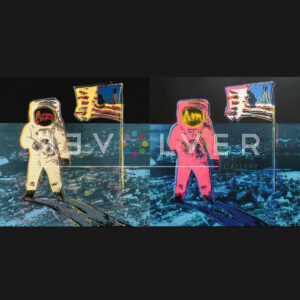
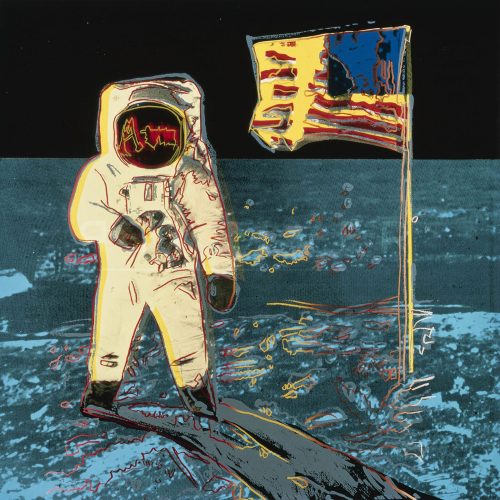
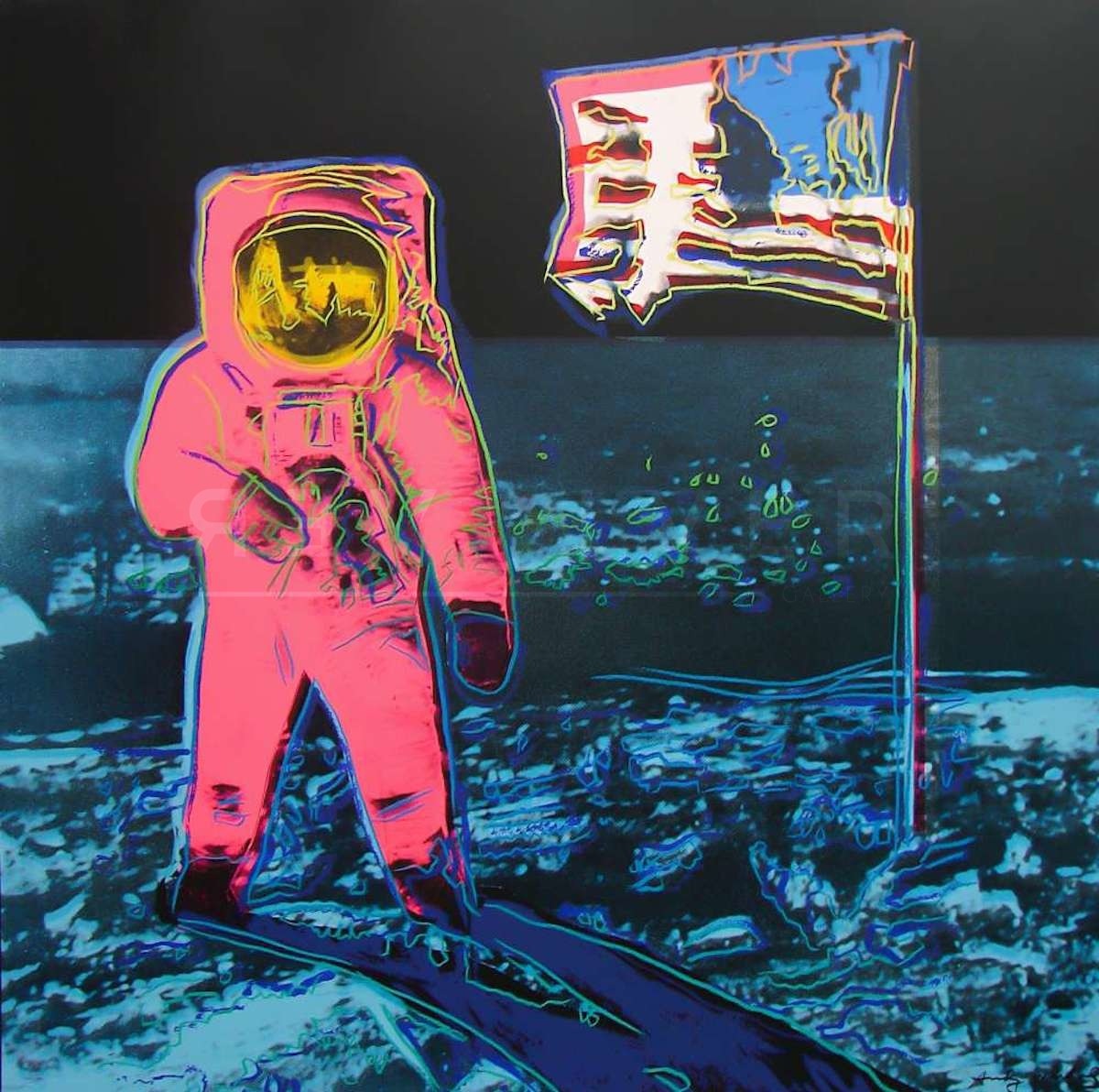
Moonwalk 405 by Andy Warhol portrays astronaut Edwin “Buzz” Aldrin Jr. during the Apollo 11 mission of 1969. The image captures Aldrin walking on the moon while Neil Armstrong photographs him—a moment that defined a generation. Warhol reimagines this photograph through Pop Art, turning a record of science into a symbol of modern myth.

Among the two prints in Warhol’s Moonwalk portfolio, Moonwalk 405 stands out for its bold palette. He replaces NASA’s muted tones with electric pinks, cool blues, and deep blacks. The astronaut’s suit glows hot pink, mirrored by the American flag beside him. These vivid colors pull the viewer’s attention toward Aldrin and the flag, creating a sense of national pride and spectacle. The result feels both historical and cinematic—an event transformed into visual pop poetry.

Moonwalk 405 and Warhol’s Vision of American Triumph

Throughout his career, Warhol celebrated fame, glamour, and image. Yet Moonwalk 405 shows a different kind of fame—collective rather than personal. Instead of Aldrin’s face, Warhol centers the act of exploration itself. He turns the moon landing into a shared cultural icon, one that reflects the optimism and innovation of the 1960s. The print captures America’s victory in the space race, but also its fascination with turning every milestone into media.

Context and Artistic Legacy

Warhol created the Moonwalk series in 1987, near the end of his life. He had planned a larger series on American achievements, but only these two prints were completed. Seen in that light, the work feels reflective—a look back at a nation’s dreams and its progress. Warhol fuses documentary realism with high-key color, reminding us that even humanity’s greatest moments are filtered through photography and television. As a result, his art turns achievement into iconography and history into image.

The Moonwalk prints stand among Warhol’s final masterpieces. They unite his lifelong themes of fame, technology, and the power of repetition. More than a celebration of space travel, Moonwalk 405 captures the making of collective memory. It reminds viewers that in Warhol’s world, every triumph—like every portrait—is inseparable from the media that records it.

Photo Credits:
1 – Photo of Buzz Aldrin on the moon, taken by Neil Armstrong. © NASA/JPL-Caltech.
2 – Govinda Gallery owner Chris Murray presenting Buzz Aldrin with Warhol’s Moonwalk silkscreen. © Chester Simpson.

Share this page:

Related Works