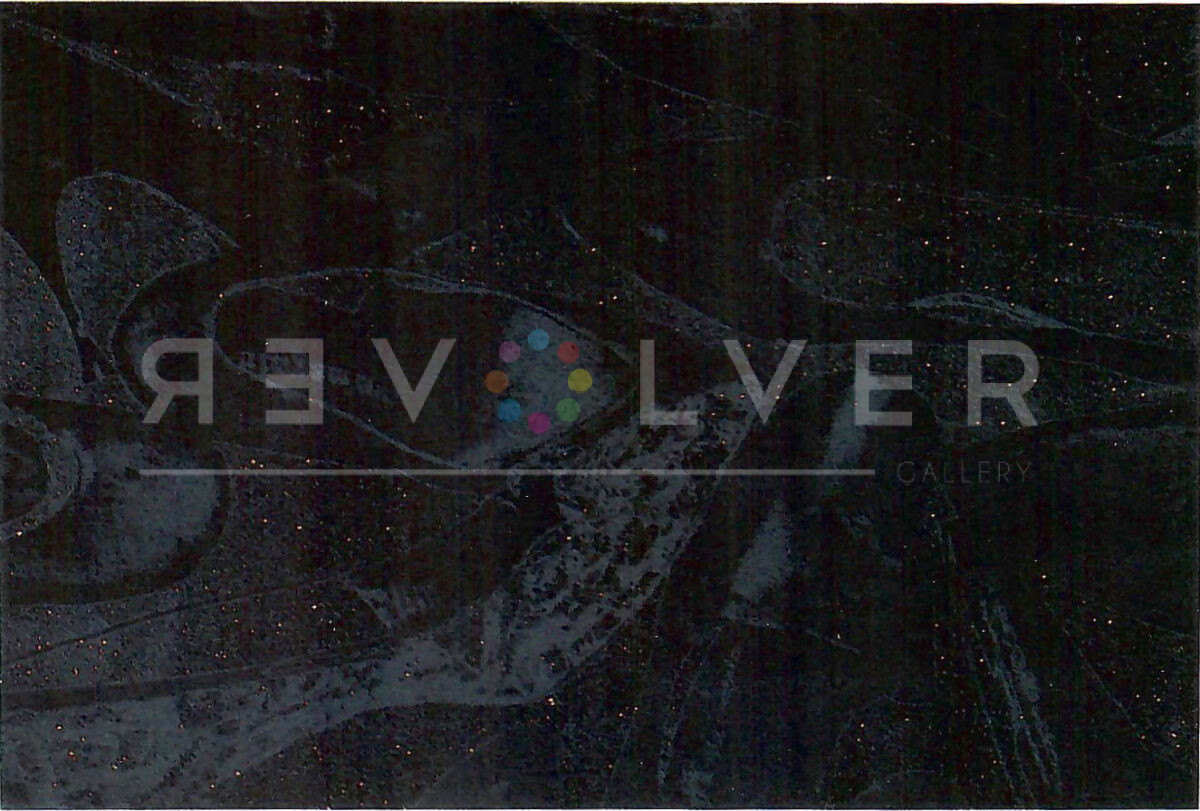
Shoes 249 by Andy Warhol, from the Shoes (Deluxe Edition) portfolio, is a testament to the artist’s ability to elevate the ordinary to the extraordinary. Within this darkly hued composition, several pairs of shoes emerge from the shadowy background, their nocturnal forms gently speckled with light. This light, produced by Warhol’s use of “diamond dust,” gives the otherwise muted artwork a subdued sparkle that invites closer inspection. The diamond dust idea came from Warhol’s master printer, Rupert Jasen Smith, who made his prints sparkle by using pulverized glass.
The shoes are arranged in a seemingly haphazard fashion, as if carelessly tossed aside by their wearer, at odds with the structured commercialism that shoes often represent in fashion. Yet, upon closer inspection, the shoes create a visual rhythm across the canvas, their curves and angles playing off one another and leading the eye on a journey through the artwork. Each shoe is positioned to both stand alone as an individual piece and contribute to the collective narrative of the composition.
In this print, we can discern at least three distinct pairs, though the exact number may be open to interpretation due to the overlapping and blending of forms. Warhol’s use of space and texture in this print is particularly noteworthy. The shoes seem to exist in a void, a place outside of time and context. The way the light catches on the diamond dust serves to both reveal and conceal, playing a visual game of show-and-tell. Their arrangement evokes a sense of intimacy, as if we’ve been granted a glimpse into a private moment—the end of a day, the unburdening of tired feet. The shoes themselves, varying in style and posture, suggest a diversity of experiences and personalities.
This artwork, like others in the Shoes series, stands as a silent yet powerful commentary on the nature of fashion, identity, and the ephemeral beauty found in everyday objects. Warhol’s Shoes (Deluxe Edition) portfolio, with its varied arrangements and emotional depth, remains a compelling exploration of the artist’s personal history with the subject and his enduring impact on the art world.