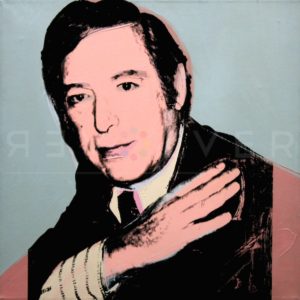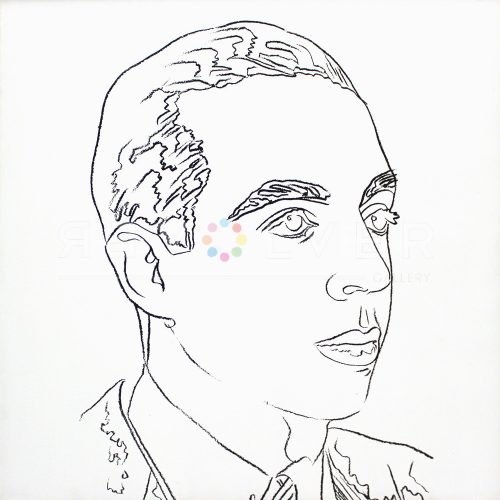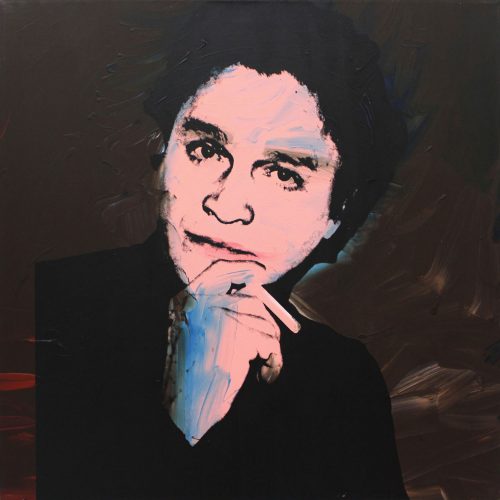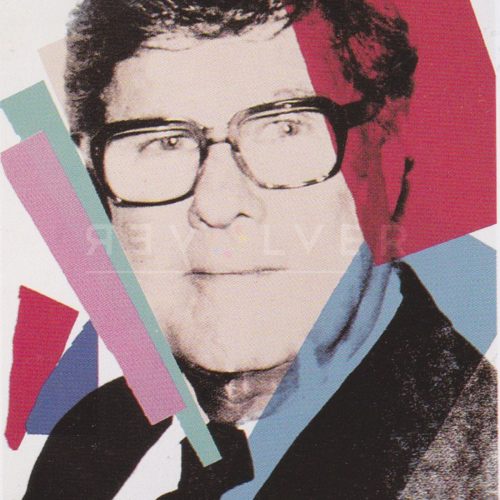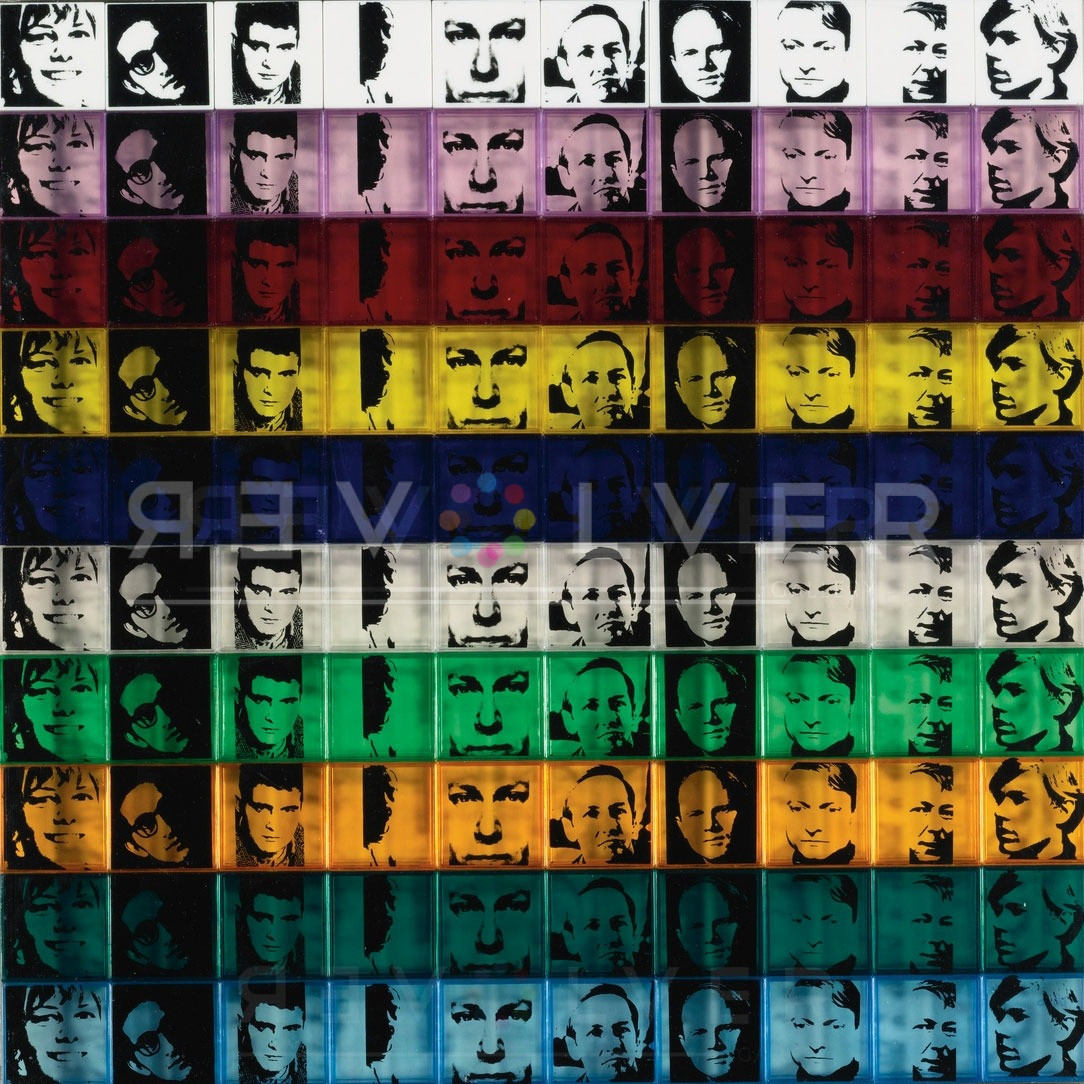
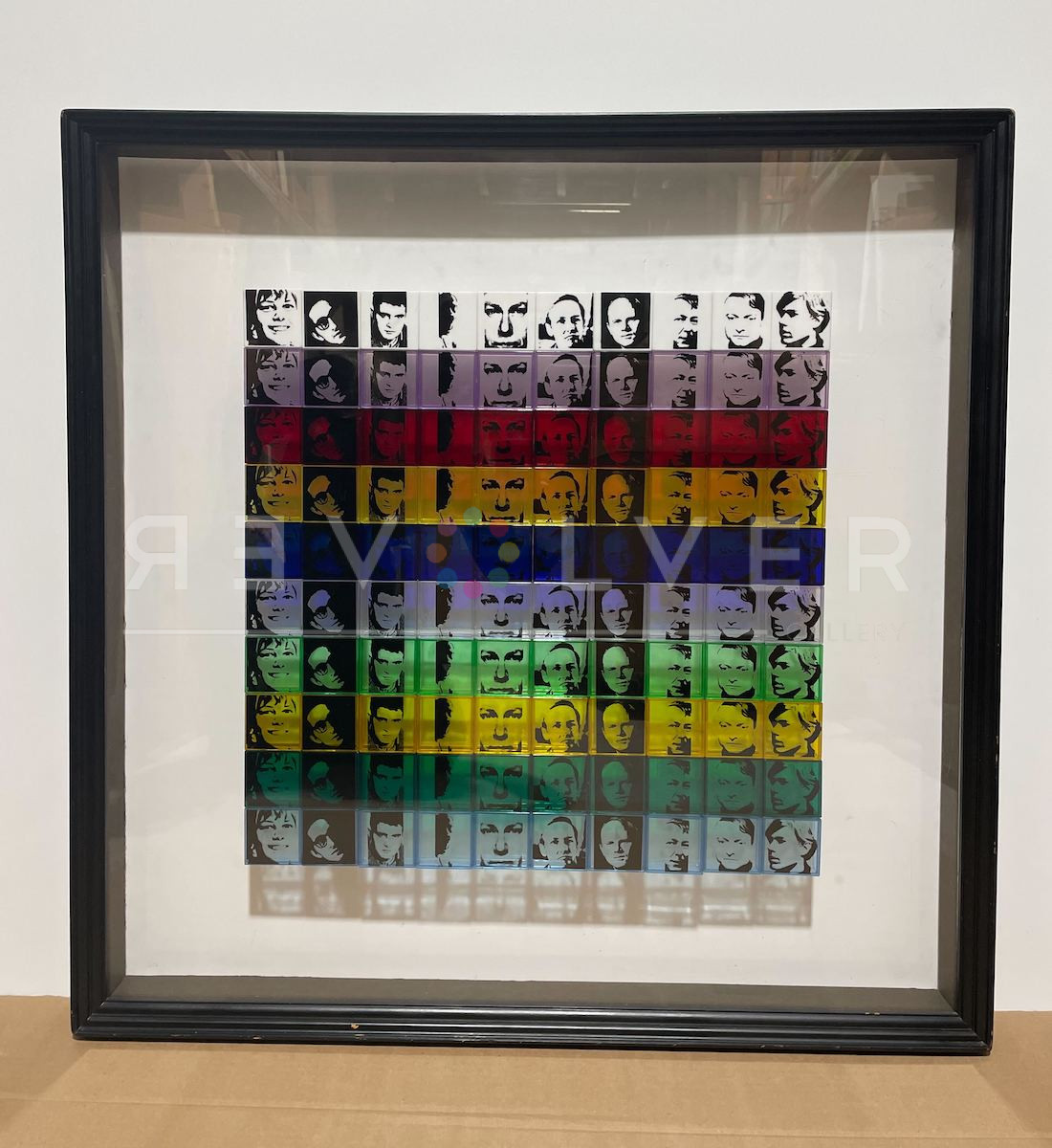
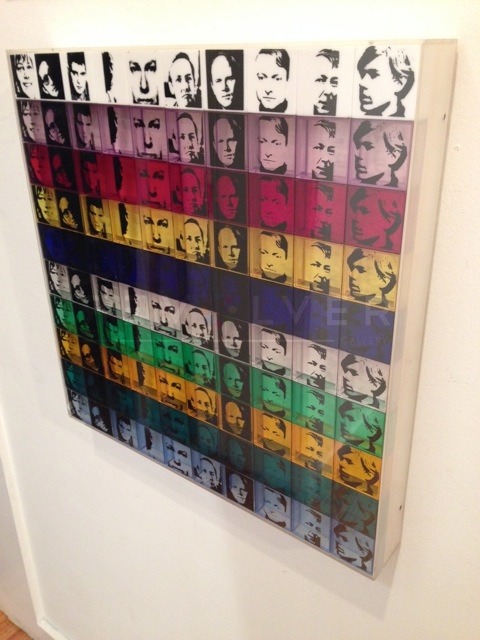
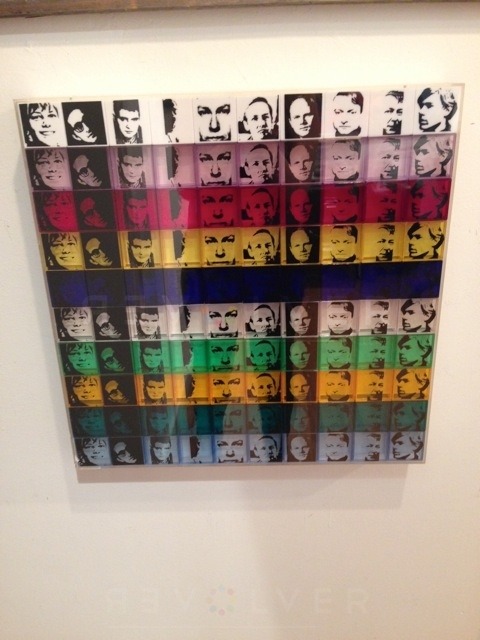
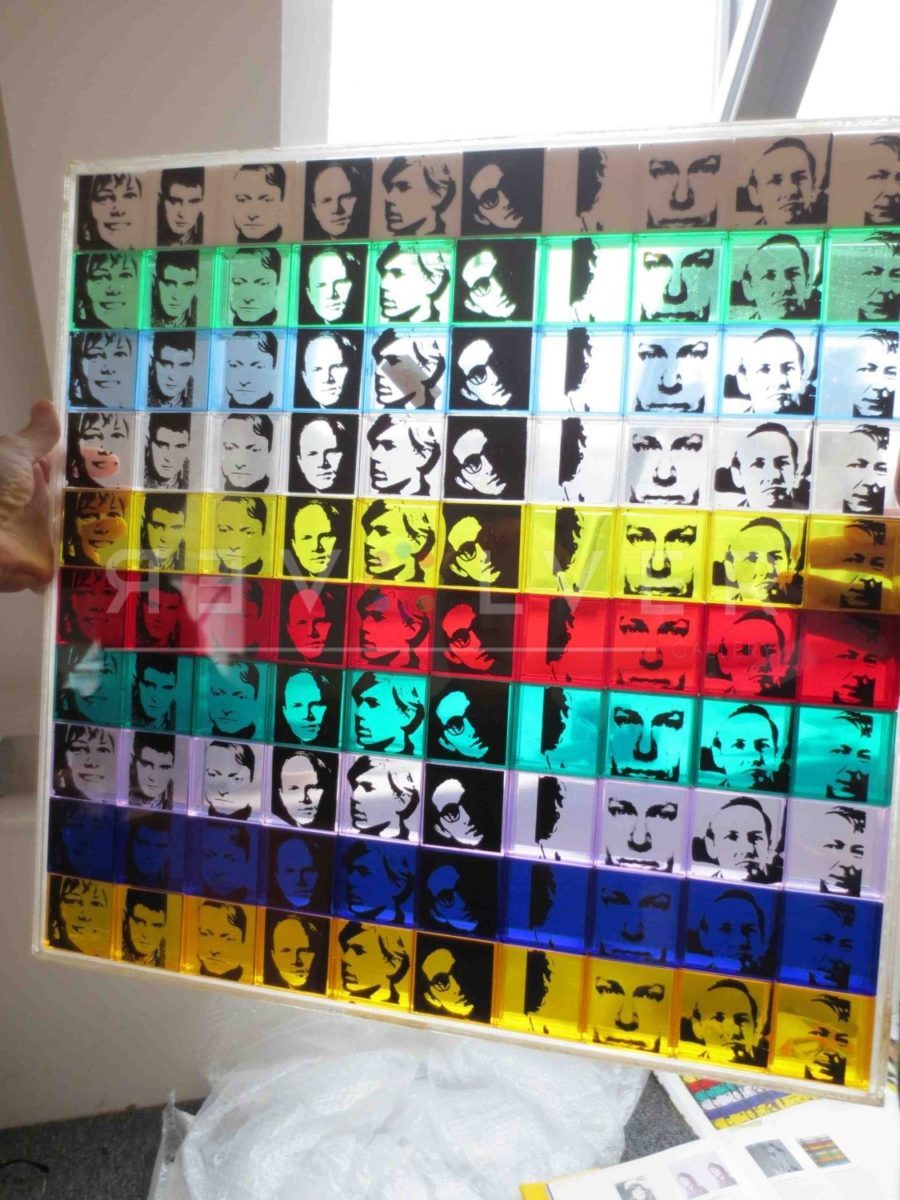
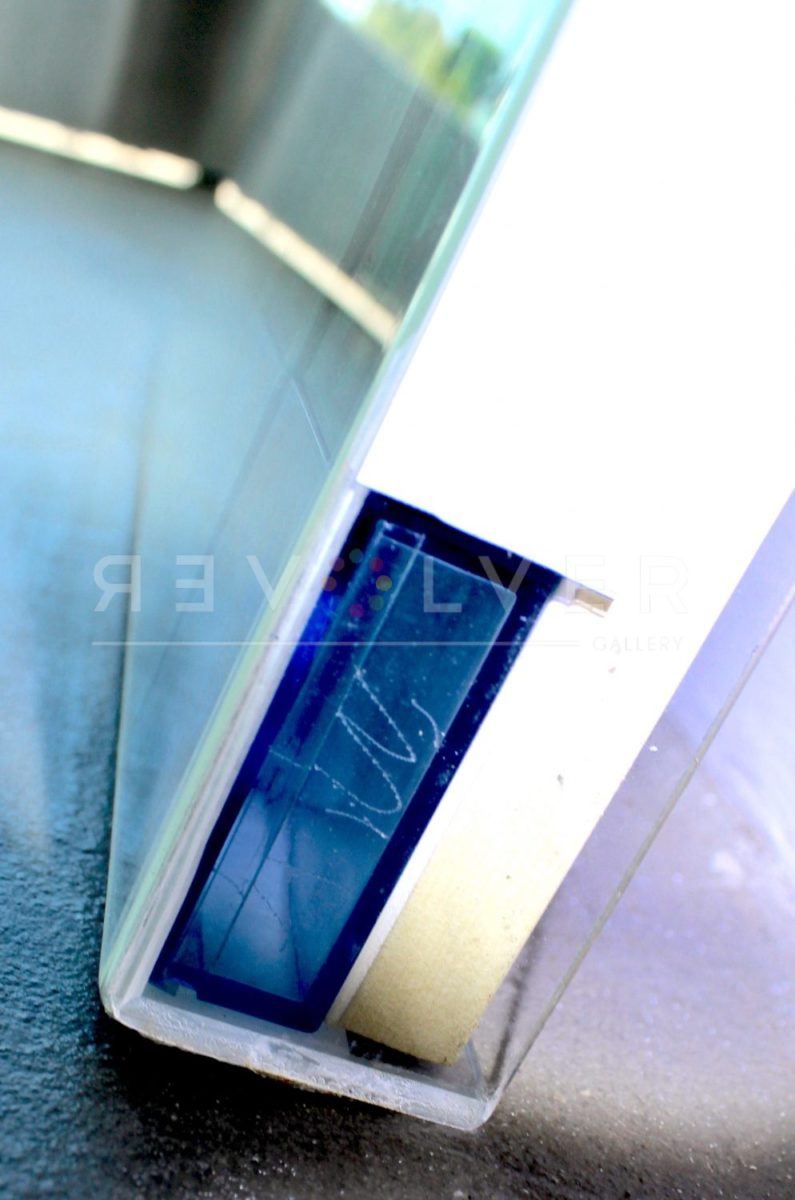
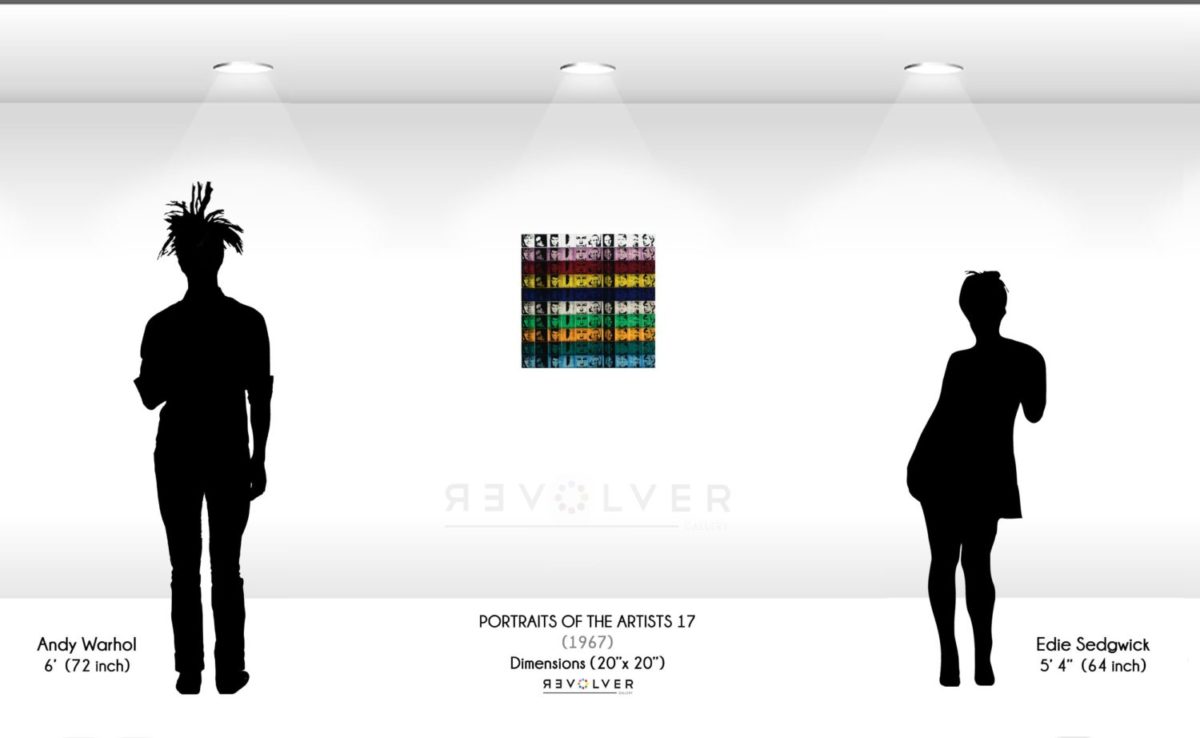
Andy Warhol was part of a very exclusive group of artists that the famous and influential New York dealer Leo Castelli represented. In 1967, Warhol created Portraits of the Artist 17, which depicts the portraits of 10 artists chosen and represented by Castelli. Sticking with his signature style of repetition, Warhol multiplies the artists’ portraits ten times in ten different colors on 3-D polystyrene boxes, each measuring at approximately 2” x 2”. The work is similar to a sun catcher because when it is held up to the light, the colors and portraits are magnified in a kaleidoscopic way.
Portraits of the Artists 17 by Andy Warhol as Part of his Larger Body of Work
The 100 boxes totals to approximately 20” x 20” when lined up. The artists depicted on the box include Robert Morris, Jasper Johns, Roy Lichtenstein, Larry Poons, James Rosenquist, Frank Stella, Lee Bontecou, Donald Judd, Robert Rauschenberg, and Andy Warhol himself. Contrary to popular belief, Warhol was not chosen by Castelli to create the work as part of an exhibition to celebrate the tenth anniversary of his Upper East Side gallery. According to the late art publisher Rosa Esman, there never was an opening. Additionally, the rumor that Warhol made extra boxes that includes other artists is a mere myth.