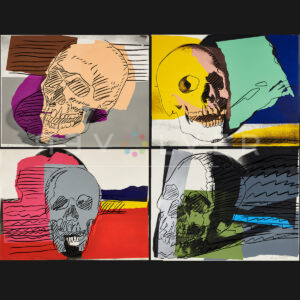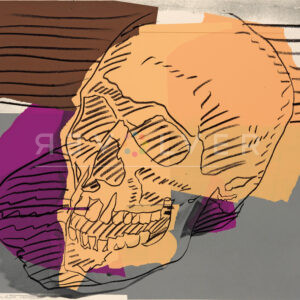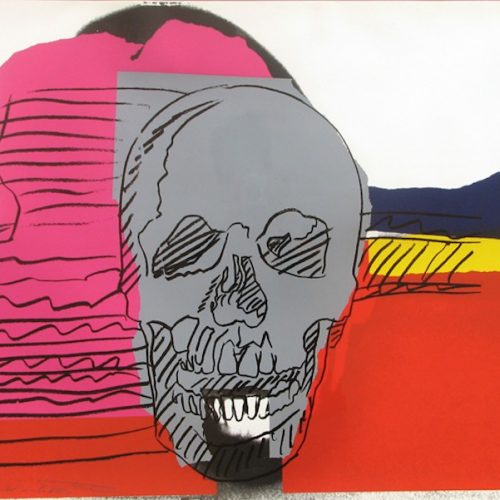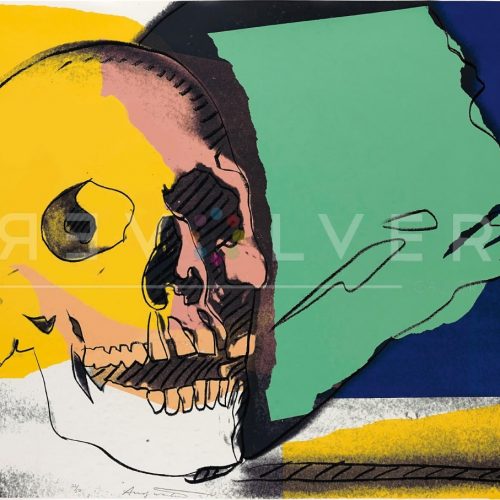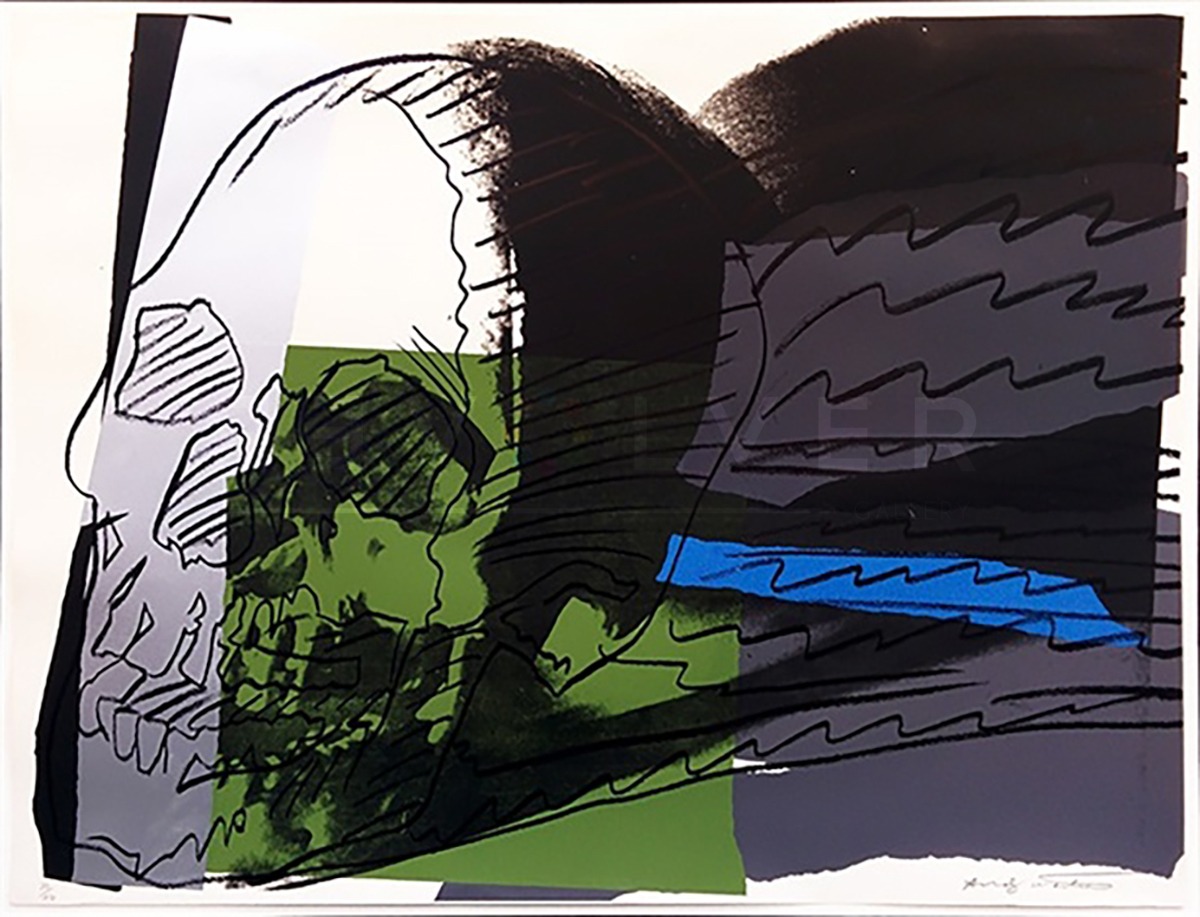
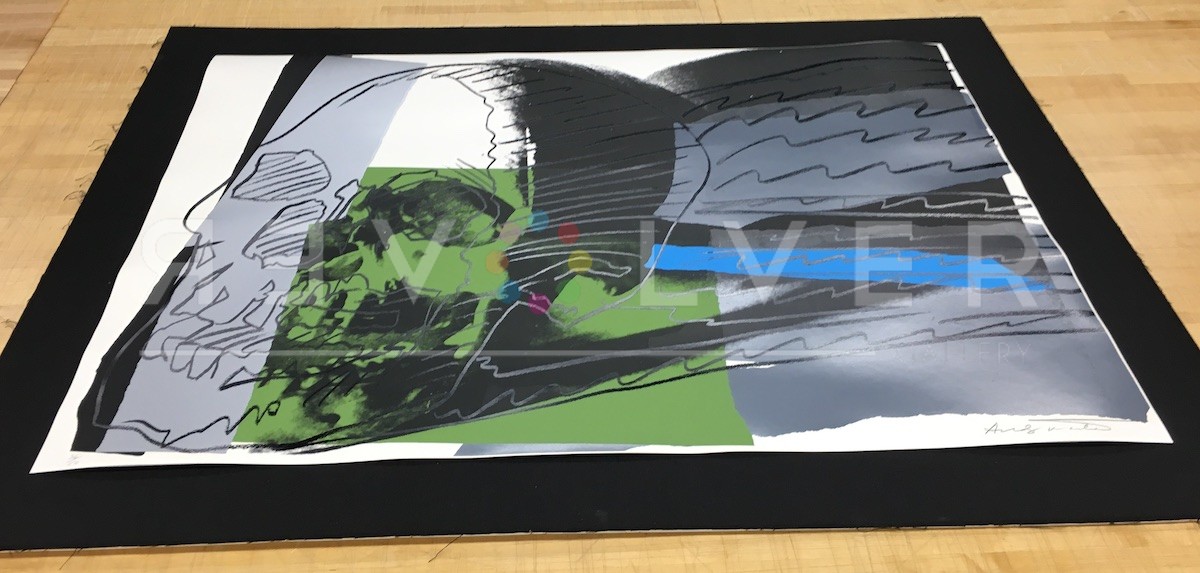
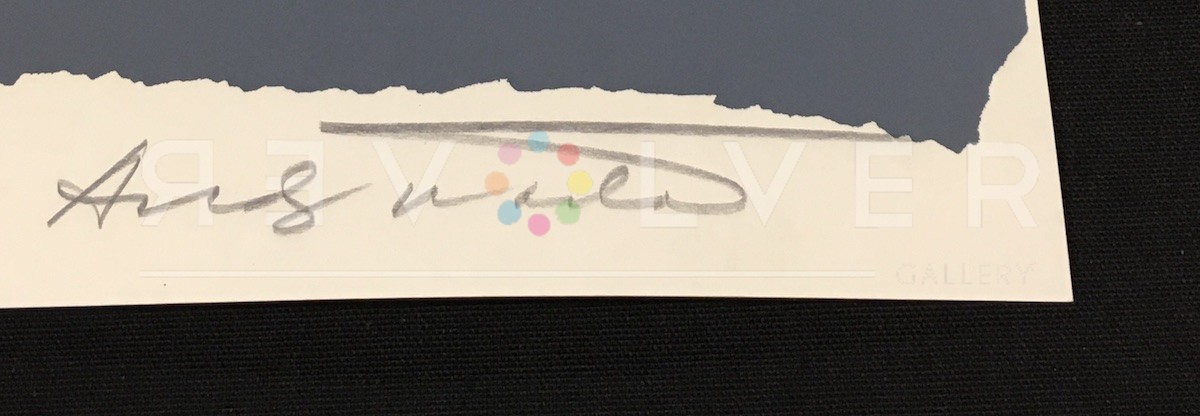
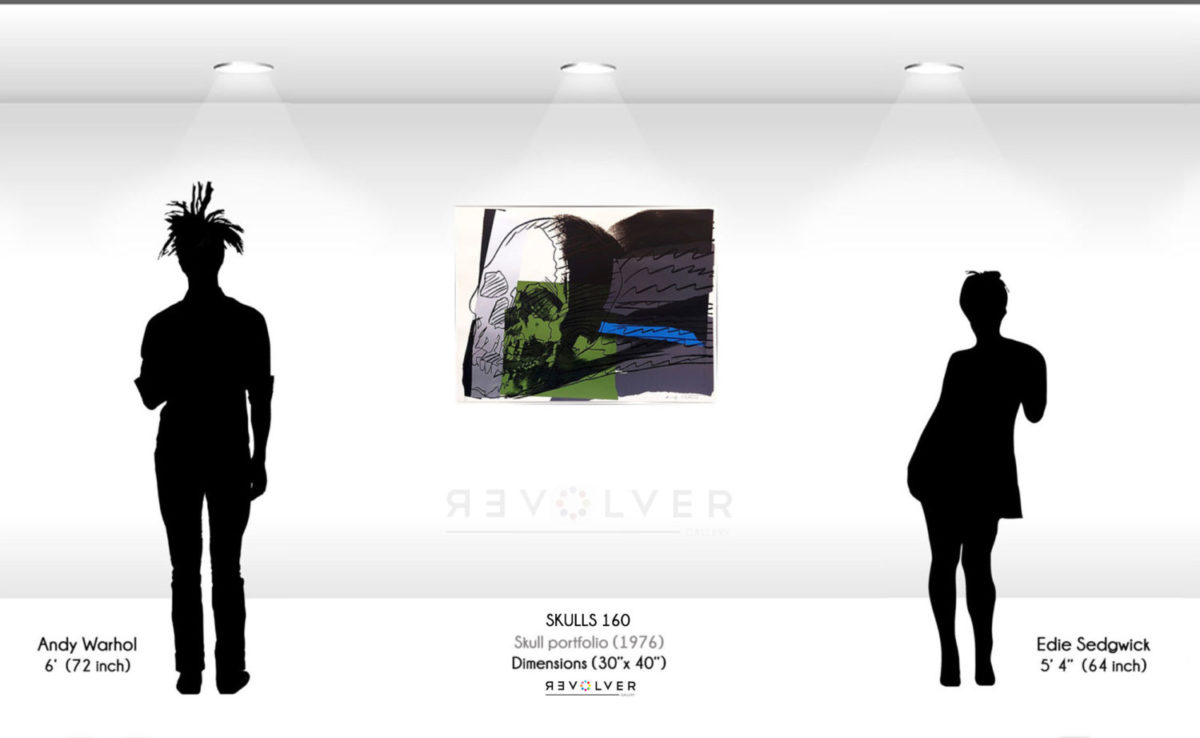
Skulls 160 by Andy Warhol is one of four screenprints that the artist created by layering vivid colors over the sketch of a human skull. Based on a photograph taken by Warhol’s assistant Ronnie Cutrone, this print is an example of Warhol’s interest with light, using photography as a way to experiment its relationship to an object. Skulls 160 is the most muted of the series, with cool colors of green and grey that give the work a gloomy yet enticing air. In this print, Warhol uses deep greens against blacks and greys to highlight the obscurity of the image.
Skulls 160 by Andy Warhol as Part of his Larger Body of Work
Andy Warhol’s Skulls portfolio represents an important shift in Warhol’s work. This shift was possibly influenced by Warhol being critically shot in 1968, an event which profoundly affected his life and art. Historically in art, the human skull represents the theme “vanitas,“ known as mortality or the shortness of life. Thus, Warhol’s skulls may serve as a motif or a part of Warhol’s desire to evoke the ephemerality of the human condition. With the help of assistants, Warhol was able to create multiple prints of the subject, varying in color combinations and the level of individual vibrancy.
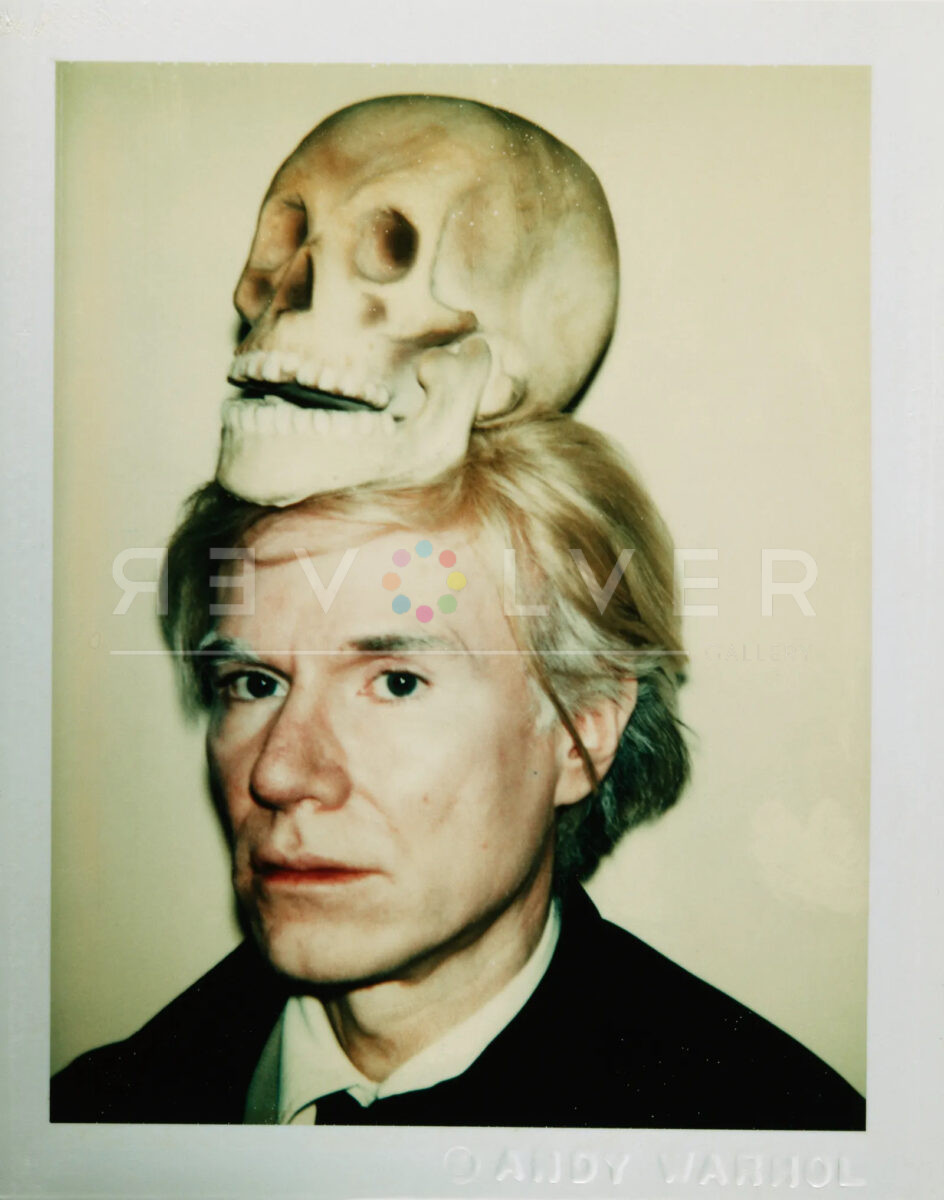
Photo credit: Andy Warhol, Self-Portrait with Skull, 1977, Polaroid Polacolor Type 108, 4 ¼ × 3 ⅜ inches (10.8 × 8.6 cm), The Andy Warhol Museum, Pittsburgh; Founding Collection, Contribution The Andy Warhol Foundation for the Visual Arts, Inc.