
Andy Warhol - Space Fruit: Oranges F.S. II 197
Andy Warhol - Space Fruit: Oranges F.S. II 197 framed jpg
Andy Warhol - Space Fruit:Oranges F.S. II 197 framed jpg
Andy Warhol - Space Fruit: Oranges F.S. II 197 framed jpg
Andy Warhol - Space Fruit: Oranges F.S. II 197 wd jpg

Space Fruit: Oranges 197

Catalog Title: Space Fruit: Oranges (FS II.197)
Year: 1978
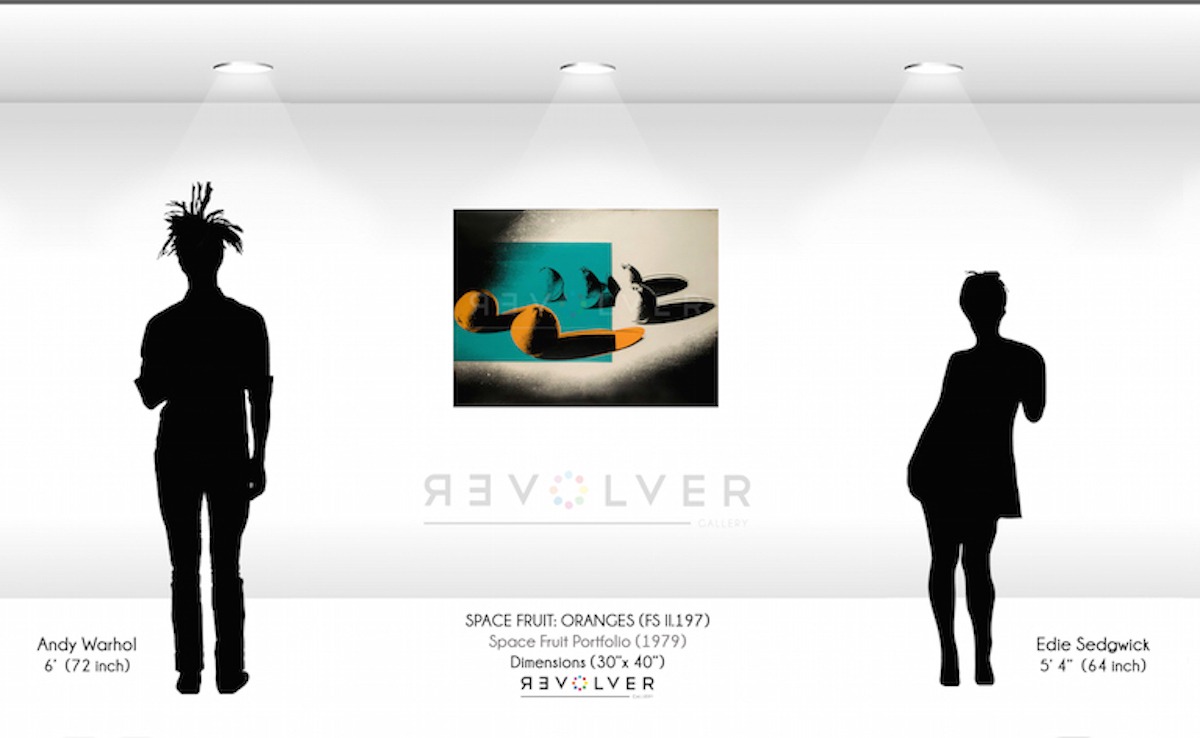
Size: 30” x 40”
Medium: Screenprint on Strathmore Bristol paper.
Edition: 10, 1 PP, signed and numbered in felt pen lower left.
Name(Required)
This field is hidden when viewing the form

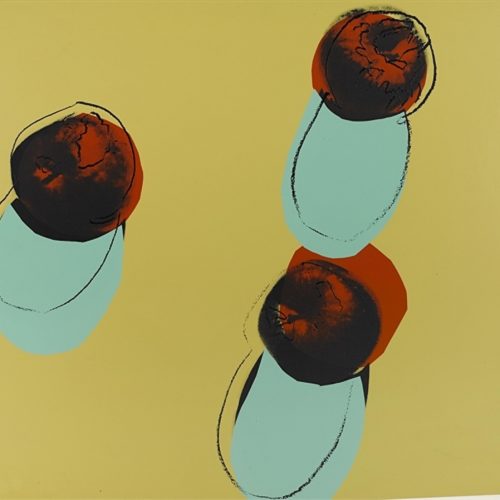
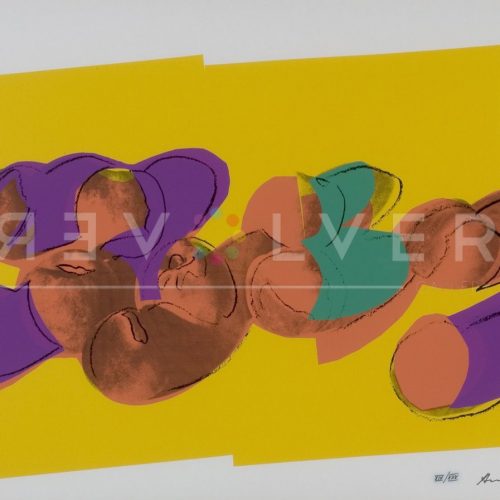
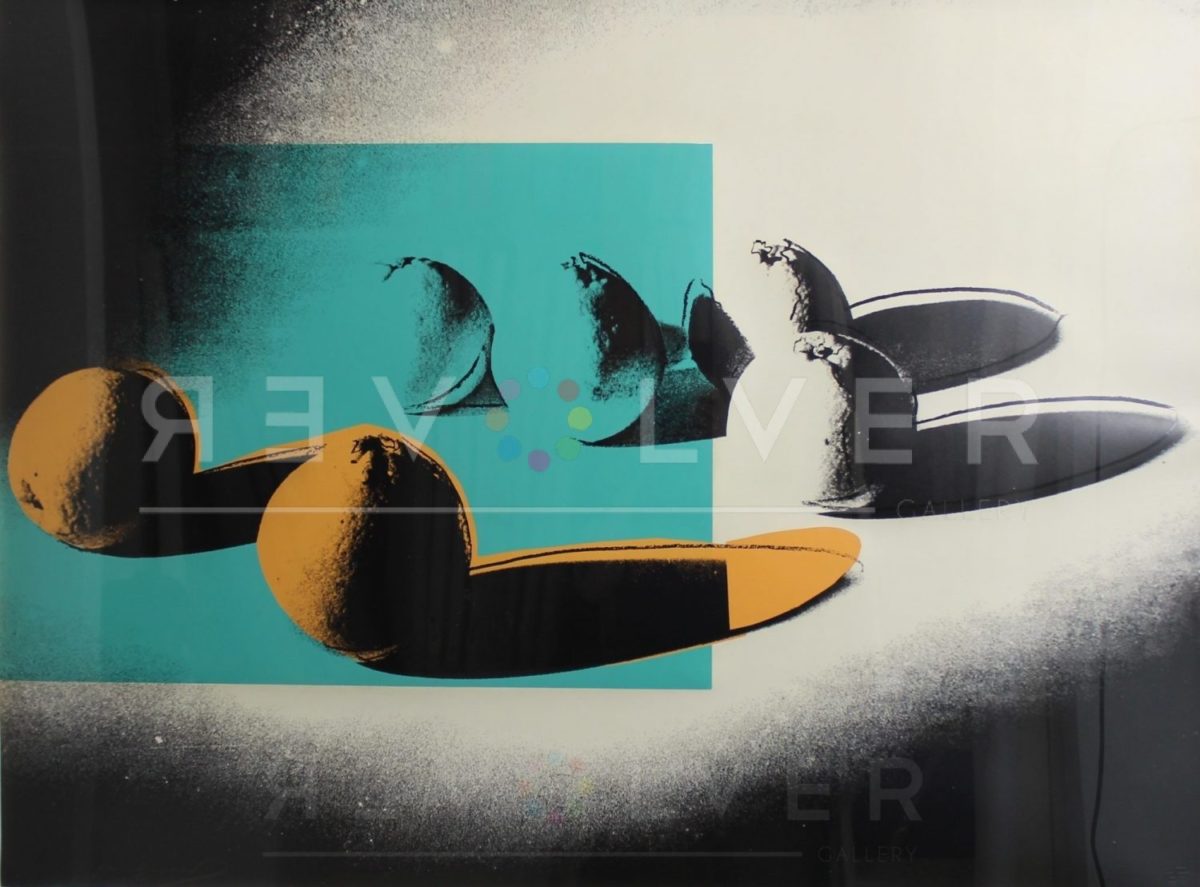
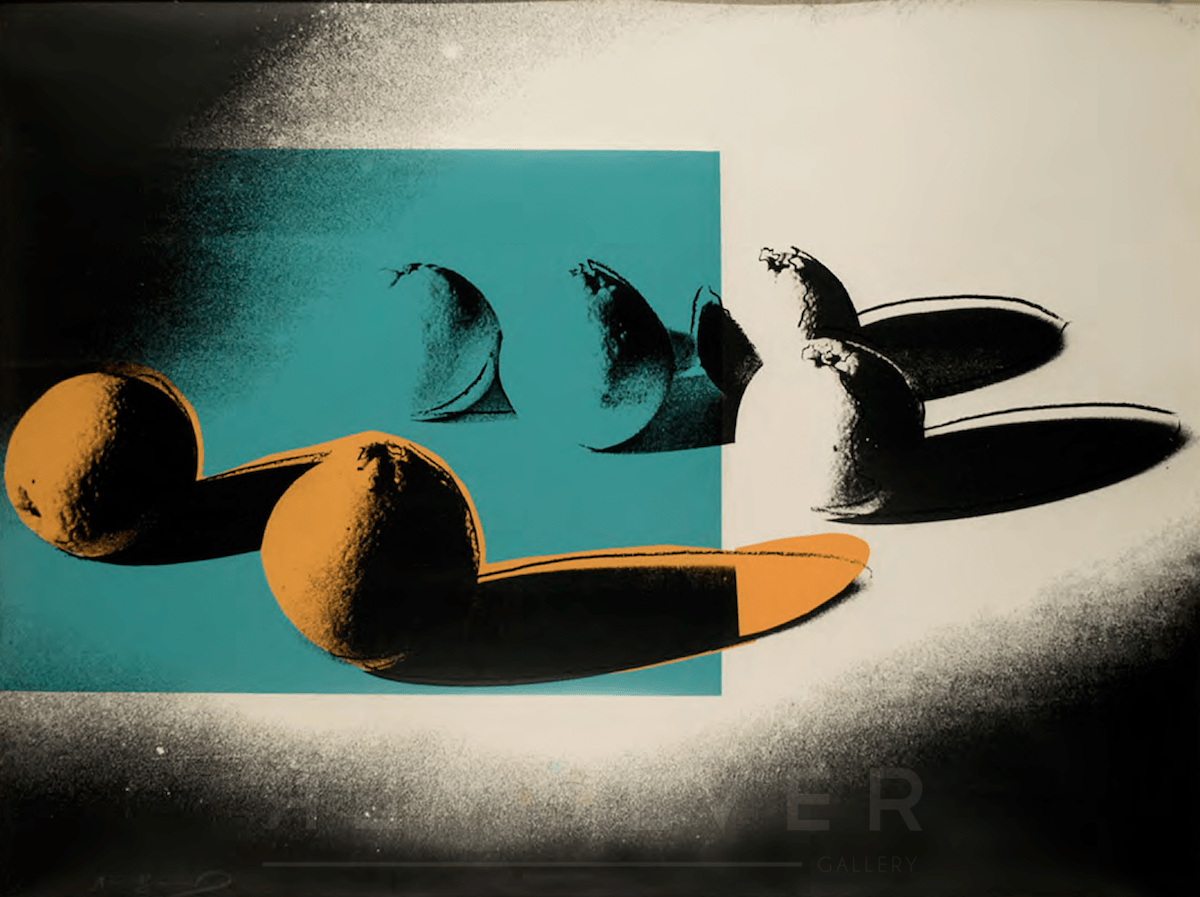
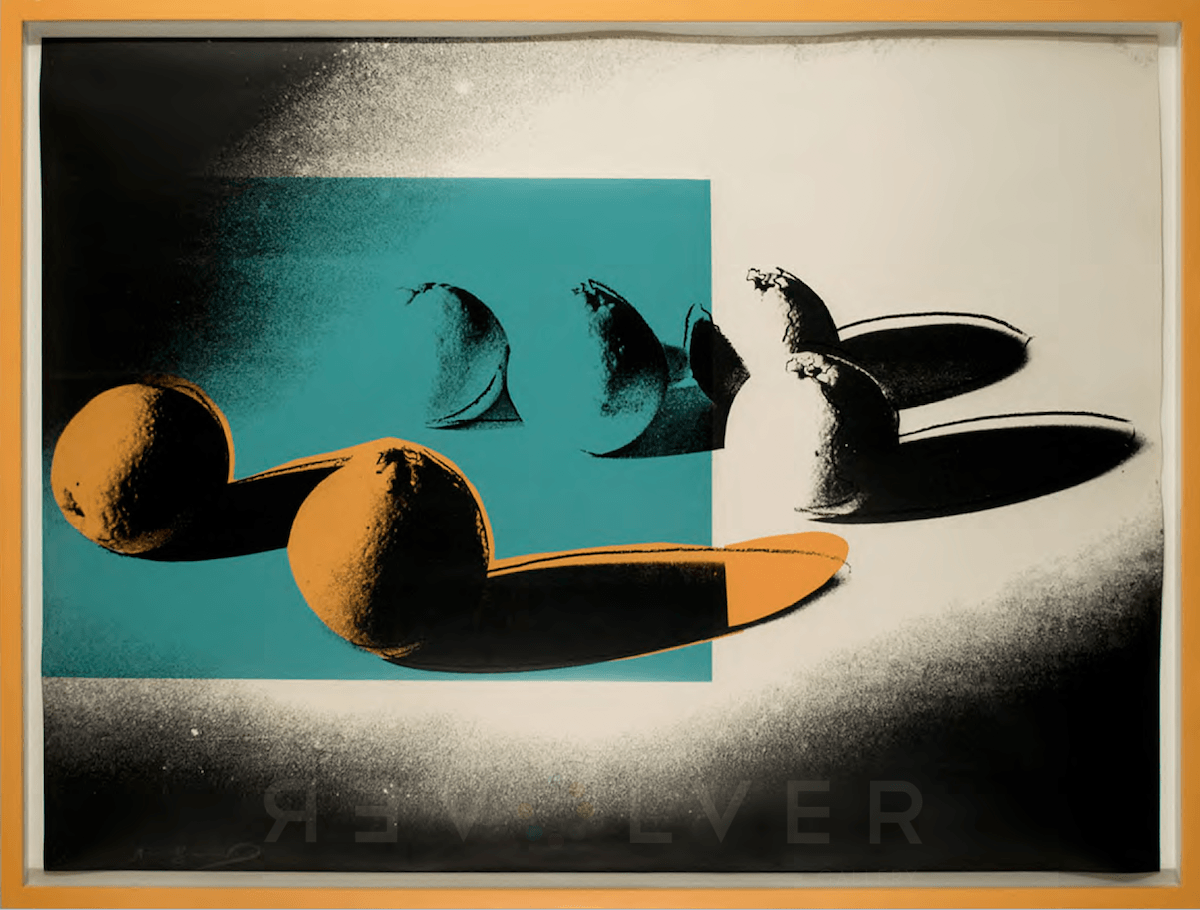
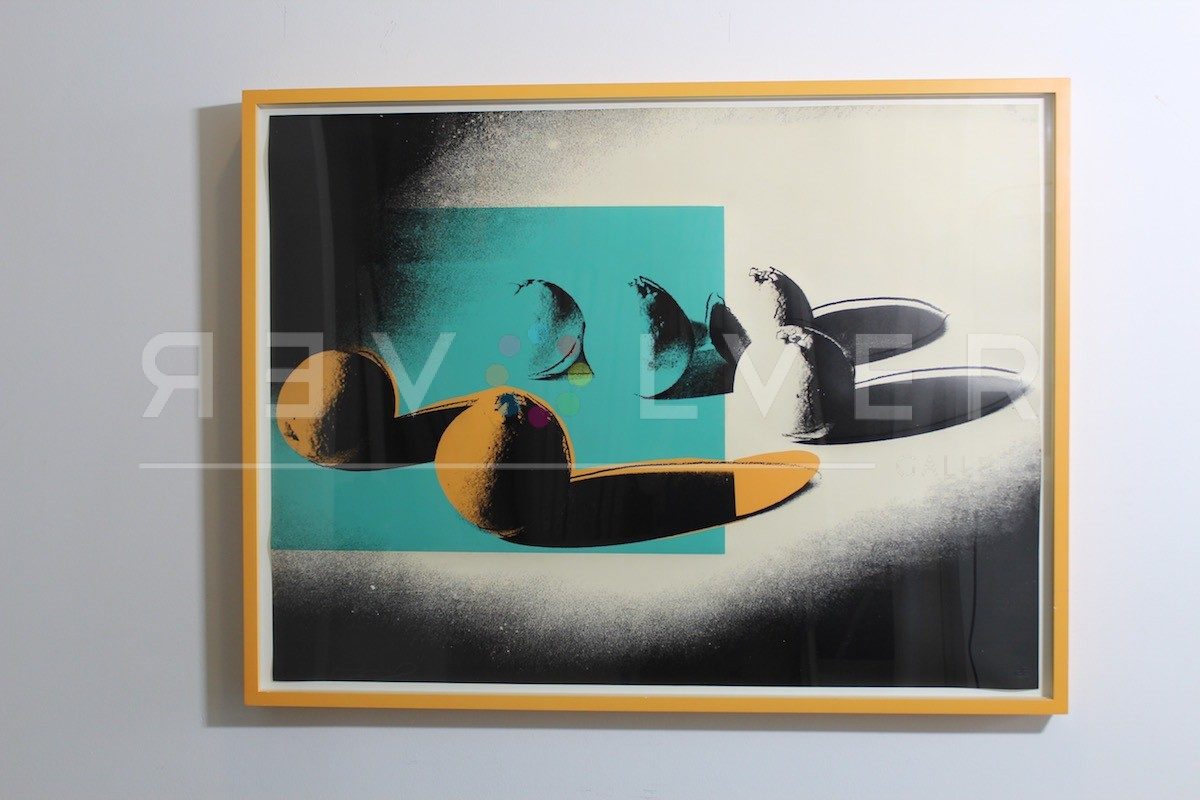
Space Fruit: Oranges 197 by Andy Warhol presents a horizontally arranged still life in which six oranges appear suspended against a stark, high-contrast field. The fruits cluster across the composition, some rendered in dense orange tones, others reduced to black-and-white forms. Warhol places several oranges within a flat teal rectangle, while others drift outside it, creating a shallow and unstable sense of space. Thick shadows stretch beneath the fruit, anchoring them while also exaggerating their weight. Grainy textures and hand-drawn lines interrupt the smooth surfaces, giving the oranges a worn, almost mechanical presence. The composition feels deliberate yet unsettled, as if the fruit exists in an artificial environment rather than a natural one.

Warhol and the Still Life Tradition

Andy Warhol created Space Fruit: Oranges 197 as part of his Space Fruit portfolio, a series rooted in the long history of the still life. Traditionally, still lifes depict everyday objects such as fruit, flowers, or household items. Warhol adopts this familiar genre but strips it of illusionistic depth and narrative context. Instead of realism, he emphasizes repetition, shadow, and graphic contrast. As a result, the oranges function less as food and more as formal shapes. Their arrangement encourages the viewer to look closely at balance, spacing, and surface rather than symbolism.

Unlike earlier still lifes that celebrate abundance or decay, Warhol’s approach feels detached and analytical. The oranges do not sit on a table. They float. Meanwhile, the heavy shadows introduce tension, suggesting weight without grounding the forms fully. This visual contradiction pushes the image toward abstraction while maintaining recognizability.

Space Fruit: Oranges 197 by Andy Warhol as Part of His Larger Body of Work

Within Warhol’s practice, the Space Fruit series aligns closely with works such as the Grapes and Skulls portfolios. In each case, Warhol isolates a familiar subject and removes any surrounding context. During the late 1970s, he relied more heavily on shadow and line to define form. Consequently, these works feel quieter and more restrained than his earlier commercial imagery.

Rather than glamour or celebrity, Space Fruit: Oranges 197 focuses on perception itself. The oranges hover between realism and design. They appear ordinary at first glance. Yet the longer one looks, the more artificial they become. This tension reflects Warhol’s enduring interest in how repetition and color alter meaning. As part of his broader still life output, the print demonstrates his ability to renew traditional subjects through reduction and visual control.

Share this page:

Related Works