Banana 10 by Andy Warhol captures one of the artist’s simplest yet most suggestive subjects. Created in 1966, this screenprint predates his collaboration with The Velvet Underground and introduced the interactive peel-away surface that would later define the band’s legendary album cover.
The work shows a single yellow banana printed on plastic with a removable top layer. When lifted, the peel reveals a pink fruit underneath. Warhol’s use of industrial materials such as vinyl and polystyrene transformed a familiar object into something simultaneously artificial and enticing. The work toys with ideas of touch and temptation, encouraging the viewer to engage not only visually but physically.
An Early Experiment in Pop Participation
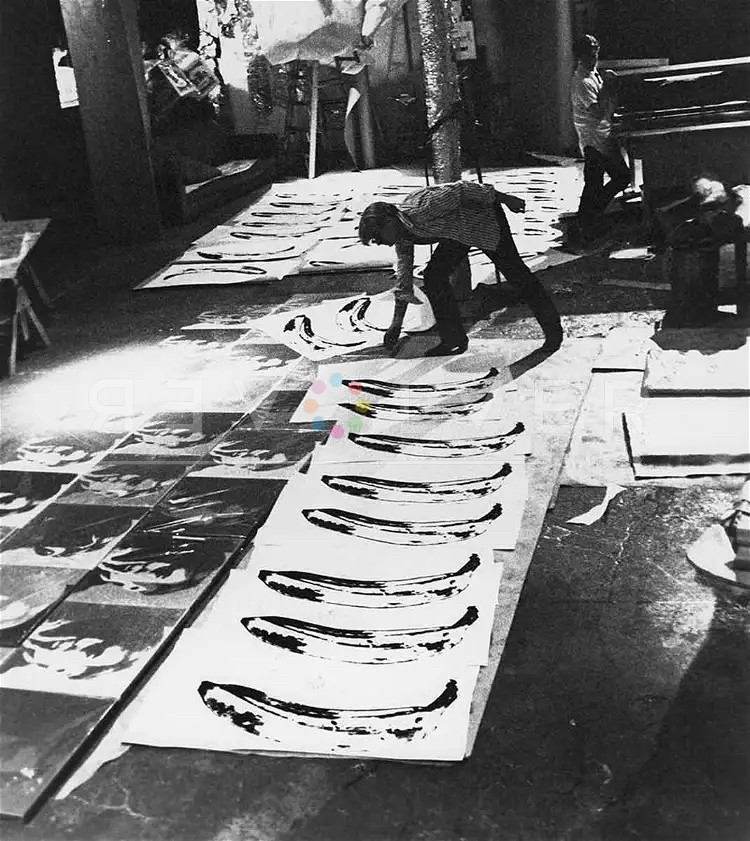
Banana 10 belongs to a moment in Warhol’s career when his art was moving off the wall and into performance. Around 1966, his Silver Factory studio had become a laboratory of experimentation where film, music, and visual art collided. This banana, with its removable surface, reflects that atmosphere of playful provocation.
The image is humorous yet charged. Its clean lines and bold colors disguise an undertone of eroticism that was typical of Warhol’s work from this period. The simple act of peeling transforms into a performance of curiosity and desire. By reimagining something as ordinary as fruit through mass-production techniques, Warhol blurred the distinction between consumer object and art object.
A year later, Warhol would revisit this concept when designing the cover of The Velvet Underground & Nico (1967). The album version repeated the same interactive idea, inviting listeners to “peel slowly and see.” Though the contexts differed — one for the gallery, the other for the record store — both versions shared Warhol’s fascination with the surface as spectacle.
Banana 10 as Part of Andy Warhol’s Larger Body of Work
The Andy Warhol Banana stands among the artist’s most enduring motifs. Like his Campbell’s Soup Cans or Brillo Boxes, it elevates a mundane item into an emblem of Pop culture. But unlike those works, Banana 10 carries an unmistakably human quality — playful, sensual, and absurd.
The print also reveals Warhol’s instinct for visual branding. By repeating and recontextualizing the banana across media, he turned it into a kind of personal logo, one that linked his art, his persona, and his circle of musicians and performers. In later years, the banana became so synonymous with Warhol that it even sparked legal battles over ownership — proof of how fully he had fused art and commerce.
Banana 10 marks the moment when Pop Art began to stretch beyond static imagery into interaction and experience, transforming an everyday fruit into an enduring symbol of curiosity, humor, and desire.
Photo Credit: Andy Warhol handling banana prints and Gerard Malanga holding silk screen at the Silver Factory by Billy Name, 1966, via The Painting Factory.