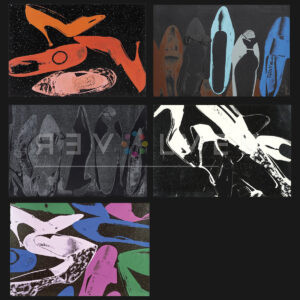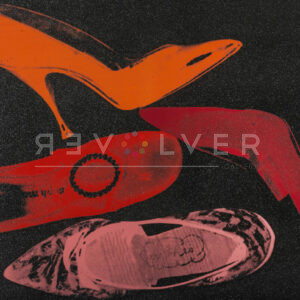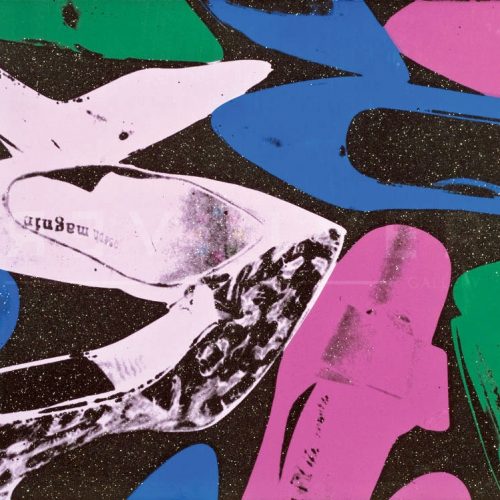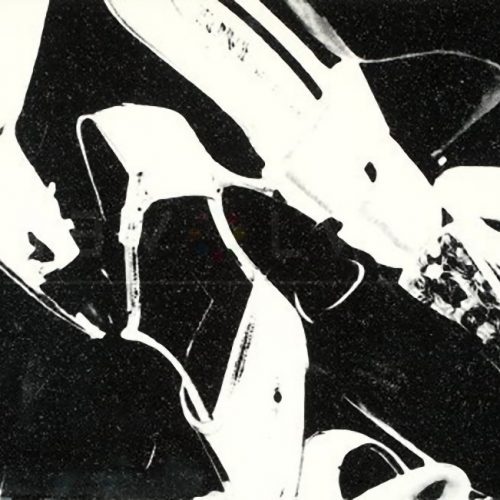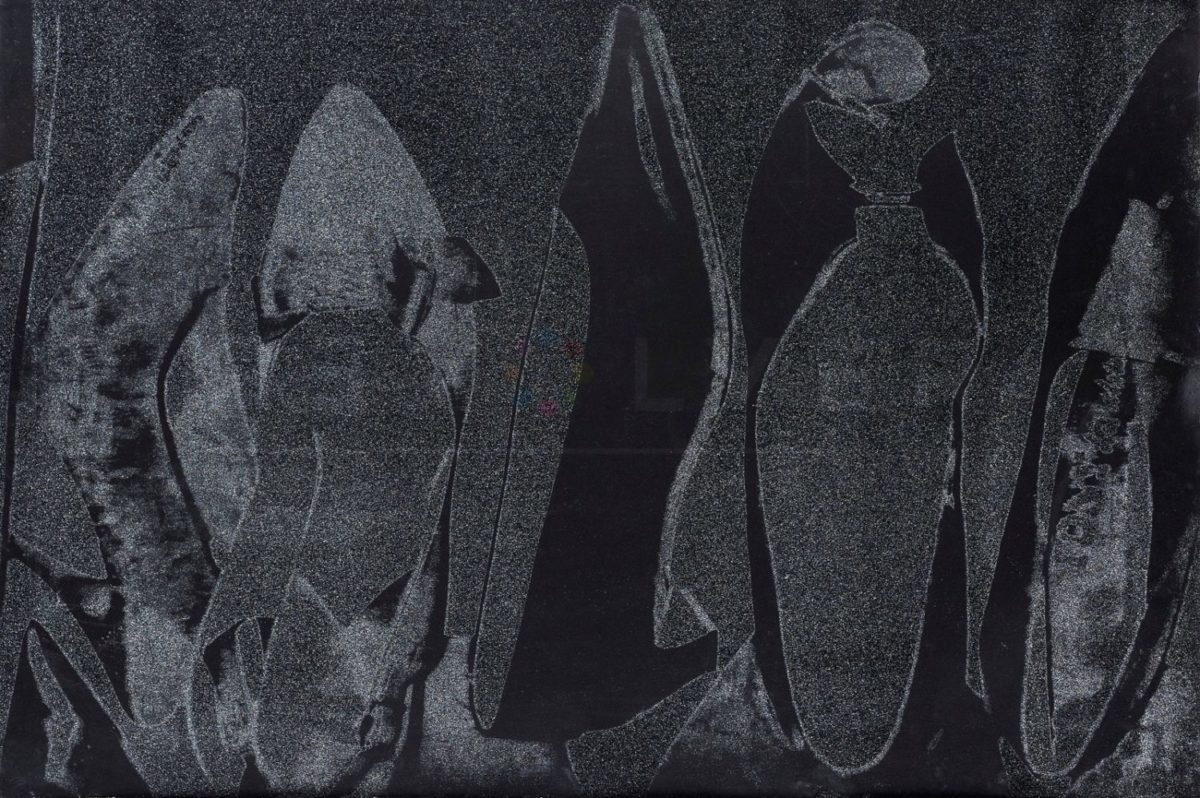
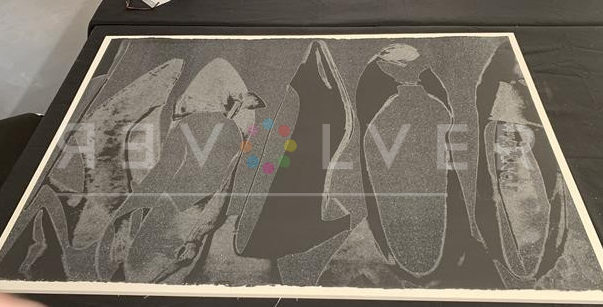
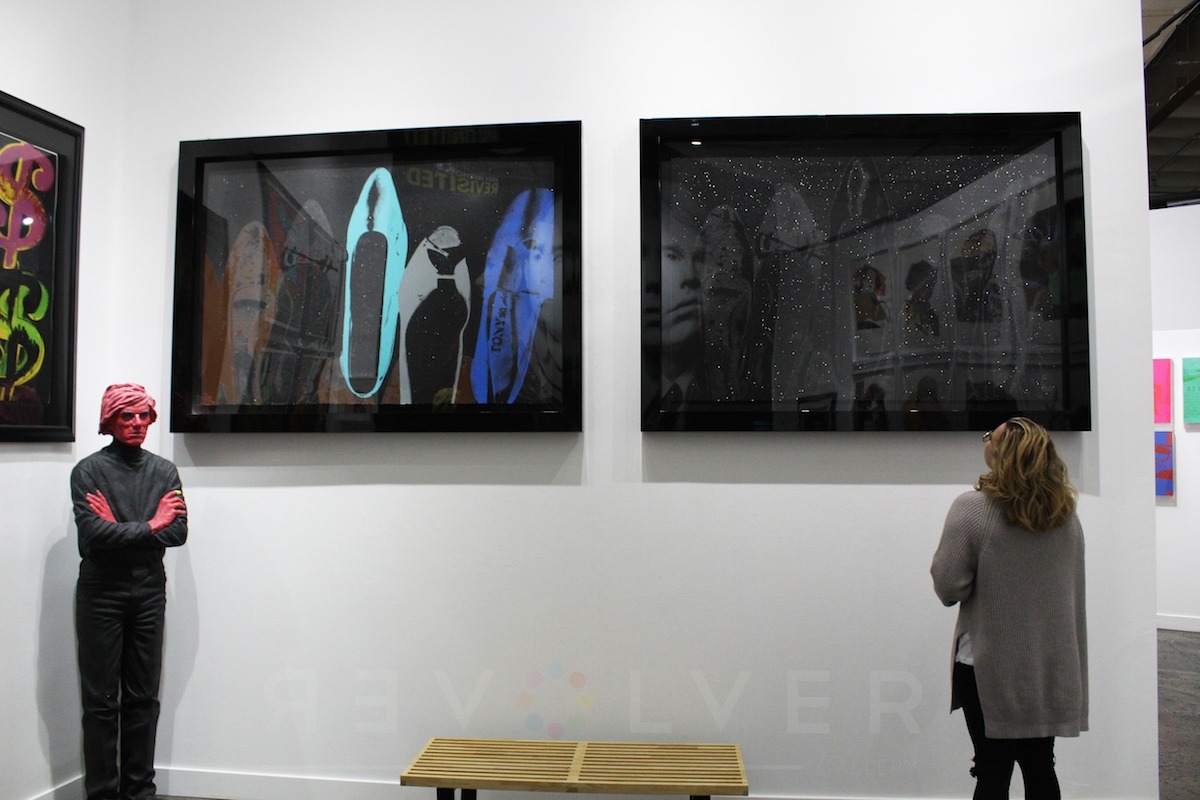
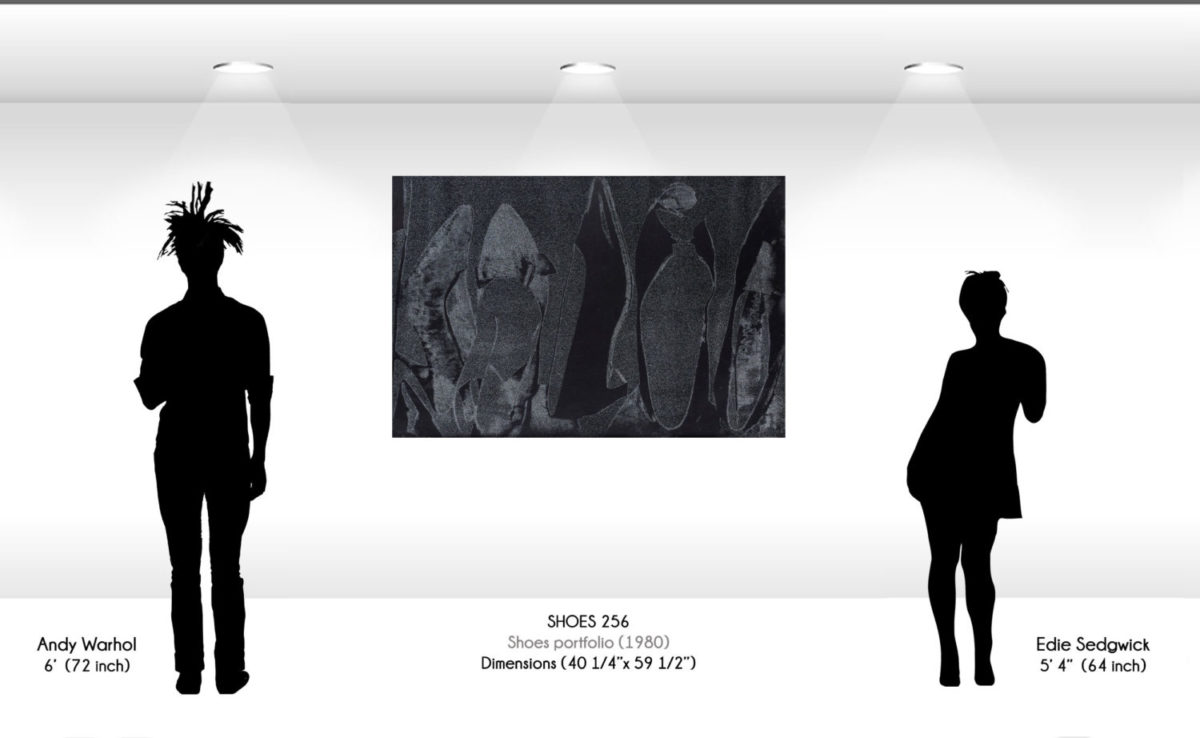
Shoes 256 by Andy Warhol is one of five screenprints from the artist’s Shoes portfolio. Long before the soup cans, the Marilyns, or the Taylors, Warhol harbored a serious fascination for shoes (especially women’s heels). This fascination was both intimate and reflective of his willingness to embrace all things American; in this case the display windows that seductively presented colorful stilettos to him when he first arrived in New York City. When Warhol returned to his beloved shoes in 1980, he had transformed from a hustling commercial illustrator to the biggest artist in the world (albeit without giving up the commercial tag).
If one didn’t look close enough, Shoes 256 could almost be mistaken for a portrait of people, validating the surprising relatable quality of the image. Warhol loved drawing shoes, and he translated this fascination into his early success in advertising. In Shoes 256 and related prints, Warhol invites us to see what shoes can tell us about the people who wear them, and even where they go beyond one’s foot. Each print shows scattered shoes or high heels, and although some of the prints are very different in their emotional and aesthetic qualities, they all stem from Warhol’s trademark approach to repetition.
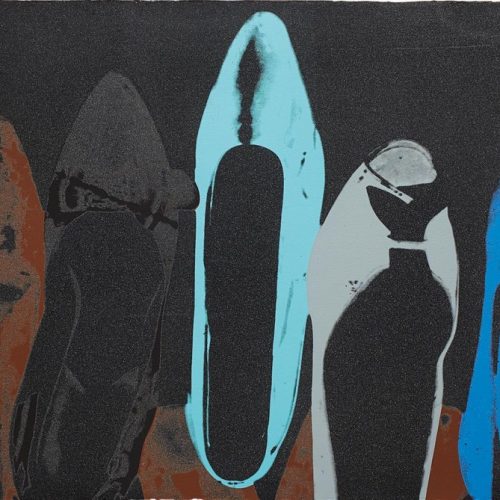
Shoes 256 comes after the deluxe edition shoes series. The print is almost completely black, making the viewer feel like they are seeing shoes in a secret area such as a drawer or under a bed. The darker pieces offer some insight into how Warhol’s imagination transposed shoes away from the wearer into more interesting and sometimes risque areas. Additionally, perhaps Shoes 256 provides commentary on the commercialization of intimacy and its association with femininity and high fashion in pop culture.
Warhol’s narrative in his 1977 book The Philosophy of Andy Warhol is telling in this respect. For instance, when the character “B” says: “it’s better to see their clothes hanging on their chairs than on their bodies. Everybody should just have all their clothes hanging out. Nothing should be hidden except the things you don’t want your mother to see.” The clothes look best hanging, presumably because they were made with the purpose of looking good in a display case. The same logic can be extrapolated to other economic spheres, but one could argue that it represents an idea present in many of Warhol’s works.
The idea for the series (as it often turned out at The Factory as well as in his other commissioned works) was suggested to him by someone else, yet mysteriously it was Warhol’s idea all along. One comes away from Shoes 256 feeling that either one has been let in on some great secret about shoes, or that one has been betrayed about the possibility of a shoe being meaningful at all. Whereas Warhol’s more colorful Shoes prints display a classic Pop Art approach, the black and white prints such as Shoes 256 and 252 evoke a more sensual and mysterious approach to footwear.
Some members of Warhol’s entourage have said that he was forced to tone down the more personal aspects of his work at the beginning of his career, partly due to homophobia and pretension in the art world. This, by default, extended to his shoe fetishism. As such, Shoes 256 holds a special place in Warhol’s oeuvre as a perfect combination of narcissistic ambition, commercial opportunism, and the thoughtful reflection that characterizes Warhol’s influence on American society.
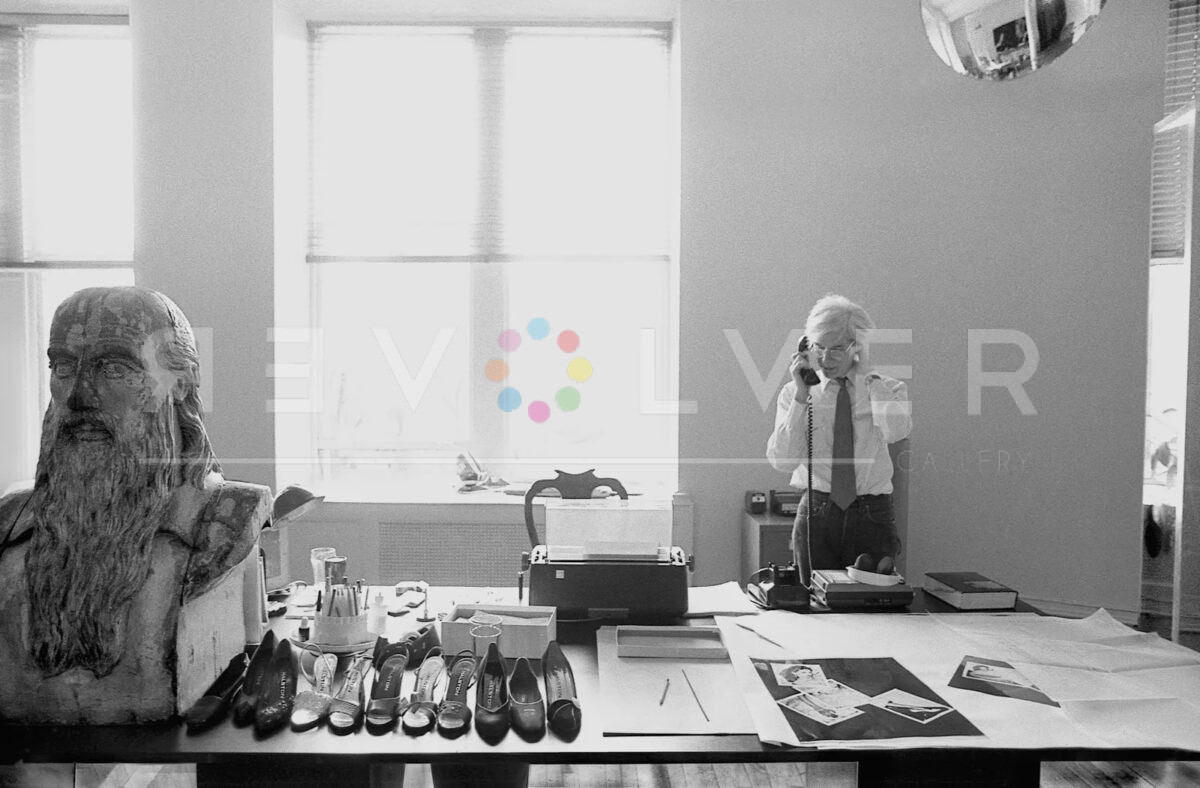
Photo credit: Andy Warhol Leonardo Bust, Halston Shoes 1981, Printed Photograph by Robert Levin. Courtesy of the Maison Gerard, New York.