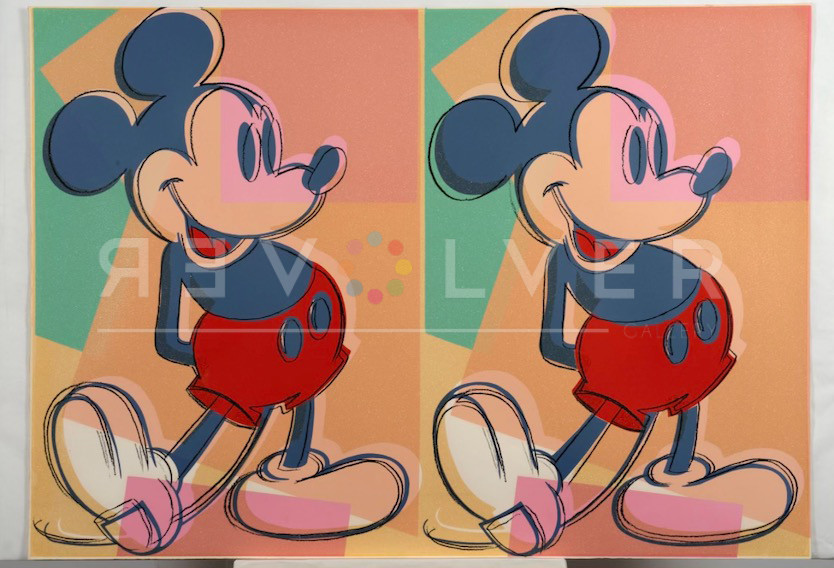
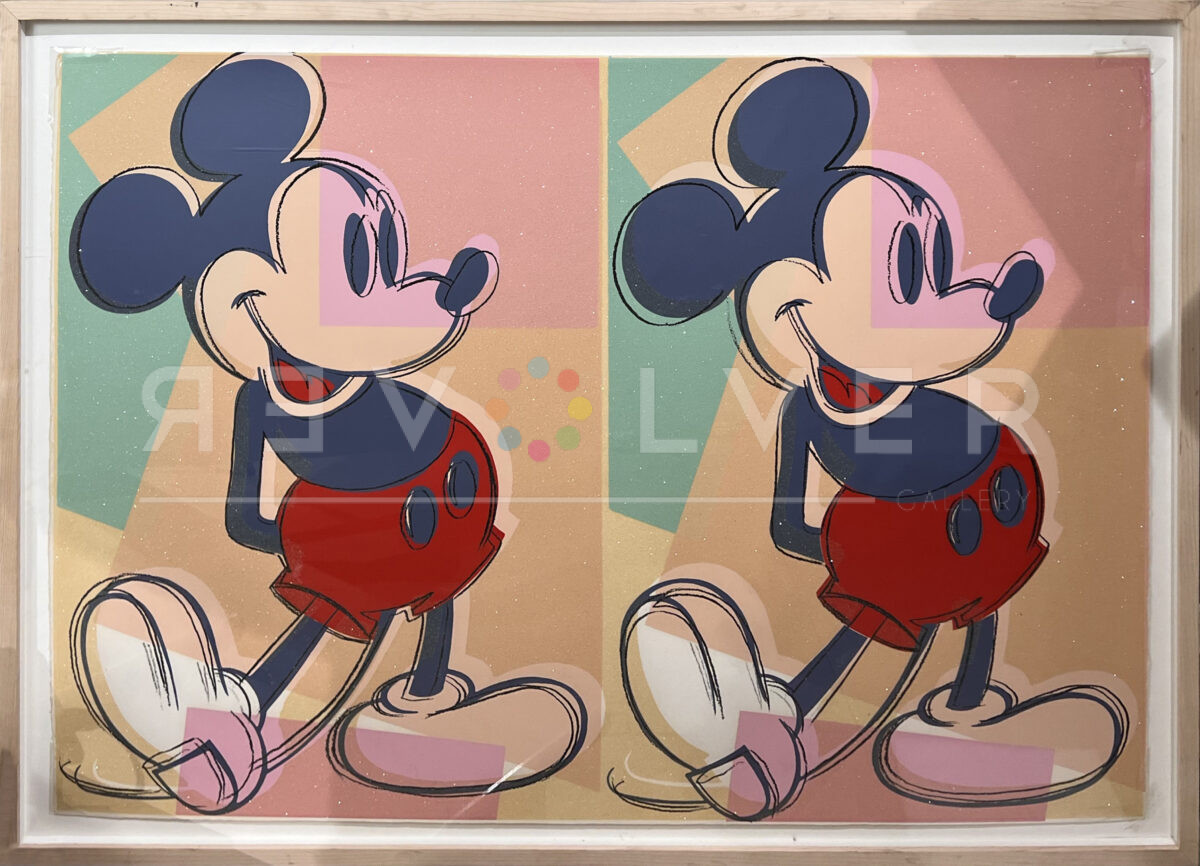
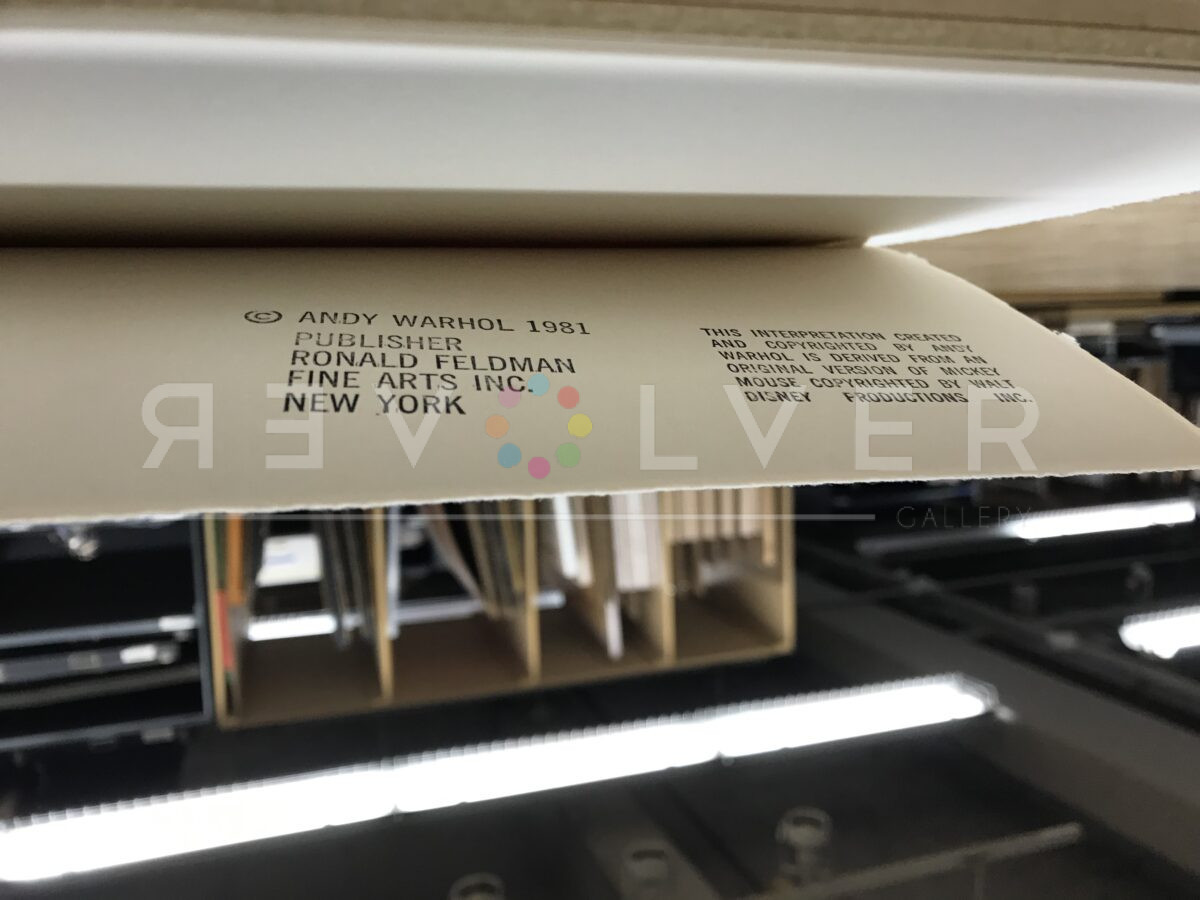
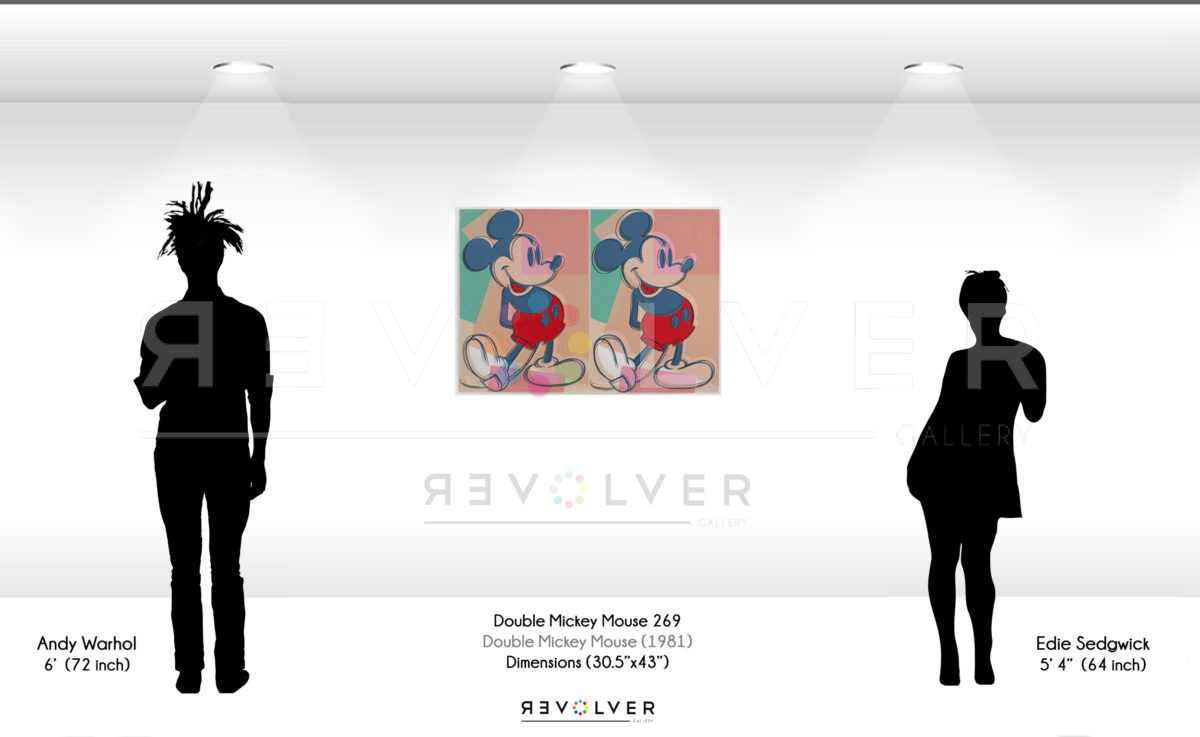
Double Mickey Mouse by Andy Warhol is a screen print from 1981, depicting a duplicated image of the famed cartoon character, a representation that is iconic, playful, and revelatory of Warhol’s fascination with popular culture.
In this piece, Warhol delves deep into the realms of visual imagery and symbolism, using Mickey Mouse, a universally recognized figure, to express his innovative ideas and perspectives on media, fame, and society. The artwork resonates with Warhol’s distinct style, featuring the repetitive use of imagery, a technique also observed in other works like Double Elvis, and Jackie II. This repetition is more than just a visual aesthetic; it brings forth the concept of patterns over the progression of movement, mirroring the essence of stop-motion animation, a technique Warhol found intriguing.
This piece of artwork aligns perfectly with Warhol’s typical thematic focus on popular and media culture, drawing attention to the enchanting and impactful characters that have shaped the American cultural landscape. The character of Mickey Mouse is seen twice in the screen print, with each representation appearing identical, emphasizing Warhol’s love for repetition, and his exploration of the iconic and the transient within popular culture. This interest is further showcased in his Myths series, where he engages with images from the 1950s television and classic Hollywood films. These portrayals shed light on a nostalgic yet critical reflection of America’s captivating and commanding past, presenting characters that have universally influenced generations.
The Double Mickey Mouse is particularly significant as it originates from the single Mickey Mouse print Warhol created in 1981, part of his illustrious Myths portfolio. This portfolio is a collection of works representing various beloved characters ranging from Mickey, Howdy Doody, and Santa Claus, to fictional entities like Dracula, The Wicked Witch of the West, and Uncle Sam. Each character depicted is not merely a representation of popular culture but is considered by Warhol to be a facet of his own personality, intertwining his identity with these iconic figures. This adds a layer of personal reflection and self-exploration to the artwork, allowing viewers to perceive not just the characters but also insights into Warhol’s mysterious psyche.
Double Mickey Mouse is not only a testament to Warhol’s artistic vision but is also one of his top 10 most valuable prints ever sold, a testament to its cultural and economic impact in the art world. The artwork captures the transformative essence of popular images, reflecting Warhol’s unique ability to transcend the boundaries between commercial and fine art. The piece continues to remain relevant as it encapsulates the enduring allure of iconic figures and Warhol’s revolutionary perspective, inviting audiences to explore the intricate relationship between identity, culture, and media representation.