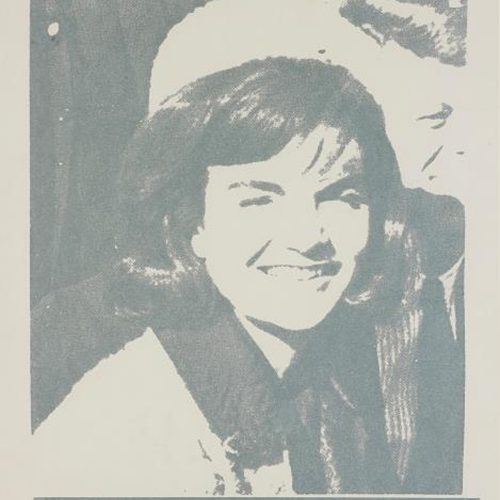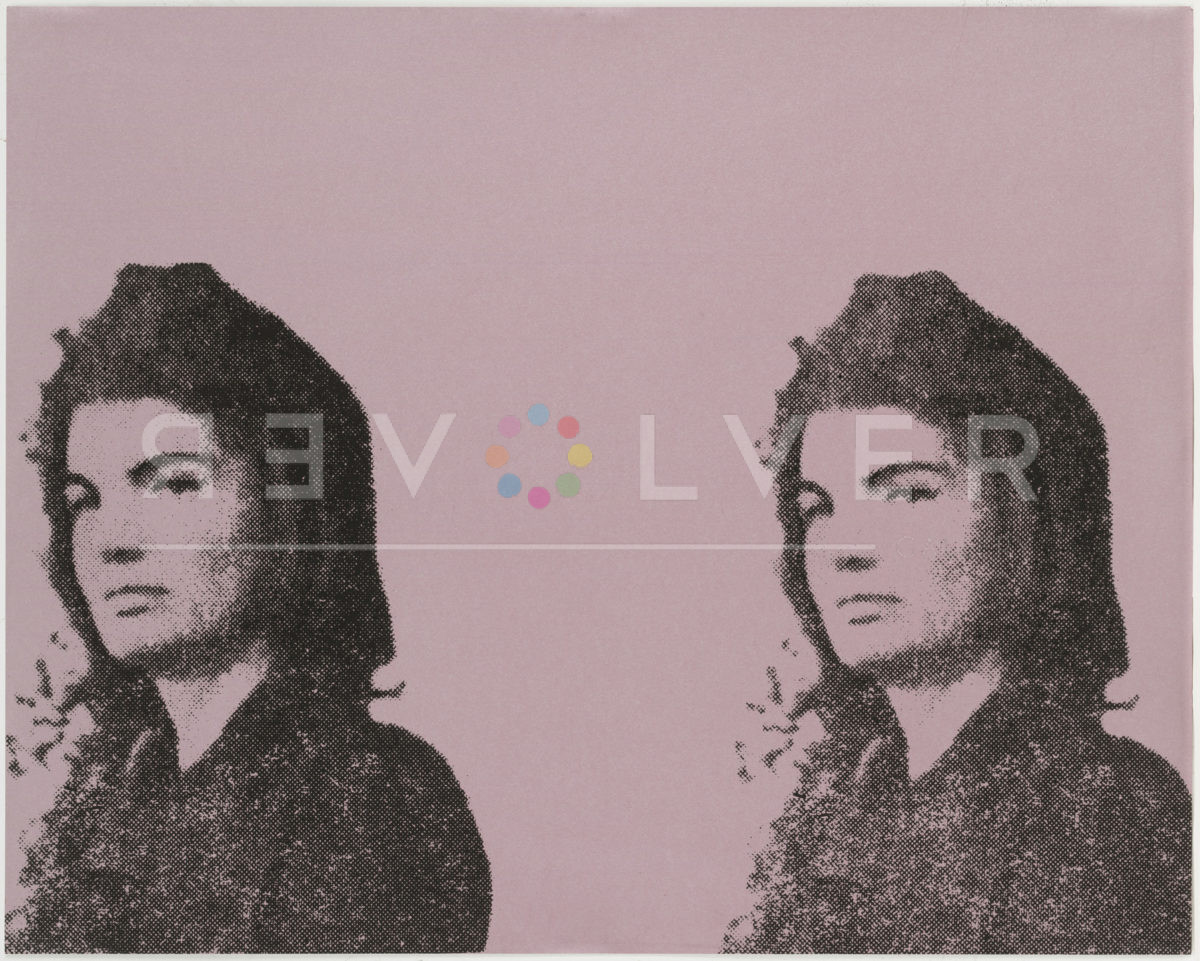
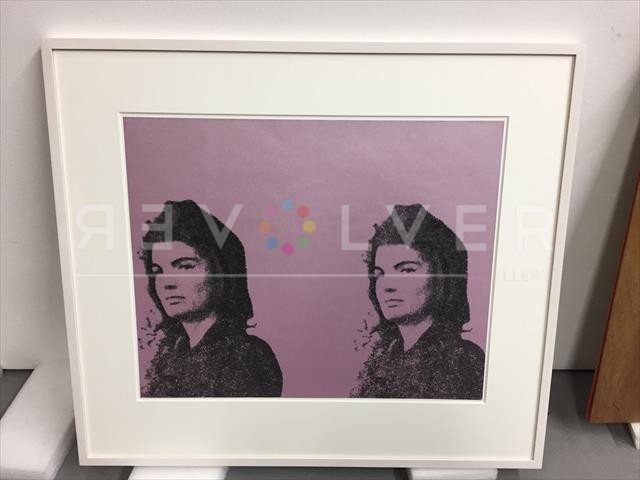
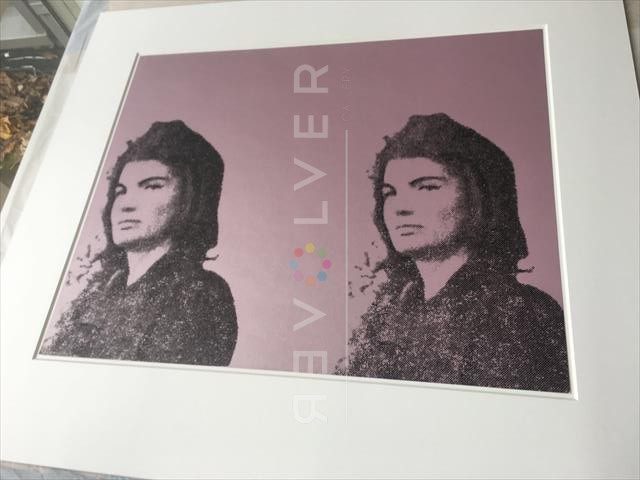

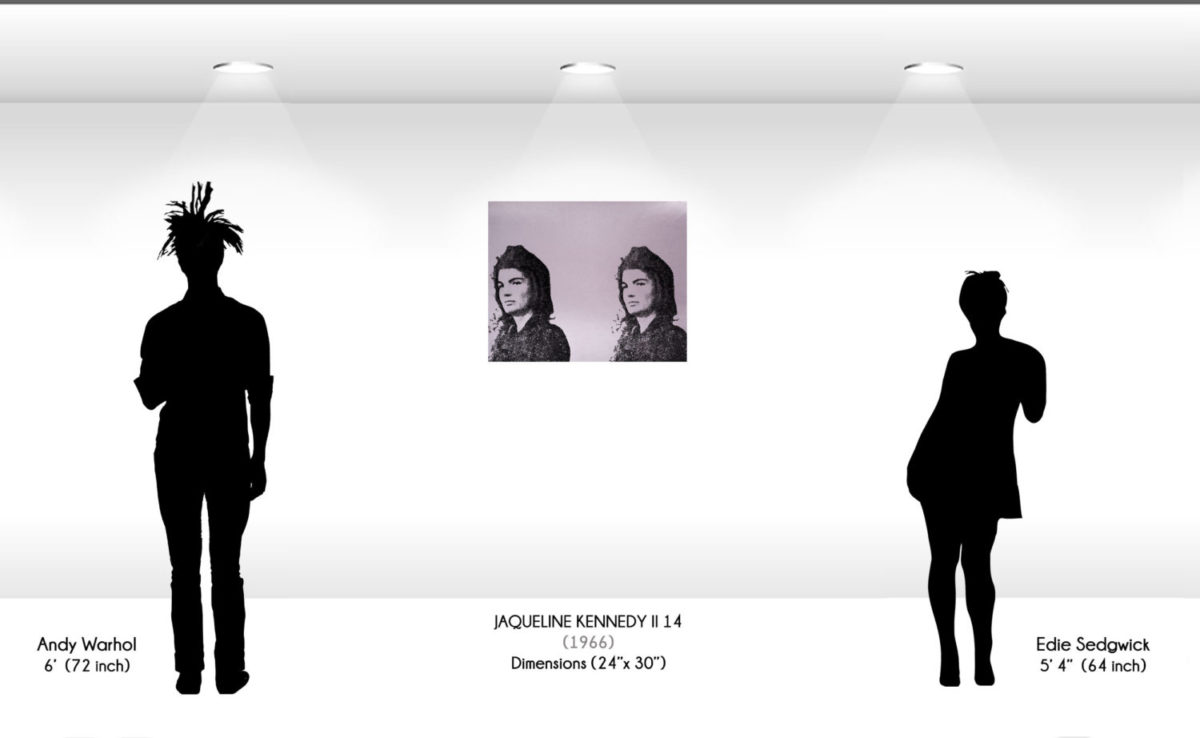
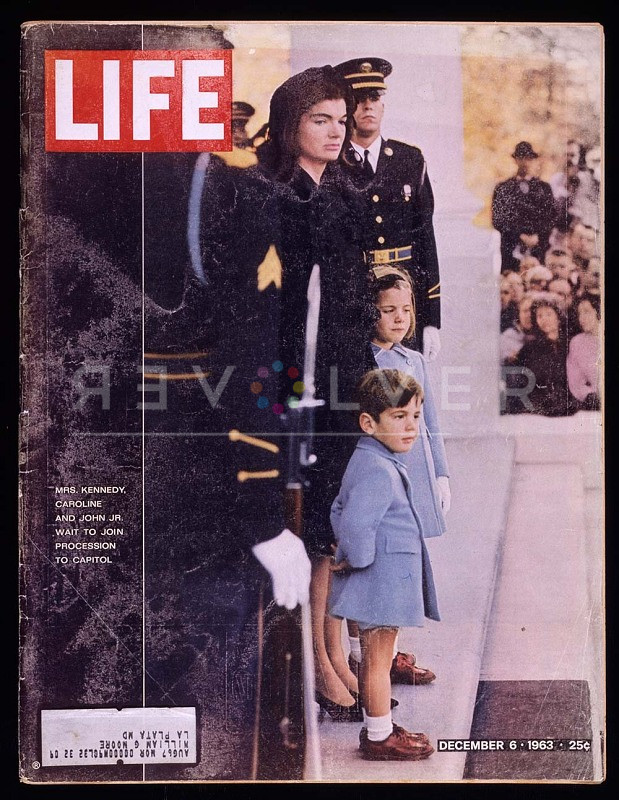
Jacqueline Kennedy II (Jackie II) by Andy Warhol presents a double print of the former first lady on a grave and unforgettable day: the funeral of President John F. Kennedy. Warhol used a photograph from the December 6, 1963 edition of Life magazine, featuring a number of images of Jackie Kennedy throughout the journey of the tremendous loss of her husband, to create the screen print. This piece, part of Warhol’s Jackie series, is one of the Pop Artist’s heaviest works amongst a vibrant oeuvre of celebrity glamour and popular products of the age of consumerism.
A far cry from the happy and smiling first lady the American public had come to know and love, Jackie II depicts what would to anyone else be a private moment of mourning. However, the rise of digital media post-war was exponential and Kennedy’s experience was projected across the world in a manner that had never before been possible. Warhol appropriated the public image of Jackie Kennedy, who was iconic in her own right, to create several different pieces showcasing the duality of Jackie’s public perception as both a tragic figure and an American royal.
Although Jackie II depicts Andy’s inclination for celebrity portraiture, it strays from the blueprints of Marilyn Monroe, Mick Jagger, and Liz Taylor. Cloaked in one muted shade of purple, Jacqueline Kennedy’s grief is the star of this portrait, highlighted by the gloomy color and lack of Warholian embellishments. Doubling the print, Warhol reinforces the consumerist ideals of “more is more” and reiterates the media coverage of the event and of common tragedy in general. In style, Jacqueline Kennedy II embodies the colorlessness and starkness of Warhol’s Electric Chairs and Death and Disaster collections, which Andy also created using tragic newspaper clippings, muted tones, and repetition.
To the world, Jacqueline’s status as a fashion icon, educator, arts and culture ambassador, and the wife of JFK was enough to make her a paragon of perfection. But in Jackie II, Andy Warhol peels back layers of Jackie Kennedy’s personal experience and the media’s dissection of a woman in an all-too-real period of anguish.
Andy Warhol’s Jackie I and Jackie III are also part of the Jackie series.
Photo credit: Life magazine cover featuring John F. Kennedy’s funeral. Courtesy of the National Museum of American History.