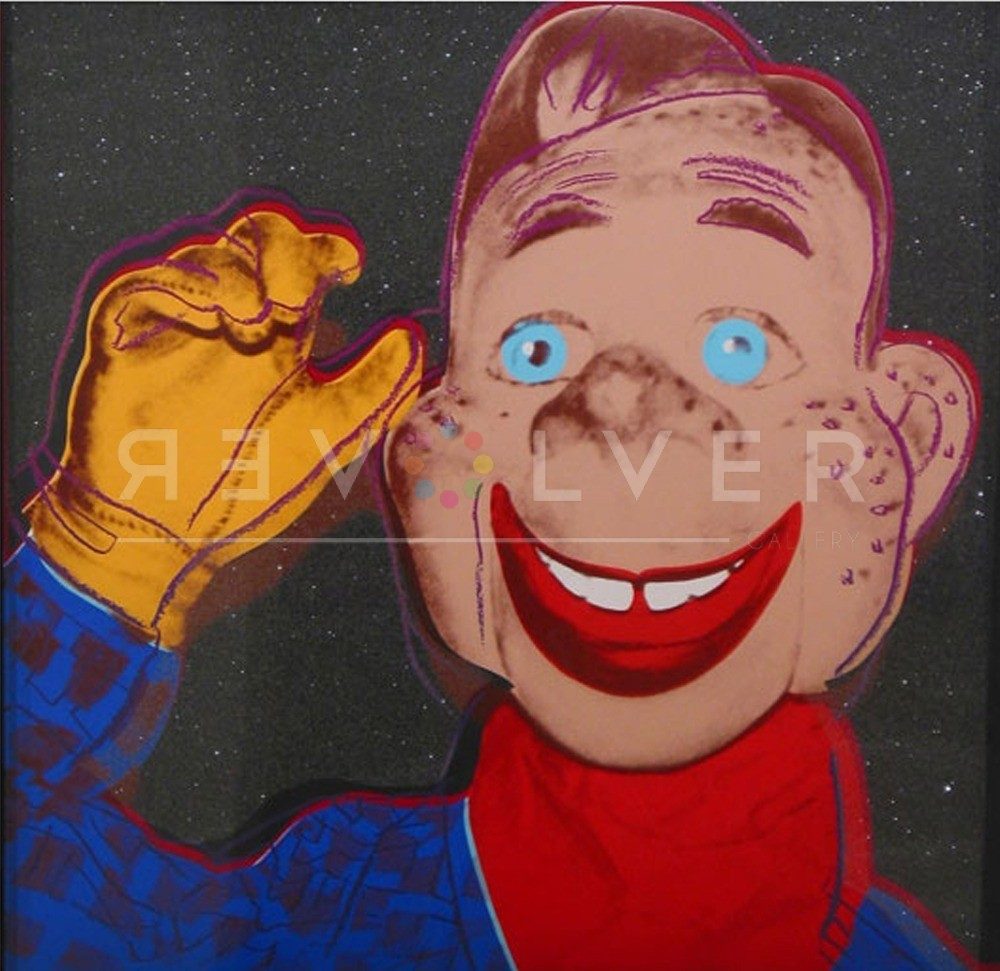
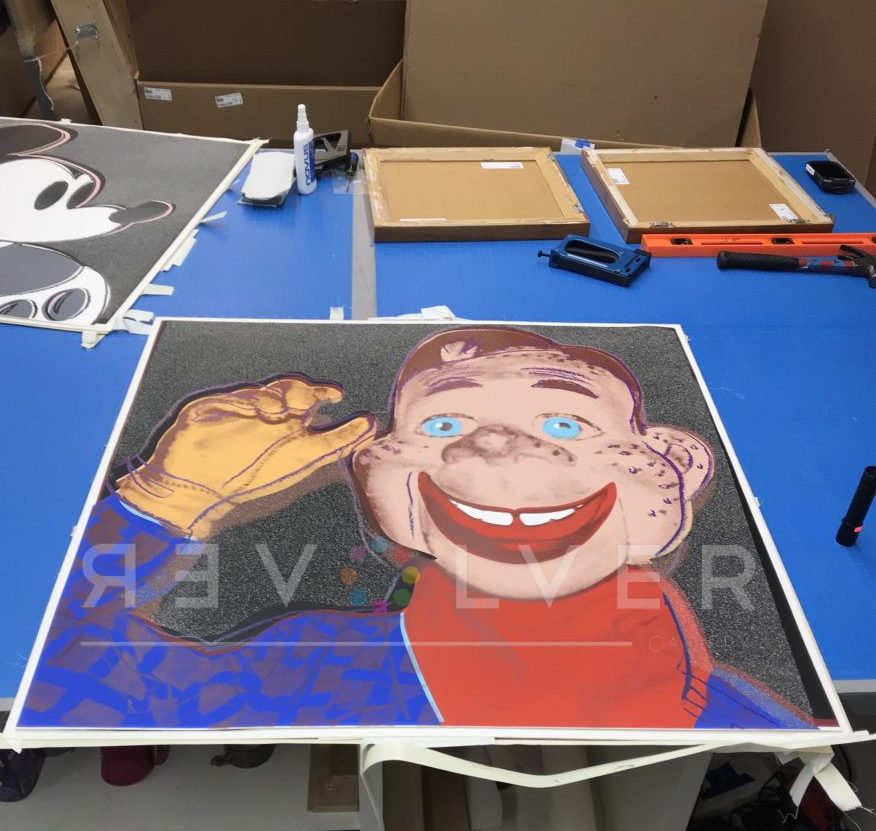
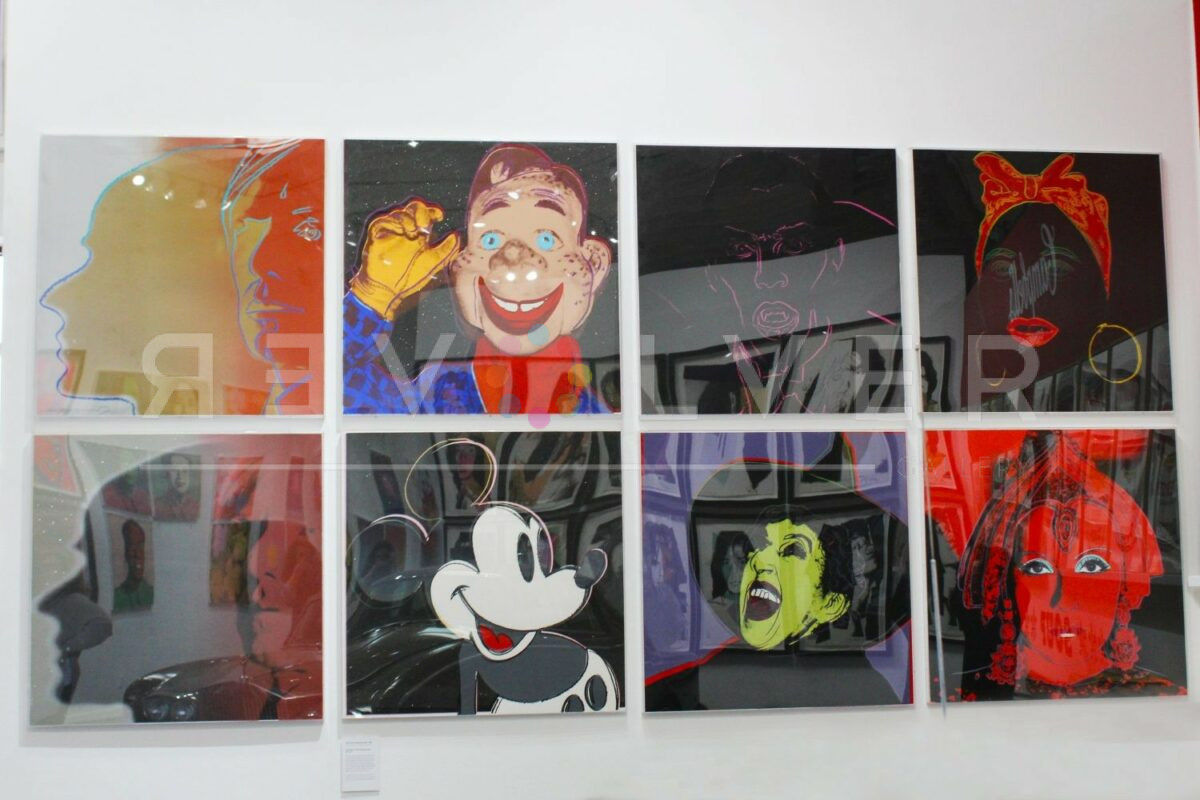
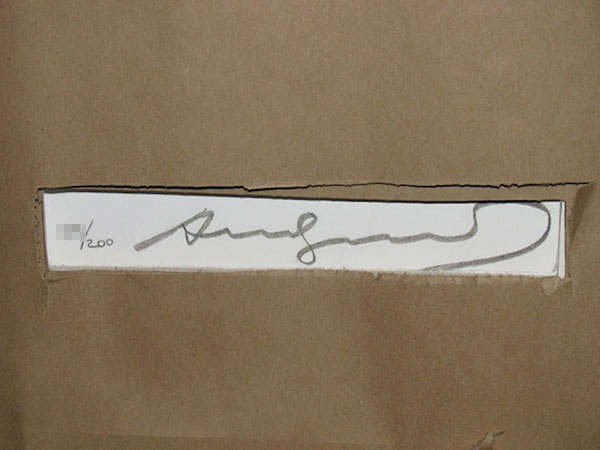
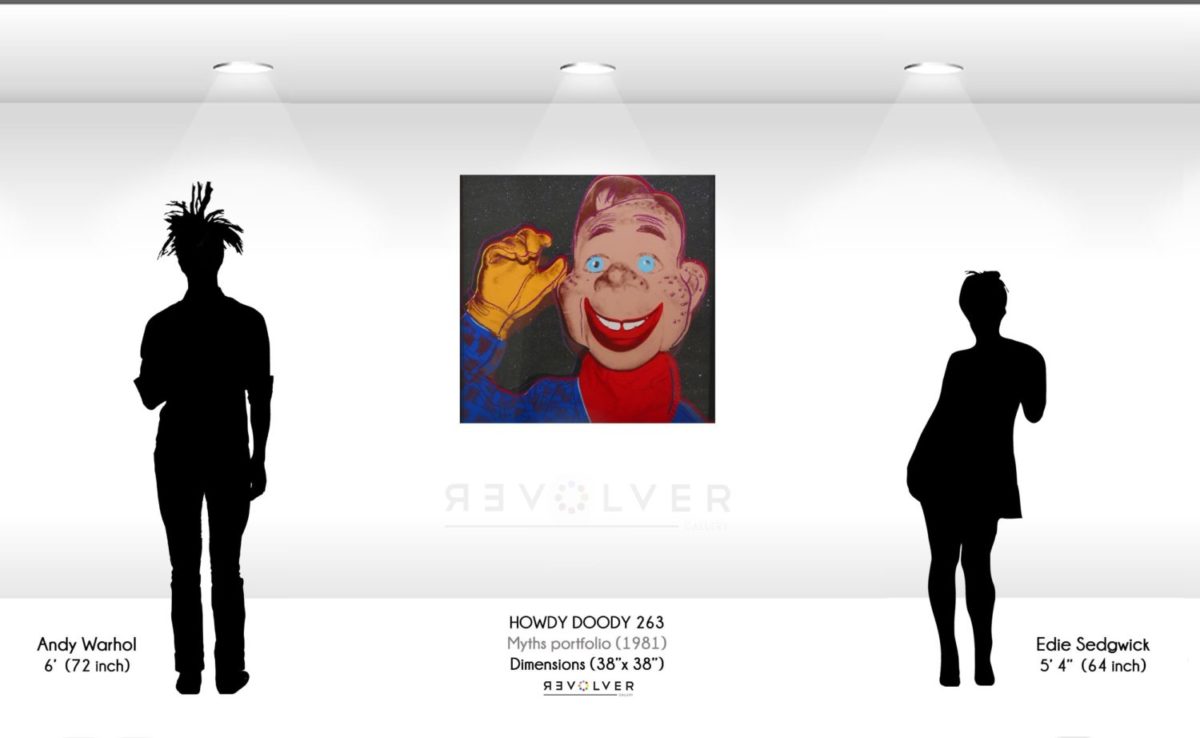
Howdy Doody 263 is a screenprint by Andy Warhol from the artist’s 1981 Myths series. It depicts the beloved marionette doll named Howdy Doody from the eponymous kids TV show.
Warhol regarded celebrity culture as the height of modern consumerism. He had been drawn to the representation of public figures all his life, and created portraits of everyone from Marilyn Monroe to Lenin. Aware of the power and ubiquity of his prolific subjects, Warhol’s perception of celebrity only bloomed as he broadened his scope to include politicians, athletes, and even fictional characters and his career unfolded.
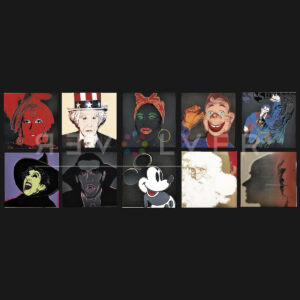
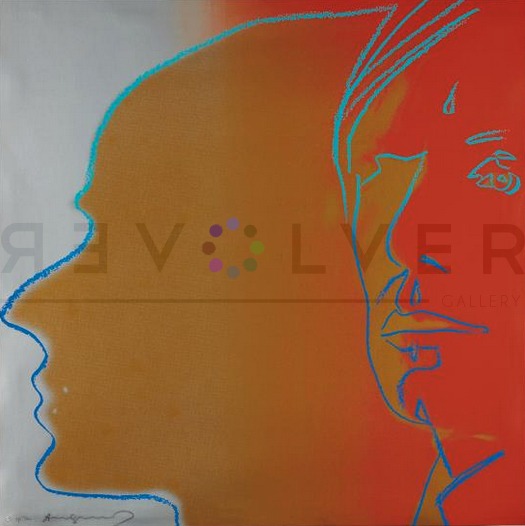
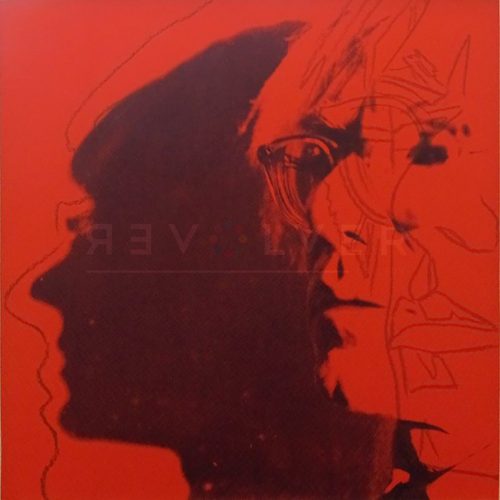
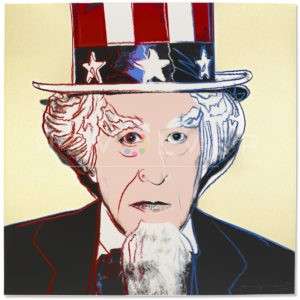
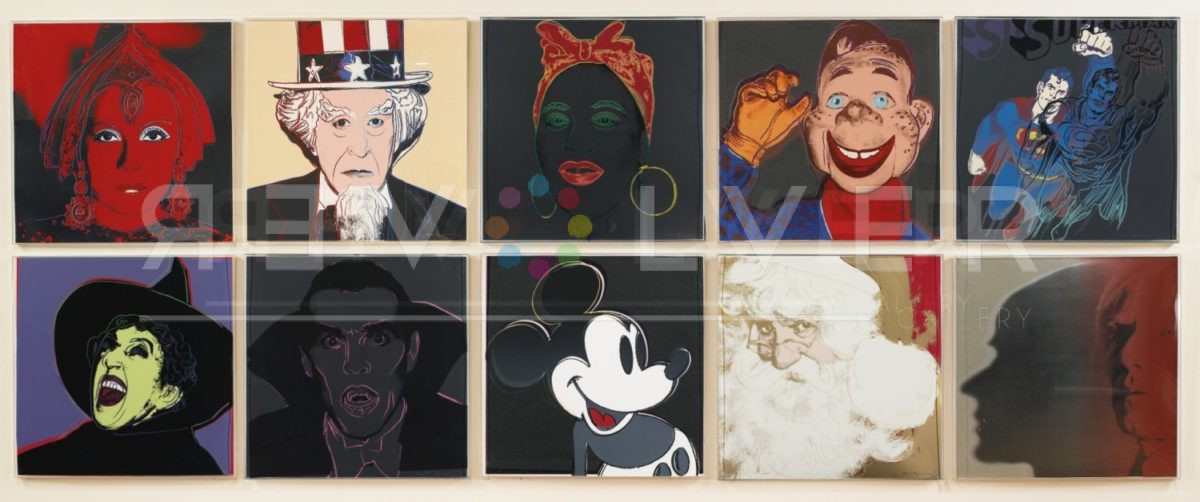
The Myths portfolio presents ten distinguishable figures from film, literature, and history, fictional characters that evolved into idols over time and successfully encompass the magic of 20th-century American pop culture. Each of these figures grew into larger-than-life entities; they embody everything from stalwart heroes to corrupt villains to lovable childhood caricatures. As author Greg Metcalf has written of Warhol’s Myths series: “Each of these cultural icons is also a commercial icon, a logo, the symbol of a corporate identity. Each is also an artistic creation from which the artist has been erased.”
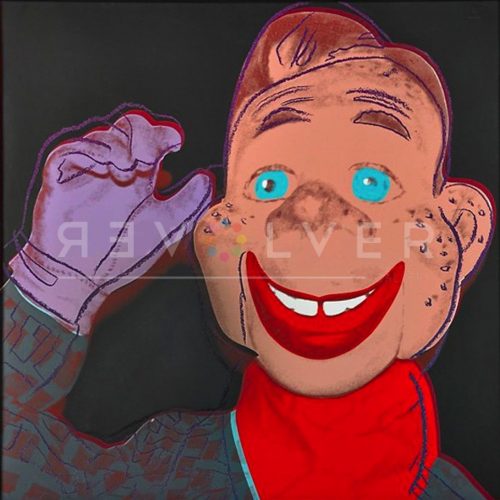
Howdy Doody 263 depicts a blue-eyed boy with prominent red hair, a gap-tooth grin, pronounced ears, and freckled cheeks. The boy’s comically large head and hands occupy one-half of the frame. He beams happily as he waves at the viewer. Dressed like a western-style cowboy, he sports a bright red bandana, checkered blue flannel, and yellow gloves. Warhol highlights these primary colors, setting the boy on a plain gray background and tracing over him with a subtle pink-purple gradient, a technique he employed often to accentuate his subjects (as can be seen in series like Reigning Queens and Endangered Species series). The print is inlaid with “diamond dust:” crushed up pieces of glass that catches light and creates three-dimensional depth.
It is said that each character in the Myths series reveals specific facets of Warhol’s personality. Though Warhol never stated his reasons for including Howdy Doody 263 in the series, the print demonstrates his aptness for recognizing what appealed to the fame-hungry masses. Howdy Doody possesses a strange sense of insentience reflected in his animated smile and exaggerated features. That is because he is not a boy but a marionette, the star of The Howdy Doody Show, a popular children’s program which aired on NBC from 1947 to 1960. The show’s host, former radio personality Robert E. Smith, nicknamed Buffalo Bob, invented the marionette character and performed his voice on television. He made an indelible impression on American audiences, garnering mass attention and popularity and a devoted fanbase.
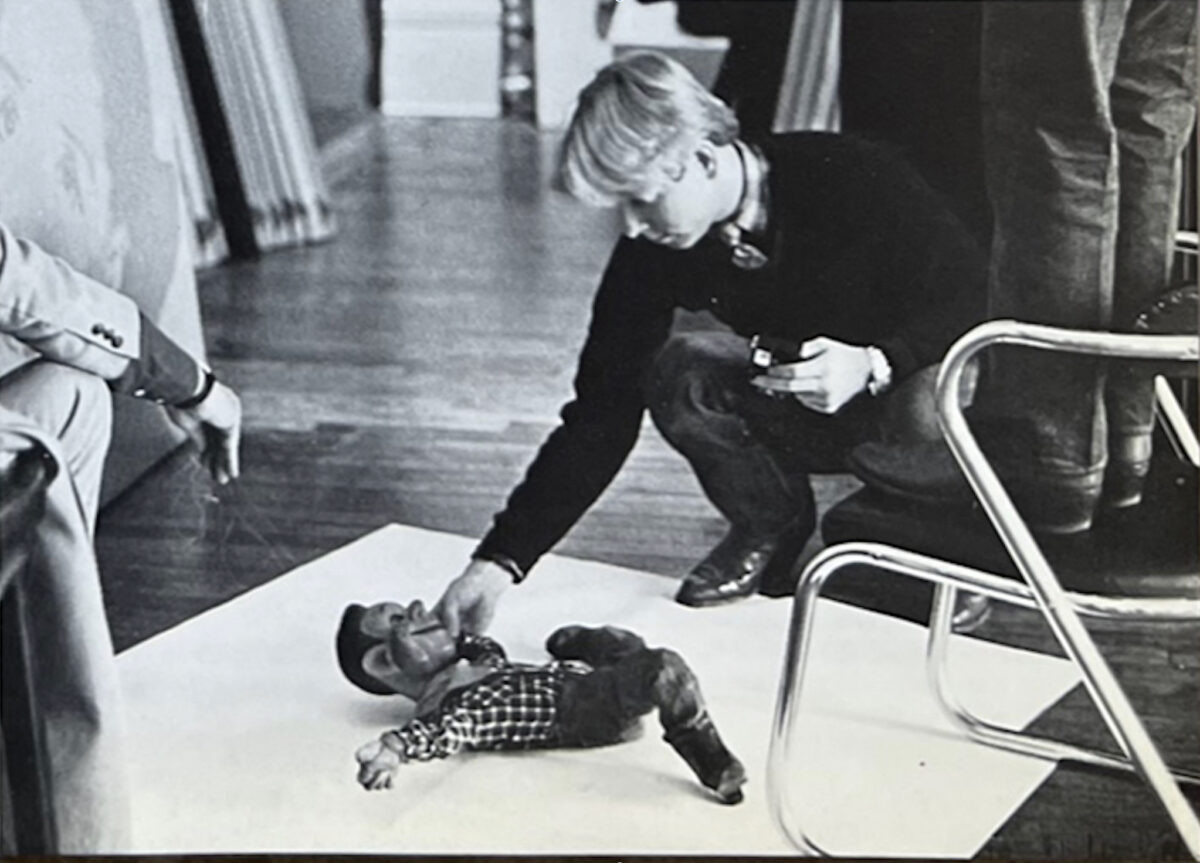
Photo credit: Andy Warhol photographing Howdy Doody. Photographer unknown. Courtesy of Judd Tully Art Critic, Journalist and Filmmaker.