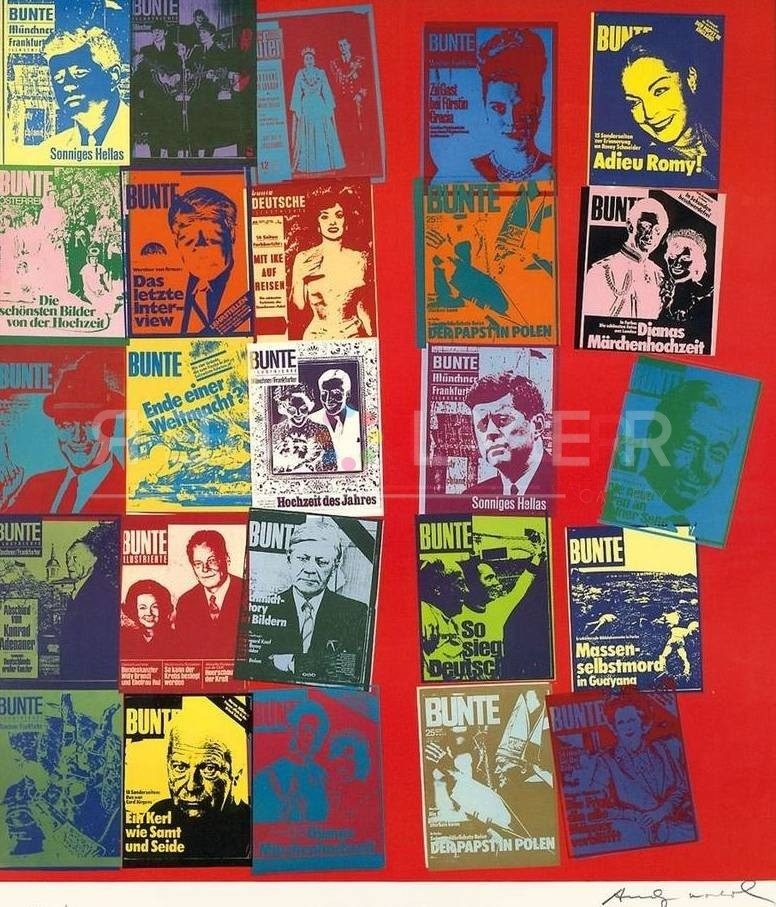
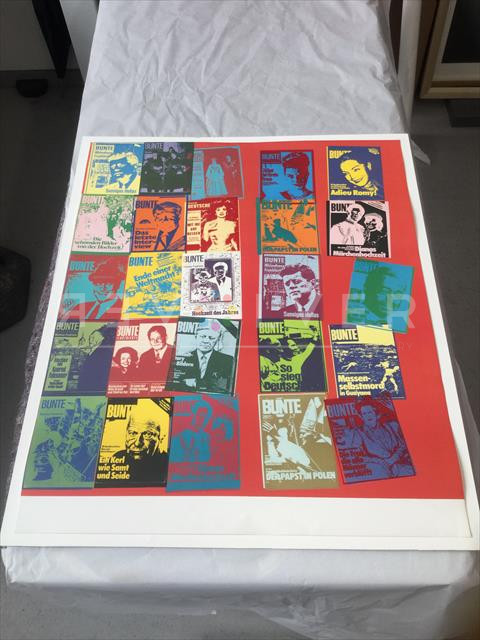
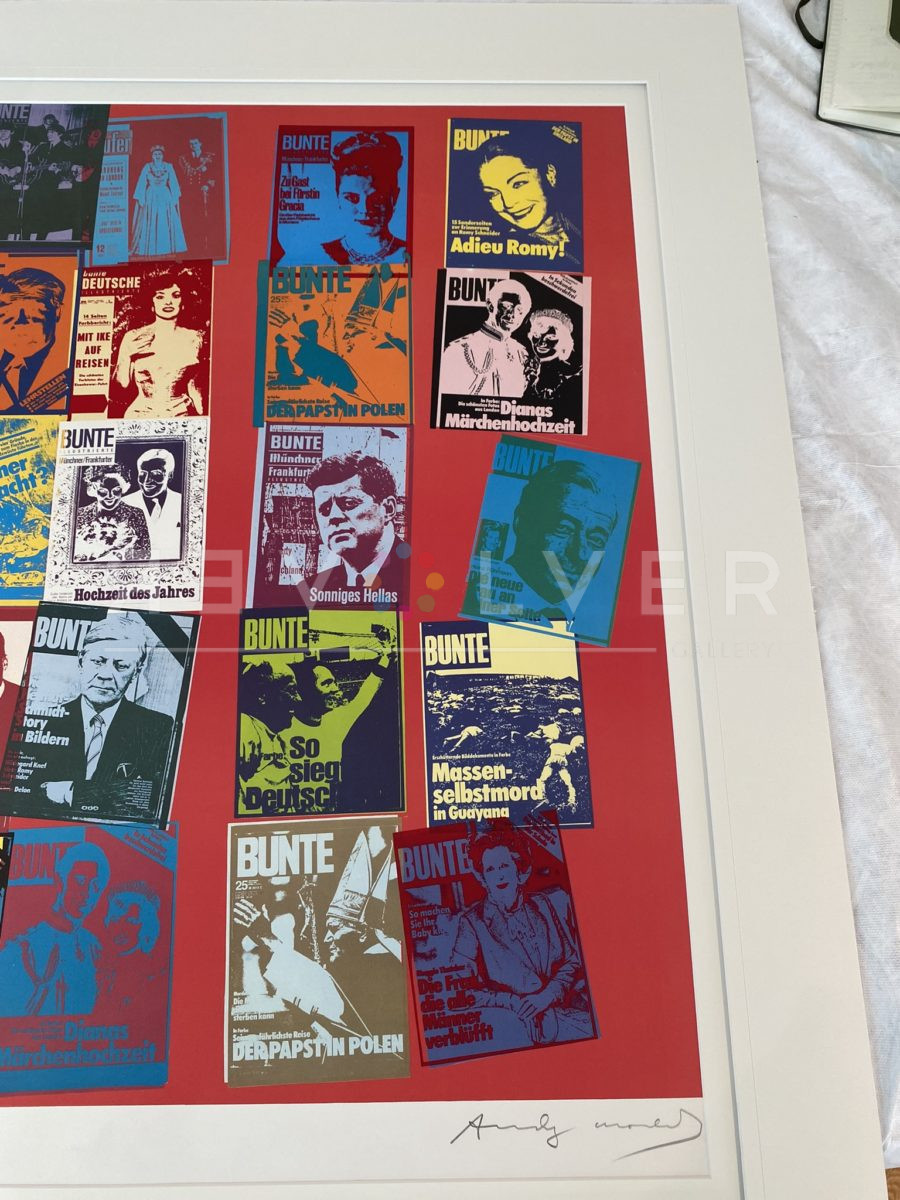
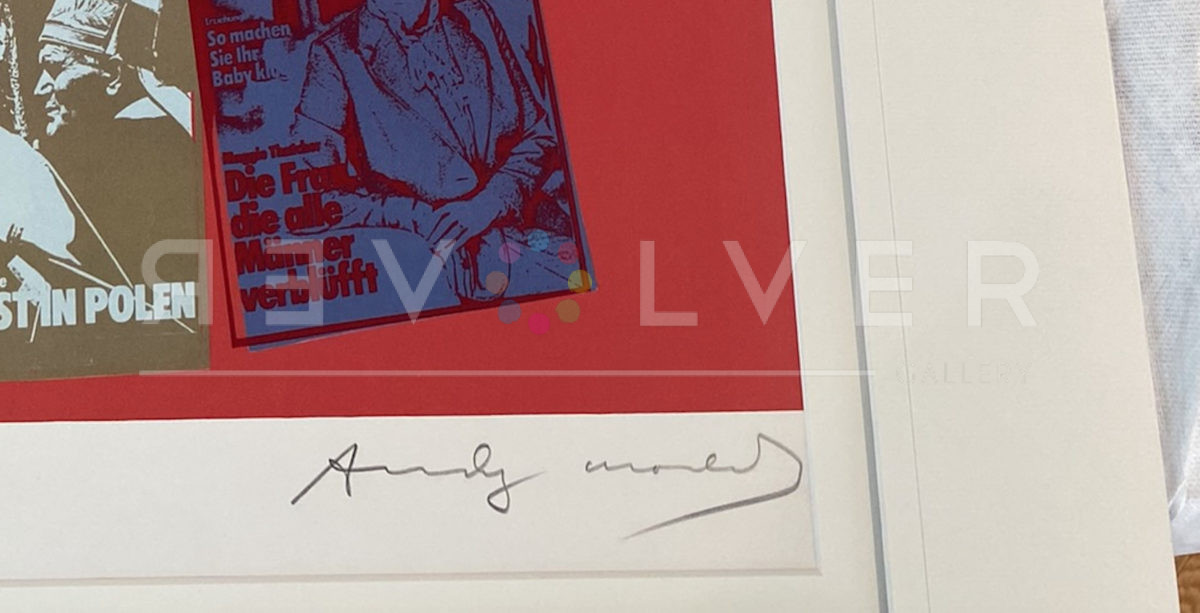
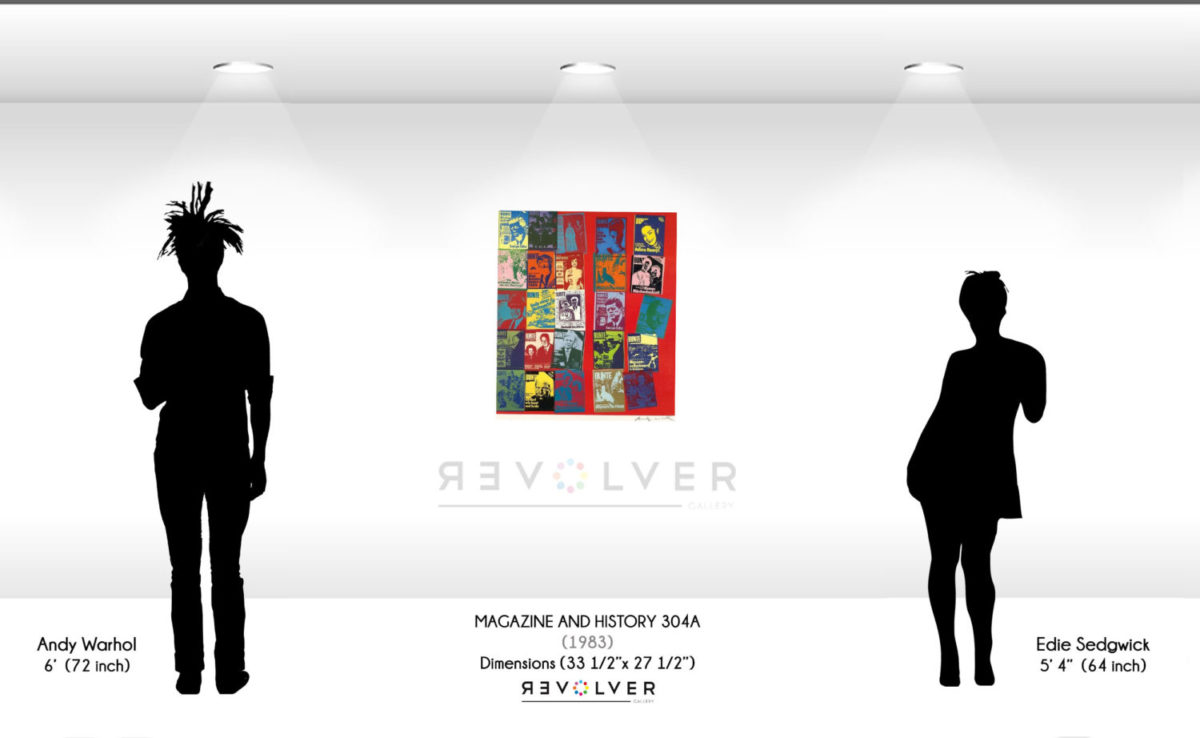
Magazine and History 304A is a compilation of Bunte Magazine covers that interested Warhol because of their ability to command attention by the use of imagery and sensationalist captions. Bunte Magazine is a German weekly magazine that covers celebrity, gossip, news, and lifestyle matters. The modern format of the magazine is said to have been inspired by Warhol, who founded his own magazine, Interview in 1969. In this print, each magazine cover is represented in a different color, forming a different sort of multi-colored mosaic. Magazine and History 304A is published as a corporate gift and is a set of 24 cover pages.
Magazine and History 304A by Andy Warhol as Part of His Larger Body of Work
Much of Warhol’s fascination with money, celebrities and mundane grocery store items comes from the fact that they are widely recognizable. Every American has held a dollar bill or has encountered an image of Marilyn Monroe at some point in life. The news is one of the most attention-grabbing forms of media that pervades American society. Because of this, Warhol created pieces like the Magazine and History, which mirrors the attention-commanding nature of American media. These are aspects that are very much alive and well in today’s culture.
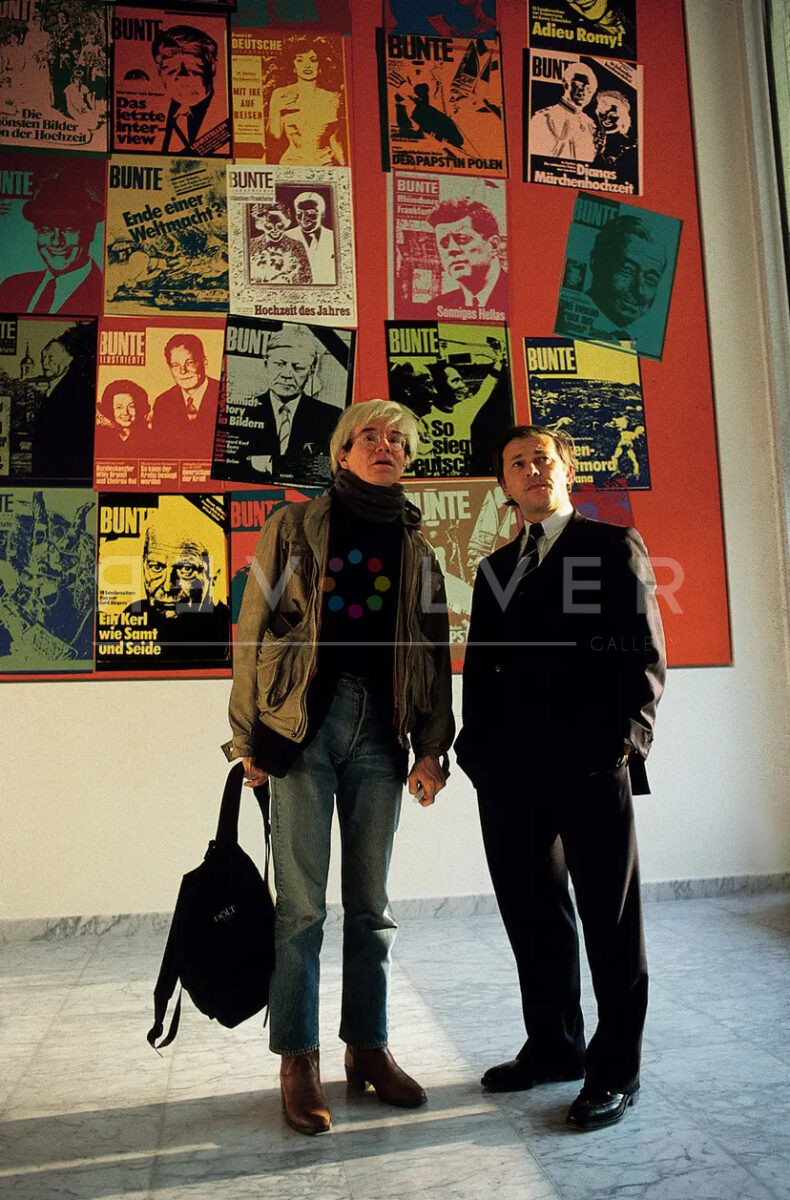
Photo credit: Dr. Hubert Burda with Andy Warhol in the foyer of the publishing house at Arabellastraße 23 (1983). Courtesy of Hubert Burda.