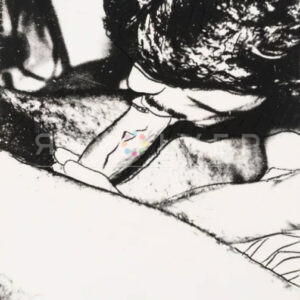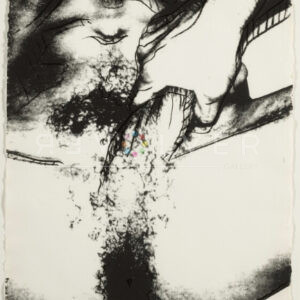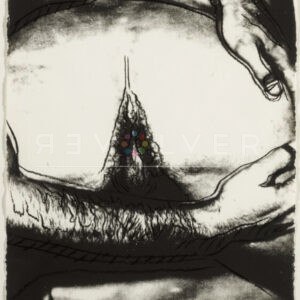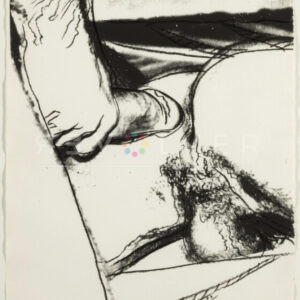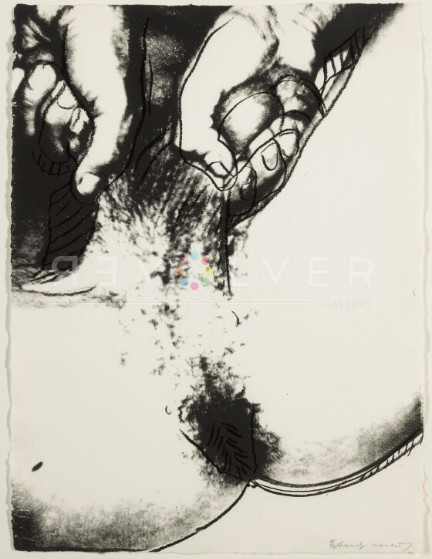
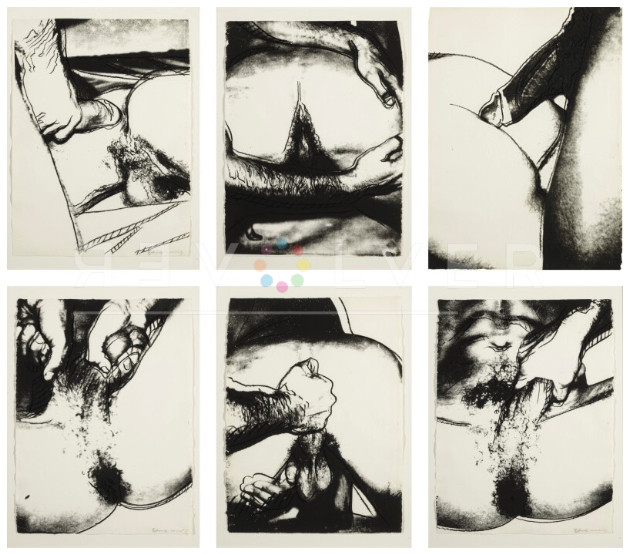
As part of the Sex Parts portfolio, this work exemplifies Andy Warhol‘s pioneering exploration into the realms of art, sexuality, and identity. Created in 1978, the portfolio was born out of Warhol’s intimate photo sessions with models he met through New York’s gay bathhouses and clubs, a project facilitated by his assistant, Victor Hugo. Warhol meticulously segregated these photographs into two collections: “Torsos” and “Sex Parts,” with the latter delving into overtly sexual acts, thus challenging the conventional boundaries between art and obscenity.
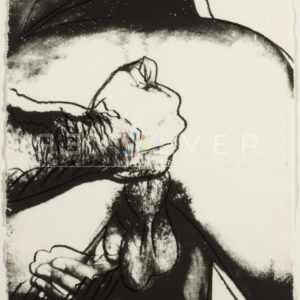
Featuring a direct and unflinching view of one man holding another’s genitalia, this print delves into the raw physicality and the tactile essence of human connection. The decision to focus solely on the hands and the genitalia speaks to the stripping away of societal constructs around sexuality, presenting the act as one of pure, unadulterated homoerotic desire and connection.
Like the other five prints in this portfolio Sex Parts 175 reflects Warhol’s audacious approach to depicting explicit scenes, pushing the viewer to reconsider preconceived notions of public art. Warhol’s choice to isolate and highlight specific moments of physical connection challenges conventional perceptions of erotic art, pushing the boundaries between the private act and public display.
Despite facing resistance from galleries and dealers, Warhol’s commitment to exploring themes of desire and identity—particularly his own as a gay man—remained unwavering. This series not only marked a significant phase in Warhol’s career but also captured a transformative moment in societal attitudes towards sexuality, underscored by the burgeoning LGBTQ+ movement.
Sex Parts 175 stands as a candid expression of male sexuality, rendered with a sketch-like immediacy and presented in stark black and white, reminiscent of Warhol’s experimental films. Through these intimate depictions, Warhol invites viewers to reflect on the universal experiences of vulnerability, trust, and the inherent desire for connection that define the human condition.