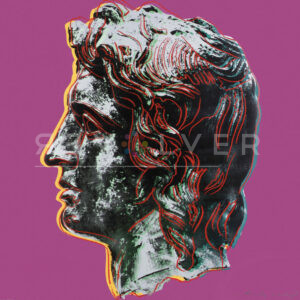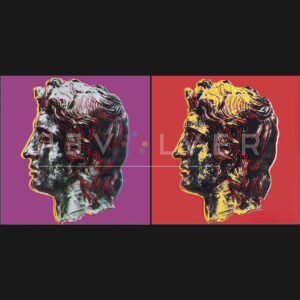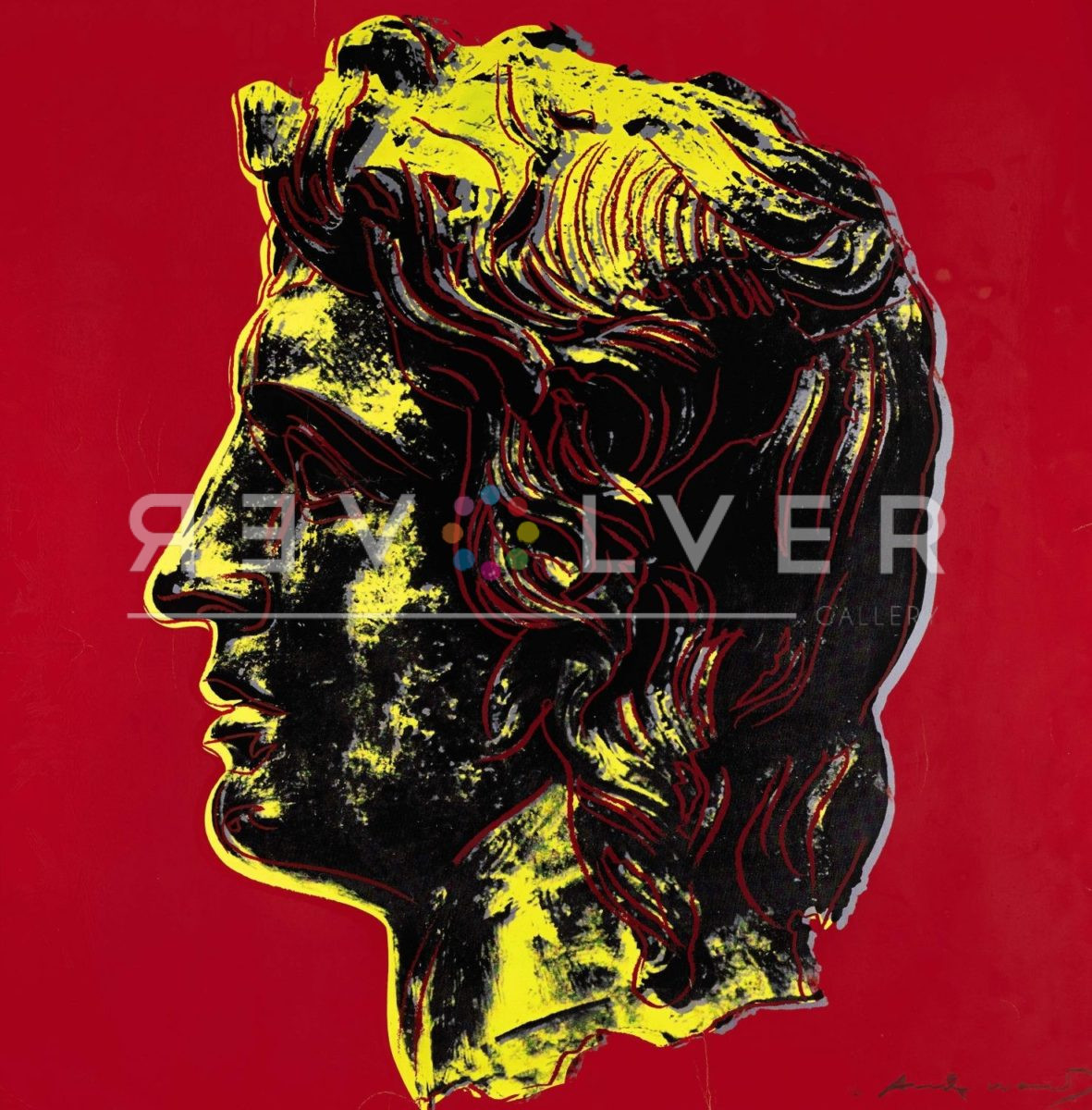
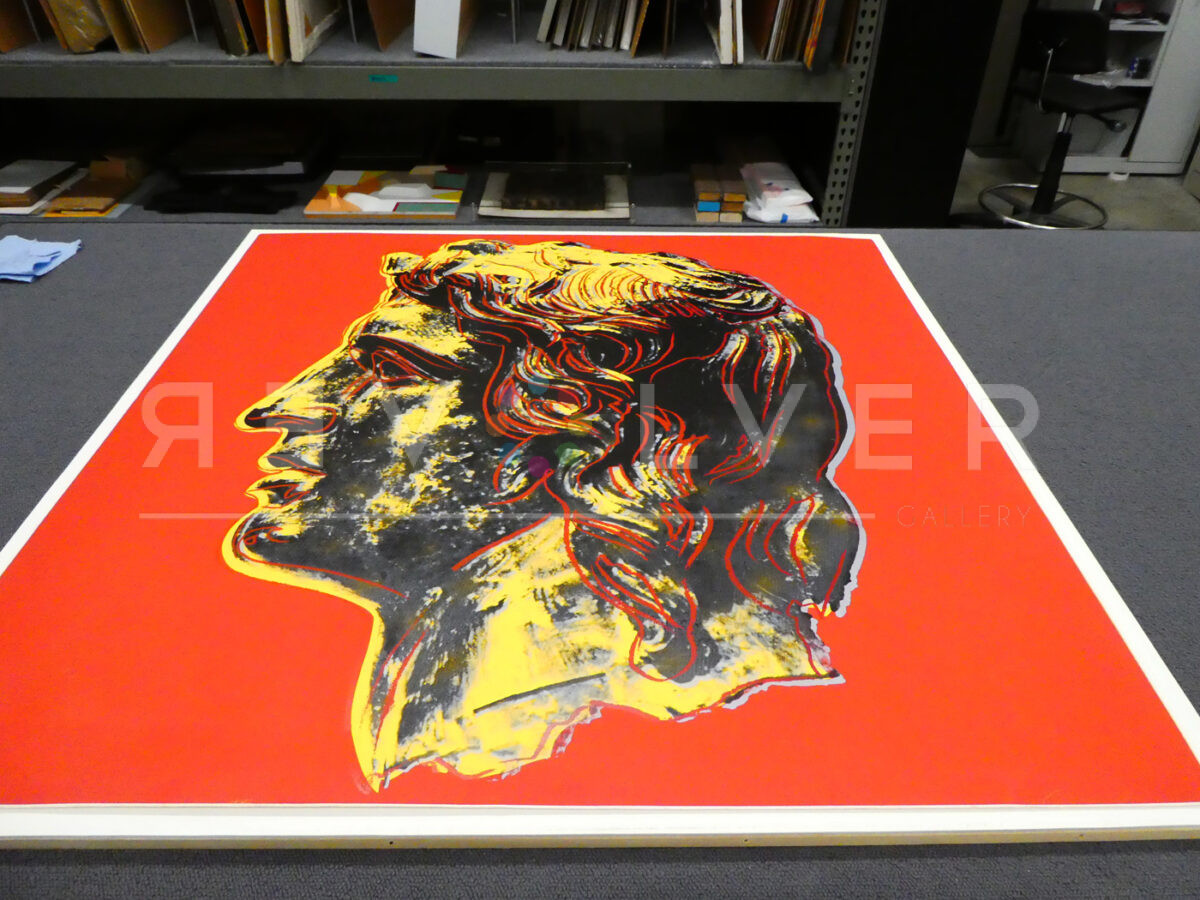

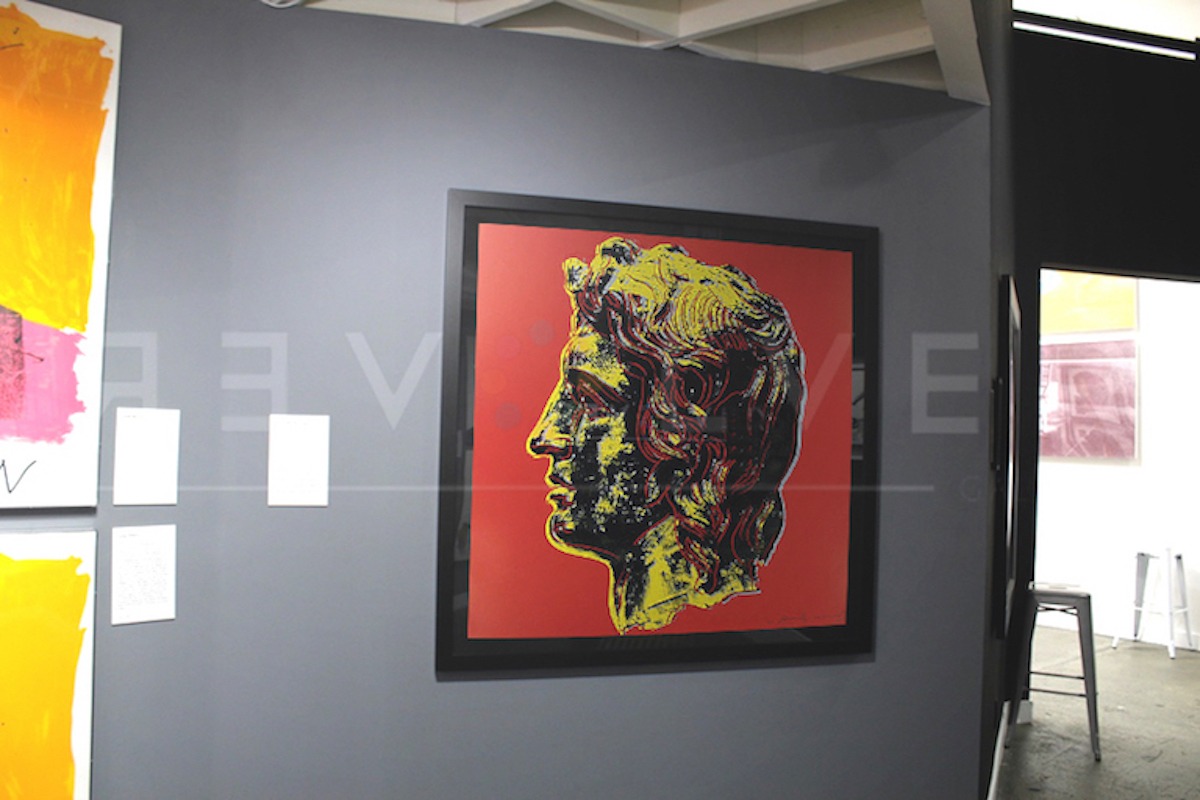
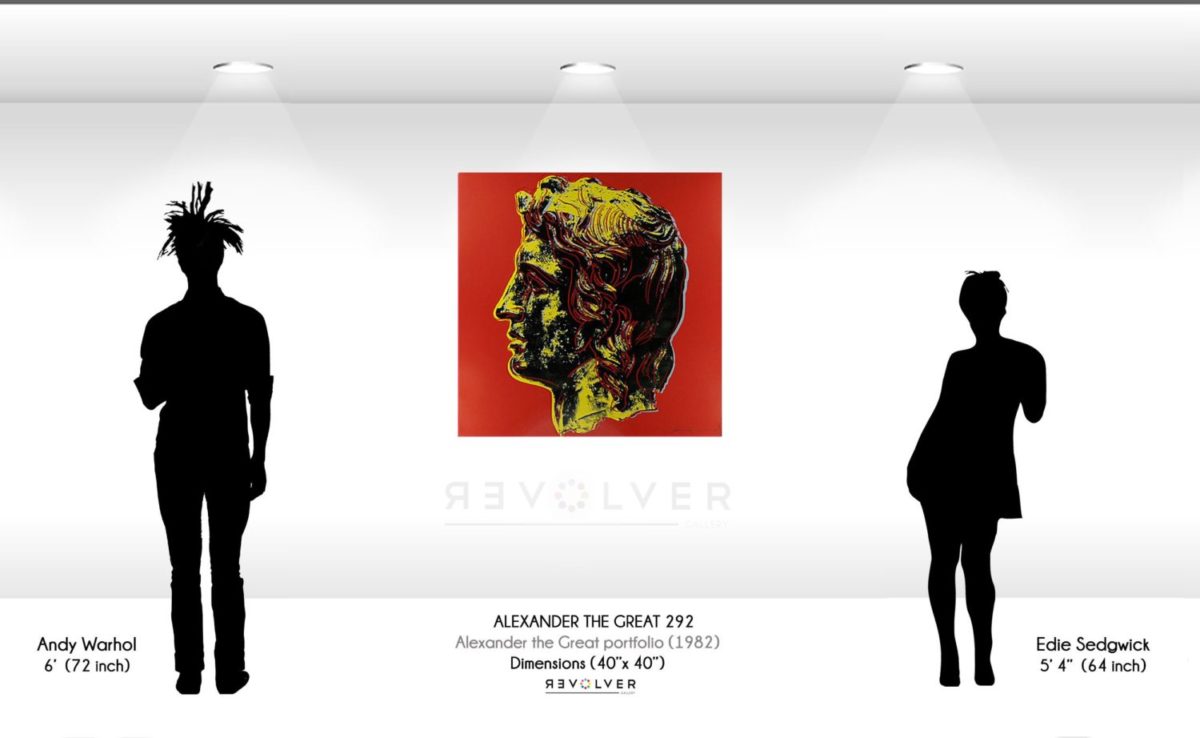
Alexander the Great 292 by Andy Warhol is a screenprint from Warhol’s Alexander the Great series. In 1982, art dealer Alexander Iolas commissioned Warhol to create a series of prints for his “Search for Alexander” collection at the Metropolitan Museum of Art. Alexander the Great 292 is highly unique to Warhol’s body of work; it was the first and only time the artist created a collection based on classical sculpture. At this point in his career, Warhol also expressed strong interest in the intersections between the past and present. Many of Warhol’s other portfolios (Details of Renaissance, Reigning Queens, Cowboys and Indians) during the 1980s centered on historic figures and masterworks. Simultaneously, his continual focus on concepts like celebrity and fame propelled these historic icons into the contemporary sphere.
Aside from being one of the greatest military leaders in history, Alexander the Great also ushered in the Hellenistic Age. Warhol most likely identified with the individualistic cultural landscape during this time. Because citizens were less involved in political life under an emperor, artwork in this period turned towards the inner self. Hellenistic artists, for instance, tended to showcase real individuals rather than unrealistic archetypes. On the whole, however, Warhol’s relationship with Alexander Iolas marked his choice of subject.
Though he came to New York as a dancer, Iolas instead became the director of the Hugo Gallery. When Warhol was just getting his start as a commercial artist in 1945, the two bumped into each other outside the 55th street building. After Iolas saw Warhol’s shoe designs, he championed the burgeoning artist and eventually gave him his first exhibition. Iolas would go on to own galleries all over the world while Warhol gained his own fame and success. Their mutual triumphs fused a bond between the two; forty years later Iolas gave Warhol his final—and fitting—exhibition for The Last Supper. They both died within months of each other in 1987.
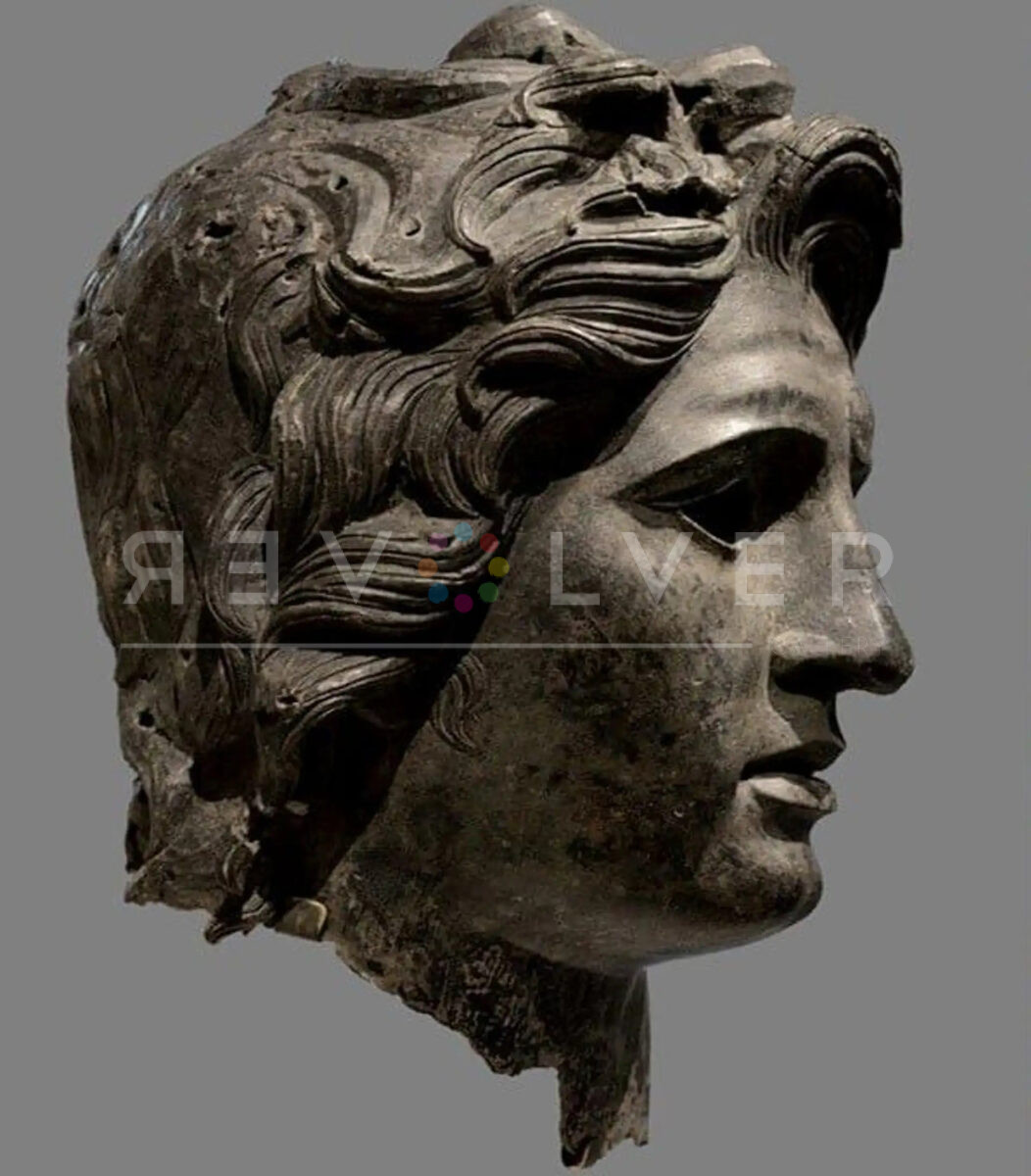
Friends in the New York art scene gave Iolas the nickname Alexander the Great due to his distinct Greek features. It is likely that above all else, Warhol created Alexander the Great 292 as a tribute to the gallery owner. With its curling hair and sharp, gallant profile, the silhouette of the bronze bust resembles a young Iolas. Warhol emphasizes these features by placing the head of the gilded bust against a blood-red background. Also, his intricate crimson line work brings added attention to Alexander’s graceful profile.
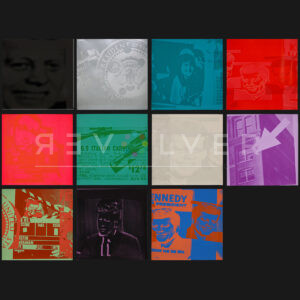
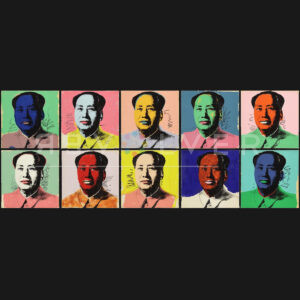
Though Alexander the Great 292 appears unusual in comparison to other Warholian works, the Pop artist employs the same themes that he utilized throughout his career. Though the emperor is not an emblem of American popular culture, his fame and long-standing status as a legend garnered Warhol’s attention. Moreover, Alexander the Great was a transformative figure who shaped society as we know it today. By using distinctive Pop techniques, Warhol asserts that the emperor is no less a celebrity than Elvis or JFK. In Alexander the Great 292, Warhol contemplates whether the idea of the mass-media superstar is as modern as we like to think.
Photo credit: Head of Alexander the Great Bronze. Greek or Roman. Late Hellenistic to Hadrianic, ca. 150 BCE — 138 CE. (New York, the Metropolitan Museum of Art.)