
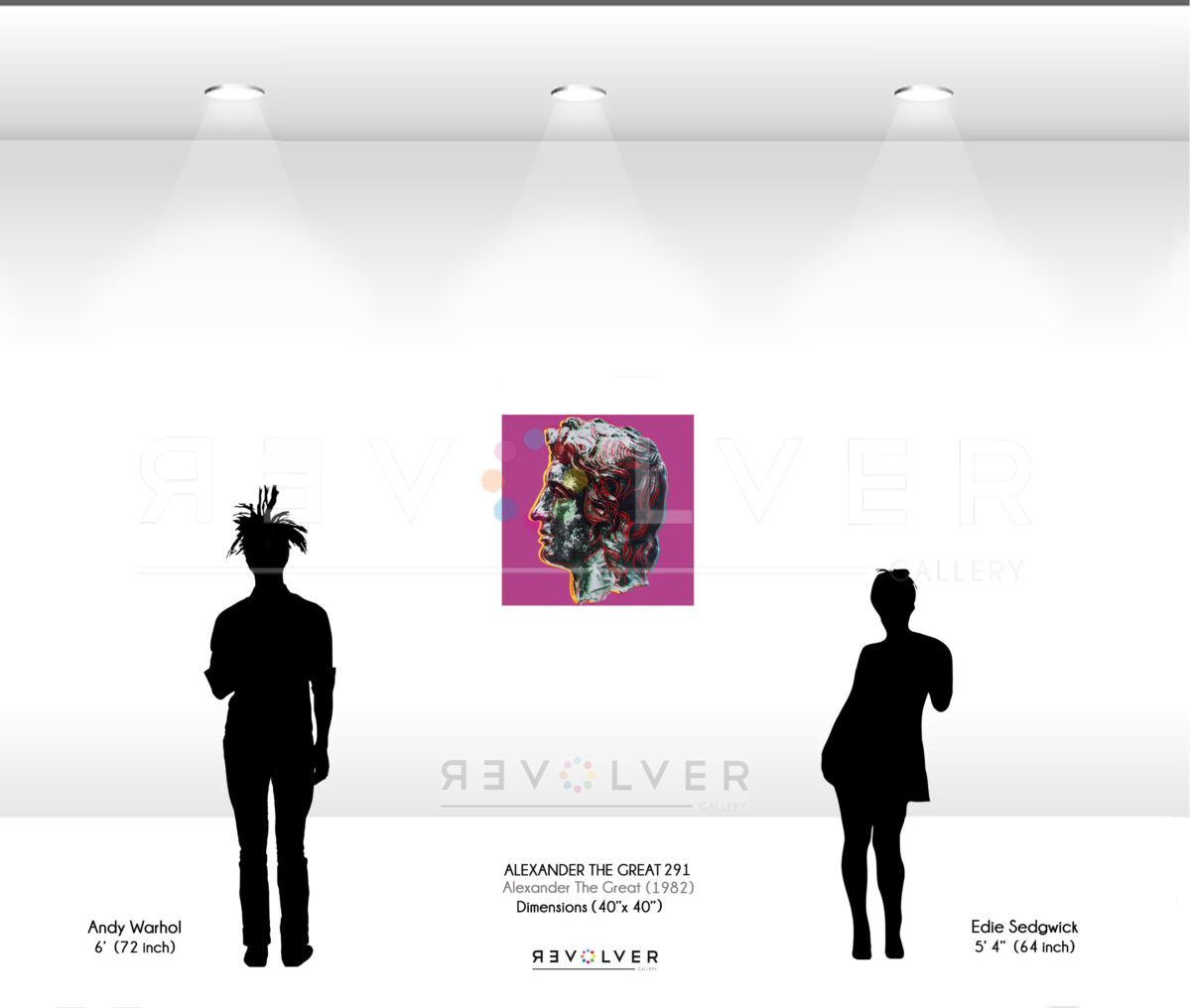
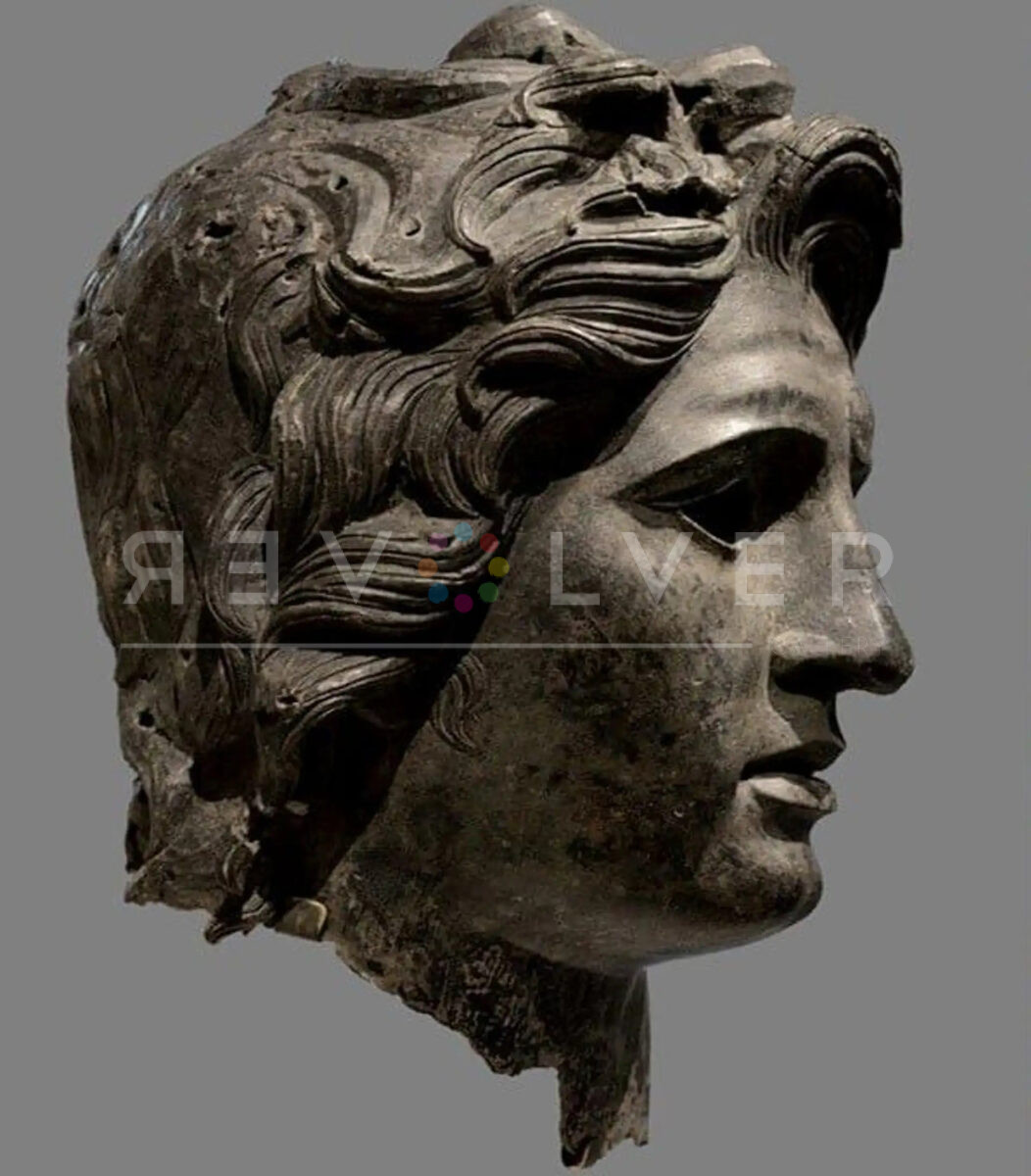
Andy Warhol’s Alexander the Great 291 is a compelling screenprint that bridges the ancient and the contemporary, forming part of a unique series dedicated to one of history’s most legendary figures. Commissioned in 1982 by art dealer Alexander Iolas for the “Search for Alexander” collection at the Metropolitan Museum of Art, this piece stands out in Warhol’s repertoire as his singular venture into classical sculpture. The work’s fusion of historical reverence with Warhol’s pop art sensibilities creates a dialogue between the past’s grandeur and the present’s vibrancy.
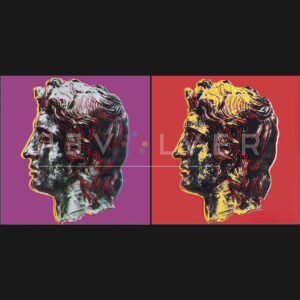
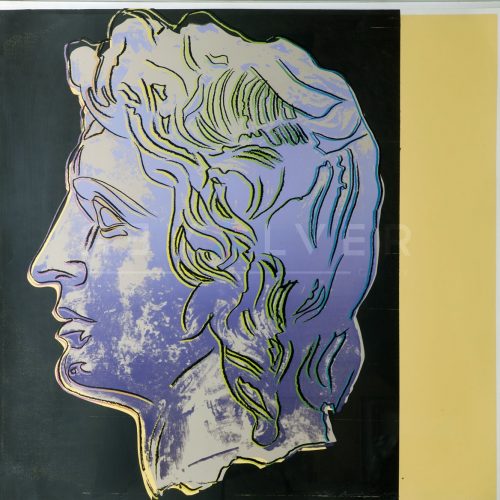
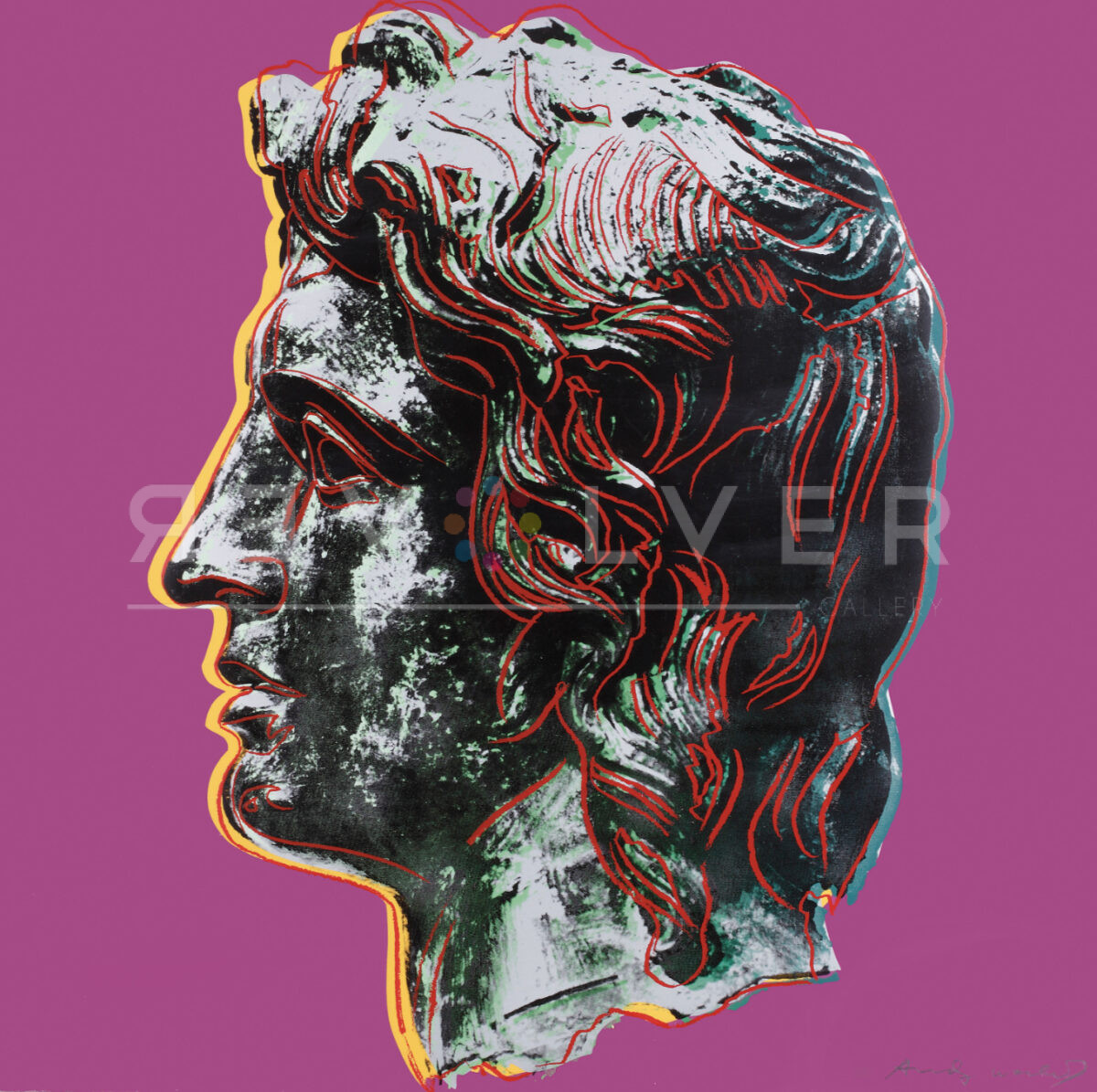
In this print, Warhol captures the profile of Alexander the Great with a dramatic interplay of shadow and highlight, evoking the tactile quality of aged bronze. The classical bust is set against an unexpectedly bright pink backdrop, isolating the figure from its historical context and casting it into a contemporary pop culture frame. This vibrant background accentuates the figure’s timeless beauty and power, drawing a stark contrast with the textured visage that suggests the weight of history.
Warhol’s use of neon overlays and a blood-red line work infuses the portrait with an electrifying energy, while also subtly alluding to the blood spilled and the passion ignited by Alexander’s conquests. These modern interventions on the classical form serve not only as aesthetic choices but also as commentary on the enduring influence of ancient icons in the current era.
Warhol’s depiction of Alexander the Great, sourced from a photograph of a Greek or Roman bronze head dating back to between 150 BCE and 138 CE, recasts the ancient conqueror as a timeless icon. Through the use of pop art techniques and colors, he suggests that the concept of the mass-media superstar is not solely a product of modern times. His 1980s prints and portfolios often revisited historic figures and masterworks, recontextualizing them within the framework of modern constructs like celebrity and mass consumption. This screenprint, therefore, positions Alexander the Great as a proto-celebrity, an early exemplar of the fame, power and transformative influence that Warhol found so captivating in more contemporary political figures like Mao, Lenin and John F. Kennedy.
This artwork also reflects the personal connection between Warhol and Iolas, a bond forged in the early days of Warhol’s career and sealed through their subsequent successes in the art world. The portrait pays homage to Iolas, with the bronze bust’s silhouette echoing the gallerist’s distinct Greek features, immortalizing their friendship and professional camaraderie. In the broader context of Warhol’s oeuvre, Alexander the Great 291 is a significant work that encapsulates the artist’s career-long exploration of celebrity culture, making a bold statement about the universal and enduring quest for influence and legacy.
Photo credit: Head of Alexander the Great Bronze. Greek or Roman. Late Hellenistic to Hadrianic, ca. 150 BCE — 138 CE. (New York, the Metropolitan Museum of Art.)