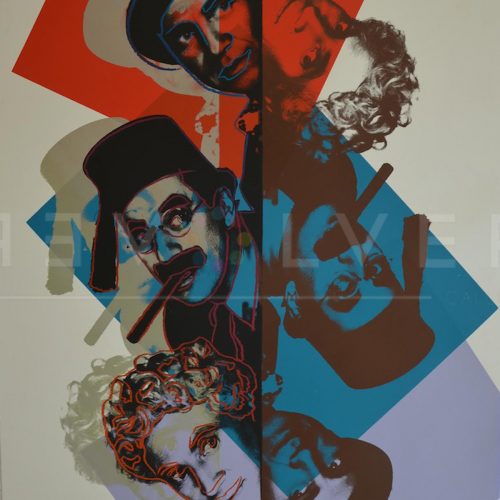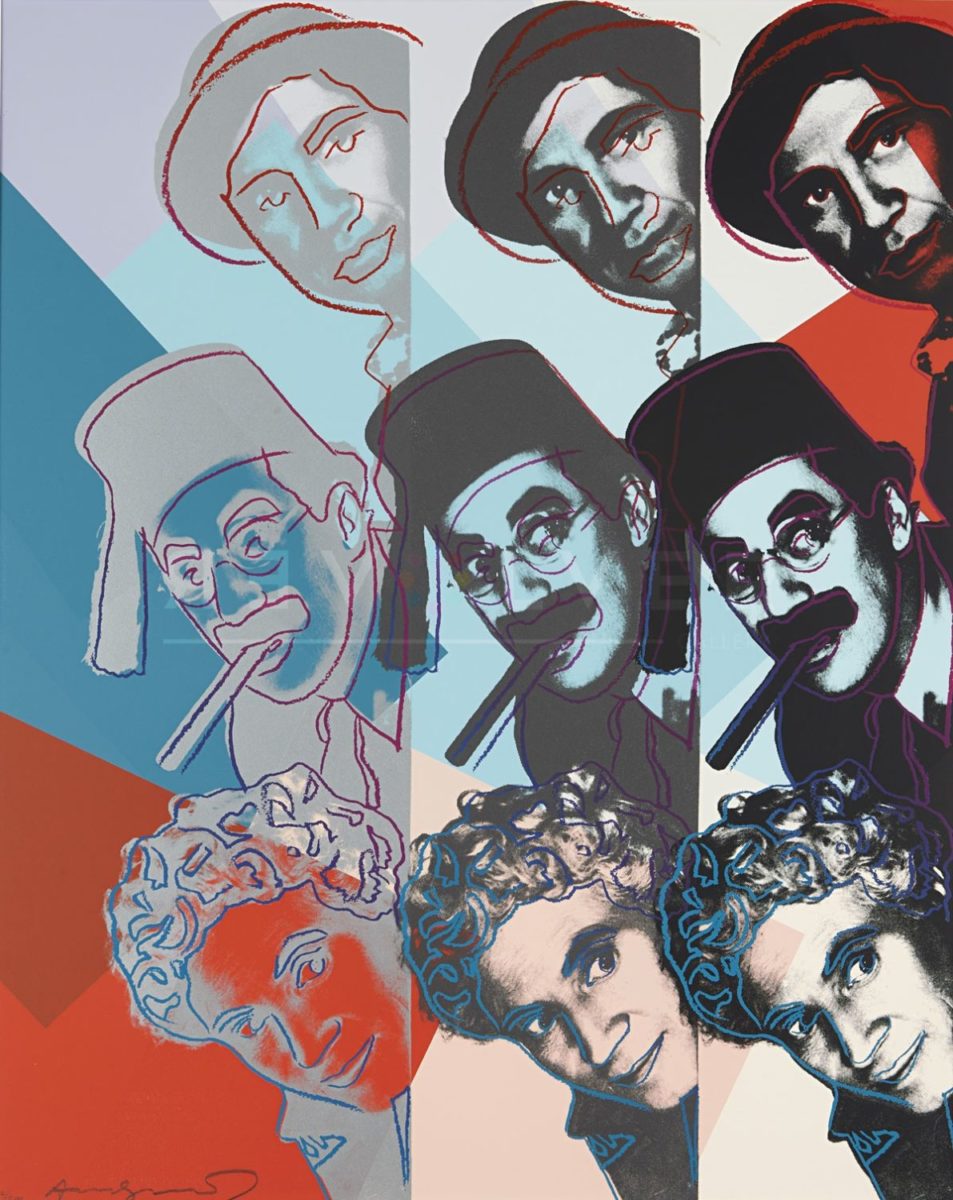
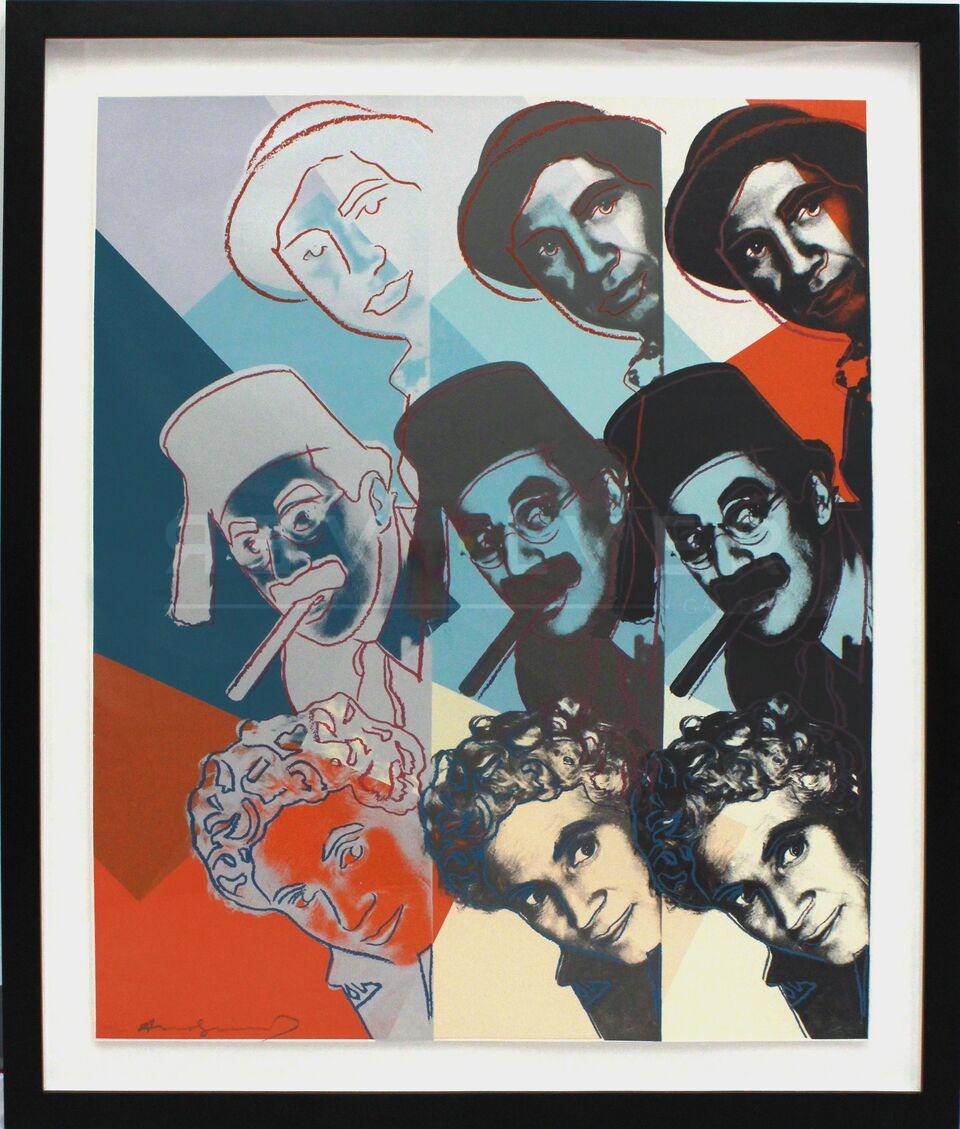
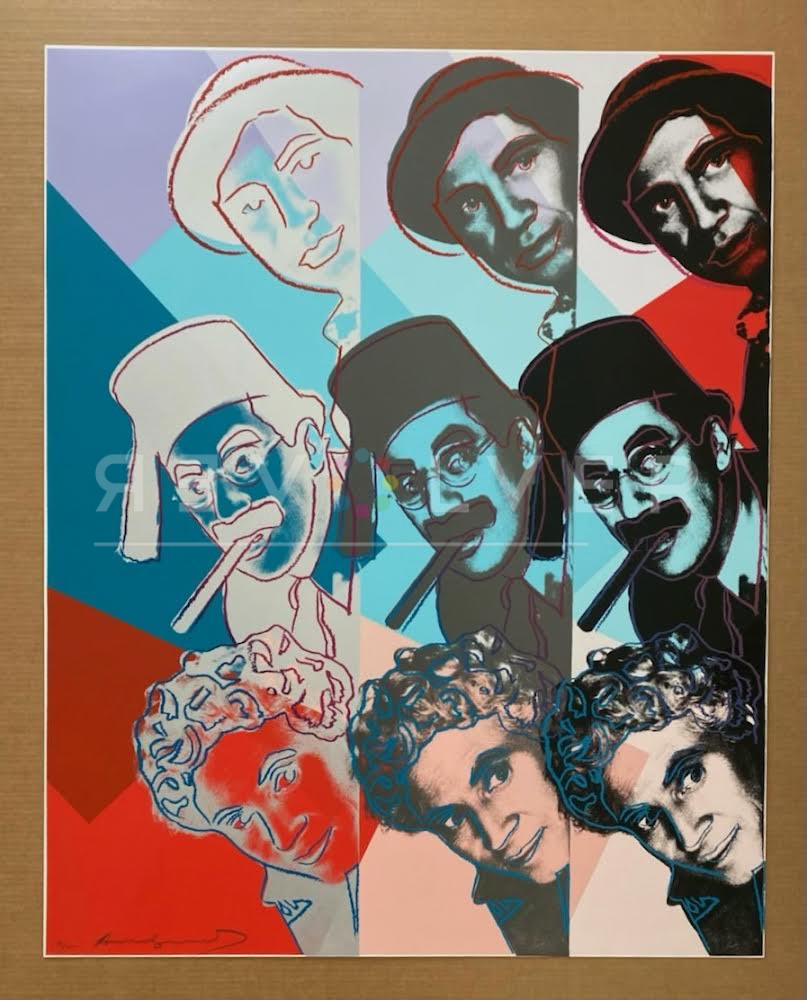
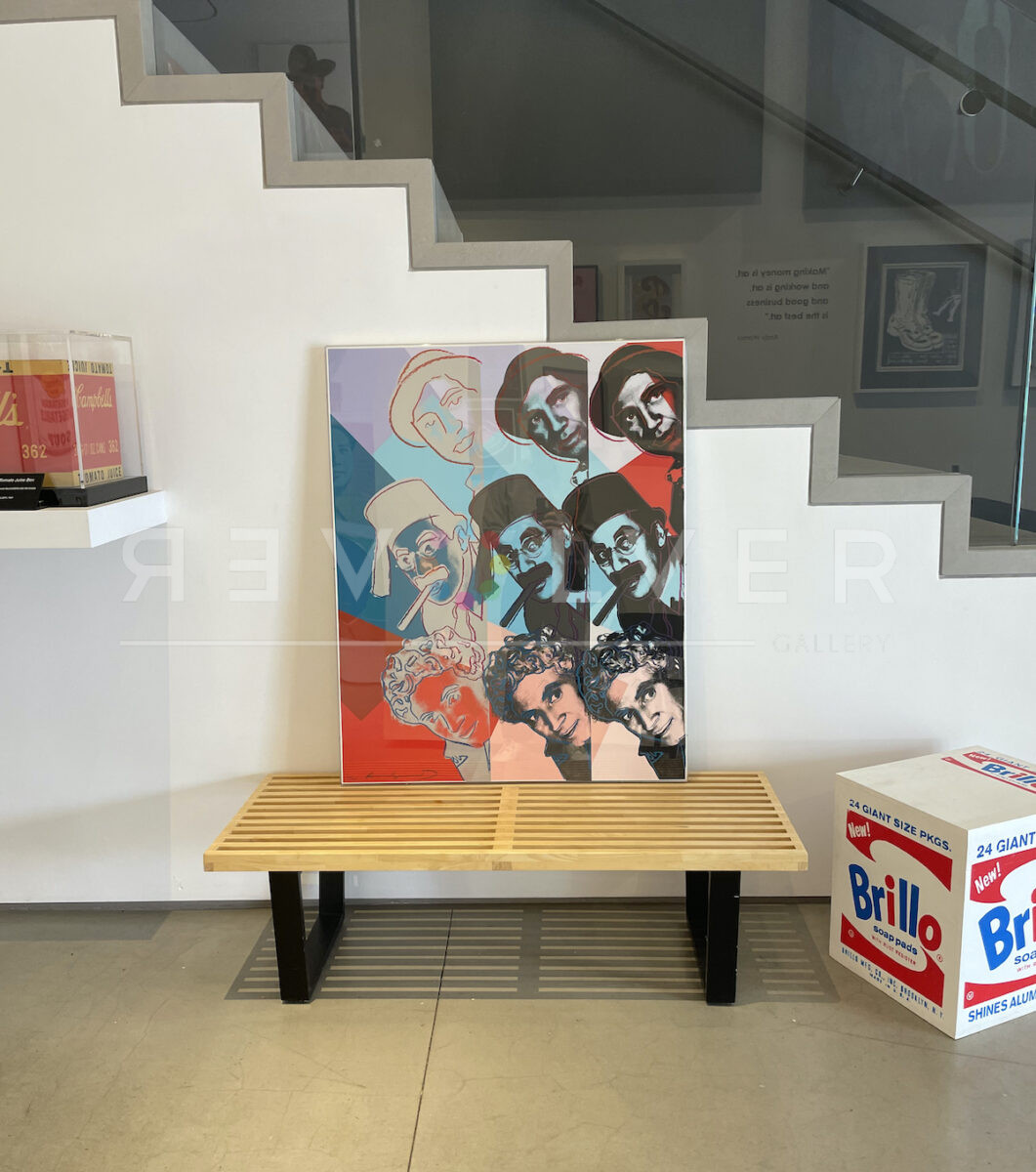
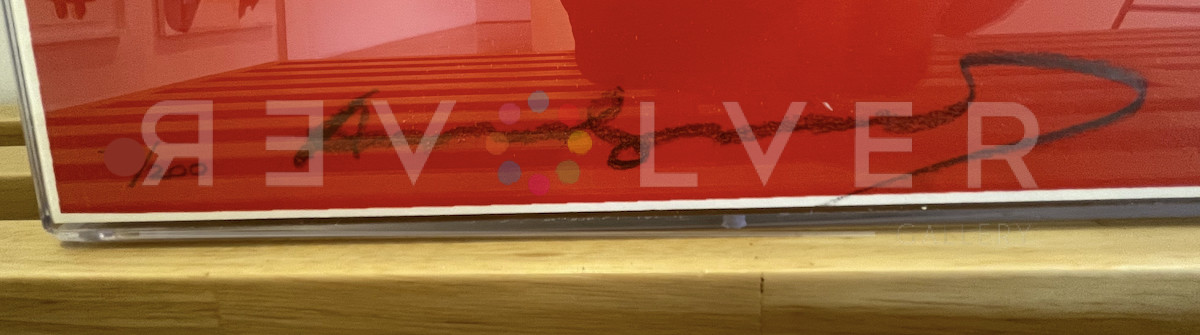
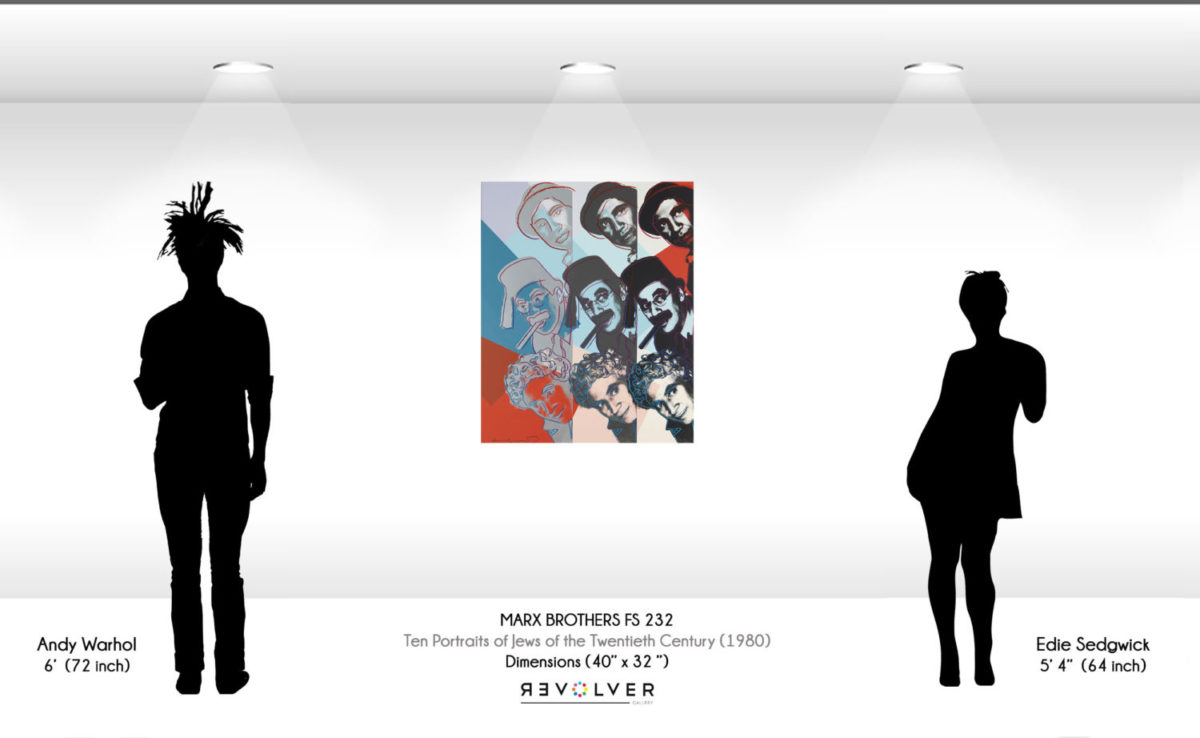
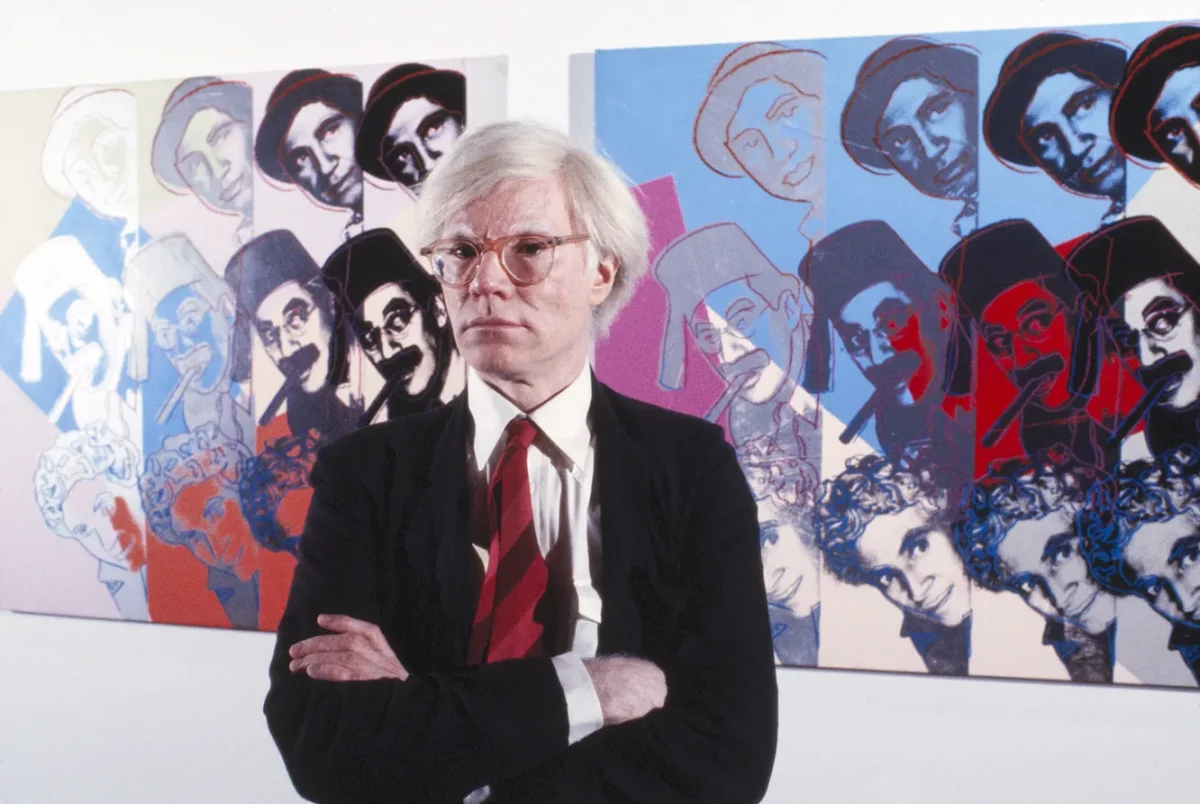
Marx Brothers 232 by Andy Warhol is a screenprint from the Ten Portraits of Jews of the Twentieth Century series, which he published in 1980. This vibrant and playful artwork pays homage to the comedic genius of the Marx Brothers, a troupe that brought joy and laughter to audiences through vaudeville, theater, and film. With their iconic movies like Duck Soup (1933) and A Night at the Opera (1935), they left an indelible mark on the world of comedy. Warhol’s choice of the Marx Brothers adds a touch of levity to a portfolio filled with intellectuals and serious figures, reflecting the diversity of the Jewish experience in the 20th century.
Warhol’s Marx Brothers 232 showcases Chico at the top, Groucho in the middle, and Harpo at the bottom. He sourced the image for this print from the movie poster for A Night in Casablanca (1946), which features the three eldest brothers. This choice of source material is a testament to Warhol’s ability to capture the zeitgeist of an era. The playful and repetitive nature of the print, with its abstract blocks of red, blue, and purple, transports the viewer back to the golden age of comedy, while anchoring it in the vibrant Pop Art context of the 1980s.
The Marx Brothers, with their stage names Chico, Harpo, Groucho, Gummo, and Zeppo, were not just comedians; they were cultural icons. Their keen sense of humor and unique comedic style earned them a place in the annals of entertainment history. Groucho’s bushy black eyebrows, thick mustache and ever-present cigar have long been emblematic of comedy itself. Warhol’s fascination with stardom and celebrity is evident in this print. By including the Marx Brothers in the Ten Portraits of Jews of the Twentieth Century series, Warhol acknowledges their significant contribution to the world of entertainment and their lasting impact on popular culture.
Andy Warhol’s portrait of the Marx Brothers is a celebration of comedy, fame, and art. It captures the essence of the Marx Brothers while paying homage to their legacy. The vibrant colors, the playful repetition, and the choice of source material make this artwork a standout piece in Warhol’s oeuvre.